
An artistic job is often highly specialized and focused on a particular segment of the market. This means that without an art market, artistic jobs do not last long. The art market plays a very substantial role in employment and income and in cultivating specialists' knowledge and skills in the global economy. The value that the art industry has added to the market comes both from businesses directly related to art trade and from businesses that sit among a range of ancillary service industries that depend on art.
Art exhibitions and other cultural events have directly increased income and the number of people hired. They have also, along the growth path of startups, increased their costs and the number of people they hire, while at the same time significantly raising the cultural attractiveness of the cities that host them. The number of artistic jobs is as varied as the color wheel. Enthusiasts in this field can draw a successful and flawless career path for themselves.
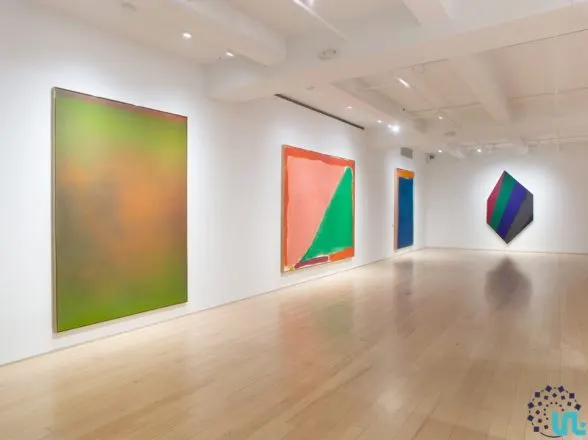
Art-field jobs for women
According to reports, women's participation share declines with age. Surveys show the women's employment rate was 66 percent, of which the largest share belongs to women under 40. The smallest share, at 45 percent, belongs to women aged 65 and over. This figure was four percent higher than in 2018. However, this figure is higher than most national and nonstandard (non-standard) industry benchmarks, in which the total share of employment of women aged 65 and over in 2019 was 39 percent in Europe and only 36 percent worldwide.
77 percent of people who worked in the dealing sector in 2019 were hired in full-time positions, a figure that was unchanged from 2018. 23 percent were also hired in part-time or temporary positions. This figure was higher than the average in the United States (22 percent) and Europe (overall) (18 percent), but equal to countries such as the United Kingdom (23 percent in 2018).
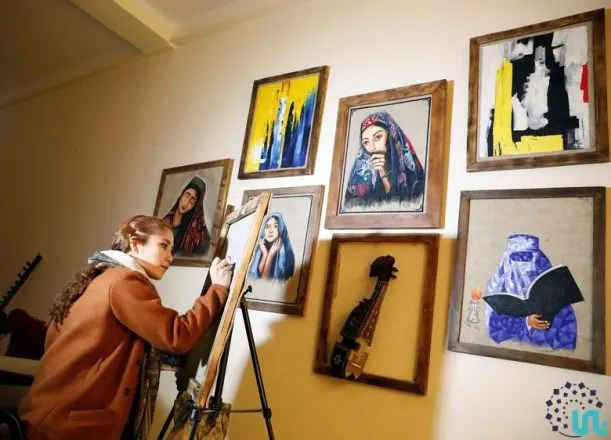
An examination of women's employment in auction-sector hiring showed that 66 percent of those hired were women. That is more than one percent relative to the previous year. This share in the second-tier auction houses segment has always been more balanced. However, in 2019 this figure fell from 52 percent in 2018 to 45 percent women's employment. The smallest share of women's participation in employment belonged to women aged 65 and over. Meanwhile the largest decline (11 percent) relative to the previous year was in the segment of women aged 40 to 64.
To see art auctions in Tehran you can visit galleries' websites.
High-paying artistic jobs
This piece examines the figures for two attractive money-making art jobs that can meet the need and interest of many art-loving young people.
Auction (sale) sector employment
Auction brokerage is another artistic job that is relatively unknown, and most people think that holding an auction is a trivial task. Estimates show that employment in the auction sector in 2019 was relatively stable. Estimates indicate 285,100 people employed (a one percent increase relative to 2018) worldwide and about 14,230 businesses.
Following 2 years of decline in employment in the art-auction sector, the number of people hired rose by 6 percent relative to the previous year, and more than 5,300 people were hired in 2019 in the five top auction-related businesses. Of course, internships and temporary hiring make up part of this increase. Specialists in this sector have also noted that this trend may reverse, because larger auction houses such as Sotheby have, from early 2020, begun to adjust and rehire their workforce.
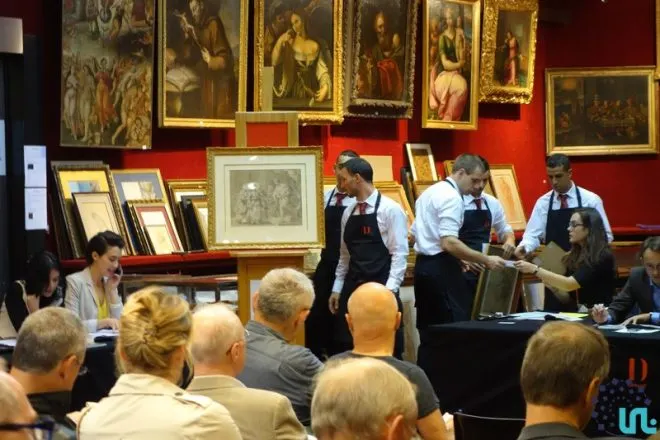
Many auction specialists have said that with sales going online and businesses becoming more integrated, cost-reduction criteria have gradually become an important priority. This has implications for hiring in the upper layers and other layers over the next five years.
Employment in upstream and downstream auction segments
In top-tier auction houses, the majority of hiring is done in the full-time segment. However, the share of part-time hiring has also increased by 4 percent. The hiring trend in second-tier auction houses has been the reverse, because part-time employment figures fell by 5 percent relative to the previous year.
The average of those hired in second-tier auction houses in 2019 who had a university education was 67 percent, that is less than 4 percent relative to the previous year. Meanwhile in the top-tier auction segment, this sector's average was about 75 percent. Both figures are substantially higher than the figures for the general labor force.
Age breakdown of those hired in the auction sector
42 percent of those hired in the second-tier auction sector in 2019 were under 40; this number was unchanged from 2018. 48 percent of people, that is more than 6 percent relative to the previous year, were between 40 and 64 years old. 10 percent, that is less than 2 percent relative to 2018, were also 65 years old or older.
Dealing sector employment
It is estimated that in 2019 more than 2.7 million people were employed in about 296,580 businesses in the gallery and dealing sector. It appears that hiring in this artistic job depends more on people's knowledge and skills than on gender. The International Labour Organization (ILO) has estimated that women made up 39 percent of the global labor force in 2019. But the gender balance in the dealing sector shows more women entering the labor market in 2019. Survey results indicate that women make up 62 percent of the labor market in this sector. This figure is 1 percent higher than in 2018.
In 2019, 84 percent of those hired in the artistic-jobs dealing sector had a university education. This is more than one percent higher than in 2018. The level of university education in this sector is much higher than the education level of the general labor force in many countries, and its average in Europe and the United States in 2019 is less than 40 percent.
Age breakdown of those hired in the dealing sector
The majority (56 percent) of people hired in the dealing sector are under 40. However, this figure is 5 percent lower than the previous year. 36 percent of people hired in this sector are 40 to 64 years old, and 8 percent were also over 65 (more than 2 percent relative to 2018). In fact, a substantial share of young people have been hired more in this sector than in the general labor force. For example, in the United States and the United Kingdom in 2019, 47 percent of people hired across all jobs were under 40, while Europe's share was less than 42 percent.
Number of artistic jobs
It is estimated that in 2019 about 310,810 businesses were operating in the global art and antiques (antique) market sector. An unbelievable majority of these businesses are in fact a small artistic job, both in terms of return and in terms of employment. Over the past 20 years, employment has increased substantially and its geographic dispersion has also grown. In addition to the number of jobs created, greater balance in the art market in terms of skill, knowledge and gender has also been one of the most important factors in the rise in employment.

The world's highest-paying artistic jobs
A small business has different definitions in different regions. In Europe a small business is work that has a return (return on capital) of less than 10 million euros (equivalent to 11.2 million in 2019) and whose number of employees is also less than 50. Also in the United States the definition of a small business is as follows: work whose return is less than 7.5 million (this definition has been provided by the U.S. Small Business Administration regarding artistic jobs in America). Definitions of a small business in China depend on the type of industry; for example, in the retail industry, a small economic establishment is an establishment that has fewer than 50 employees and a return of less than 5 million yuan (close to 725,000 dollars in 2019).
Conclusion
Around each of us there are many young people whose first and last word in life is finding an artistic job. Perhaps you are one of them. There is no shortage of school students who, when asked why they chose mathematics and experimental-sciences tracks, say it was by force. Even those who study in artistic fields are often after creating art and have no information about the other segments of this market. High-paying artistic jobs exist in Iran and the world from which many art-loving young people can earn income.
Machine-translated from Persian by Namafar; the Persian original is authoritative. Read the original in Persian