Today the importance of the cultural and creative industries and their impact on the economy and culture has become clear to countries. A group of them, as pioneers in this field, earn good income from the cultural and creative industries, and these industries have become an important part of their economies. Another group is also engaged in discourse-building and promotion and transition in the cultural and creative industries. It may be said that the cultural and creative industries in Iran have a status similar to that of the second group of countries. Given this, a look at the experiences and the path that active countries in this field, especially leading countries, have taken can be illuminating and useful. Cultural and creative industry parks are one of the matters that have been less studied and examined in the field of cultural and creative industries in Iran.
What is a cultural and creative industry park?
Perhaps on hearing cultural and creative industry parks you too think of the science and technology parks that exist in the country, but as the name of these parks makes clear, their field of activity is limited to the cultural and creative industries, and of course they also have different functions, goals and policies. In general, creative and cultural industry parks, which are often known as cultural and creative districts, are specialized areas that focus on promoting and fostering the cultural and creative industries. These parks are designed to bring together businesses, organizations, artists and entrepreneurs from various sectors involved with the cultural and creative industries in a single physical location.
The primary goal of these parks is to stimulate innovation, creativity and economic growth in the cultural and creative sectors of society. Among the best-known cultural and creative industry parks one can mention 798 Art District in the city of Beijing, China, Docklands Studios Melbourne in Australia, and the Tjuvholmen and Vulkan districts in Oslo, Norway. These parks play an important role in fostering creativity, preserving cultural heritage and advancing economic development in these countries.
Cultural and creative industry parks bring together artists, designers, entrepreneurs, investors and other stakeholders and, through advanced infrastructure such as studios, exhibition spaces, performance venues, coworking spaces and so on, support the creation, production and display of cultural and creative works. Cultural exchange and promotion, protection of intellectual property and economic impacts are some of the features of these parks.
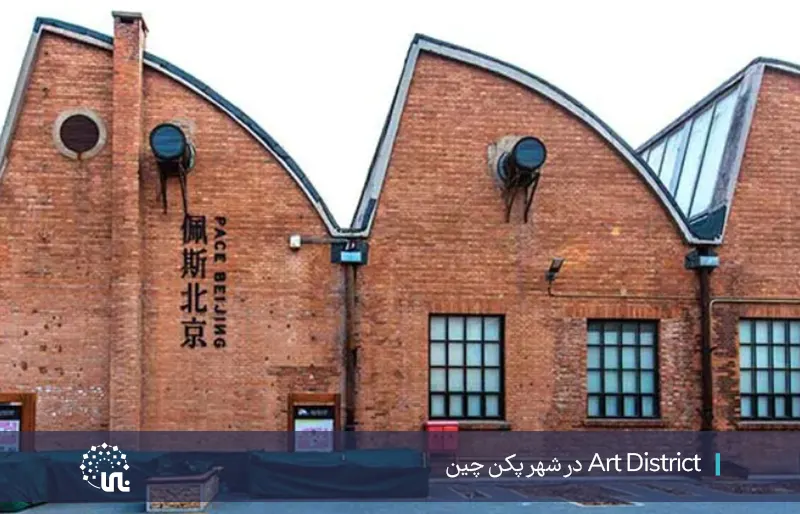
As noted, China is one of the countries that is active in establishing and using cultural and creative industry parks; accordingly this article, using big data, has examined the status and risks of developing China's cultural and creative industry parks.
Status of cultural creative industry parks in China
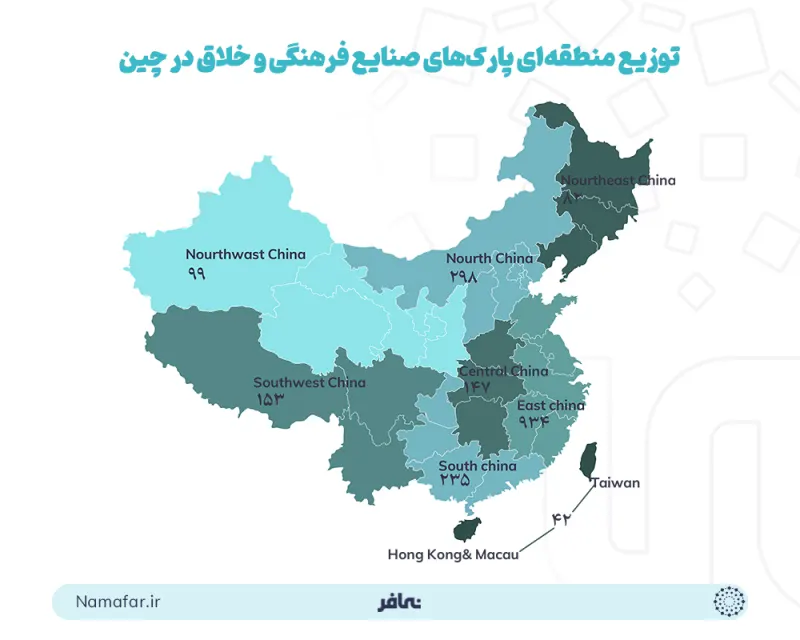
Geographically, the largest number of cultural creative industry parks (934) are located in eastern China. Of this number, fewer parks are located in the central, southern, northern and other regions, which indicates the unequal distribution of soft technologies and cultural industries in China.
However, when we look at the growth rate of China's science and technology parks, this rate is higher in central and western China compared with the eastern region. This shows that the regional imbalance in the distribution of creative industry parks in China is gradually improving over time.
Development of cultural creative industry parks in China
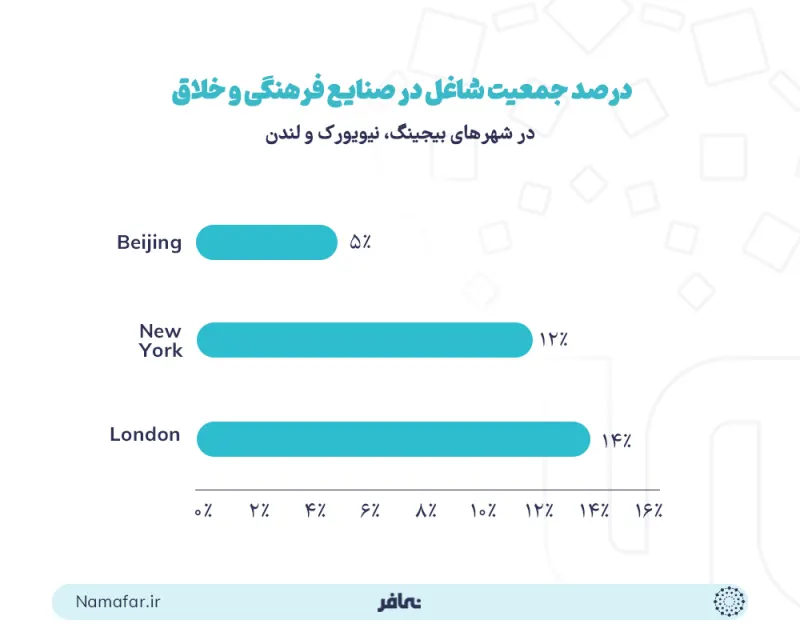
An examination and comparison of the share of the population employed in the cultural and creative industries in three cities, Beijing, New York and London, shows that London, with 14 percent employed in creative-industry fields, has more employed people than New York with 12 percent. Beijing, China, with 5 percent employed on the list of China's creative companies, also has a large gap with these two cities.
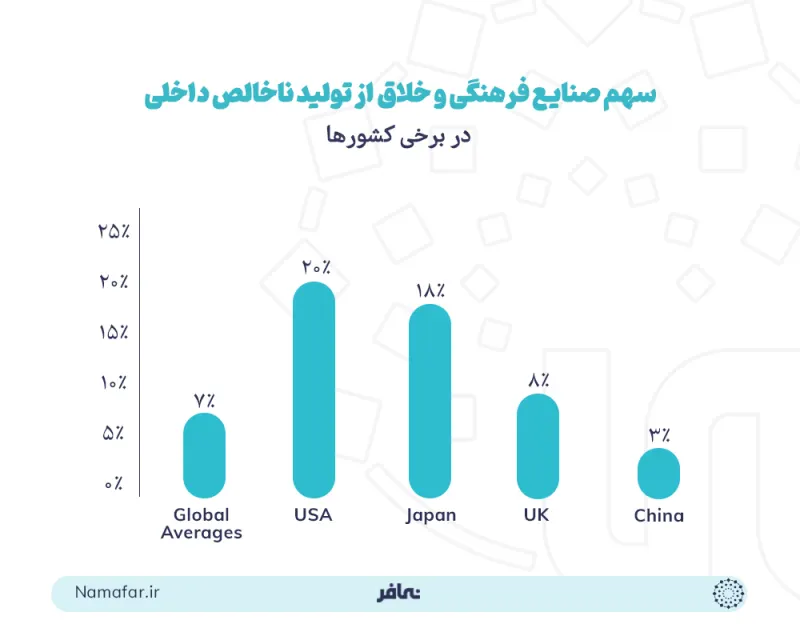
Studies also show that the creative industries in the United States of America, with a 20 percent share of gross domestic product, have a larger share than other countries. Japan is in second place with 18 percent, and the global average is 7 percent. China, with a 3 percent share of the creative industries in the world of gross domestic product, lags behind the global average figure.
Given these figures and the capacity that the growth and development of the creative industries in China possesses, it appears that creating creative and cultural industry parks can be an appropriate way to achieve this.
Risks threatening cultural creative industry parks in China
This article has identified a total of 24 risk factors in 4 groups for the development of creative parks:
- Construction risks and plans of China's cultural creative industry parks: These risks relate to issues of the park's design and layout, infrastructure and facilities. Incomplete planning, lack of coordination, inadequate infrastructure and a shortage of public-service facilities are examples of these risks.
- Risks of mistaken management of creative industry parks in China: These risks relate to the management, processes and business model of running the parks. The existence of inefficient organizations, inability to manage, lack of oversight of activities and failure to form a reasonable revenue model are examples of managerial harms.
- Risks of developing cultural creative industry parks: This focuses on the growth and capabilities of Chinese technology companies and ensembles in the parks. Matters such as the absence of leading companies, low specialization, low talent, low innovation and brand weakness fall into this category.
- Environmental risks: This refers to external risks arising from broader policies, intellectual property, the market and government conditions.
Recognizing possible harms helps policymakers and managers of cultural creative industry parks take action to prevent these risks and also for sustainable growth. In this way, by understanding these problems early, they can adopt plans and policies to prevent and reduce them.
Summary and conclusion
This article reviews the status of cultural and creative industry parks in China. It also examines the harms and risks of developing China's creative industry parks. The findings show that these parks have an unequal geographic distribution, with concentration and multiplicity toward the eastern regions of China. However, their growth rate in other regions in past years indicates an improving regional balance over time. Cultural and creative industry parks can be engines for achieving the projected growth in the fields of China's cultural creative industries.
This article has identified 24 risk factors in four groups: risks threatening creative parks and their plans, managerial risks, risks of the parks' growth and development, and environmental risks. Also, ensuring strategies, resources and correct implementation in the areas of planning, management, business and policy is essential for cultural and creative industry parks in order to realize their economic and creative potential.
Machine-translated from Persian by Namafar; the Persian original is authoritative. Read the original in Persian