A country that was once only a consumer of video games has now become one of the giants of this industry. By drawing on its vast domestic market and strategic investments, this country has been able to consolidate its position as one of the leading producers in this field. This sector, which has become a focus of global attention, is notable not only because of its innovative and diverse business models, but also because of its inseparable link with policy and culture. In China, video games play a role beyond entertainment and have become a tool for conveying cultural and social messages. Alongside abundant economic opportunities, this field also faces challenges within China's borders. Government regulations and oversight, together with challenges related to data protection and user privacy, have added complexity to some of the dynamics of China's market. In addition, geopolitical tensions have confronted China's games market with international challenges.
History of the video game industry in China
In the 1970s, when video games became popular in other parts of the world, China was still in the period of the Cultural Revolution and access to foreign products, including game consoles, was severely restricted. These conditions caused China to lag almost entirely behind the video game industry until the 1980s. With the start of China's economic reforms in 1978 and the gradual opening of this country's market to foreign products, the video game industry entered the country. Despite these developments, however, the Chinese government's concerns about the negative effects of video games on the younger generation led, in 2000, to a ban on the production and sale of foreign game consoles in the country. This ban, which continued until 2015, had long-term effects on video game culture in China. While the console market in China never flourished, computer and internet games, which were not covered by this ban, found a special place in public settings such as internet cafes and became the main part of the games industry. During this period, the Free-to-Play business model, introduced by Chinese companies such as Shanda Games, offered a suitable alternative to purchasing console and online games. This model allowed users to experience games for free and pay only for special features and in-app purchases. This revenue model quickly spread in the Chinese market and caused companies such as Tencent and NetEase to become the main players in the country's games market. The industry's growth accelerated further with the start of the 2010s. In 2014, the Chinese government lifted the console ban in a limited way, and in 2015 the ban was fully repealed. Even after the ban was lifted, however, consoles still constituted a small part of China's games market. The reason was the success of free online and mobile models, which were more compatible economically and culturally with Chinese users' consumption behavior. Mobile and online games achieved major successes not only in China but also in global markets and became a model for other countries.
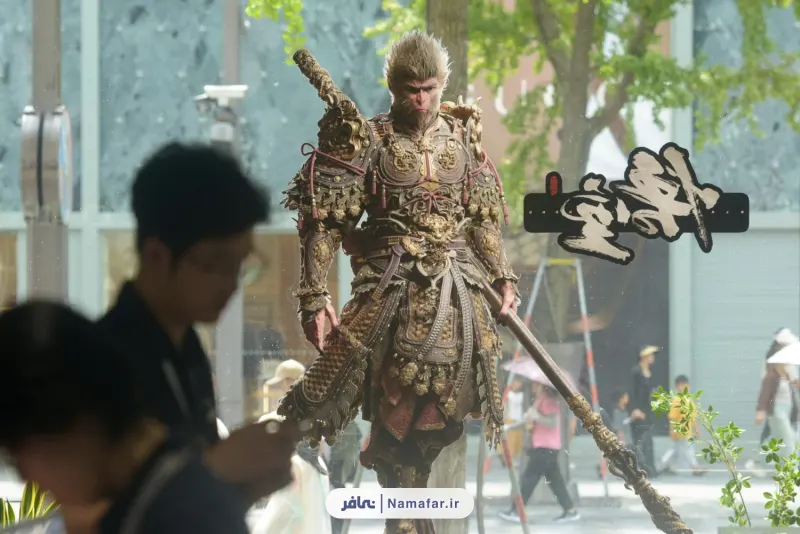
In recent years, despite the remarkable growth of the games industry in China, the government has continued to impose restrictions. One of the latest measures took place in 2021, which seriously limited online play hours for people under 18 and reduced them to three hours a week. These decisions indicate the government's concern about video game addiction and their negative effects on the younger generation. Despite these challenges, China's video game industry has been able to consolidate its position in the global market by focusing on online and mobile games, using creative business models, and expanding the production of local content. As a result, China has today become one of the world's largest and fastest-growing video game markets.
One of the important developments in China's games industry is the turn toward new revenue models. While in the past many Chinese online games generated revenue only on the basis of in-app payments, Chinese free-to-play games have now been able to become a model for other games worldwide. In particular, successes such as Genshin Impact and Honor of Kings have shown that Chinese games can compete on a global scale with console and major games. These games, with high graphics, engaging storytelling, and creative revenue models, have attracted the attention of gamers worldwide and have been able to achieve major successes in various markets, including the United States and Europe.
Overview of China's games industry
China's video game industry, with the largest market in terms of number of players and the second most profitable video game market in the world, is considered one of the main players in this industry. In 2023, China, with 668 million active gamers, earned revenue equivalent to 42.6 billion US dollars from this sector. These figures indicate China's position as a superpower in the games industry. Forecasts indicate that by 2027, this market will reach 56.7 billion dollars and the number of its users will increase to 730 million people. Such growth clearly shows that China's games market is still expanding and that there are many opportunities for investment and innovation in this field. In this context, the game company Tencent, China's technology and games giant, with revenue that in 2023 reached 7.4 billion dollars, ranks at the top not only inside China but also globally. According to Newzoo's global ranking reports, Tencent has been able to take a major share of the online games market. By contrast, NetEase, another large Chinese company, with revenue of 2.8 billion dollars, has been placed in fifth position globally. These companies have a strong presence not only in China's domestic market but also in other parts of the world. In the first half of 2022, Tencent accounted for 44 percent of the total revenue of China's online games, and this company's domestic games revenue reached 24.5 billion dollars.
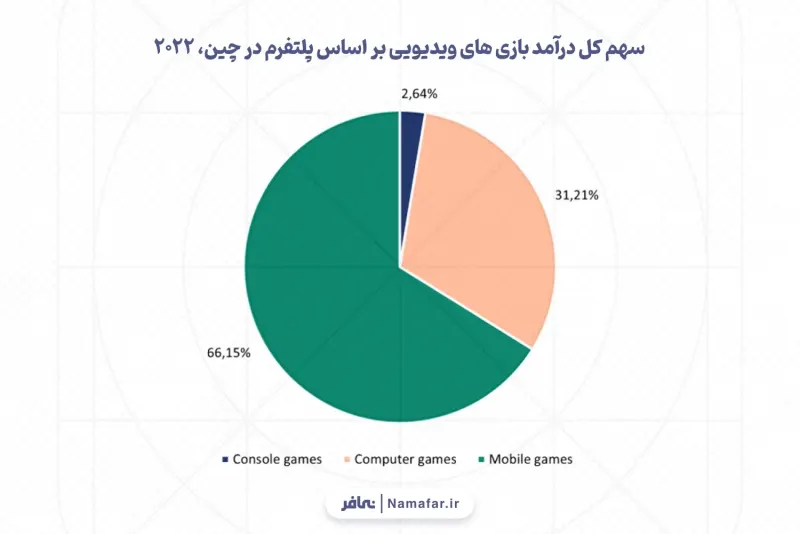
China's games market can be divided into three main segments: console games, computer games, and mobile games. In this breakdown, console games have the smallest share, with revenue that in 2022 reached 1.2 billion dollars. Computer games rank second and, with revenue equivalent to 14.2 billion dollars, have accounted for a substantial share of the market. But without a doubt, mobile games stand at the top of this list and are recognized as the strongest segment of China's market. The value of China's mobile games market in 2022 was equivalent to 30.1 billion dollars, which accounts for 47 percent of global mobile games revenue.
These data not only show the economic dimensions of the games industry in China, but also make clear this country's importance as one of the world's largest producers and consumers of video games. With the growing market and the greater dominance of Chinese companies over mobile and online games, China has become one of the most important global players in this industry.
China's foreign investments in the global games industry
In recent years, China has seen significant growth in foreign investments in the video game industry. These investments have mainly been made by the two Chinese giants Tencent and NetEase and have strongly affected global markets. Tencent, as the world's largest game development company, has purchased substantial stakes in various game development studios around the world. In 2022 this company signed 27 foreign contracts worth 3 billion dollars, an amount that was substantially more than its domestic investments in the same year. Also, Tencent's share of revenue from international games markets rose from 10 percent in 2019 to 25 percent in 2022, indicating a change in this company's strategy toward global expansion.
Chinese games, especially in recent years, have attracted a great deal of attention abroad. According to industry reports, sales of games made in China in 2022 reached 17.3 billion dollars, which was a slight decrease relative to 18 billion dollars in 2021. Despite this decrease, however, the figures show that Tencent's investments in global markets are still increasing. This company is continually trying to obtain half of its games revenue from international markets, although in 2023 this company's revenue from global markets, with a 5.65 percent decrease, reached 16.3 billion dollars.
The new wave of Chinese free-to-play games and its effects on the global games industry
Since the release of Genshin Impact by the studio MiHoYo in 2020, the mobile games industry has undergone a dramatic transformation. This game, with the Free-to-Play revenue model described above, not only shifted the standard boundaries of mobile games, but also created a new attitude regarding the quality and potential of free mobile games. Genshin Impact was able, as a mobile game with quality similar to AAA console games, to attract many fans around the world. With stunning graphics, engaging gameplay, and a vast world to explore, this game went beyond ordinary mobile games and set a new benchmark for free-to-play games at the global level.
After the enormous success of Genshin Impact, MiHoYo continued by releasing similar games such as Honkai: Star Rail in 2023, and Zenless Zone Zero was also recently introduced. This trend has been followed not only by MiHoYo, but also by other Chinese studios. For example, the game Wuthering Waves, developed by the studio Kuro Games, registered more than 30 million players on the first day of release. This game too follows the successful formula of Genshin Impact and indicates that the wave of Chinese free-to-play games is continuing.
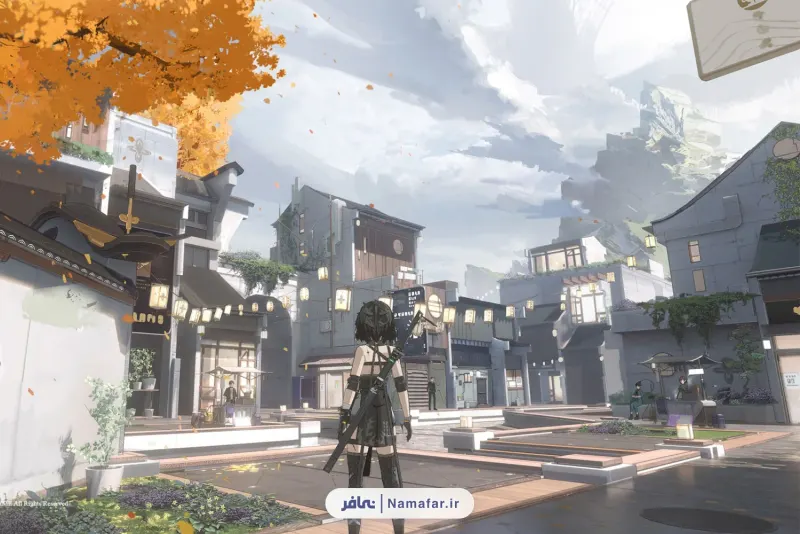
One of the important aspects of this new wave of Chinese games is the change in how gamers view revenue models. Games such as Genshin Impact are not only competitive with console games in terms of graphics and gameplay, but through the F2P model and in-app purchases they also provide players with a free experience. This has had major effects especially in markets such as China and other developing countries, where free-to-play games enjoy great popularity.
With the rising popularity of Chinese free-to-play games, we are seeing greater pressure on the console games industry. Why should one pay a cost for games such as GTA 6 or The Last of Us Part II, while free games of similar quality are readily available? This question is at present occupying the minds of many gamers. Especially in a situation where Chinese free-to-play games offer players facilities similar to paid games and generate revenue only, if the player wishes, through in-app purchases.
This change in the revenue model and the global successes of Chinese free-to-play games have not only come at the expense of paid and console games, but have also forced the global games industry to make fundamental changes in its strategies. For companies such as Electronic Arts and Activision Blizzard that still rely on the traditional model of selling paid games, competition with Chinese free-to-play games has become a serious challenge.
Overall, the new wave of Chinese free-to-play games has not only transformed the mobile games industry, but has also had extensive effects on console games and revenue models at the global level. These changes have caused game producers around the world to look especially at Chinese free-to-play games as a serious threat to their traditional models.
The Chinese government and the video game industry
The video game industry in China has always been under the influence of government interventions. In 2015, with the lifting of the console ban, China's games market saw significant growth, but concerns about inappropriate content and game addiction still remained. In 2018, the Chinese government temporarily halted the release of all new games, both domestic and foreign. This measure, whose official reasons were not announced, stemmed especially from the concerns of parents and Chinese officials about young people's addiction to video games. In addition, Chinese officials were seeking to limit the influence of large companies such as Tencent in the country's games market. After this pause, the government enacted new rules to restrict specific content in games. These rules included restrictions on the depiction of blood, sexual content, same-sex relationships, and even references to sensitive political issues such as "Hong Kong" or "Tibet." The aim of these policies was to keep the games industry in line with the ideological values of the Chinese Communist Party and to ensure that these games would not have a negative effect on society. In 2021, the Chinese government applied greater pressure on the games industry and limited adolescents' online play time. Also, criticism of large companies such as Tencent because of "making money from something that was being called the spiritual opium of the youth" intensified. These changes, especially in the first half of 2022 when the issuing of permits for new games was stopped, caused a 10.33 percent decrease in the revenue of China's games market. Although this pause was taken as a sign of reduced regulatory pressure, it showed that government oversight still dominates China's games industry. In response to these restrictions, many Chinese companies, especially in recent years, have turned to international markets. They use global online stores such as Steam and Epic Games Store to distribute their games. The regulatory pressures, however, still remain in place. For example, Steam was blocked in China and access to it is possible only through the use of a VPN.
The foreign investments of Chinese companies in the global games industry are not only aimed at earning revenue, but at the same time also help the Chinese government's strategic goals in expanding cultural and economic influence. The Chinese government uses the games industry as a tool for conveying its values and principles to other parts of the world and wants games content to be consistent with the country's cultural and social guidelines. This approach helps companies such as Tencent and NetEase, in addition to economic development, to compete at the global level and consolidate their presence as games-industry giants in global markets.
Western governments' concerns about China's investments in the video game industry
The main concern of Western countries about China's investments in the video game industry goes back to the close relations between large Chinese game companies and the Chinese government. These connections have led many analysts to believe that the Chinese government uses these companies as a tool for expanding its cultural and political influence in global markets. In this regard, the Chinese Communist Party (CCP) has introduced video games as an export tool for promoting Chinese culture.
This issue has caused concerns in Europe, because it is said that China uses its games industry to promote its ideological values at the global level. For example, some Chinese games companies, such as Tencent, have in the past voluntarily removed content that is "inappropriate" from political or cultural viewpoints in order to conform to China's government policies. These actions, although acceptable in China, have met with negative reactions in Western markets. In this regard, some analysts predict that this type of intervention could become a threat to the cultural independence and freedom of choice of audiences in Europe and other parts of the world.
On the other hand, political tensions between China and Western countries, especially in the recent period, have affected the video game industry. For example, after the increase in political pressures, Chinese investments in some European markets have faced restrictions. This is while companies such as Tencent are seeking to increase their investments in Europe and other parts of the world. But because of China's domestic and foreign policies, especially in the area of data collection and privacy, many European companies avoid cooperating with Chinese companies. In this regard, reports indicate that Chinese companies have faced numerous cultural and legal challenges in expanding their games in global markets. While these companies are moving rapidly to reach new markets, some analysts believe that this speed of growth could potentially be a threat to transparency and privacy laws in Western countries. In the end, despite these challenges, it cannot be denied that China's games industry is growing significantly and has many opportunities for development. While there are concerns about China's political and cultural effects at the global level, Chinese investments in the games industry have still remained a profitable and attractive sector for many Western countries. Especially in Europe, where Chinese companies are seeking to enter new markets, these investments can be counted as an economic and commercial opportunity for this continent.
Conclusion
China's video game industry has become one of the main and influential players at the global level. By combining advanced technology, continuous innovation, and a vast population, this industry has been able to grow rapidly and consolidate its position in the global market. At present, China holds the largest video game market in terms of revenue, and prominent companies such as Tencent and NetEase, by producing and releasing mobile and online games, have significantly affected industry trends.
One of the key features of China's games industry is the remarkable growth of innovative revenue models such as Free-to-Play, which have become popular especially in multiplayer online and mobile games. These changes, especially in domestic markets, have been able to attract large audiences and introduce new models for games worldwide.
Even so, China's games industry faces challenges such as government restrictions, cultural concerns, and restrictive rules on games content. From 2018 onward, the Chinese government, by imposing stricter rules for issuing permits for new games, has exercised greater oversight of this industry. In the future, China's video game industry is expected to expand further in international markets, especially in the area of mobile games and new technologies such as VR and AR. With further advances in artificial intelligence and online social interactions, China will be able to play a more prominent role in determining the future of global video games.
Machine-translated from Persian by Namafar; the Persian original is authoritative. Read the original in Persian