With the lifting of COVID restrictions, policymakers in the world's tourism field have sought to make the most of existing capacities in order to recapture former markets and gain a share of new markets. Miyuki Yanagi, in the article "Reconsideration of Japan's Tourism Innovation Characteristics," has sought to identify, formulate and introduce the initiatives used in this country. In such a way that they can also be usable and inspiring for other places and countries.
The impact of tourism on Japan's economy
To correctly understand the effectiveness of Japan's programs and innovations in boosting the tourism industry, it is better to consider spending and economic effects up to before the COVID-19 pandemic (2019). Between 2013 and 2019 there was a clear rise in spending, and the total value of Japan's tourism spending went from 22.8 trillion yen to 27.9 trillion yen, which indicates this industry's success in attracting more spending from international and domestic visitors.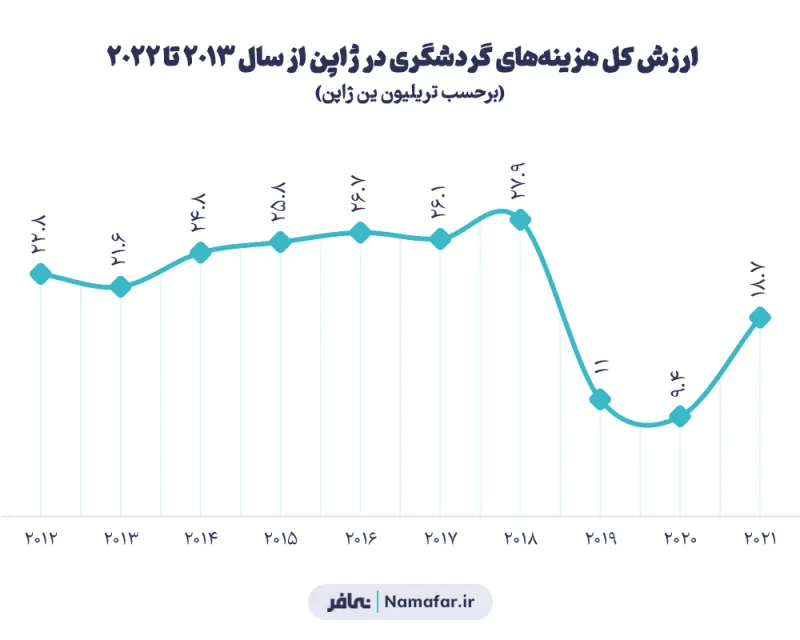
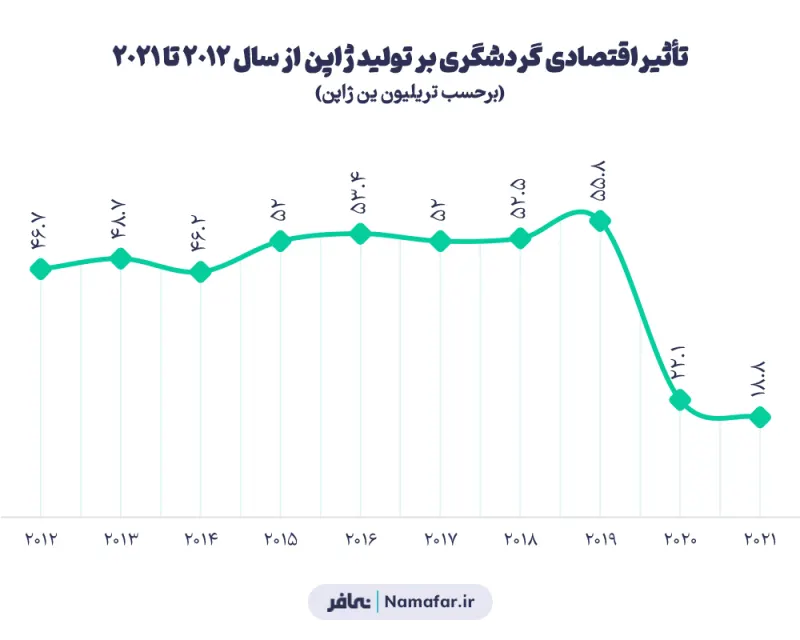
In 2019, Japan's tourism contributed more than 55 trillion yen to this country's output, a considerable figure. The important point is an increase of more than 3 trillion yen in this figure compared with 2018. A matter that indicates the upward trend of tourism revenues before COVID restrictions.
Jobs for the people of the Land of the Rising Sun; the yield of tourism
At the global level, tourism has a high share in job creation. Before the COVID-19 pandemic, 10.3 percent of all jobs and 25 percent of the world's new jobs were related to this field. In Japan, too, this industry had a high impact on employment. In 2019, 4.5 million Japanese were employed in tourism-related sectors. Also, an impact on half a million new jobs over a seven-year period (2019–2012) is confirmation of the effectiveness of Japan's tourism industry in job creation.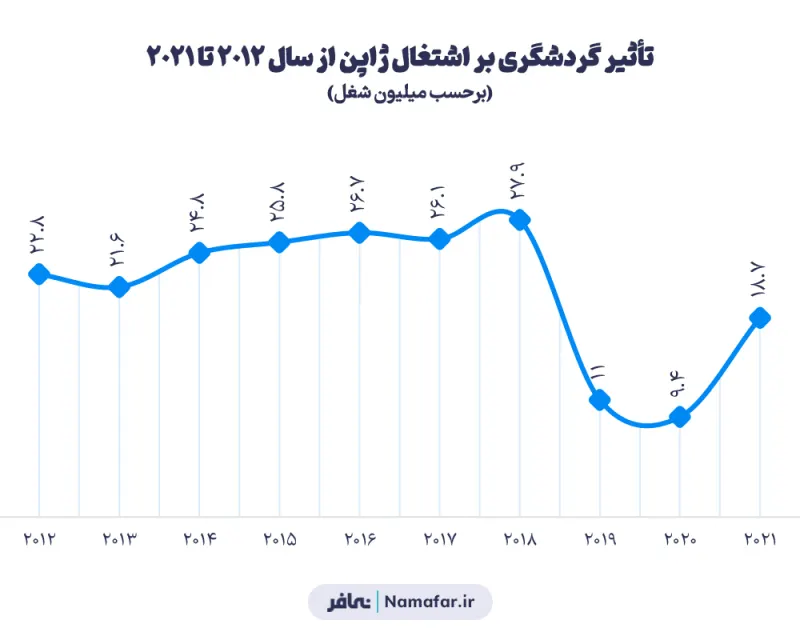
Fivefold growth of foreign tourists
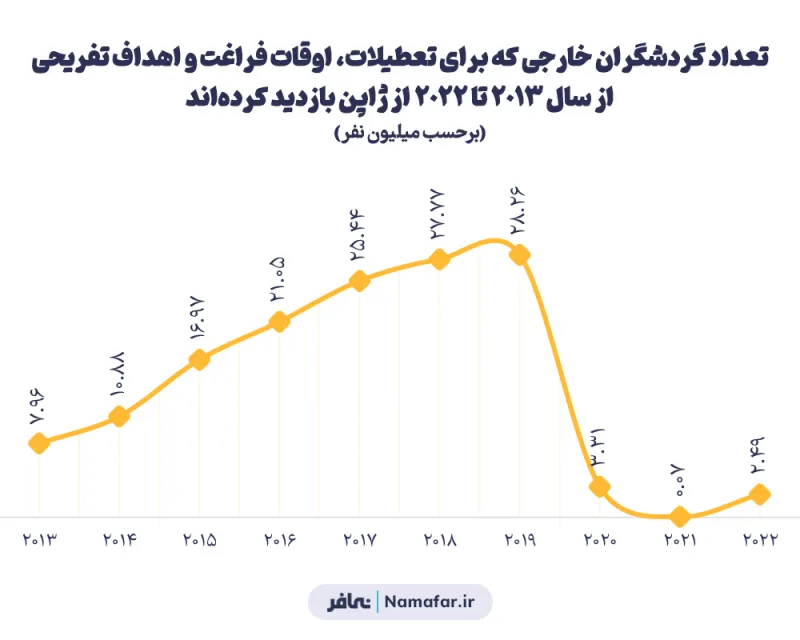
The number of inbound foreign tourists to Japan, over a 14-year period, was accompanied by almost 5-fold growth. This number went from 6.73 million people in 2005 to 31.88 million people in 2019. After a sinusoidal trend in the early years, from 2012 the number of inbound tourists (until the outbreak of the pandemic crisis) was always on an upward path. On average, 80 percent of this figure related to travelers who chose Japan for holidays and recreational purposes. Also, this segment's share rose from 75 percent in 2013 to 89 percent in 2019. A matter that indicates the high capacity of this country's recreational attractions and also the Japanese success in attracting their target audience.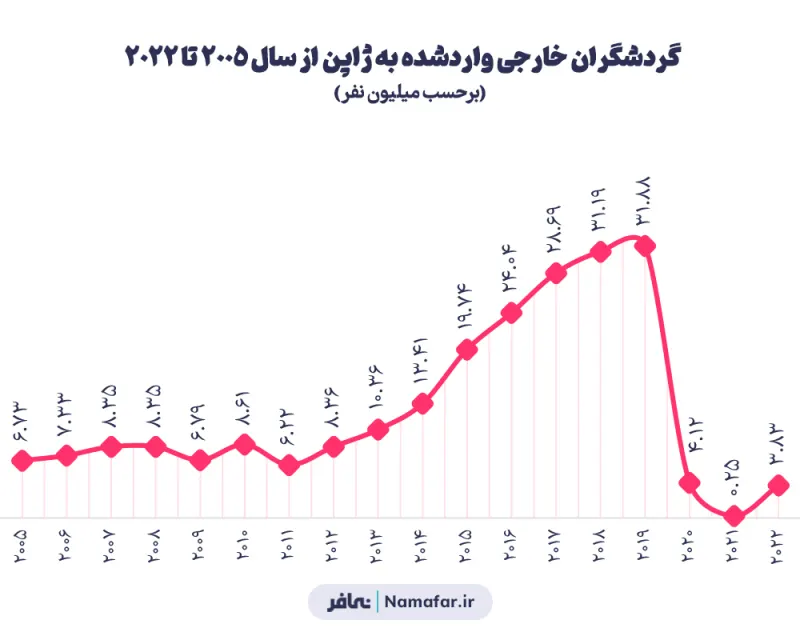
Classification of Japan's tourism resources
Japan's tourism resources are divided into two types, natural and cultural. Natural resources encompass everything from stunning landscapes to distinctive flora and fauna. While cultural resources include the country's historical, economic and regional features. These resources are classified at five levels that range from "Special Class A" to "Class D". The first level relates to places of unique global importance, and the last level covers small places with local use. This classification makes it possible to adopt a targeted and strategic approach to tourism development.
Innovation models in Japan's tourism industry
The success of Japan's initiatives in the tourism industry depends on the diversity of its innovation models. These models present Japan's rich cultural and historical heritage as dynamic and evolving destinations.1. Resource redefinition model
This approach simply represents existing resources using reinforced messages. For example, the inscription of Mount Fuji on the World Heritage List in 2013 built a fresh image for a well-known element and significantly increased its popularity. This model has the best effectiveness in resources classified in Class A; where a light and cost-effective investment draws tourists toward it.2. Exploration and reconstruction model
The exploration and reconstruction model, which is often accompanied by extensive reconstructions, examines cultural backgrounds and narratives. A successful example of implementing this model relates to the Ginzan Silver Mine. A place that had remained abandoned for years. Until in 2007 CE, UNESCO recognized it as World Heritage. The revival of this site has illuminated Japan's historical role in the global trade supply chain and industrial development.3. Guided model
Using this model, Japan treats phenomena such as cherry blossoms and hot springs as distinctive cultural resources and creates tourism destinations around them. In the guided model, tourists not only experience local tourism resources; they also grasp indigenous and local cultural features. As a result, the ground is prepared for the development of cultural tourism.4. Creative model
Japan also has a distinctive style in merging past and future in innovative places. A matter that is a hallmark of the creative model. For example, anime creators embed aesthetic and narrative cultural signs within stories. Then places are provided that allow fans to immerse themselves in imaginary worlds. This type creates high-value-added resources. For that reason, it has become a strategic choice for the development of Japan's tourism economy.5. Value transformation model
Value transformation (conversion) includes strengthening the original functions and image of tourism resources, in order to exploit the potential of hidden values. As a successful example, converting Otaru Canal into a historic tourist attraction emphasizes the power of adaptive reuse. This model ensures that even seemingly ordinary places can, through the addition of strategic value, be turned into important tourist attractions. By discovering hidden values in various places, Japan offers visitors unexpected and richer experiences.6. Distinctive neighborhoods model
The distinctive neighborhoods model integrates cultural identity in iconic neighborhoods. Preserving old buildings in a modern fabric creates a unique combination of tradition and modernity. For example, while the Sensoji Temple complex has preserved its old buildings, planners have introduced creative shops that have made this place more attractive to young people. This has caused an ancient religious site to appear like a modern shopping center.7. Distinctive theme park model
The development of distinctive theme parks revolves around particular cultural subjects and offers immersive experiences. In this model, the Japanese accompany their cultural narratives with artificial landscapes. Two excellent examples in this field are Edo Wonderland and Tokyo Disneyland. These parks have become a concrete embodiment of Japan's civilizational richness and allow visitors to step into various aspects of this country's culture.
Conclusion
The common feature of all seven of Japan's initiative models is reliance on the concept of "place-based innovation in tourism." This concept refers to initiatives that are designed and implemented in line with the particular local context of a tourism destination. Place-based innovation rejects adopting identical approaches for different destinations or copying one region's innovation models in other regions. Instead, it recommends that dedicated innovations be designed and applied for each place that encompass that place's particular needs, subtleties and natural and cultural necessities.The important lesson of Japan's experience is that attracting tourists does not require eliminating indigenous identities and local attractions; rather, cultural subtleties should be considered as the main infrastructure. By regularly evaluating approaches and adjusting them toward achieving strategic goals, other countries too can implement these renewals and benefit from their economic advantages.
Machine-translated from Persian by Namafar; the Persian original is authoritative. Read the original in Persian