The holding of the 2023 AFC Asian Cup football tournament in Qatar has reached its middle days. Aside from whether you have been running in step with the Iranian cheetahs or not, let us take a look at Qatar. But not at its football team—at Qatar's tourism and sports tourism, which has turned it into one of the world's sports tourism hubs. Truly, if I were in the place of a Qatari, it would not have been important to me that the maroon-wearers were quickly eliminated from the 2022 World Cup. Beyond these I would have been thinking about my country's tourism industry, which is shining.
Now perhaps the question has arisen for you: so what has Qatar done in the field of sports tourism and where in the world is it? If I say it simply and briefly, Qatar is at the peak of the world's sports tourism. Surely if you too, like the writer, have not had the fortune of traveling to Qatar in the past year, through your circle of connections (on social media) you see the flood of travel to Qatar to watch the Asian Cup football matches. Now the fact is that football is only part of Qatar's ambitious project to develop sports tourism, and events such as the Handball World Championship and so on have also drawn many travelers from all over the world to the country of Qatar. But beyond these definitions and descriptions, let us take a data-driven and research look at Qatar's sports tourism industry and reread and study the article “Sports brands and tourism: unexpected perspectives of mutual development,” written by Tiansha Ka.

Types of sports tourism; getting both benefits
The definition of sports tourism means the connecting link of the two industries of tourism and sport, which allows travelers and spectators to watch professional competitions such as the FIFA World Cup, tennis, Formula One and so on, and alongside that or separately to engage in sport and recreation. So it appears that tourism and sports tourism can be defined at two macro and micro levels. However, this important point must be kept in mind that types of sports tourism are a combination of politics, culture and the economy that require appropriate infrastructure and long-term strategic plans.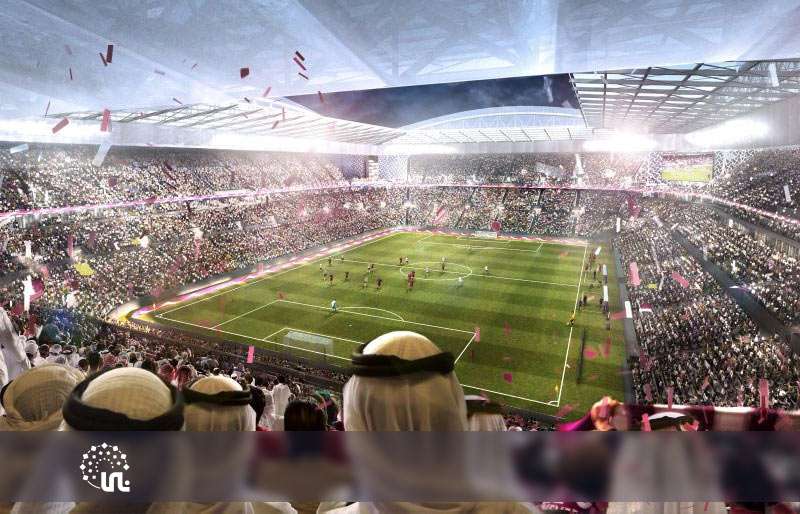
Challenges of sports tourism and Qatar's actions
Although the field of sports tourism is an astonishing and satisfying activity that raises the level of material and spiritual welfare of societies and enriches cultural diversity and exchange, it is also accompanied by challenges. One of the main challenges is environmental issues. Sports tourism activities, like other large events, often because of extensive infrastructure needs have large environmental effects, and there are concerns around them about climate interventions, damage to the local ecosystem and high energy consumption. The need for appropriate tourism products and the integration of the supply chain of tourists' needs is another important matter that requires serious attention. To confront these problems, Qatar has used new and creative solutions. The construction of Qatar's environmentally compatible stadiums such as Stadium 974, which was built from 974 containers and was dismantled after the World Cup, is an example of this. They want, by 2030, to obtain 20 percent of the country's total energy from renewable energies and have committed to reducing greenhouse gases. Also the development of tourism infrastructure in Qatar, such as the construction of 180 hotels by 2023 and its continuation with 50 other hotels under construction, the expansion of Doha International Airport, the construction and renovation of eight international stadiums and Qatar's most modern stadium, the use of three advanced metro lines and so on, are part of the massive project to develop Qatar's sports tourism industry.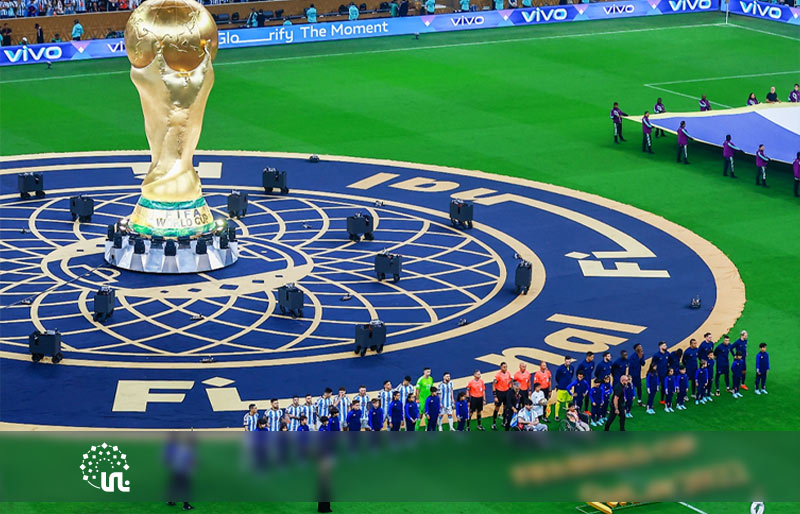
Qatar's cooperation with sports brands to develop sports tourism
The holding of the Qatar World Cup is a good example of the cooperation of sports brands with countries that host sporting events in order to earn revenue and generate wealth. On the one hand, the world's reputable sports brands, with their financial support for advertising or participation in sports projects, bring significant revenue to the host country. For example, the Nike brand was the official supplier of the kits of Qatar's national team and of the World Cup organizers and implementing teams. While the Adidas company was the official supplier of the World Cup balls. On the other hand, the World Cup matches are followed and watched by millions of people. According to the report of Qatar's Planning and Statistics Organization, the 2022 World Cup in Qatar, the number of foreign tourists who traveled to Qatar to watch the World Cup was 1.5 million people, which is a suitable opportunity for advertising sports and non-sports brands. Qatar's cooperation with famous sports brands and infrastructure development has also continued in the 2023 AFC Asian Cup football tournament.The increase in Qatar's revenue and foreign investment through sports tourism
An examination of FIFA's revenue from 2019 to 2022 and its comparison with the period 2015 to 2018 shows that the revenue of the body in charge of football has reached 7.5 billion dollars and FIFA's revenue has increased by 1.1 billion dollars (18 percent) relative to the years 2015 to 2018. These statistics well prove Qatar's success in hosting the World Cup and, at the macro level, in the sports tourism development project. Also the number and growth rate of foreign direct investment projects in Qatar have increased and have gone from 24 projects with a growth rate of 20.8 percent in 2019 to 143 projects with a growth rate of 34.9 percent in 2022. Qatar has begun a large program in line with its National Vision 2030 for the construction and renovation of Qatar's hotels, improving transport, building sports infrastructure and so on, and this investment is not only a foundation and support for the World Cup and the Asian Cup, but a lasting legacy for Qatar's tourism industry.
Tourism in Qatar, an attractive travel destination and a capable host
In addition to the economic benefits, the football World Cup, handball, the AFC Asian Cup and so on are an opportunity to create a distinctive and favorable image of the country of Qatar. In these events, whether through sports tourism or through the media, the culture, tradition, hospitality, dress and identity of Qataris (and the Arab world) are constructed, and they are decontextualized from unrealistic representations in the historical past. Holding cultural festivals in Qatar, attention to the cultural indicators of other countries (even countries that have not been and are not present in the World Cup and the Asian Cup) and cultural exchange are another part of the Qataris' actions during the holding of these large events. Qatar is now an important actor in the sports industry, the economy and sports tourism and has shown off its capacities as a capable and attractive host to the world.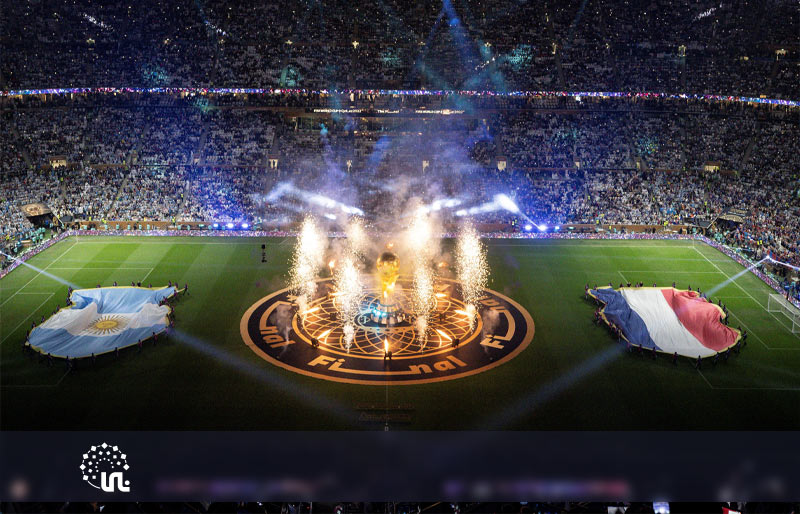
Nobody throws stones at a standing train
From the Germans' protest on the field of play, to the threats of not coming to Qatar by Norway, which in the end could not qualify for the 2022 World Cup, Qatar has been accused of human rights violations and exploitation of non-native workers. In addition, exhausting work in the land of sand and Qatar's scorching weather has often been followed by people's concern about the condition of workers. But these controversies have gradually faded under the shadow of the Qataris' worthy hosting, and they have been able to manage this issue well by changing and enacting laws such as the prohibition of any work from 10 to 15:30, implementing a law protecting workers' rights with the requirement of electronic payment of wages, and establishing a workers' insurance foundation. This reality must be accepted that Qatar has now become an always-ready option for the world's sports authorities. This important matter, in their own words, would never have been possible without work, participation and self-sacrifice.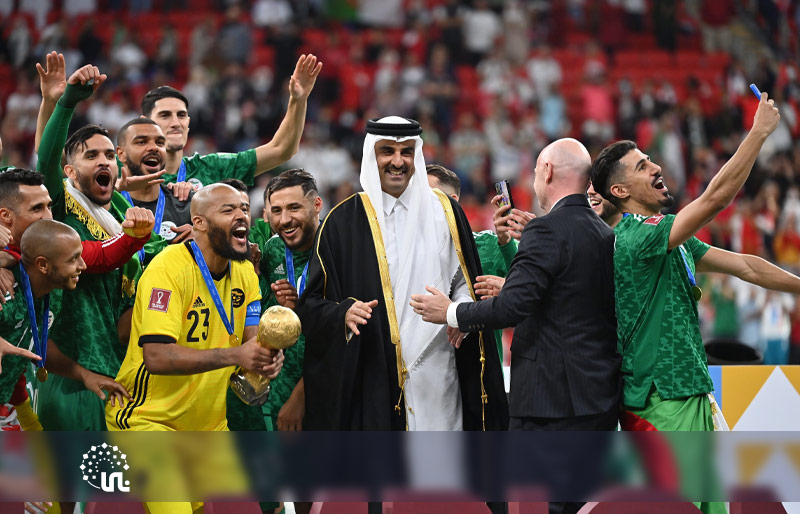
Creating favorable conditions for people with disabilities in Qatar's stadiums
In Qatar's stadiums a suitable and barrier-free environment has been provided for people with disabilities and reduced ability in order to improve the experience of travel and watching sporting competitions for them. Creating barrier-free environments on transit routes and in Qatar's stadiums, making available assistive services such as wheelchairs and golf carts for movement, and training more than 3,500 staff in dealing with and living with these people, have been only part of Qatar's actions to develop sports tourism for people with reduced ability.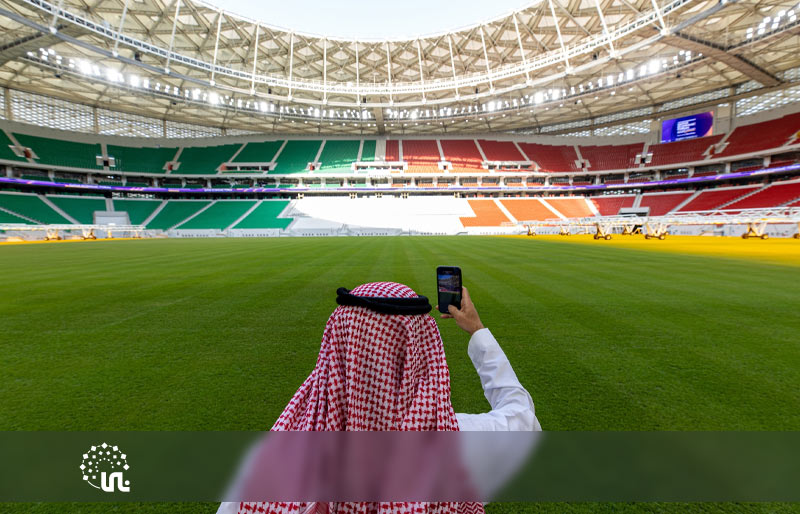
Conclusion
Qatar, which is a country reliant on oil and capital, with the drafting of National Vision 2030, has for several years been moving toward sustainable development. Success in holding the 2022 World Cup and the 2023 AFC Asian Cup football tournament are a good example of Qatar's sports tourism. These large world sporting events have been implemented on the basis of five indicators of the development of tourism, society, the economy, the environment and governance and in accordance with their National Vision 2030. Such that now the event of the 2022 Qatar World Cup is an instructive model of sports tourism at the global level.Namafar invites you to read the post Saudi Arabia preparing to host the 2034 World Cup .
Machine-translated from Persian by Namafar; the Persian original is authoritative. Read the original in Persian