When my life was nothing
nothing but the tick-tock of the wall clock, I realized
I must, I must, I must
love madly
someone who is like no one…
The poet of this beautiful piece is Forugh Farrokhzad. A piece in which Forugh has displayed her genius. In unison with the repeating sound of the clock's hands, she keeps telling herself she must, must, must fall in love. In Forugh's time, when there was nothing in a person's life, only the sound of the wall clock remained. That is, when a person had no patience even for television and radio, they would probably sit and stare at the wall and, from the sheer silence, fall into unison with the sound of the clock's hands. But today, if someone has patience for nothing, they probably still have patience for scrolling posts up and down on social media. They in fact, to escape boredom and tormenting tedium, quickly take refuge in TikTok—but not the tick-tock of a clock. They turn to an endless cycle of short videos. They often tolerate videos only for the first few seconds; if they are drawn in, they continue to the end and then go on to the next videos. They stay in this cycle until they become tired, or the feeling of wasted time torments them beyond measure.
TikTokification
Addiction-like, endless immersion in TikTok videos has become so acute that some have set out to counter it. For example, people who are madly skipping through videos may come upon a post that shows a highly attractive visual situation. For instance, the moment of bringing ice close to a piece of molten iron. When the piece of ice comes fully close to the molten iron and the user is completely waiting to see what the ice's reaction to the molten iron will be, suddenly the video cuts off and questions of this kind appear on the screen: "How many hours have you been sitting with your phone? Which video is this? Do you even remember what you saw in the last few videos?" That is when a mountain of guilt crashes down on the user's head and their overdue tasks parade one after another before their eyes. When this happens two or three times, the user may lose their sensitivity, and when they reach this kind of nudge video, they go on to the next video without any particular guilt. People do not necessarily have to go to the TikTok social network in order to immerse themselves in these videos and experience drowning in this cycle. They can also have access to this media medium on Instagram, YouTube, and other platforms. Some call this content convergence TikTokification.
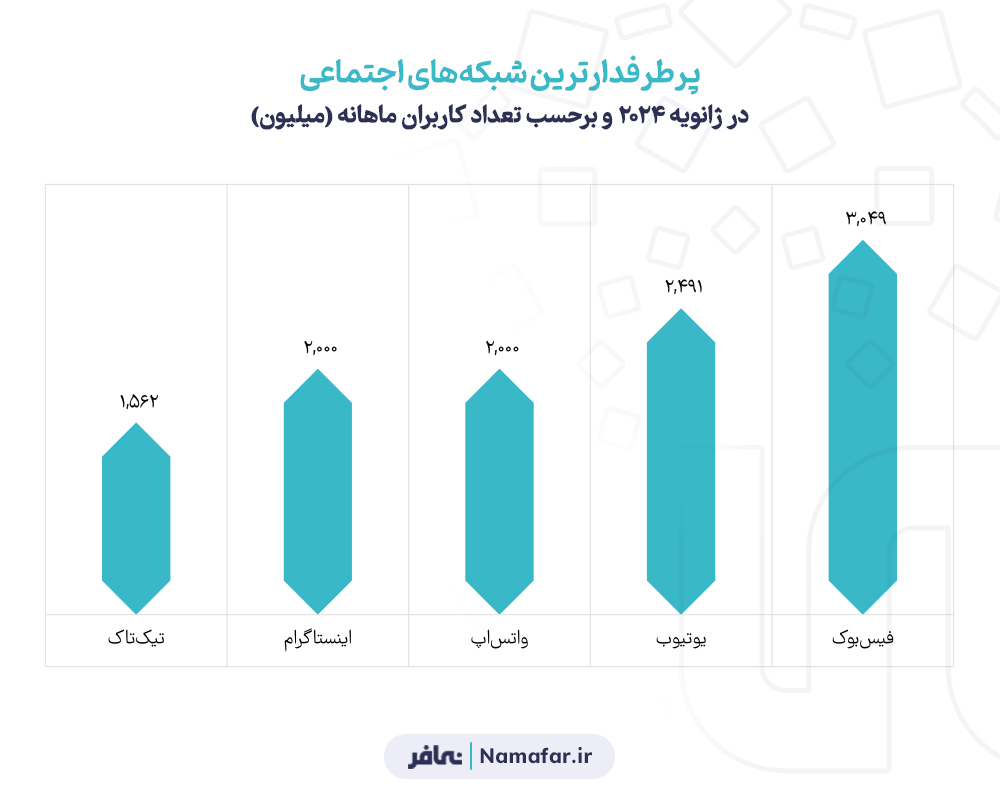
The TikTok platform presented a style of content that other social media, to protect their share of audiences, quickly added to their features. Gradually this style of content, which is called short videos, became the main medium of content in the world of social networks. The TikTok app was introduced in 2016; by 2020 Instagram had added the Reels option and YouTube the Shorts option. These two platforms are among the most popular social networks in the world. YouTube has the most users among video media and is the second social network in the world by audience size. Instagram also ranks fourth in this respect. This means TikTok had introduced a medium that threatened the world's largest platforms. If they did not want to fall behind TikTok, they had to become TikTok-like. The giants, from the spread of the TikTok social network, were hearing the tick-tock of their own decline. It reached the point that even a text-based platform such as X (formerly Twitter) also created the capability of watching these short videos without interruption. Snapchat and Facebook were other platforms that moved toward this kind of video.
Now TikTok had not only itself become widespread; it had also made its own medium and media form widespread.
Features of the TikTok app: fast, fluid, simple
What were the characteristics of this new medium? TikTok-style short videos are fully suited to smartphones, cut vertically and relatively narrow. Their duration is also very short. Users try to keep the videos they make from reaching one minute. In the TikTok app users can add diverse audio and visual effects to their videos. These short TikTok videos are the best response to the vast multitude of users who are addicted to their smartphones. More than 90 percent of the world's digital population have a smartphone. To use short videos there is no need to read text, nor must much time be spent on a piece of content, nor is the image incompatible with the phone's display. Everything is in the service of capturing the greatest amount of attention. These TikTok videos are fast, fluid, and simple. In such a way that they trap the audience in a whirlpool of video. They must be engaging and short. These videos, through the mechanism of going viral or spreading on social networks, can be seen by many people. The TikTok medium and TikTok-style content have a great fit with Generation Z and their interaction with social networks. Just as most content producers on this social network are young people aged 18 to 24.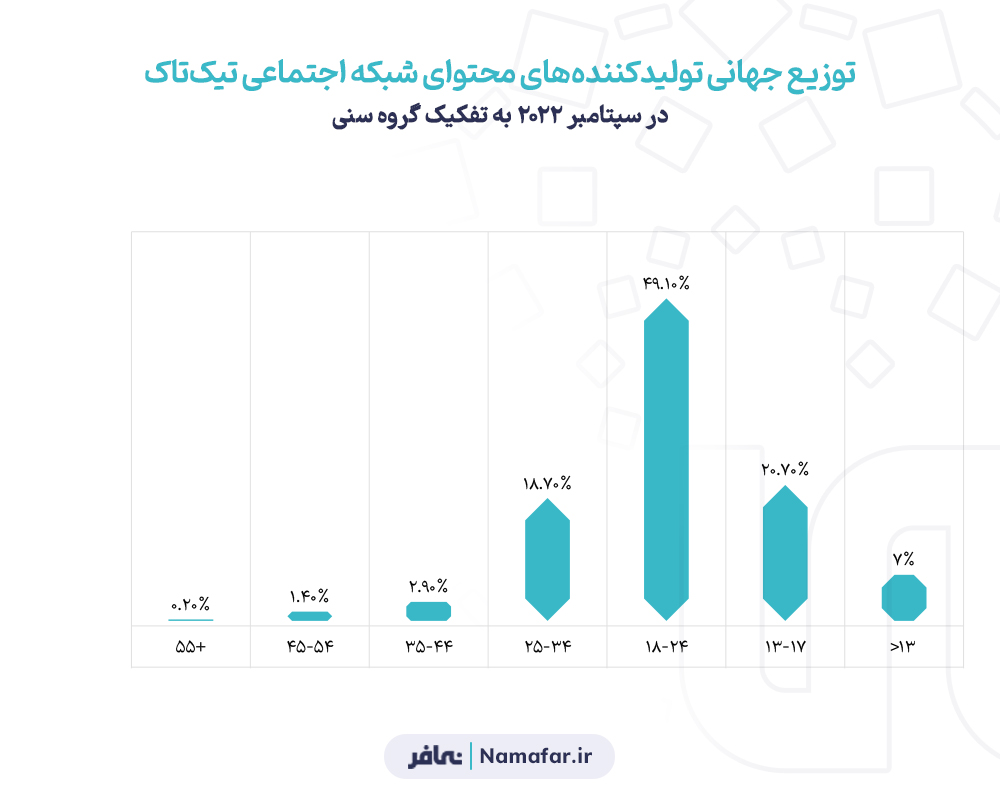
The power of short videos on social networks
The TikTok app is not very prevalent in Iran; but we have had the experience of TikTok-style short videos on Instagram. These videos can stop us thinking. From tormenting and anxiety-inducing thoughts we flee toward these videos as a powerful narcotic; from sitting on the metro and looking at the walls of the car we take refuge in these videos; when we get bored at work we immediately open Insta; in the middle of studying, suddenly our hand as if involuntarily unlocks the phone's screen lock and has no destination but Instagram Explore. Sometimes we are astonished, because we were browsing X or Telegram or Bale but unawares find ourselves skipping through Reels videos. Instagram's powerful recommendation algorithm can also be seen as involved in our dependence on Reels in the Explore environment.These short videos seem to have been made for our age. An age in which the patience to read short and long texts has disappeared. Images are not as attractive as videos, and for watching long videos there is also not enough time or will. In such a period, the appetite for variety has reached its peak, and people do not give a piece of content much time to become absorbed in it. The TikTok medium is the product of a flawless analysis of the psyche and behavior of the citizens of the digital world in the twenty-first century.
The political roots of TikTokification
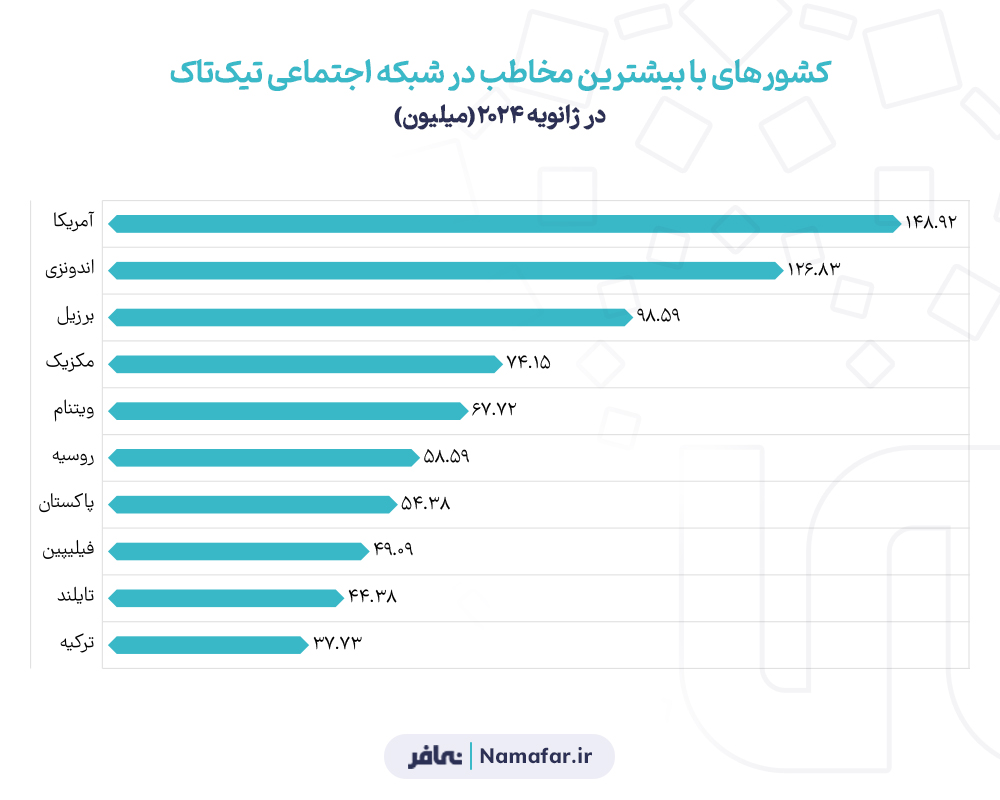
It is true that platforms naturally moved toward protecting their audiences and users and attached TikTok's short-video feature to their other features so that their market would not be harmed, but political and security conditions also required this. The TikTok app is a Chinese platform and was able, within a short time, to reach great popularity in the United States. This was a complete cyber defeat for America. Because for the first time a foreign platform, and from China at that, had gained access to a vast and valuable database of American society. America, owner of worldwide platforms and king of the social media arena, was now witnessing a very large disruption in the domain of the internet. The very rapid reaction of American platforms to Chinese TikTok can also be analyzed in this framework. America's internet governance system saw creating a substitute for it as the first step in countering TikTok in America. By 2020, the number of TikTok users in America had reached 40 million.It seems that the competition of a social network such as YouTube with TikTok cannot be analyzed with a purely market and economic view. Now in 2024, 52 percent of global internet users visit YouTube at least once a month. The number of YouTube's active users has reached 2 billion and 700 million, and 80 million people worldwide have purchased YouTube Premium subscriptions. Was YouTube, with this power, only worried about losing its market when it established YouTube Shorts? The possibility cannot be ruled out that creating the short-video feature in American apps has been a cyber defense against China. Even so, this wave of TikTokification could not seriously stop the growth of TikTok users even in America itself. In 2023 the number of American TikTok users reached 150 million. Growth of more than 100 million in only 3 years! For this reason America and the European Union created legal obstacles and restrictions for TikTok. Thus, in practice, installing TikTok in America and Europe is banned for many groups.
The success of YouTube Shorts | YouTube Shorts
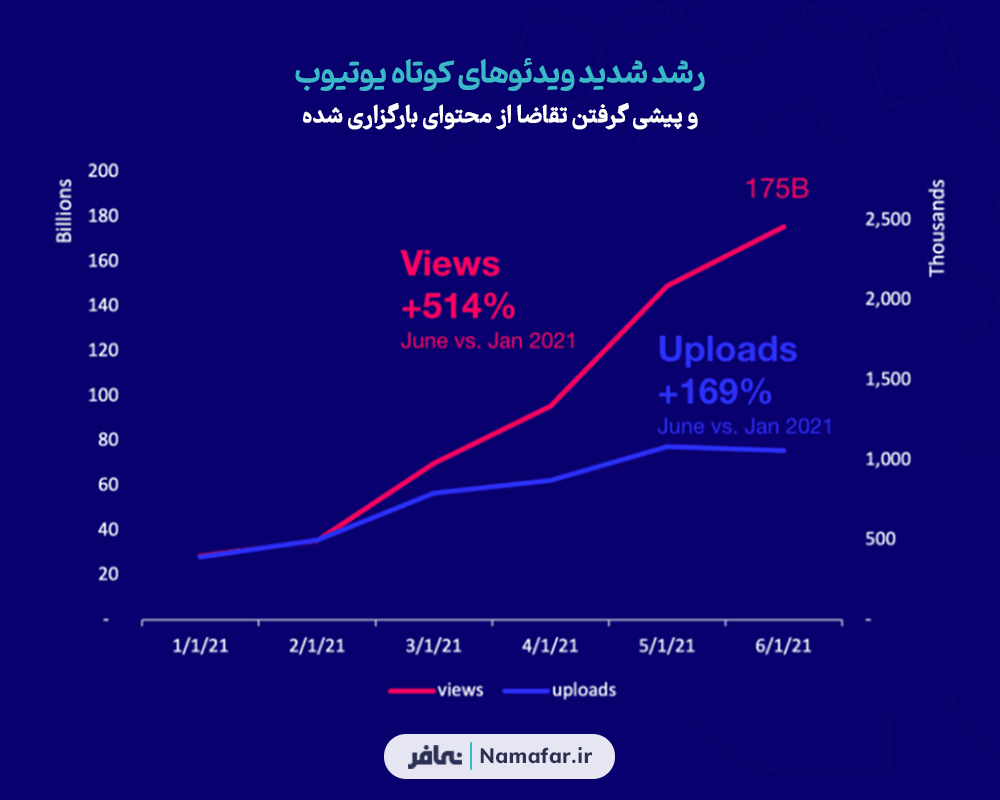
Although we said that the intention of American apps, and especially YouTube, in imitating TikTok was probably not only business; it cannot be denied that YouTube Shorts was well received by YouTube's global market. In 2020 the daily number of views of YouTube short videos reached 3.5 billion. This feature grows 135 percent annually and has 1.5 billion monthly users each month. YouTube Shorts owes its success in part to the Indian market. Because the use of TikTok is banned in India, and this provides the ground for increased activity of Instagram Reels and YouTube Shorts there. More than 25 percent of YouTube Shorts videos are made in India and about 23 percent in America. About one year after YouTube Shorts was established, demand for this content outstripped its supply!
Instagram Reels: TikTok's most important rival
In 2020, at the height of the COVID pandemic, the Instagram social network took a historic decision. Instagram was a photo platform. Gradually, with various limitations, it added the use of video to its features. At first Instagram videos had a one-minute time limit. They could also be seen only in the form of a post. After a while Instagram's IGTV feature was launched, in which one could watch video without a time limit and in a format other than the post format. As the name of this feature indicates, IGTV was a feature with a use similar to television and did not much find its place in Instagram's structure. Instagram, throughout these years, although it tried different forms of presenting video, remained a platform of images and photos and did not become a video platform. The establishment of Instagram Reels in 2020 was historic in this respect, that it altered Instagram's nature and almost turned it into a video platform. The time of the pandemic and lockdown was also the best time to create this feature on Insta. In August 2021, Instagram's business service announced that 91 percent of Insta users watch short videos at least once a week.Instagram's Reels feature on the verge of turning 4
Now in 2024, and while in August of this year the Reels feature reaches its fourth year, 2 billion and 350 million people are monthly active users of this feature, and every day on the Instagram and Facebook social networks, 200 billion Reels videos are played. In this year the total number of Instagram Reels will probably exceed one billion, and India is still the most important and largest Reels market.
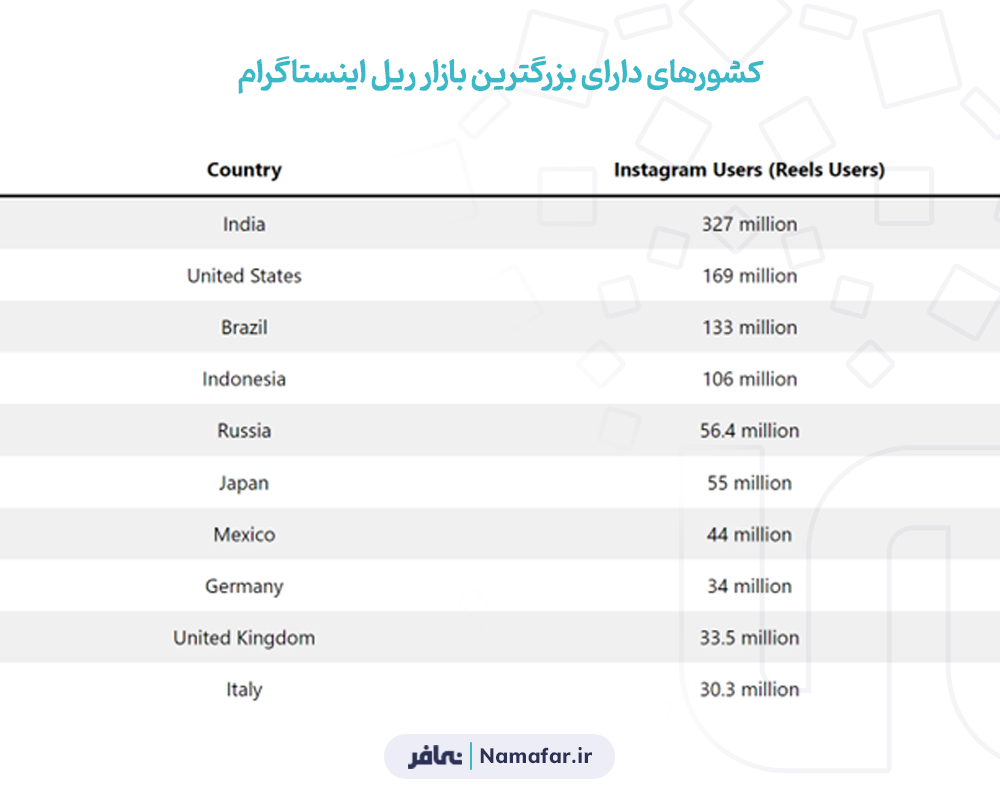
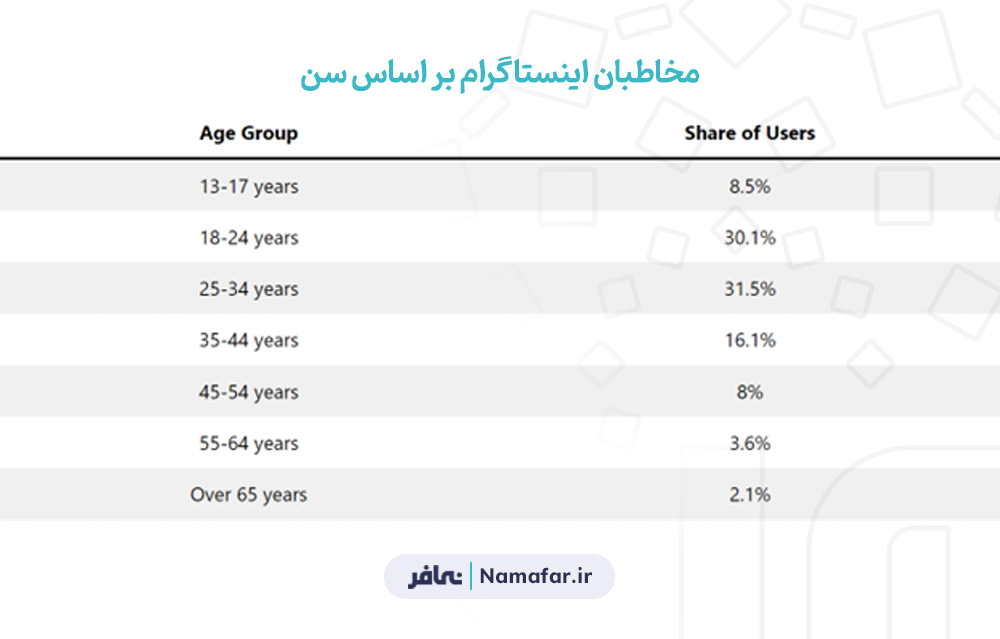
The noteworthy point here is that Instagram Reels took the short-video format out of the exclusive hold of Generation Z, that is the 18-to-24 age group who in our country are usually called the "eighties generation." The audience for Instagram Reels is more the 24-to-34-year-olds. This was a competitive advantage in the competition between Instagram and TikTok that engaged a broader group. Another interesting point is about Brazil. Brazil is considered the world's third-largest market for the Instagram and TikTok social networks.
TikTok's great revolution in content production
According to the claim of the website Upbeat, which is a marketing agency, 71 percent of content published on Instagram is photos, but videos are 3 times more engaging than photos in each post and create interaction with the user. On the basis of the overall result of all these data it can be concluded that short videos on social networks, as the newest format or medium or structure of visual content, have been able to become one of the most popular types of content on social media. The TikTok app was a platform that proved that with the right idea one can not only reach global users, but can even create a transformation in internet users' content consumption. This is how TikTok shifted the boundaries of a platform's success. Because it was not merely a new video medium; it was a novel content structure and medium. New content platforms create new content of their own, and more important than that, they make new human beings. Perhaps if Forugh Farrokhzad lived in our era she would compose her poem this way:When my life was nothing
nothing but damned TikTok, I realized
I must, I must, I must, I must, I must, I must...
Final word
The Chinese social network TikTok was established as a user-driven video medium in 2016. The success of this social platform was such that the number of TikTok users in America by 2020 was about 40 million users. This success caused large American social networks such as Instagram, YouTube, Facebook, Twitter, and Snapchat to also add TikTok-style short videos to their features. In addition to market necessities, the possibility of security and political considerations in creating a substitute for a highly popular Chinese platform is not ruled out. Among the most successful copies of TikTok, YouTube Shorts and Instagram Reels can be mentioned. YouTube Shorts has 1.5 billion monthly users each month, and the number of Instagram Reels in the current calendar year will probably exceed one billion. The ban on using TikTok in India has caused both short-video features on YouTube and Instagram to have their largest market in India. These measures could not entirely stop the growth of TikTok installs in the world and, in addition, caused the spread of a new content medium. In this way the TikTok app, besides itself becoming a pervasive and widely used platform in the world, also established its content medium in the world.Machine-translated from Persian by Namafar; the Persian original is authoritative. Read the original in Persian