If you are a game enthusiast you have probably heard the names of big games such as Super Mario (the mushroom-eater) and Sonic. The making of the first video game in Japan dates to 1978 (1356 Solar Hijri) with the name Space Invaders. At that time many of today's civilized countries were not familiar with advanced computer technologies. In those same years several game-making companies began their activity and some of them have today become giants of this industry; Nintendo, Sega, Sony, Konami and Namco are among these companies. Japan is among the leading countries in the game industry and games such as Super Mario, Sonic, The Legend of Zelda, Street Fighter and Resident Evil from the past to today have been an inspiration to game-makers around the world.
Japanese creativity in the gaming industry
Games that have been made by this Asian country often have strange stories. The manner of interaction and production of particular characters, the use of female characters and intelligent rules are among the hallmarks of these games. Perhaps part of this matter can be related to Japan's ancient civilization and traditional atmosphere. This country has experienced different empires and eras and has nurtured rich legends and very strong stories within itself. For this reason, many animations, video games and books have been born under the influence of this same atmosphere and have shone at the global level. In addition, Japan's nature too has had a great impact on the creation of these works, and inspiration from nature is evident in many of these works. The use of animal characters such as Sonic and Pokemon is also another example of this issue. Another part of this creativity stems from this country's traditional non-video games. Japan is among the countries that, before the birth of the video game industry, had a particular genius in designing individual and group games. Many of these games are played at school and in the street and at traditional festivals, and the use of this special capacity is another reason for the Japanese success today in the video game industry.
The emergence of gacha games
The game industry in Japan and many parts of Asia has a unique and undiscoverable existence (compared with the simpler and more integrated dynamics of games in Western countries). Mobile games have effects throughout the world, but specifically the emergence of gacha games in Japan is different from other regions. Gacha games tempt the player to spend real money in exchange for random rewards that differ in quality and value. Sometimes you may obtain something that is worth the price you have paid for it; but in most cases, the reward offered has very little value and the chance of winning in a gacha game is very low. The name gacha originates from a type of vending machine in Japan; the same device that in exchange for paying money (coins) sells chance toys. Today these games have become widely popular throughout the world. Many gacha games are extremely entertaining. Some types of gacha games require players to collect a complete set of prizes in order to continue the game. This matter forces the player to spend money in order to move forward in the game. One of the reasons for the popularity of gacha games is that incredible prizes appear easily attainable for players and it removes the skill that is usually necessary in a game to collect the best prizes. Undoubtedly the addictive and particular nature of gacha games has led to their widespread popularity and success.
Japanese companies' competition with video game giants
According to Statista statistics, in 2022 the three companies Sony, Microsoft and Nintendo, with 13, 8 and 7 percent respectively, together accounted for 29 percent of the share of the global game market. A noteworthy point is that Sony and Nintendo are two Japanese companies. Also in the field of the highest-earning game companies, the Japanese company Sony, with revenue of 4.38 billion dollars, after the Chinese company Tencent (with 7.56 billion dollars) was able to obtain the title of the second highest-earning game company worldwide in the first quarter of 2023. On the other hand it must be noted that many actors in the video game arena introduce this country as one of the capitals of the mobile game; because it has had notable successes in this field and has accounted for one of the highest-earning mobile game markets in the world. Also this country, in terms of consumer spending, after the United States and China occupies third place. On this basis it can be said that the industry in Japan is moving in a unique situation distinct from global trends under the title of Galapagos syndrome. This movement is a symbol for other domestic technological advances of this country such as flip phones before the smartphone revolution. Galapagos syndrome in Japan shows signs of globalization and is used to refer to the isolated development of a branch of a globally available product.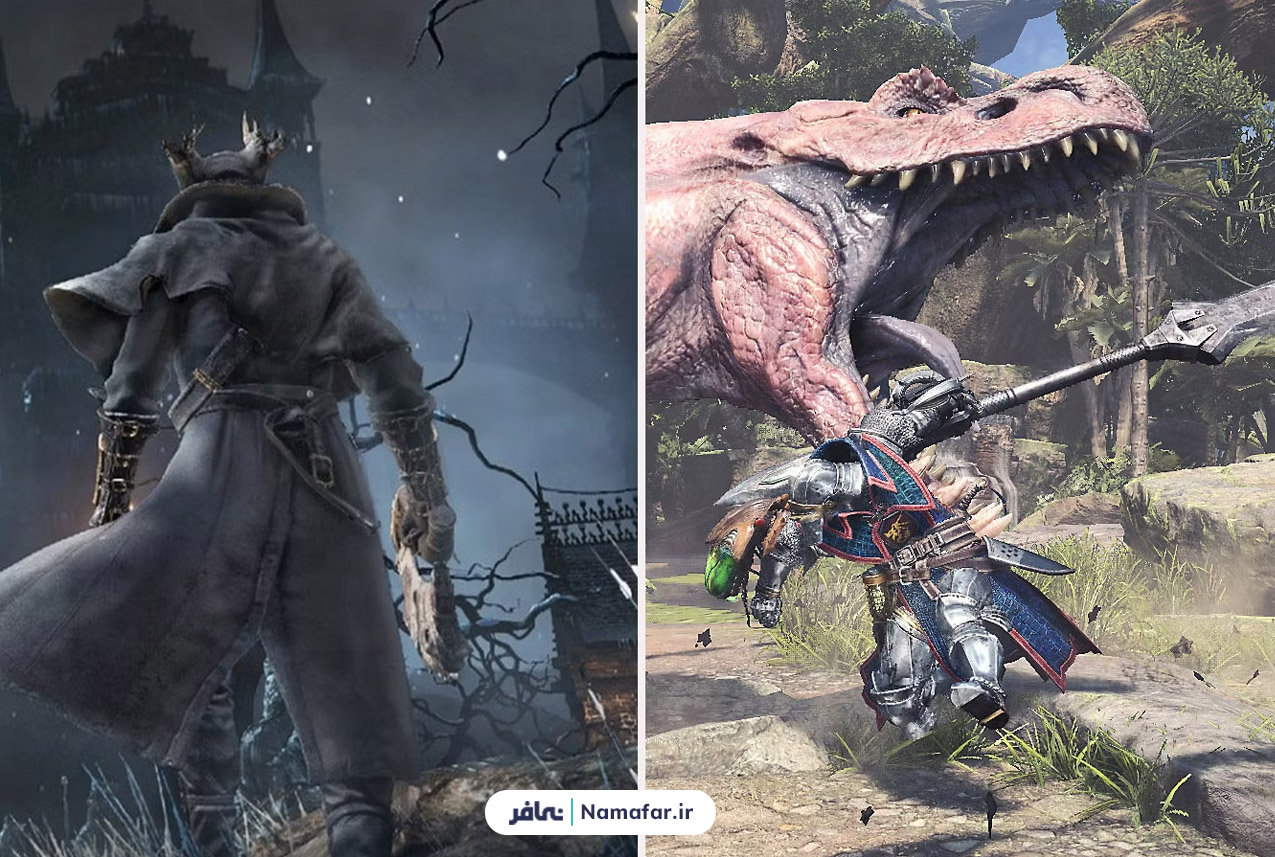
The decline of the video game industry in Japan: reasons
According to Dareng Kandra, one of the leading specialists in game market intelligence in the Asia and Middle East domain, in 2010 or 2015 almost all of the top 100 video games were made in Japan, but now Japanese gamers show greater reception of foreign (non-Japanese) games. Therefore looking at today's Japan market means looking at a market in flux. A market that, having Galapagos syndrome because of its connection with its popular culture, is becoming more international day by day and is accepting new experiences from more diverse platforms and developers. In the international market too, although Sony and Nintendo still have the first word in game consoles, overall video games have shifted toward smartphones. This is while ownership of the two main operating systems, namely Google's Android and Apple's iOS, belongs to America, and the production of games on this platform also has greater diversity. This matter has led to a relative weakening of Japan's dominance in the video game field. On the other hand, Microsoft's Xbox, in competition with Sony and Nintendo, has been able to bring part of the game-console market into America's grasp, and the ease of writing games for the Windows-based Xbox system has led to greater inclination of Western game-makers toward it. On the other hand, because of complex and extensive competition with various game-making companies especially Western companies and a focus on results-orientation, less risk is taken and less investment is made in unknown young forces, which has caused a decline in creativity in producing video games in Japan. The discovery of various genres over time and the reduction of game-makers' freedom of action is another point that must be noted; meaning that in the past, when computer games did not have much age, many interesting ideas still remained untouched, whereas today, with the release of a massive flood of games, rarely can a thought and idea and genre be found that has not previously occurred to someone. Because of the multiplicity of products made in existing genres, comparison of these products is also carried out more seriously than in the past. Inappropriate marketing and incorrect modeling and imitation of Western publishers and games are also among the other reasons for the relative decline of the video game industry in Japan. Of course some of the aforementioned defects are more or less also seen in the performance of non-Japanese companies and some Western companies active in the video game arena.
Final word
The video game industry in recent years has continually been growing, and a forecast of future trends also indicates the continuation of this upward trend. In this piece an attempt was made to review the history, advances and status of the video game industry in Japan as one of the leaders in this field. Based on the nature of this field, game consoles and the games themselves are two important sections in the video game domain. Japan in past decades has had important advances in both sections, and the production of various consoles and games has turned this country into one of the poles of the video game in the world. Although this country still ranks among the three powerful countries in the video game arena and is considered one of the main poles of this industry, factors such as globalization, the development of smartphone technology, extensive global competition and lower risk-taking, reduced creativity, saturation of various genres and a move toward incorrect imitation of Western games are factors that have damaged this standing and caused Japan's relative decline in this field. Given that the video game industry is one of the revenue-generating industries with culture-building and advertising capability at the national and international level, attention to the aforementioned factors can be of importance in the course of this important industry in our country Iran and the source of important effects.
Mohammad Ali Zakeri
Machine-translated from Persian by Namafar; the Persian original is authoritative. Read the original in Persian