Television broadcasting is a way of generating revenue for media and, on the other side, for sports companies and clubs, and it brings competition among television networks. On a global scale, usually more than 50 percent of the revenue of sports clubs, especially in football, is supplied through broadcasting rights. Television networks, too, by broadcasting these competitions, increase their audiences and attract more advertising, which leads to an increase in their revenue. This has created a mutually beneficial economic cycle for both sides (media and club).
As an example, the English Premier League recently concluded a contract with Sky and TNT Sports and reached an agreement with them. Under this agreement, the Premier League receives 6.7 billion pounds over four years. This contract takes effect from the 2025-26 season and has a particular effect on the economy of sport and football in Britain.
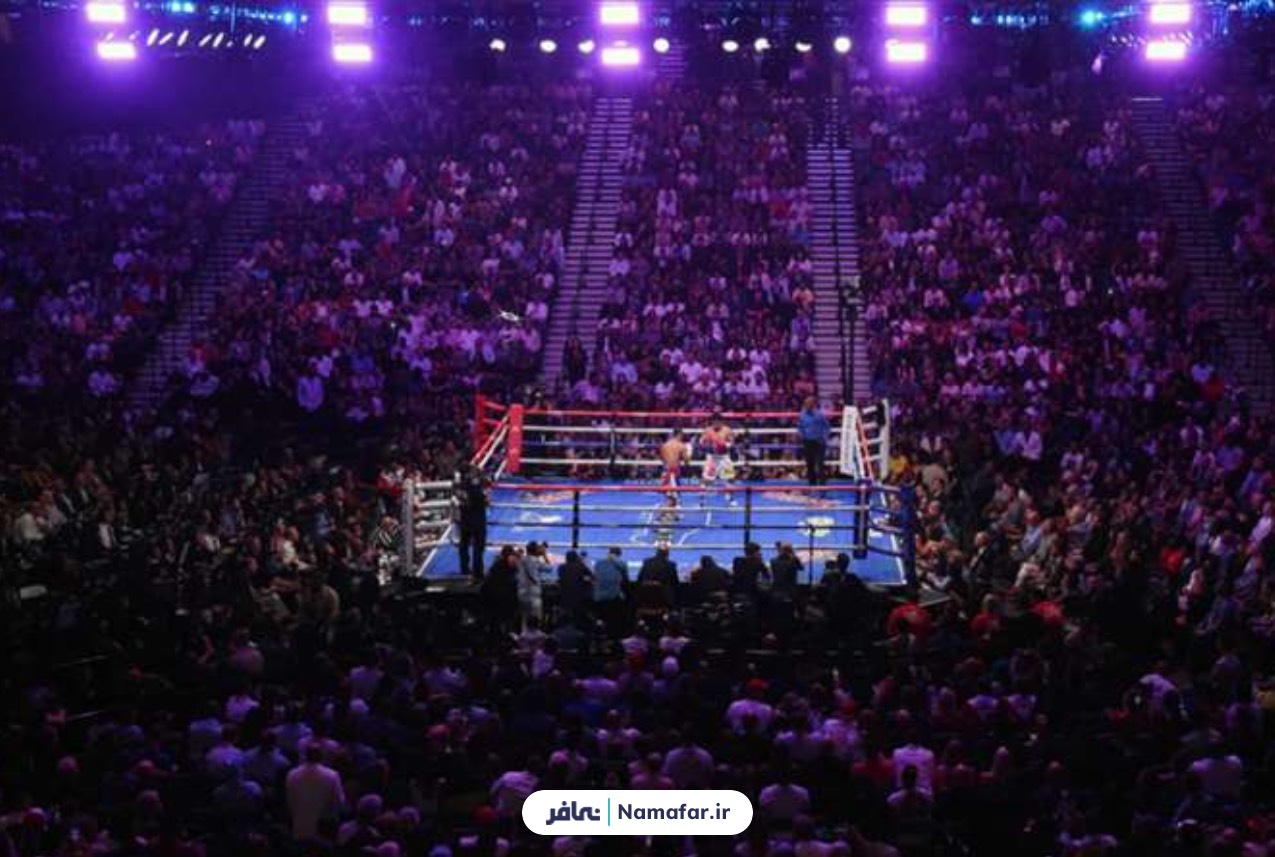
Online platforms move toward the tempting live sports broadcasting market
Given the substantial market for live broadcasting of sports competitions, this subject has entered a new phase of competition, and online broadcasting platforms such as Apple TV, Netflix, Amazon and others have entered serious competition with television networks to obtain broadcasting rights for sports competitions so as not to be left out of this market. Among these, Apple, with a decade-long contract worth several billion dollars, has purchased the broadcasting rights for U.S. soccer league matches and some baseball league games. Netflix, too, has made a great effort and spent a great deal to purchase the broadcasting rights for professional wrestling competitions. Under this contract, the most important professional wrestling program (Monday Night Raw), after 30 years of weekly television broadcast, will from now on be broadcast on Netflix. The broadcasting of the hockey league on Amazon, and this company's effort to purchase the broadcasting rights for next season's NBA games, are other examples of stakeholders' interest in live broadcasting on online internet platforms.The damaging effects of online broadcasters on the economy of cable networks
The entry of online broadcasters into various domains, including live broadcasting of sports games, has endangered the economic situation of cable networks, which earn most of their revenue this way. In the view of some researchers, the entry of these broadcasters into the broadcasting of sports competitions is a bad sign for the cable-television business, because many of the most-watched television programs on cable networks are sports programs. For example, American football league competitions in the United States and hockey competitions in Canada are among the ten most-watched television programs. Although traditional broadcasters, that is cable television, do not want to surrender and try to renew their contracts to broadcast various sports games, with more sports migrating to internet platforms the decline and loss of cable-network audiences will probably accelerate. Of course, given the multiplicity and diversity of cable televisions and internet platforms, and that each holds the broadcasting rights to part of the competitions, people who are interested in different sports are forced to pay subscription fees for several different streaming and cable services, unless in the future we see one particular company prevail in this domain.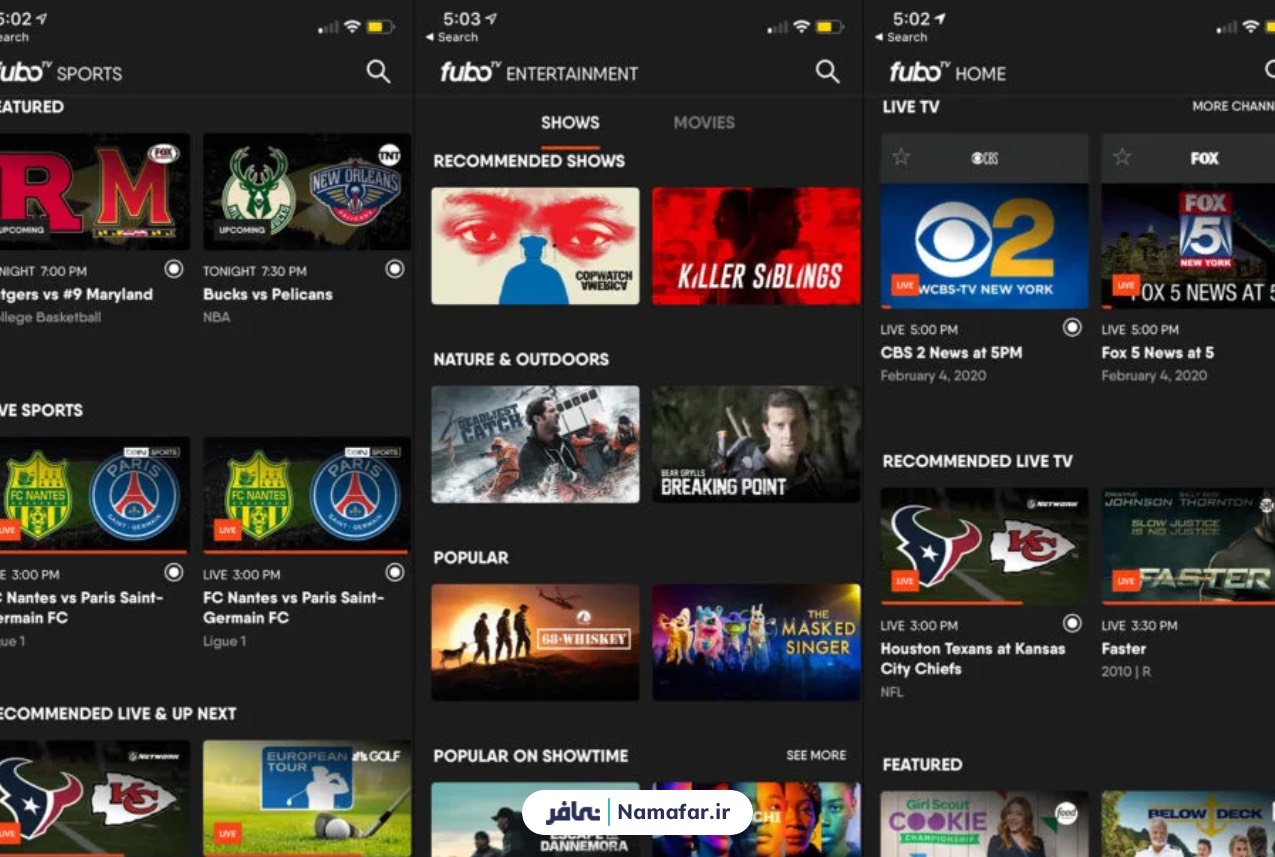
Audiences' views on the entry of online platforms into sports broadcasting
Audiences, and sports audiences in particular, have various views on the entry of internet platforms into live broadcasting of sports competitions. In this section we will examine, as a sample, the views of Netflix audiences. To expand its business, Netflix has entered negotiations to purchase live broadcasting rights for sports competitions including tennis, surfing, football and others. This company was able, at Christmas 2024, to broadcast two National Football League games exclusively and live through its subscription platform. According to a survey by an online entertainment and gaming website (Casino.org) with 3000 participants, 59 percent of audiences are not pleased that they have to watch the live broadcast of these two games on Netflix. Nearly 40 percent of opponents have raised the Netflix subscription cost as a drawback, and nearly 36 percent have also said they do not have a subscription to this service. In total, more than 76 percent of respondents have said they will not subscribe to watch the games on Netflix and will not pay this subscription fee. According to this survey, Netflix has been ranked as the third platform for watching the games (after CBS and the cable-television operator).
Domestic internet platforms and live broadcasting of sports competitions
Under clause 4 of the single article "Determining the requirements for organizing the comprehensive audiovisual domain," adopted on 30 Khordad (May–June) 1402 (2023/24) by the Supreme Council of the Cultural Revolution, "the production and live broadcasting of programs, and also the issuance of permits and supervision of live broadcasting in cyberspace / online, shall be the exclusive prerogative of IRIB (Islamic Republic of Iran Broadcasting)." Under this resolution, live broadcasting is the exclusive prerogative of IRIB (Islamic Republic of Iran Broadcasting); therefore if a medium requests live broadcasting, it must conclude its contract through IRIB (Islamic Republic of Iran Broadcasting) and the Cyberspace Deputy and a contract with IPTVs agreed by the organization, or request from SATRA (audiovisual media regulator) to receive live broadcasting of IRIB (Islamic Republic of Iran Broadcasting) channels. On this basis IRIB (Islamic Republic of Iran Broadcasting) has tried, in some cases, by adopting a supportive approach toward online broadcasting platforms at some sporting events, to pave the way for live broadcasting of competitions through them. For example, with the agreement of the head of IRIB (Islamic Republic of Iran Broadcasting), the I-form (international feed) of the 2023 AFC Asian Cup in Qatar was made available free of charge to applicant media holding a permit from SATRA (audiovisual media regulator).IRIB's obligation to pay broadcasting rights for sports competitions
It should be noted that the broadcasting-rights cycle, especially broadcasting rights for domestic competitions in Iran, has not yet taken a complete shape, and there is also no competition among television networks. IRIB (Islamic Republic of Iran Broadcasting) has also not yet fully accepted paying broadcasting rights for sports competitions. For this reason, members of Parliament (Majlis) in Mehr (September–October) 1402 (2023/24), in the course of considering the Seventh Development Plan bill, adopted Article 78 of it. Under this article, "in order to develop public and championship sport, IRIB (Islamic Republic of Iran Broadcasting) is obligated, in coordination with the Ministry of Sport and Youth, to prepare the bylaw on how to determine the amount of television broadcasting rights for sports competitions and how they are to be financed and shared among stakeholders, taking into account the quality and quantity of the competitions and the number of audiences, within 6 months of this law coming into force, and to submit it for approval by the Council of Ministers." Also, under Note 1 of this article, "the Ministry of Sport and Youth, in cooperation with federations that have a professional league, is obligated, in order to improve economic health, the financial monitoring (control) system and the progress of sustainable investment in clubs, to prepare the Financial Fair Play bylaw and within at most 6 months to have it approved by the general assemblies of the relevant federations." It is obvious that pursuing this legal article and drafting its bylaw can play a notable role in the two-way media-sport economy.Conclusion
Given the substantial market for live broadcasting of sports competitions, this subject has entered a new phase of competition. Streaming platforms have entered serious competition with television networks to obtain broadcasting rights for sports competitions so as not to be left out of this market. The entry of online broadcasters into this domain has endangered the economic situation of cable networks, which earn most of their revenue this way. Sports audiences, too, have various views on the entry of internet platforms into live broadcasting of sports competitions. For example, about 60 percent of audiences are not satisfied that they have to watch the live broadcast of football games on Netflix. In Iran, under a resolution of the Supreme Council of the Cultural Revolution, live broadcasting has been placed in the exclusive prerogative of IRIB (Islamic Republic of Iran Broadcasting). On this basis this organization has tried, at some sporting events, to pave the way for live broadcasting of competitions through licensed online broadcasting platforms. On the other hand, the broadcasting-rights cycle, especially broadcasting rights for domestic competitions in Iran, has not yet taken a complete shape, and there is also no competition among television networks. For this reason Parliament (Majlis), in the course of considering the Seventh Development Plan bill, obligated IRIB (Islamic Republic of Iran Broadcasting) and the Ministry of Sport and Youth to prepare the bylaw on how to determine the amount of television broadcasting rights for sports competitions and how they are to be financed and shared among stakeholders.Machine-translated from Persian by Namafar; the Persian original is authoritative. Read the original in Persian