About Deloitte's outlooks
Deloitte's annual sector and subsector outlooks highlight the leading trends expected to shape businesses over the next 12 months. Deloitte is one of the world's largest multinational professional services and consulting firms. The firm operates in more than 150 countries and works with clients from various industries such as energy, technology, health, and financial services. These reports complement the group's annual technology, media, and telecommunications (TMT) predictions and go more deeply into particular trends and technologies that bring about change, transformation, and innovation. This text is a translation titled "2024 Media and Entertainment Subsector Outlook, Video Games section," and it examines the coming trends in the video game industry.
Introduction
It may not be far off when video games become so hyper-realistic that they are hard to distinguish from real life. Games will probably soon transport us into worlds so unusual that they are clearly beyond everyday experience. Designers, storytellers, and communities are using video games to create and participate in vast and persistent worlds; worlds that have become even bigger than the largest cinematic experiences and are as social as town squares, concerts, or stadiums.
Deloitte's 2024 Digital Media Trends survey showed that 85% of Gen Z, 78% of millennials, 60% of Gen X, and 35% of boomers in the United States regularly play video games. Mobile games have enabled many non-players to enter the market, especially among older generations. But the video game industry appears to be shaped by vast, hyper-realistic worlds and enduring multiplayer services. The biggest story-driven games can take players into 100-hour immersive experiences and create franchises that extend beyond the world of games. Popular online games attract millions of regular players; along with brands, musicians, athletes, and celebrities who join persistent game experiences and support social interactions and benefits beyond competition. For many, interactive and immersive game experiences have become an integral part of how we engage with stories, socialize, and express ourselves online.
Conditions are tough for new titles
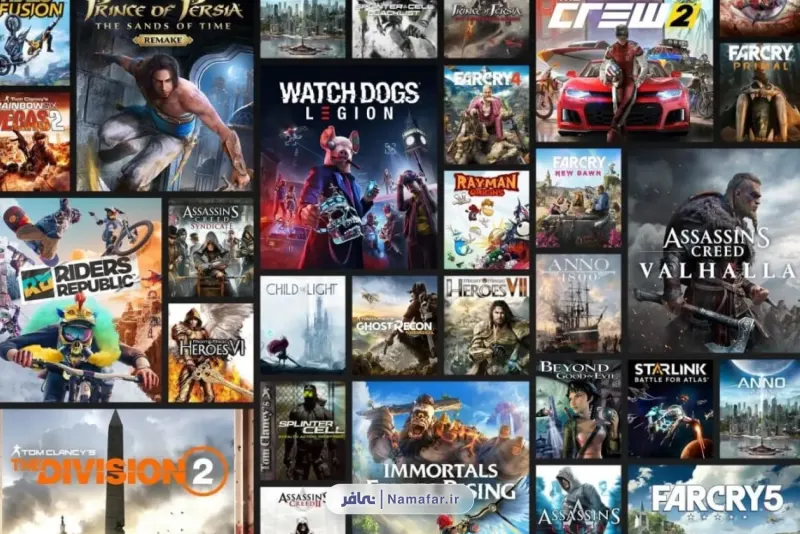
However, there are variables shaping the video game business that have implications for media and entertainment companies, both in gaming and beyond. Although the most successful games can benefit from long-term engagement and stickiness, it is usually harder for new games to break through and endure, and they are also more expensive to develop and market. Despite a vast assortment of available games, more players are being drawn toward a limited number of leading titles. By some accounts, the games with the most monthly active users in 2023 were all released more than five years earlier, and 90% of game revenue came from only 43 titles. The result is that the market is dominated by a small number of major successful games, while a large number of other games may generate enough revenue to sustain holding companies, independent studios, and 3D content-creation platforms, but not large studios and publishers.
For game companies and non-game companies seeking to enter interactive experiences, standing out and competing with these entrenched successes may be harder than ever. Development costs of so-called AAA games—that is, those big games with the highest production goals—continue to rise and may now appear unsustainable. This makes achieving a return on investment (ROI) more difficult. Top studios can spend hundreds of millions of dollars and years of work to bring a new AAA game or a live service game to market. This can make it critical to reduce development risk while also raising innovation and quality.
In the year ahead, the largest game companies and publishers may come under pressure to take fewer and more calculated risks. This may lead to fewer new games being released by major studios and more investment in previously successful properties. At the same time, more games may enter the market. While the largest players face high costs for releasing major titles, smaller game studios may gain more power to develop and market compelling, innovative games and also cultivate communities and fans around them. Also, more non-game media companies are entering the video game market, seeking to expand their intellectual property rights into interactive experiences in order to stay close to the interests of younger generations.
Viewers and fans follow their favorite stories and characters through television, film, and video games. These media are converging in order to expand successful franchises and create new opportunities. This will likely encourage media and entertainment executives to understand the broader value of their intellectual property (IP) and of the fans who grow around it. Several questions arise here: How can executives activate fans and reach more audiences across a set of experiences? What should they understand about converting IP from one medium to another? And also, how can they design these experiences in a way that leads to long-term engagement with a franchise and more successful monetization of them (in games, television, film, or even merchandise)? And beyond that, media and entertainment executives should think about the entire life cycle of their IP and franchises and consider how this relates to fans and how they can keep those fans engaged and satisfied for years.

Extending the lifespan and reach of game worlds
The video game industry worldwide has advanced a great deal through mobile games. That is because mobile games have brought a larger number of people into the world of games and have also increased this industry's revenue through app sales, in-app payments, and advertising. Although many large game studios and publishers serve the mobile game market, the industry continues to be largely shaped and funded by AAA games and live services (especially in Western markets). In 2023, the revenues of the largest game publishers were led by the biggest free-to-play live services and by some of the largest film franchises that have been turned into AAA games.
The dominance of leading games and the competition to attract players may change executives' strategies. To keep more players and for longer play, most large game studios and publishers are now developing multiyear roadmaps and live services. If this approach succeeds, it can anchor fans and monetize players for years, but only some of them may succeed.

Crossovers and convergence in big, story-driven game worlds
Large, story-driven games can sell at prices of $65 or more and offer an immersive single-player experience that can provide more than 60 hours of impactful gameplay. These games appear to have broader universal appeal. Deloitte's 2024 survey showed that among US respondents, a nearly equal number of men (57%) and women (51%) prefer single-player adventures in rich, story-driven worlds. Game studios and publishers can use AAA games to create new franchises, expand existing IP, and establish partnerships with film and television studios. The high quality of writing in AAA story-driven games has led to films and television series being made from them. In 2023, film and television slates were boosted by successful versions of video game IP, a trend that is likely to accelerate.
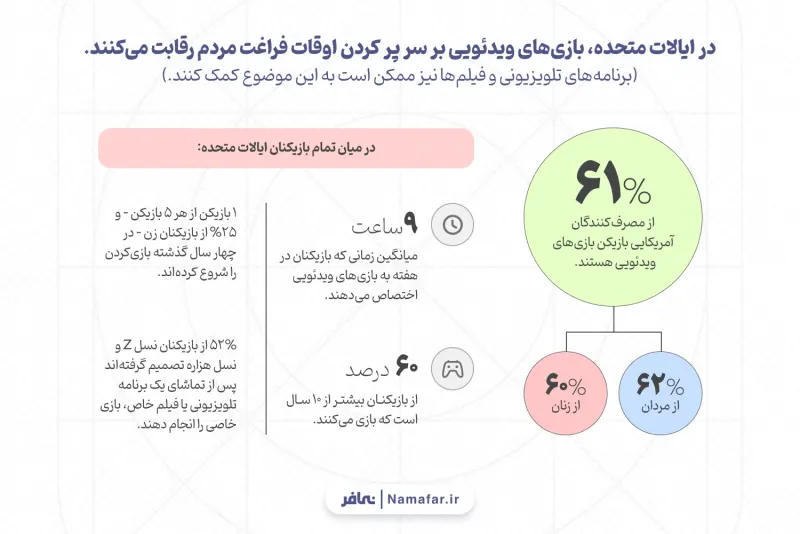
Successful story-driven games can create entirely new fans among players and expand television and film fans into participation in interactive experiences. Recent successful crossovers from game franchises into streaming television and films have generated very strong interest in the games that inspired them and have attracted new fans and new players. Our study found that 52% of Gen Z and millennial players who took part in the survey decided to play a particular video game after watching a particular television program or film. This may be good news for television and film studios seeking ways to stay closer to people who spend more time in games. However, it is unclear whether game publishers have been able to fully capitalize on these benefits. Are they actively supporting positive onboarding and play experiences? Are they reinforcing their fans with social interactions and monetizing them through physical and digital merchandise? Game companies and film and television studios may need stronger coordination across their businesses in order to realize larger and more durable benefits.
Live service games that continue for a decade or more
In the year ahead, game slates appear likely to include more live service games. In live service games, gameplay can change, new experiences can be introduced, and new "moments" can be created to keep the game fresh and provide regular marketing and public relations opportunities. Live service games can change development costs and monetization. Instead of releasing one game and a few updates, live service games typically require constant activity and maintenance. Continuous development may be necessary to keep gameplay fresh and increase the number of players. In these games, revenues from in-app purchases may be highly dynamic and even volatile.
Successful live service games benefit from network effects and impose switching costs: the more people play, the harder it may be to leave, especially when your friends are there. The most popular live service games have more than 100 million players a month. Brands can look to live service games to reach younger audiences, where they spend much of their entertainment time and are socially and emotionally fulfilled.
According to our 2024 survey, 33% of Gen Z and millennial players believe they socialize more in video games than in the real world, and about 30% say they have more friends in game worlds than in the real world. In addition, 41% of Gen Z and millennial players mainly play online games to meet their friends.
These statistics are attributed more to men, because men are more engaged with live service games. When we asked them about their favorite type of game, only 29% of American women players said they mainly play live service games, compared with 47% of men. This may be partly because many popular live service games are based on fighting and combat. But our study shows that the reason is harassment and bullying against women in multiplayer virtual environments. 44% of men players and 48% of women players believe that online multiplayer games have too much harassment, and about 56% of all players think that video game publishers should do more to combat harassment in their games. Given that game companies may pin their future on live service games, they should consider it a business imperative to tackle harassment and bullying and to offer more experiences that attract women players. Our study found that 41% of men players and 50% of women players have little interest in multiplayer games.

Generative AI to drive innovation and accelerate time to market
Game studios and publishers face two big challenges in the year ahead: addressing development costs and innovating in gameplay and experiences. Early experiments and implementations of generative AI have sought to tackle both challenges and are pursuing ways to accelerate time to market for new games and to open up innovative paths. In the year ahead, game companies will continue evaluating generative AI tools, but they may face challenges in fully operationalizing them and defining a coherent strategy because of the extensive change in generative AI.
Generative AI already appears to be accelerating pre-production by using visual models that can iterate rapidly through concept art and early visualization. In game production, generative coding models help engineers quickly gain access to game behaviors and mechanics and test the quality of their code.
Game companies are also experimenting with generative AI to deliver more realistic and engaging gameplay. Early experiments with conversational non-player characters (NPCs) show paths toward more natural language interactions rather than predetermined dialogue. These developments will likely help develop NPCs that are highly conversational. But they expand within limits that human writers have defined. Generative AI already makes rapid translation and dubbing into different languages possible, which can make games much more accessible across regions.
Generative AI can produce customized digital goods in live service games and, at the same time, make game worlds and stories more adaptive and personalized. Games have used procedural modeling for years to create extremely large game worlds that cannot be designed by hand. Generative AI can enable more responsive content generation, such as game levels that evolve in response to players' behaviors and skills. This possibility can be extended to the rapid development of digital goods that are personalized specifically for players, brands, and events.
Generative AI can also better attract newcomers by helping them, and in this way improve the player retention rate. Our digital media surveys showed that one in five players overall—and 25% of women players—have started playing in the past four years. Are these new players having good experiences? Models can help players understand their weaknesses in gameplay and then develop tutorials and training simulations so they can improve. These models can also be more effective at monitoring harassment and bullying in live service games, which can raise how satisfied players are with the game and increase the time and money they spend in the game.
Looking back, gameplay data can inform generative models that seek to discover player groups, fans, and new innovations in gameplay. Just as generative AI seemed to appear out of nowhere, the game industry could be disrupted by a company that deploys generative AI extensively and accelerates and scales its capabilities to bring new, innovative gameplay to market.
These examples show that the complexities of game development and operations do not appear likely to be reduced by generative AI, although some of them may become more automated. They also indicate that the costs of developing the next generation of games may not fall all that much, but innovation, time to market, player retention, and monetization can be significantly improved. Ultimately, the game experience for the audience may soon become more realistic, engaging, and responsive.
A roadmap for success
Although the economics of success may look more daunting for games, new games are still succeeding. However, the paths to success appear to be shifting. Multiyear outlooks and live services may require different approaches to financing, development, and monetization. Deeper relationships with brands and non-game franchises can further expand engagement and reach the lasting fans critical to success. With the rise of generative AI, strong data is more important than ever. Although costs are high and competition is intense, media and entertainment executives should evaluate the strengths and weaknesses of their IP and may want to consider it as the center of a portfolio of experiences across different media. They may need to focus on fewer and larger franchise efforts and lead with strong social media campaigns to create discovery and excitement, engage fans, and cultivate communities.
These are important considerations for non-gaming companies that are pursuing the expansion of their franchises into game experiences. What kinds of considerations should they have in order to keep game strategies away from possible risks? How many fans might have their first game experience through the franchise (merchandising)? What kind of guidance might be needed to ensure a positive experience? How many new players might come in, and how can they become lasting players and fans? Given the convergence of games, television, film, and music, cultivating strong relationships with business partners that support all sides of the business will be vital.
Games may also go through cyclical periods. Different groups and investments may first flow to live services and then return again to single-player games. Franchises may rise in popularity and then lead to franchise fatigue and a desire for new "outsider" content and experiences. Competitive games may give way to cooperative experiences. Players can become exhausted by in-app purchases and monetization. Executives may need to pursue a balanced portfolio that both covers different trends and serves diverse business goals and audiences with different growth objectives. Ultimately, media and entertainment executives should look for ways to maintain a long-term relationship with audiences, convert them into fans, and meet them wherever they are, digitally and physically. Costs may not fall in the short term, but there are opportunities to grow players, engagement, and revenue.
Despite the high costs of live services and AAA games, these games will continue to define the roadmaps of the largest game studios and publishers, and increasingly the same will be true for the largest television and film studios as well. The best games can attract players and shape culture for a decade or more. However, there is still no clear formula for what makes a game successful for a particular market. Leading game studios and publishers, along with the television and film studios that partner with them, may be tempted to focus more on known successes and use their power to create interest and engagement. But players still want the innovation and risk-taking that can move the medium forward and surprise them with new experiences. This may open new doors for the next disruptions, which may become more empowered than at any other time.
Machine-translated from Persian by Namafar; the Persian original is authoritative. Read the original in Persian