Yesterday's neglect, tomorrow's opportunity; the future of Iran's toy industry
Iran's toy industry has for years moved in the shadow of neglect and the absence of global marketing infrastructure; but the experience of entrepreneurs who began from inside the university and research, by forming associations, domestic and foreign showrooms, attending international exhibitions, and trying to create an export consortium, shows that this industry, despite customs problems, the lack of transparent data, and obstacles to standardization, can have a bright future in regional and global markets. In this regard, in an exclusive interview, Namafar went to Mohammad Hossein Nakhchi, manager of the Karistan Baharestan toy showroom, and has narrated the challenging path of Iran's toy industry.
From electronics to the toy industry; the birth of a new path
My activity in toys is rooted in my educational background in electronics. After finishing my studies at a technical-vocational high school, together with a small team, we established our company near a university. This geographic location allowed us to establish a close connection with professors and students, and at first we moved mostly in the form of university activities and in fields such as electronics and new energies. This same approach led to our company being defined among knowledge-based companies. Even so, the turning point of our activity came in the years 1390 to 1393 (2011–2015), when through an intermediary we entered a project whose nature was educational entertainment. At first we did not want to put the name "toys" on it, because there was the perception that the word toys was equivalent to low technology and limited appeal. But the further we went, we realized that the subject is very serious, important, and at the same time appealing. The appeal of the work, especially because of its B2C nature, was much greater than B2B activities or purely technological projects. This same experience opened a new window for us onto the market and direct connection with people.
Iran's toy industry: capable production, weak sales
Later, we founded the Maharatafza brand, which took shape on the basis of producing construction toys based on a STEM educational approach. At the same time we were holding startup events at Sharif University of Technology, and in this space virtual groups formed. This experience brought us to the question of why in Iran there is no specialized association or organization in toys. From this same point, I began my efforts to launch such an institution. In coordination with a group of toy producers, a meeting was held at Sharif University, the result of which was the approval of the founding board of the Toy Association. I pursued this process seriously and in the end we succeeded in receiving a permit to establish the association from the Ministry of Labor. After holding general assemblies and elections, a board of directors was formed and I was elected as the first secretary of the Toy Association.
Within the association, numerous activities took shape: holding specialized events and exhibitions, creating diverse working groups including wooden toys, tabletop, robotics, and other fields. These measures provided a platform for cooperation and synergy in the industry. But one of my important experiences was a trip to China. Although I also had other trips to various countries, encountering China's toy industry was a turning point for me. On these trips I realized more than before that the main weakness of Iran's toy industry is not in production but in distribution and sales. In China I clearly saw how marketing and distribution infrastructure play a key role in the industry's success. For example, in the city of Shantou nearly eight to ten thousand toy factories are active, and this city alone accounts for about seventy percent of world toy production. This enormous volume of production has reached global success only with the help of a powerful distribution and marketing network.
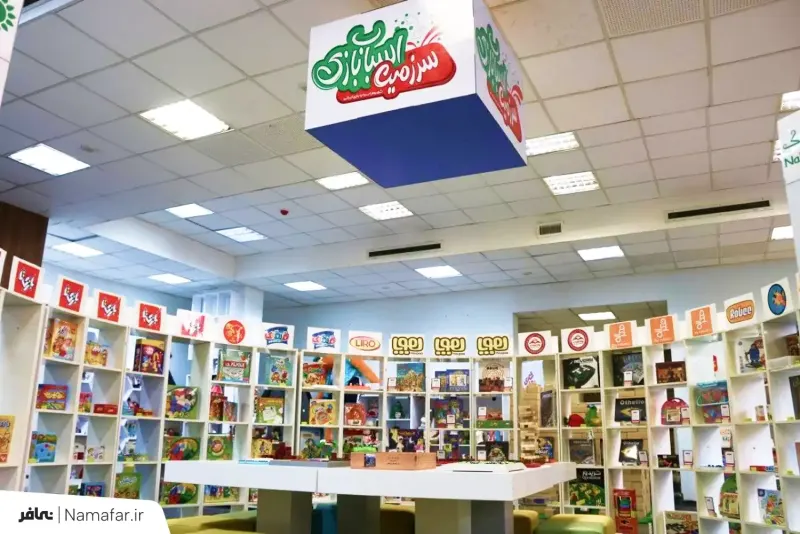
The Sarzamin-e Asbab-Bazi showroom: modeling China and bringing Iranian producers together
Another important point I grasped on the trip to China was the role of "showrooms" in the toy industry. In the city of Shantou, in addition to thousands of active factories, there are also more than two hundred specialized toy showrooms. Each factory also independently has its own showroom, but what matters is that these showrooms operate as permanent exhibitions and are the main platform for marketing and connecting with domestic and foreign buyers. Toy production also flows in other Chinese cities; for example in Shenzhen a large share of electronics production takes place, and in other cities diverse products are offered as well. Observing this pattern led an idea to take shape: why should we not also have a toy showroom in Iran? After review and consultation, for the first time I was able to establish the "Sarzamin-e Asbab-Bazi" showroom; a place where all domestic producers gathered their products. After a few years this showroom was moved to the Karistan complex in Baharestan and has now become a place where more than two hundred of Iran's toy factories display samples of their products. The number of titles presented at this center is more than two thousand items, and that on a selective, curated basis from among factory output, while it is estimated that Iran's total toy production is about ten thousand titles. Even so, there is a clear difference between showrooms in Iran and China. In China each product is on average supplied in a print run of close to one million copies, but in Iran the scale of production is more limited and this issue affects competitive power in global markets.
When a website became an accelerator for the toy industry
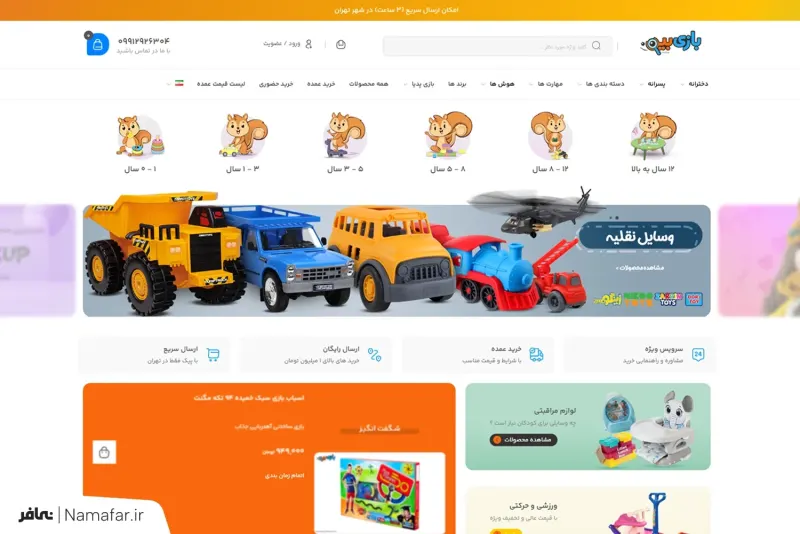
After launching the showroom, we concluded that expanding the market required an online distribution network. For that reason we established the “Bazbin” website to function as an online showroom: a platform for displaying products, connecting with stores and retail outlets, and also for exports. In the first step, because of insufficient investment, we steered this platform toward a B2C model so that it could cover its operating costs. But the main outlook remains development toward a B2B model and enabling exports through the online platform. Alongside these measures, I also took on other responsibilities, including drafting knowledge-based indicators in the toy field for the Vice-Presidency for Science and Technology, cooperating with the Toy Oversight Council, and participating in related commissions. But perhaps the most important responsibility I held was serving as secretary of the “Toy Working Group” in the Soft Technology Development Headquarters of the Vice-Presidency for Science and Technology. In that role we had the opportunity to study many of the toy industry’s fundamental issues, carry out in-depth research, and identify and extract the basic problems and challenges of this field.
Exports: from scattered projects to the idea of a toy consortium
Now, thanks to the research and studies carried out in working groups and through field activity, we have obtained a clear picture of the toy industry value chain in Iran. We know what challenges exist in each link of this chain and which of them have higher priority for resolution. On that basis, one of the approaches I considered was a focus on exports, because exports, besides heavy costs, face numerous operational and structural complexities and require synergy among actors in this arena. To gain a more precise understanding, I made several foreign trips to conduct field studies in target markets. The result of these reviews was the definition of several joint projects with domestic producers. For example, together with some actors we were able to design a project to study the Russian market. Or in another project, we prepared the “Iran Toy Yearbook,” in which about sixty producers participated. This book was published in ten different languages and was used as a tool for introducing Iran’s toy industry at the international level.
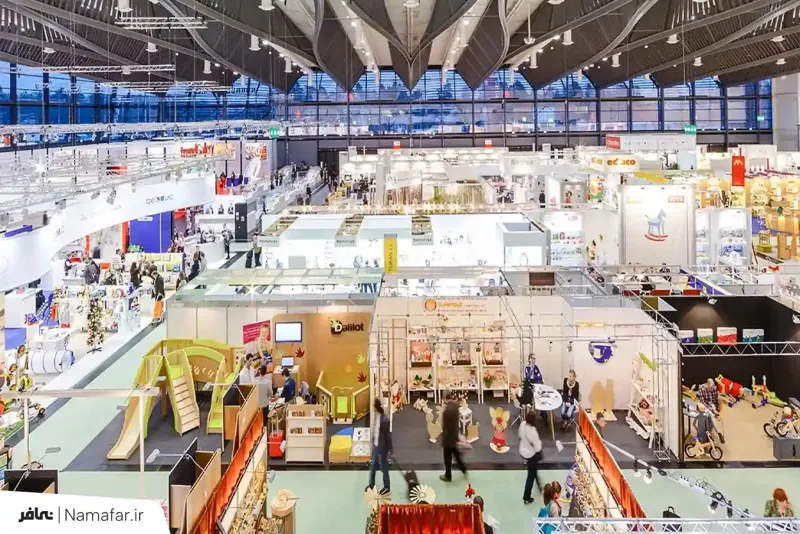
Foreign exhibitions, a launchpad for Iranian toys
Another achievement was participation in foreign exhibitions. For the first time, Iran’s pavilion was set up at the Istanbul International Toy Fair. This experience provided an opportunity to connect with many countries and gauge their interest in Iranian products. Although we encountered numerous problems in the area of exports, this initial step was of great importance. Subsequently, at the Russia exhibition as well, with the presence of more than thirty Iranian factories, a joint Iran pavilion took shape. On that trip we signed a memorandum of understanding with the Russian Toy Association and even met the president of one of Russia’s autonomous republics and reached agreements on cooperation. Talks on joint investment also began. In Uzbekistan, a direct connection was established with the minister of industry, and the groundwork for cooperation at the governmental and industrial levels was defined, which requires continuous follow-up to be realized in practice.
Alliance and collective cooperation among toy producers for a global presence
These experiences, and the obstacles we encountered on the export path, led us to conclude that Iran’s toy industry, to operate effectively at the international level, needs a joint organization. For that reason the idea of forming a “Toy Consortium” took shape: an alliance-like mechanism in which producers can collectively participate in foreign exhibitions, publish joint annual books, conduct market research in target countries, and advance export projects. The preliminaries of this consortium are now being pursued, although becoming a durable institution requires a clear business model and a specified legal framework. Along this path, talks have been held with government bodies and various organizations so that maximum interaction can take shape. Despite structural obstacles, some of which go back to Iran’s macroeconomic problems, our effort is, by adopting operational solutions, to make the international path of Iran’s toy industry smoother and to have the least damage and shortcoming in implementation.
The experience of scattered exports and the need to form a national brand
Although the volume of Iran’s toy exports is not yet extensive overall, in scattered experiences we were able to export to more than twenty countries. Part of these exports went to countries such as Turkey, Iraq, Lebanon, the UAE, Oman, Qatar, Armenia, Georgia, Uzbekistan, Russia, Belarus, and Romania. In some cases efforts were also made to enter African markets (such as Senegal) and even Central America (Venezuela), although some of these efforts were not accompanied by complete success. These experiences taught us that sustainable and continuous exports materialize only when appropriate institutional and marketing foundations are created. For that purpose, in some countries we moved to set up showrooms, including in Sulaymaniyah, Iraq; in Armenia with an 80-square-meter showroom that is a venue for offering Iranian products; in Uzbekistan; and also in Moscow under the name “Van Asbab.” These centers helped us obtain precise field data and knowledge of market conditions, consumer tastes, and the logistical and legal needs of destination countries.
“A national brand: the key to sustainable exports of Iran’s toys”
From these experiences we reached the conclusion that exporting Iran’s toys requires a large, strategic project. Scattered, small measures have been able to light the path, but for serious impact, a national brand, or at least aggregated and shared brands, must take shape: brands that are the product of joint investment and interaction among several producers, each targeting particular markets. To lay the foundation for such an approach, we took a key step: precisely identifying the indicators that affect the choice of target markets. More than twenty indicators were extracted for this purpose, including access to land borders, the destination country’s customs tariffs, the size of the toy market, import capacity, and related economic factors. These indicators enabled us to rank and prioritize countries and to know which markets are more suitable for a more serious entry. In the next step, using a comprehensive database of domestic production, we examined which Iranian products could be selected to match each market’s needs. We even moved toward combining and “bundling” different products to build new packages that would be attractive both for the domestic market and for foreign markets. For example, we had an experience named “Tooz ba Toys,” in which we offered products as a combined package, and this idea can be developed in other markets as well. Such an approach, based on data analysis, field analysis, and product design according to market requirements, can elevate the future of Iran’s toy exports from scattered measures to a sustainable and targeted path.
Iran’s toy exports: a lack of marketing, limited foreign-exchange earnings
One of the areas I have always thought about is the use of toys in educational centers and schools. Toys, especially those designed within a skills-building and educational framework, can be used as effective teaching aids. But unfortunately in Iran we face a shortage of precise data. For example, customs statistics often do not record toys under the correct HS heading, and many goods that are in practice toys are placed in other categories. In my own field observations in markets such as Erbil and Sulaymaniyah in Iraq, or in Armenia, I have repeatedly seen Iranian toys that had been exported through informal channels, without any trace of them in official statistics.
Based on existing estimates, the volume of Iran’s toy exports is put at about 20 to 30 million dollars, although official statistics are reported as close to zero. I personally have had the experience of shipping twenty containers of toys in a single year, but compared with some traditional distributors this figure is small. Traditional distribution networks operate far more powerfully and receive large orders, such that in some cases foreign customers place ten-container orders directly with these distributors. These orders are often supplied directly from the factories, and the factories, because of financial need, accept direct sales. This situation has made Iran’s exports more “passive.” That is, factories wait for a foreign customer to come to Iran themselves, visit, make the purchase, and take the product back to their country. Although this process earns foreign exchange for the country, it creates little profit for the producer and in practice is no different from domestic sales. Whereas real exports require active marketing in the destination country, identifying new customers, registering a brand, and even delivering the goods in that same country.
From standards and tariff barriers to the need for a presence in the global market
Numerous structural problems have also made this path difficult. Among them is money transfer, which always faces serious obstacles, or obtaining standards permits such as CE, GCC, and EAC, which are mandatory for exports to various regions such as Eurasia or Arab countries. Under current conditions, many foreign customers, because they have particular relationships and lobbies, obtain these permits themselves and import the Iranian product. But the domestic producer is in practice deprived of this capacity. For example, exports to Qatar or Oman require obtaining a certificate that costs one hundred dollars per product, and this cost must be paid for each entry and by each customer. This inefficient structure makes exports costly and high-risk for the Iranian producer.
I too, as a producer, have experienced these difficulties. The “Maharat-Afza” brand, which began its activity in 1393 (2014/15), is still standing and offers ten main products, but customs and tariff challenges have repeatedly hindered the development of exports. For example, the tariff on toy imports into Turkey is 100 percent. This is while Turkey has preferential agreements with the European Union and European products enter almost without tariff. As a result, European toys, despite a higher price, enter the Turkish market more cheaply than Iranian products, and this threefold price difference in practice makes Iran’s exports uncompetitive. All this is while the future of Iran’s toy industry depends on the development of exports. The domestic market has limited capacity, and without a presence in regional and global markets, sustainable growth of this industry will not be possible. Therefore, resolving issues related to statistical data, international marketing infrastructure, standardization, and preferential tariffs must be placed among policymaking priorities so that this industry can find its real place.
Machine-translated from Persian by Namafar; the Persian original is authoritative. Read the original in Persian