Changes in technology are happening rapidly, and people have been forced to keep up with this trend. These innovations have brought many challenges and opportunities with them. Among the numerous forms of this innovation, one can point to the Internet of Things ( IOT ), artificial intelligence ( AI ), robots, and big data. The use of artificial intelligence in education, production, services, and many other sectors has become widespread. As a result of this, many jobs have changed, and consequently the required skills have also undergone change and transformation.
One of the most important ideas raised about artificial intelligence is whether this technology can even surpass humans. Can it dominate them and take the reins of affairs from them? In general, does the rise in artificial intelligence's power weaken human power? Answering yes to these questions means considering humans as fixed and unchanging and artificial intelligence as constantly strengthening, but that is not the case. Because this same artificial intelligence technology gives a great deal of help to humans and human intelligence and makes it strongly more powerful. Another important question is what the future of artificial intelligence in Iran will do to school and university education. The article we introduce below opens this issue somewhat.
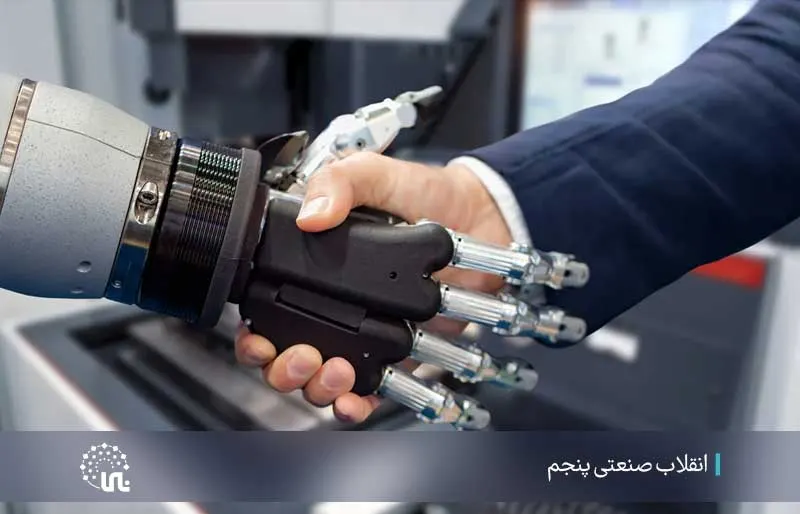
Having creative skills in the age of the Fifth Revolution is one of the solutions for responding to the challenges that have arisen. The Fifth Revolution is an era in which new values created by technological advances can minimize human responsibility and future economic problems. In this era it is expected that the development and use of artificial intelligence can increase creative skills for facing challenges and taking advantage of opportunities. This article addresses the application and use of artificial intelligence in school and education to increase students' creative thinking and creative skills in this era.
The present article is written in three sections. The first section addresses the application of artificial intelligence from various aspects and states the foundations of its development from different viewpoints. In the second section, the indicators of creative thinking and the ethics and behavior associated with each of them have been examined. Finally, by referring to the written text, the aim and findings address integrating artificial intelligence into students' daily lives and improving their creative thinking.
Section one: definition of artificial intelligence
There are many and varied definitions of the concept of artificial intelligence. In a simple definition related to the aim of this article, artificial intelligence is described as a mental design that has created a system similar to how the human brain functions. Philosophers believe that artificial intelligence is a leap toward science that requires many mathematical formulas and includes three main pillars: logic, computation, and probability. Here artificial intelligence moves away from mathematical computation in order to become a useful system for human needs. Given the highly complex algorithm needed to develop artificial intelligence, mathematics plays a valuable role in its development. From economists' point of view, knowing how people make decisions to earn income is very important, and this work requires proper monitoring, diagnosis, and analysis. For this reason, the economic budget for the development and analysis of artificial intelligence is of great importance for the future of this technology. It is also predicted that the development of technology will reflect scientific advances in the cognitive sciences, and this will improve the performance and quality of artificial intelligence in various fields.
Computers are upgraded through the development of memory, speed, and the accuracy of the data produced. Artificial intelligence is also controlled by software on the computer. The superpower of artificial intelligence supplies the operating system, programming language, and the tools needed to create a program. So the more the computer is upgraded, the ability and power of artificial intelligence also increase as a result. On the other hand, in facing any technology one must be able to control it and protect it properly. For this reason, security in artificial intelligence must also be considered.
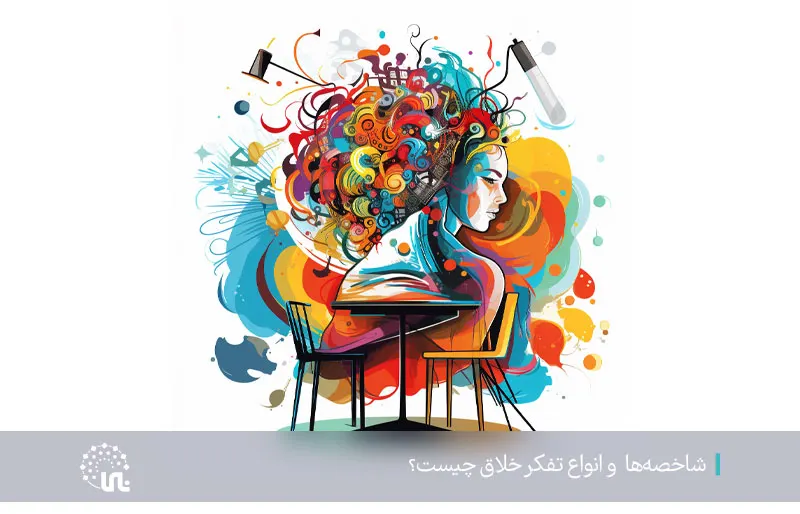
Section two: what are the indicators and types of creative thinking
Creative thinking techniques are said to be the ability to generate various new ideas and possibilities, which usually do not form suddenly and require curiosity and skill. This article examines and states four indicators ( marker ) of creative thinking with an experiment among students.
- The ability of fluent thinking ( Fluent ) means that students can ask many questions and are able to offer similar ideas to solve a problem. For example, some simple concepts about an airplane were stated for the students, then the students presented their ideas and asked questions.
- The skill of flexible thinking ( Flexibility ) refers to students being able to offer various interpretations of an image. For example, students are given an image of an airplane and then they state its problems and advantages.
- The definition of the ability of original thinking ( originality ) is that students can offer various interpretations of an image and try things that others have never thought of. For instance, students are given a problem, such that the students present from it a different image but with the same meaning as their other classmates' answers.
- The aim of the ability of detailed thinking ( Elaboration ) refers to students being able to enrich, develop, and elaborate others' ideas. For example, students raise simple questions related to an airplane. Then they answer them in their own way. From these answers, explanations are offered as input or visually in the form of other reasons that can strengthen the answers given by these students.
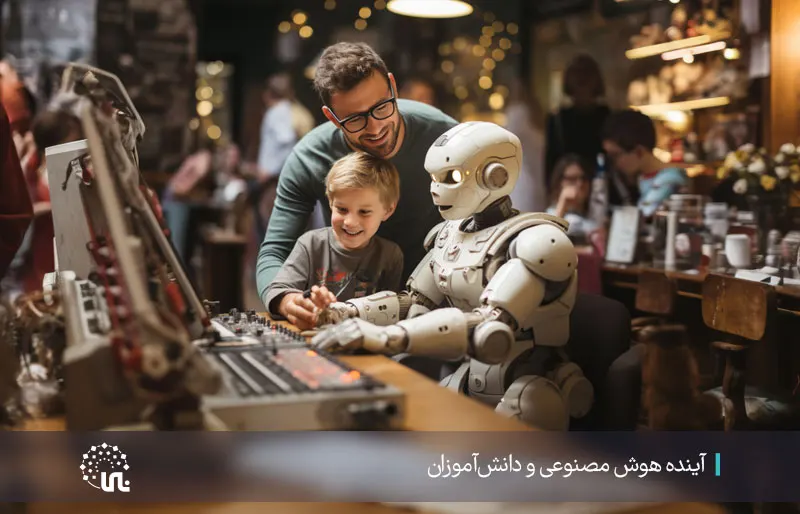
Given the understanding obtained from the definition of what artificial intelligence is in the first section and the definition of the types of creative thinking skill that were mentioned, artificial intelligence can help students in promoting each of these creative thinking indicators and improve their creative skills. Of course this work requires promoting innovation and using artificial intelligence in the teaching and learning process in schools. For this, in the first step teachers must be familiarized with this technology and their skills increased for facing the Fifth Revolution.
Section three: the importance of students using artificial intelligence
With the changing of time, a new model is needed for using artificial intelligence in daily life in order to improve creative skills. The application of artificial intelligence technology in education and school is more essential for students. Because using this program in daily life and understanding it from various aspects helps students' teaching and learning process. Artificial intelligence is not something to not use; rather this view should be created among students that they should benefit from it. If students become familiar with the application of artificial intelligence in Iran and use it positively, certainly a generation will be created in the future that, given the scientific and technological abilities they have together, will cause society's progress. Given the foundations and understanding obtained from the dangers and abilities of types of artificial intelligence, this technology is a way to help creative thinking and acquire creative skills for students with regard to the types of creative thinking indicators.
Conclusion
This article, by pointing to the status and future of artificial intelligence in Iran and the world and addressing the foundations of its development from various angles, tries to create an understanding of the applications of artificial intelligence. Then, by conducting an experiment among students and stating the types of creative thinking indicators and creative skills, it states the use of artificial intelligence to improve creative thinking. It seems the article's main aim is promoting and raising awareness about the impact of technology and artificial intelligence in education and school for teachers and students. This article also explicitly states the unique opportunities that artificial intelligence places at humans' disposal. According to the evidence of this article, artificial intelligence can become an assistant to the human mind. Also, academic education can be improved by artificial intelligence, more than it is harmed by it. You can obtain the original text of the report Using artificial intelligence to improve creative thinking in the age of the Fifth Revolution from the Namafar knowledge base.
Machine-translated from Persian by Namafar; the Persian original is authoritative. Read the original in Persian