The board game is a profitable branch of the entertainment industry in the world. It is said that in 2022 board-game market revenue reached about 3 billion dollars and by 2027 it will reach about 5 billion dollars. The board game may be one of the world's oldest games for human entertainment. Throughout history, humankind has had a continuous relationship with play and entertainment. Irrefutable historical evidence shows that various games should not be viewed as pointless entertainment. Because playing and recreation have been, and still are, a symbol of human beings being alive.
Among various types of games, board games, or as they are called today, board games, have been one of the old and authentic pastimes among humans. The board game is a fully modern mode of play and entertainment; but it has ancient roots such as chess. Playing on a flat surface with a number of pieces, dice, and a board is an ancient form of entertainment. But today's new board games are made with various stories and scenarios and with diverse pieces and characters that bear little resemblance to their ancestors.
In the history of the board game it may not be possible to extract precise information about the first and oldest thinking game played by humankind. But in what follows, with data from board-game history, the timeline of these games' development will be set out, which further clarifies the role and benefits of board games in history.
The oldest and best board games
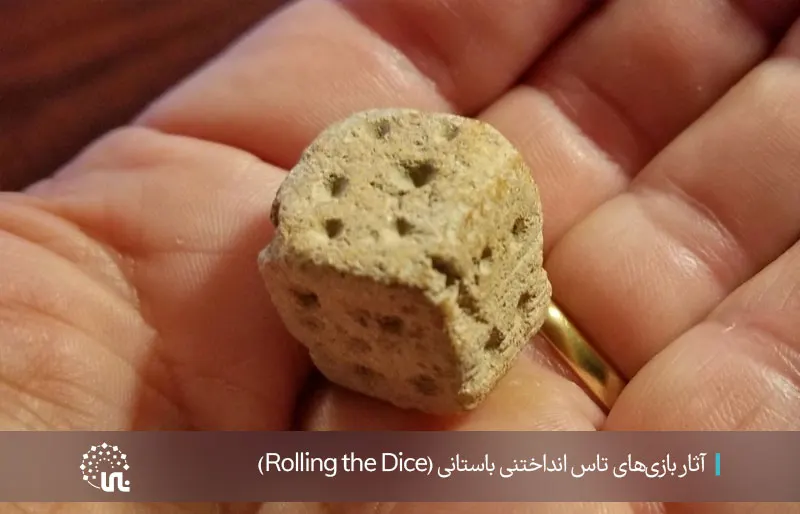
Dice games|Rolling the Dice
The die, as a small 5000-year-old cube, is not a modern invention! In fact the die is one of the oldest tools of tabletop games. Archaeologists, while excavating in southeastern Iran, discovered a set of 3000-year-old dice. We do not know precisely which dice game early Iranians played other than backgammon, but the popularity of dice games has continued over the centuries.
Recently a sample of various old dice has been found in Turkey whose antiquity dates to about 5000 years before the birth of Christ. Of course in the past the shape of the die was not as it is today. They were made of elephant ivory and a type of wood. The economic and social effects of the kinds of board games in which dice played a serious role appeared in fourteenth-century England. There, chance- and fate-based betting games entered the economy and the cash flow of businesses. A small die, and board-game-style entertainments, gradually laid the foundation of the casino industry in the world.
Domino and tile games|Tiles & Dominoes
Examples of tile games exist in China that are more than 2900 years old. Domino games appeared 1000 years later in the Song dynasty. Even so, it is estimated that various domino challenges became common in the West in the eighteenth century CE.
The best-known tile game is the old mahjong game Mahjong. This most popular tile game in the world has a Chinese origin and never entered global markets until the nineteenth century.
Domino games and tile games were among the first board games in the history of East Asia in which chance and fate did not play an important role. In fact the power of analysis and thinking came first in this type of board game. The new game of dominoes made the role of board games in history more prominent than before for later generations.
Card games|Card games
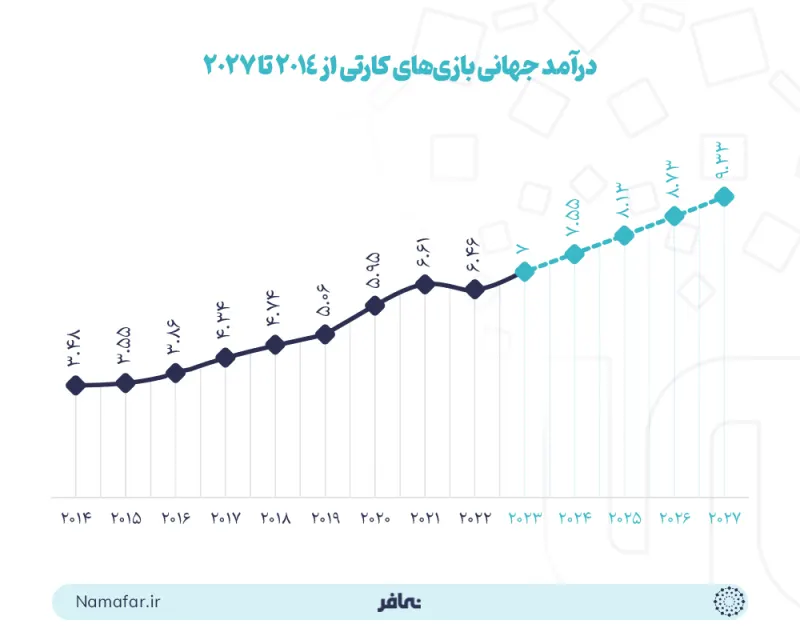
Social card games are a more recent invention. Once again the first playing cards were played in ancient China. They were played in the Tang dynasty (sixth century to ninth century CE). Playing-card games reached Europe in the fourteenth century. Early models of card games were very similar to tarot cards. One can also experience various modern and classic medieval versions of card games digitally and as online card games on today's digital gaming platforms. Revenue from playing-card and card games in 2023 was exactly 7 billion dollars. This figure will reach more than 9 billion dollars by 2027.
Board games Board Games|older ancestors of the world of games
If you enjoy well-known board games such as Monopoly or Scrabble, you share a pleasant 5000-year-old feeling with the ancient Egyptians. We may not know the original rules of these games, but there is a painted panel of the well-known board game Senet whose antiquity dates to about 3500 BCE.
The invention of the first well-known Chinese board game was in 200 BCE. Also in Western Europe from 400 BCE they played the thinking game Tafl, which was very similar to chess. In fact board games brought the role of board games in history to maturity. The game Go, or Weiqi, dates to 200 BCE and is among the old board games in history belonging to South Korea. The history of backgammon in Iran is around the year 600 CE (by means of dice), chess from India at the same time, and Nine Men's Morris from medieval England. Of course many think this board game originated from the Roman Empire. Snakes and Ladders Moksha Patam, the well-known old game of snakes and ladders, is one of the world's most popular children's games, which began in the sixteenth century in India.
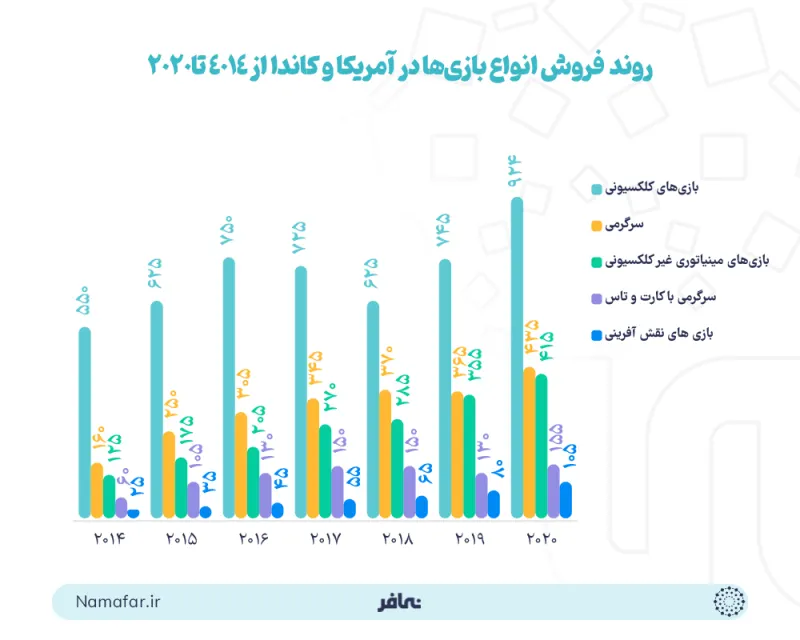
The share of board games in the entertainment industry keeps growing. This can be inferred from the sales trend of new board games in the United States and Canada.
The impact of board-game history
Games in the strategy genre among board games accounted for roughly 26 percent of the game industry's market share in the world in 2022. This figure is not the result of a few years' or a few decades' activity. To grasp these figures we must put the story of historical board games more under the magnifying glass. With a simple look at humankind's glorious civilizations one can see that they had a reason and a logical justification for all their actions. Thinking games and entertainment were no exception to this rule. Since board games have been part of countries' cultural heritage, there are good reasons to experience these classic board games, and in what follows we will point to two prominent examples of the reasons for playing the best-known strategy board games.
Play to strengthen the power of strategic thinking
Usually the world's best board games consist of a board and a few pieces. At first glance everything is simple. But with these same simple components one can plan the most complex maps and strategies for attack or defense on a battlefield. The same thing that, as historians attest, happened in 1863 CE during the American Civil War. The boom in board games in America coincided with the great Battle of Gettysburg. Commanders who were avid fans of the strategy board game Stratego (Capture the Flag), and whose military genius caused the capital of the southerners of the American region to fall easily.
Since the experience of board games helps your strategic-thinking skill, understanding the nature of these thinking games has a large effect on your long-term outlook and decision-making in personal life. Teaching board games, together with teaching methods of assessing a situation, brings strategic thinking as an efficient tool for creating your future.
Games that strengthen and increase the power of inference and reasoning
If you have not played group games such as Mafia, you have at least heard the name once. The gameplay of Mafia games proceeds on the basis of logical arguments. The sciences around logical reasoning have been current since the ancient Greeks. On the other hand, the roots of some mystery board games (the negative role) based on reasoning, such as Pesseia, are borrowed from Greek literature. So one can conclude that various board games can acquaint us, like our predecessors, with cognitive and perceptual skills. With the least theory and instructional notes you can provide the grounds for learning and strengthening and increasing your power of reasoning by means of board games and the best tabletop games.
Summary
Game-industry revenue in the board-game market in 2022 reached about 3 billion dollars and by 2027 it will reach about 5 billion dollars. Various games in the strategy genre, as the most popular game genres among the best thinking board games, accounted for roughly 26 percent of market share in 2022.
Various tabletop games are a group pastime that can help strengthen solidarity in a gathering, grow social skills, and improve relationships. These strategy games can also help increase players' power of strategic thinking and power of reasoning. Other types of tabletop or board games, or board games, include dice games, various tile games, and card games and playing cards. Revenue from card games and playing-card games in 2023 was exactly 7 billion dollars. This amount will reach more than 9 billion dollars by 2027.
Sources
- Statista
- ICV2
Machine-translated from Persian by Namafar; the Persian original is authoritative. Read the original in Persian