What do the numbers say about Jordan's orange economy?
From Petra, the ancient rose-red city, to the shores of the Dead Sea, every region of Jordan speaks of long-standing civilizations. A small country in the heart of the Middle East, with middle income and a young, educated population that is grappling with a high youth unemployment rate. In such countries, the orange economy, because of its enormous potential to drive economic growth, create jobs, stimulate innovation in various sectors, improve social inclusion and strengthen cultural heritage, can initiate and lay the foundation for inclusive development.
The "orange economy" is a concept that encompasses the creative and cultural industries and includes sectors such as media, design, visual arts, cultural heritage, entertainment and digital technologies. The orange economy is also known by other concepts such as the creative economy and the economy of the cultural and creative industries. In the orange economy, art, commerce, technology and culture come together both to produce economic value and to enrich cultural identity. The article "The Orange Economy: Definition and Measurement; a Case Study of Jordan" has quantitatively measured the size and economic share of "Jordan's orange economy" and seeks, by examining this sector's share in GDP, value added, jobs created and so on, to identify the strategic measures needed for a national macro policy.
Jordan's trade deficit in the cultural and creative industries
Creative goods are products and services that include cultural, artistic and creative content such as media, design, entertainment and software. Jordan's exports of creative goods from 2002 to 2012 were in the range of 50 to 55 million dollars and by 2015 had increased to 65 million dollars, which overall is a low figure. Meanwhile, imports of foreign creative goods into Jordan in these years increased steadily and rose from 150 million dollars to more than 360 million dollars (average growth rate 7 percent). Since imports have grown at a much faster speed relative to stagnant exports, the trade deficit in creative goods rose from about 100 million dollars in 2003 to about 300 million dollars in 2015. This means that Jordan spends 300 million dollars more annually on importing creative goods than it exports of its domestic creative products. As a result, Jordan's trade deficit in creative goods is increasing.
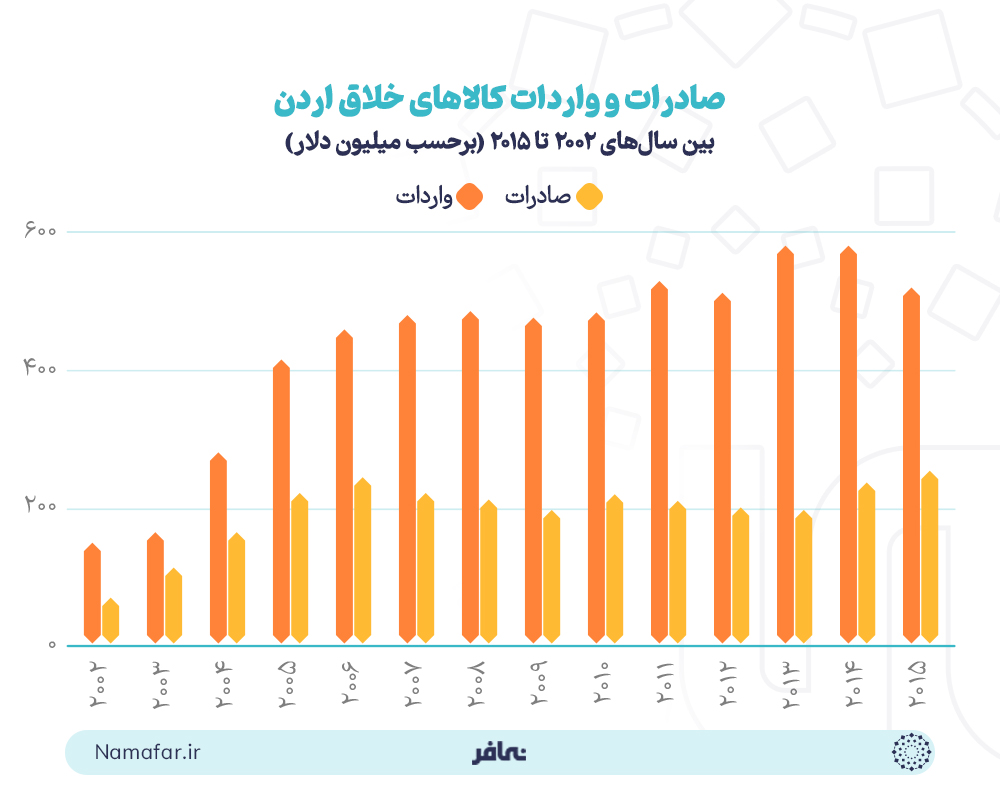
Rapid growth of creative-economy value added
Value added is defined as reflecting the share of GDP, or the economic value produced by a company or sector—in this article the cultural and creative industries. An examination of the course of changes in nominal value by the orange economy between 2011 and 2018 shows that the value added of Jordan's creative economy grew at a very high speed in this 8-year period.
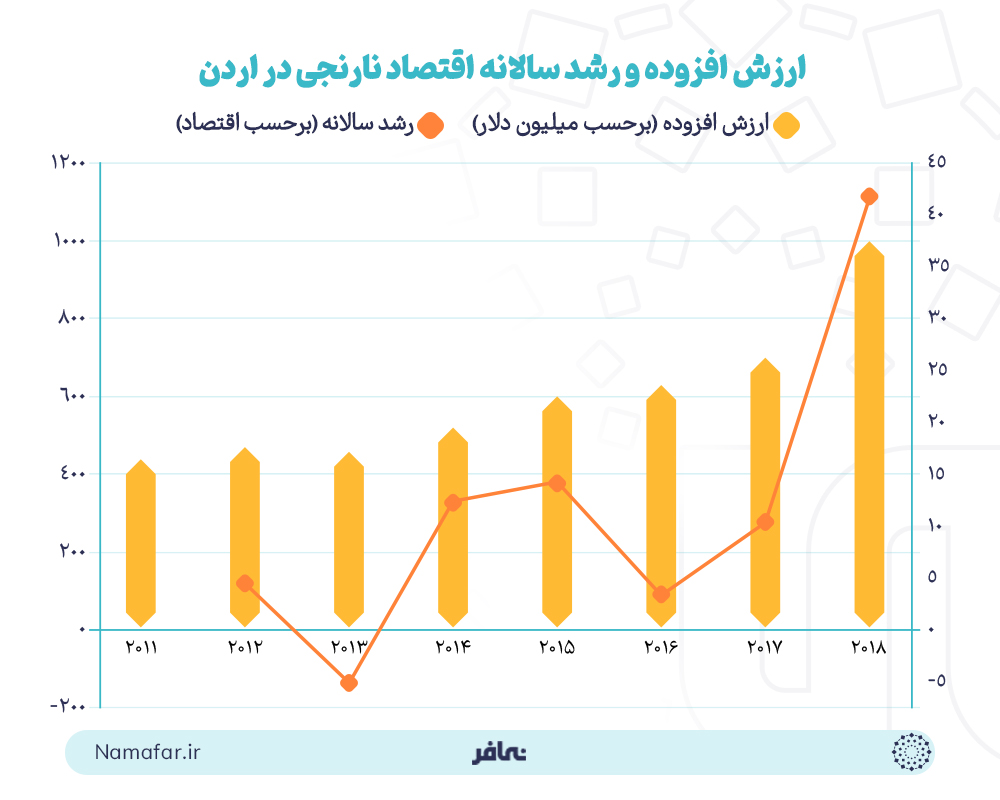
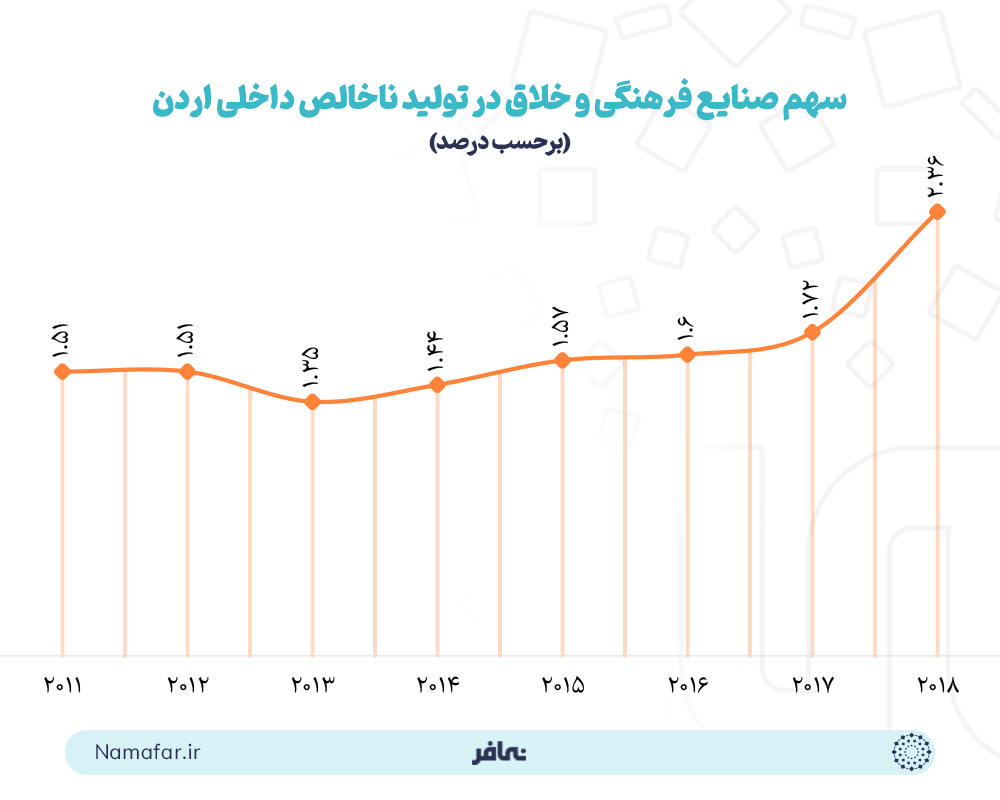
The GDP value added of the cultural and creative industries rose from 437 million dollars in 2011 to 997 million dollars in 2018 and had a twofold increase. These figures show 13 percent annual growth. To understand this figure more correctly, it should be known that in the same period Jordan's national economy grew only 2.4 percent a year. Another important point is the increase in the orange economy's share of GDP, which rose from 1.5 percent in 2011 to 2.4 percent in 2018, a considerable share.
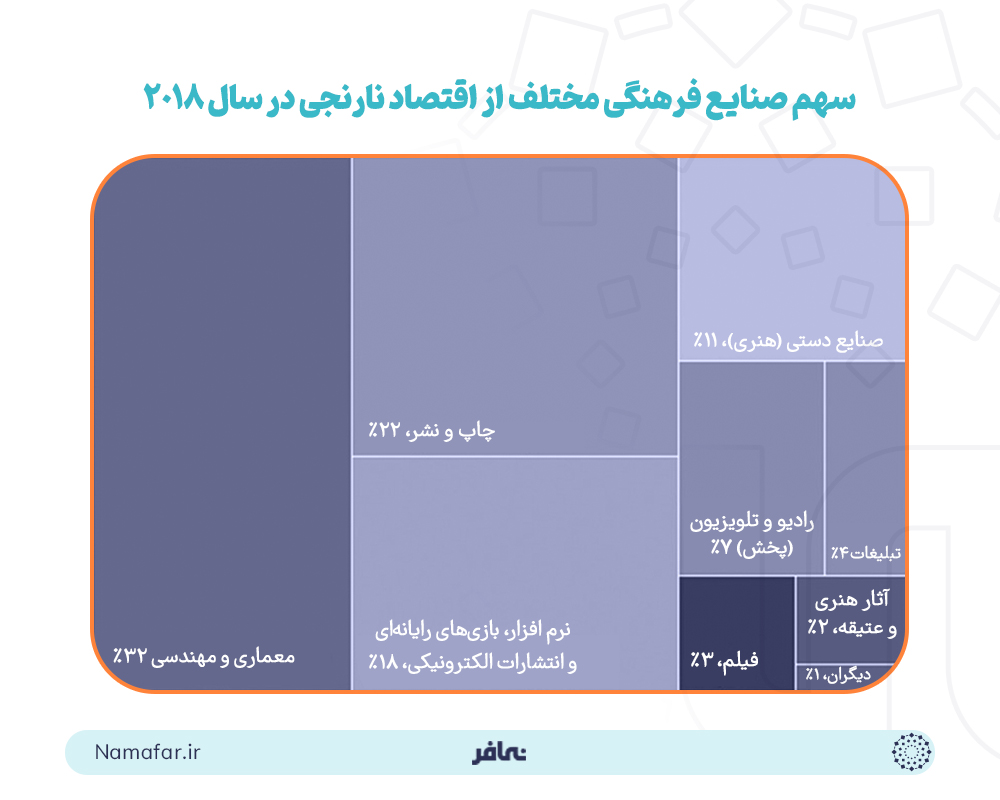
Share of various industries of Jordan's creative economy
An examination of the share of different sectors of Jordan's orange economy shows that the architecture and engineering services sector has accounted for almost one third (32 percent) of the entire orange economy, which given the high demand for construction in Jordan is natural. Printing and publishing, with a 22 percent share of the creative economy, is in second rank, and software, games and electronic publishing, with 18 percent, is in third place. Art and handicrafts, radio and television, advertising, film, art and antiques and other sectors, respectively with 11, 7, 4, 3, 2 and 1 percent, are in the next places.
Employment growth with a welcome for performing arts and cultural education
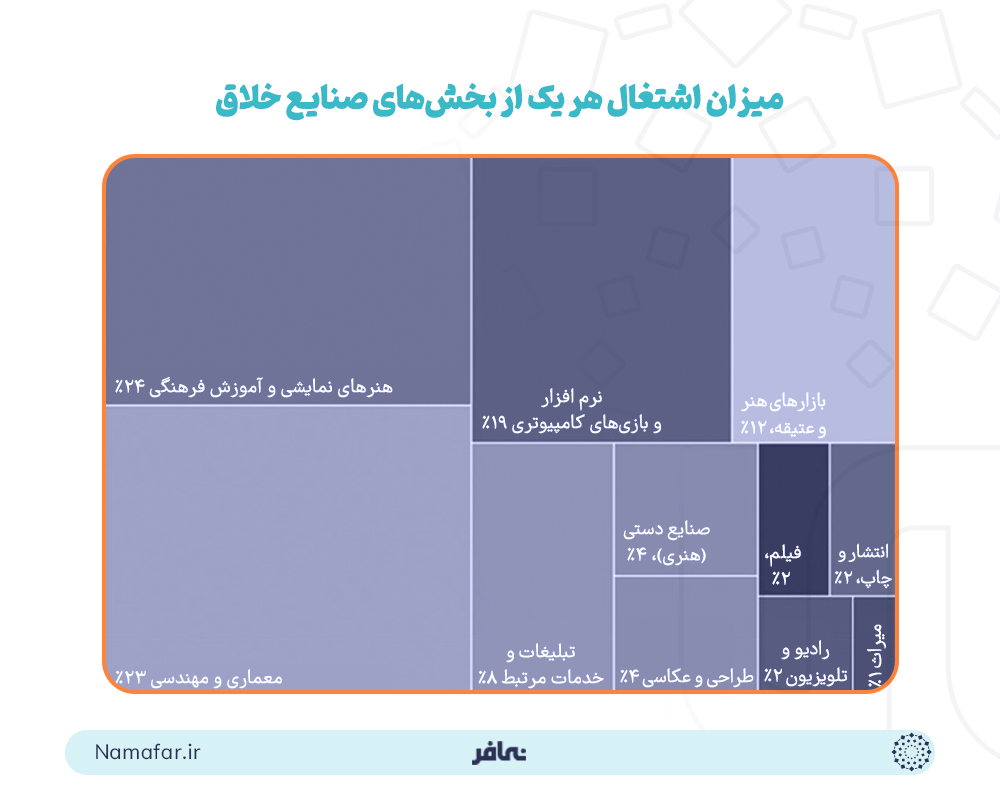
Jordan's employed labor force in the cultural and creative industries in 2018 increased to 98 thousand people, a figure equivalent to 3 percent of all employed people in Jordan. Given that the orange economy has a 2.4 percent share of Jordan's GDP, this sector has a higher employment rate compared with the average of the whole economy. Women have also accounted for 28 percent of the orange economy's labor force, which is twice the 14 percent female participation rate in the whole economy. On this basis it can be said that the cultural and creative industries in Jordan have provided more and more inclusive job opportunities. A look at creative-economy jobs by cultural and creative industries shows that performing arts and cultural education, with a 24 percent share of creative jobs, is in the lead. Architecture and technical services with 23 percent, software and computing with 19 percent, art and antique markets with 12 percent, and advertising with 8 percent are in the next ranks.
Employment: the priority of Jordan's strategic program for the cultural and creative industries
Dividing GDP by employment created shows an interesting structure in which high-income subsectors such as media and publishing, despite a larger share of GDP, create less employment. This is while sectors such as cultural education and performing arts, despite their GDP being close to zero, have created more employment. For this reason the priority of Jordan's program for its creative ecosystem has generally been focused on industries such as games and tourism.
The place of Jordan's game development companies in the Middle East and North Africa
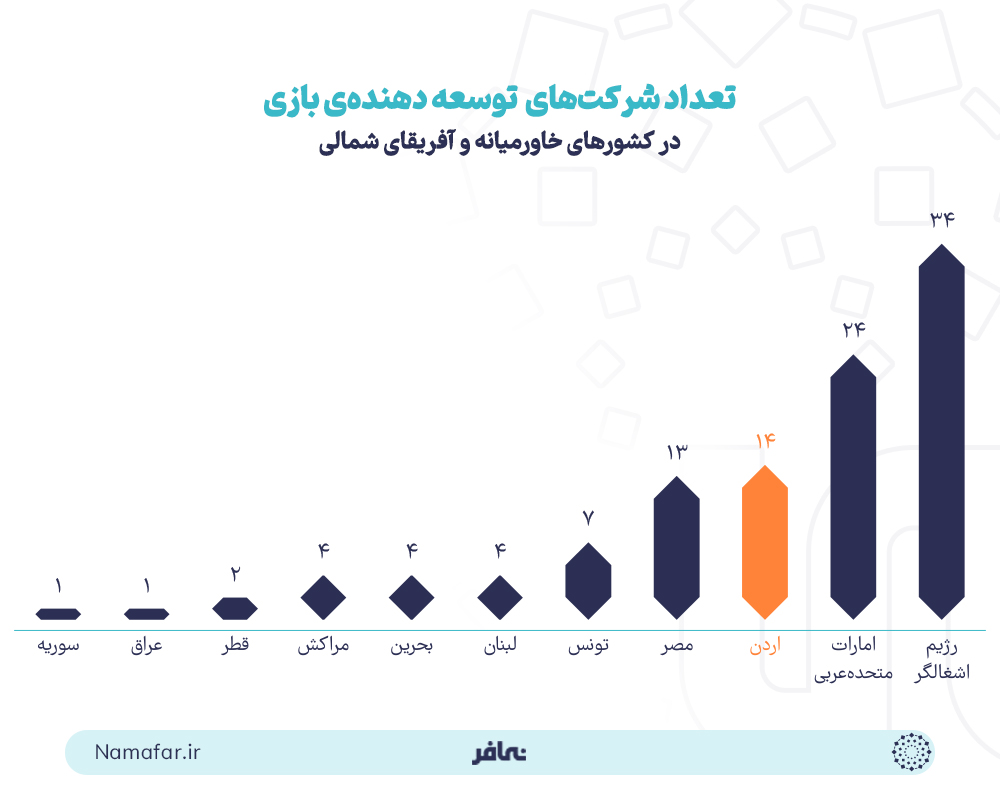
An examination of the number of registered video game development companies in some Middle East and North Africa countries shows that Jordan punches far above its weight. This country, with 14 game-developer companies, after the Zionist regime and the UAE, which have larger economies, is in third rank in the region. Jordan has human capital, entrepreneurial conditions and supporting institutions for the flourishing of the video game developer ecosystem, and there are abundant talents in this country for making innovative media products.
Identifying strategic priorities
The authors of this article, focusing on sectors such as architecture, publishing, software, games, digital, art, handicrafts and design, performing arts and cultural venues, have identified some strategic priorities. These recommendations include improving intellectual-property support, providing specialized training and financial access, promoting exports, and increasing public budgets for cultural venues. Drafting a national strategy to maximize the potential of the orange economy in Jordan has also been emphasized.
Closing remarks
Quantifying the size of Jordan's orange economy using national statistics has drawn back the curtain on its growing value as an influential source of growth and employment. The figures indicate the dynamism of the cultural and creative industries in Jordan with 100 thousand jobs, which are expanding at a speed more than twice that of its stagnant economy.
Although in a region that until a few years ago is known more for state-led economies or oil-extracting industries this concept is somewhat unconventional, the dynamism and entrepreneurship of Jordan's creative economy highlight an alternative, more inclusive and more sustainable outlook for the future. An alternative that is rooted in the unlimited potential of human imagination rather than limited material resources.
Machine-translated from Persian by Namafar; the Persian original is authoritative. Read the original in Persian