Abstraction, imagination, desire; animation has found a place among these three concepts and, by narrating and visualizing what humans have been eager to see and hear but that has of course been impossible, has gained many fans. On this basis it may perhaps be claimed that among the creative industries, no industry is as tightly bound to technology as animation. Every change and transformation in the world of information technology has taken animation a step forward. From pushing the manga industry to the margins to the widespread replacement of comics—which began in 1990—it was the application and gift of technology and computer software that has advanced animation. For example, an examination of 58 top-grossing animations from 1977 to 2022 indicates that 49 animations have used computer-generated images and only 9 animations have made no use of computer technology to produce images and have dominated the box office with techniques such as hand-drawn two-dimensional design.
But beyond these cases, the question now is what effects the rapid progress of artificial intelligence has had and is having on the animation industry. Is artificial intelligence, like other technological advances, also a gift for animation, or will the announcement of its emergence and presence also bring fears. Answering this question is not simple and it must be addressed from various angles and aspects. In this regard, Ranjia Shi in the article “The development trend of the animation industry in the context of information technology and its challenges” has examined the impact of artificial intelligence technology on the animation industry from two aspects, production processes and business models, a rereading of which and its prominent points are presented below.
Rapid growth of artificial intelligence revenue and research and development
Artificial intelligence is a technological phenomenon with a high growth rate in various dimensions. A global examination of the number of articles in the field of artificial intelligence shows that the number of articles about artificial intelligence increased from 162.444 articles to 334.497 articles in 2021. The 2022 Artificial Intelligence Index report of the University of Oxford indicates an increase in demand for labor related to artificial intelligence. Also, an examination of global artificial intelligence market revenue indicates the astonishing growth of this market, which has risen from 200 billion dollars in 2015 to more than 2300 billion dollars in 2023.
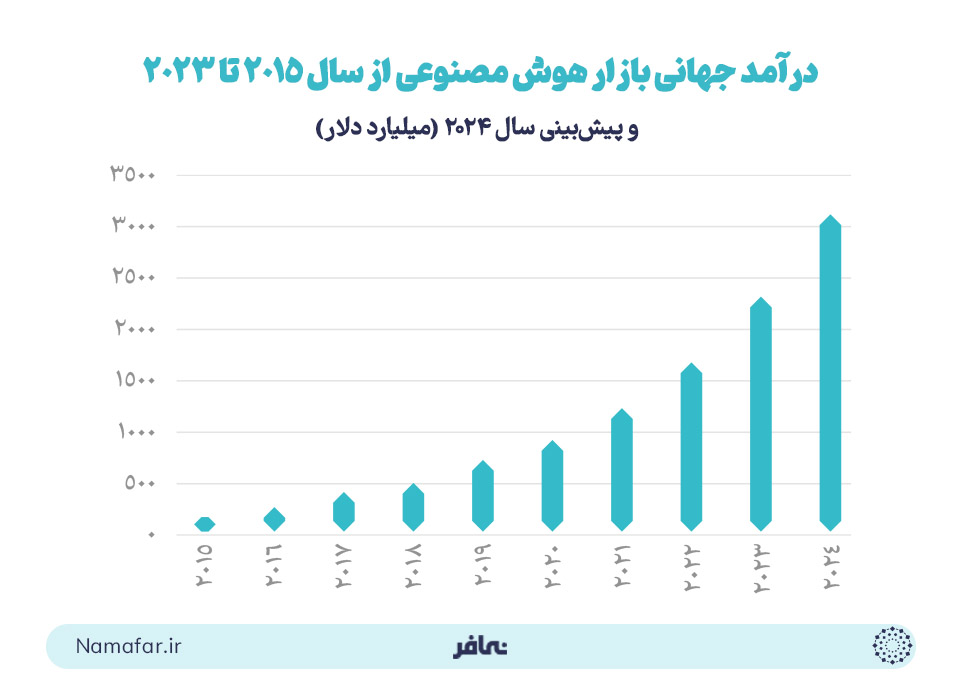
But a look at the categorization of articles on creative industries and artificial intelligence makes clear that the topic of artificial intelligence and animation has received less attention from researchers and this field needs examination and knowledge production. As noted, below the impact of artificial intelligence on business (commercial) models and production processes in the animation industry is set out.
The evolution of the co-production model in the presence of artificial intelligence
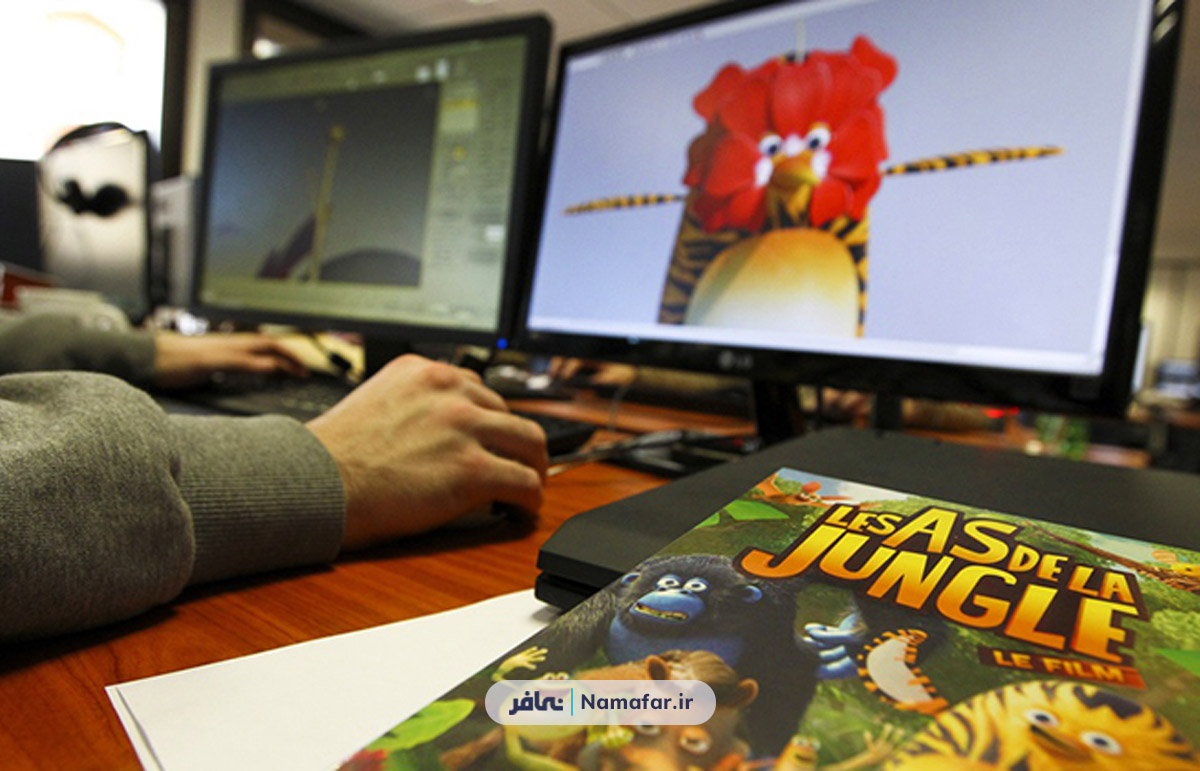
An examination of the trend of how the business models of studios and creators in the animation industry have evolved shows that at the outset many of them in making animation were dependent on and interested in outsourcing various stages of production to outside organizations and freelance individuals. The outsourcing model can be seen as influenced by two main factors: savings in reducing costs, and the increase in market and viewers’ demand for content. As projects became more complex as a result of the increase in product quality, animation production costs also rose sharply; in these conditions outsourcing allowed many studios to reduce costs by hiring cheaper labor. Also, with the growing demand for animation content and the inability to produce it, outsourcing allowed animation creators to define and work on several projects at the same time.
However, now and in conditions in which technology—especially artificial intelligence—has made possible the production of animations of suitable and at times stunning quality, many animation creators and studios have been steered toward a co-production model instead of a full outsourcing model. In this model, routine and procedural processes are often carried out by the creators themselves with the help of artificial intelligence technology, and creative responsibilities in the production process rest with outside organizations and individuals; of course in this model the role of outside organizations has also expanded to financial participation, and if the project succeeds they will have a share.
The co-production or sharing model has enabled animation creators and studios to strike a balance between creative supervision and production flexibility and to enjoy their benefits. Now, as noted, the possibilities and capabilities of artificial intelligence, especially in procedural and routine processes and stages, will bring many positive effects for the animation industry.
Opportunities and challenges of artificial intelligence in animation production
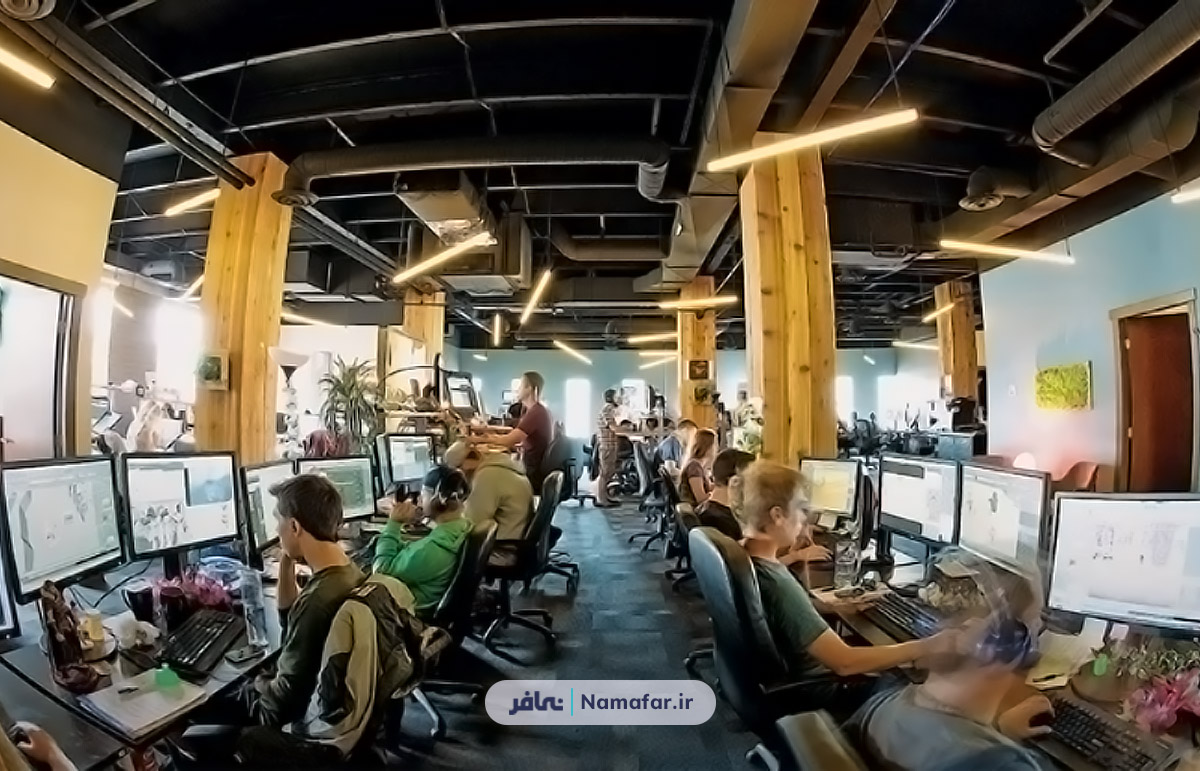
The presence of artificial intelligence in the processes and stages of making and producing animation has a dual character and involves uncertainty. In general, new technologies such as artificial intelligence affect design, editing, output and the tools related to them and reduce the time required compared with traditional techniques. Today the possibility of remote collaboration, cloud storage and digital assets have facilitated work on joint projects without dependence on location, and it is predicted that artificial intelligence will enhance each of these and create a better experience for users. Also, the increase in the quality and complexity of products that artificial intelligence has brought has caused studios to have a competitive advantage in attracting talent in this field, and the use of higher levels of it is regarded as a possibility for advantage.
Nevertheless, the announcement of a technology’s emergence has never been without fear, and every technology has also brought challenges to some degree. On this basis, artificial intelligence productions are often regarded as a threat to human creativity and the authenticity of the work, and the animation industry is no exception to this rule. Overreliance by animation studios on artificial intelligence can lead to the loss of essential human skills such as character design, storyboarding and two-dimensional drafting. Also, although artificial intelligence can increase productivity, if it reduces authenticity its use in the animation industry may be limited.
Conclusion
This article has examined the development trend of the animation industry in the light of technological progress—with a focus on artificial intelligence. The findings show that technology has transformed business models from the outsourcing model to co-production, and the production process has also been accompanied by opportunities and challenges. Among the opportunities created by artificial intelligence one can point to creating a competitive advantage, increasing productivity and the advancement of production tools, and the threat to human creativity, neglect and the decline of essential skills and the loss of authenticity are among its challenges.
It appears that technology has been and is an inseparable part of the animation industry and its development, and appropriate use of it will lead to success. However, studios and animation creators are advised to have a strategic plan for using technology, such that they establish a balance between human creativity and technology (artificial intelligence), because by adopting this approach, in addition to increasing production and quality, creativity and innovation can also be added as a flavor.
Machine-translated from Persian by Namafar; the Persian original is authoritative. Read the original in Persian