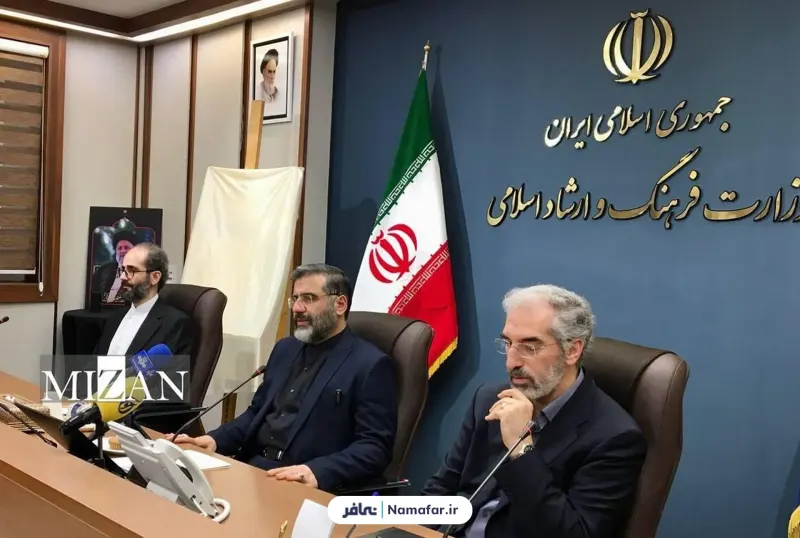
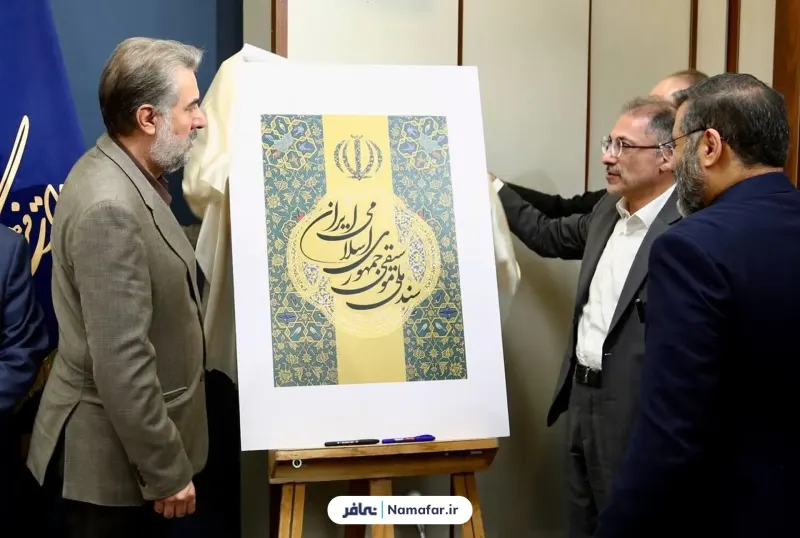
The National Music Document of the Islamic Republic of Iran is a charter that has been compiled in order to regulate, preserve and elevate the country's music culture on the basis of Islamic and Iranian values. This document was approved in 1402 (2023/24) in the Supreme Council of the Cultural Revolution and was communicated for implementation by Seyyed Ebrahim Raisi—then-head of the Supreme Council of the Cultural Revolution—to the relevant ministries and institutions including the Ministry of Culture and Islamic Guidance, IRIB (Islamic Republic of Iran Broadcasting), Howzeh Honari of the Islamic Revolution, the Office of Islamic Propagation of the Qom Seminary, the Center for the Management of Seminaries, the Art Council of the Supreme Council of the Cultural Revolution and the Secretariat of the Supreme Council of the Cultural Revolution. In the note ahead we will have a review of this document and with a critical look examine its weaknesses and strengths so as to arrive at a balanced assessment of the current situation and potential grounds for improving it.
A review of the National Music Document as a whole
The National Music Document of the Islamic Republic of Iran has been compiled in 8 sections including an introduction and seven articles.Download the National Music Document file
In the introduction section the philosophy of art and music from the perspective of the discourse of the Islamic Revolution and its place in Islamic civilization has been addressed. Also, while presenting a brief pathology of the current state of music, it has stipulated the necessity of designing and implementing a policy framework.
Article One has addressed the foundations, values and principles of the document. The orientation of art, the purposefulness of music, the capacities and functions of music, the attractiveness and deep influence of music, and the understanding of music in fiqh are among the issues that have been briefly examined in this section and emphasis has been placed on the necessity of attending to them.
Article Two has addressed explaining the document's objectives. These objectives include all facets of the matter of music from the policy-related to the cultural, spiritual, economic and social.
Article Three, under the title of issues, has addressed the existing challenges in the arena of music.
Article Four has stated the document's macro policies, which look to the outlook of the Islamic Revolution and Iranian culture.
Article Five, in fifteen clauses, has enumerated the measures necessary to resolve existing issues and realize the objectives in line with the macro policies.
Article Six has implicitly stated executive activities and Article Seven executive requirements. Executive responsibility for this document has been entrusted to a committee under the title "National Music Executive Headquarters." The chairmanship of this committee is the responsibility of the deputy for artistic affairs of the Minister of Culture and Islamic Guidance, and its members consist of the director general of the Music Office of the Ministry of Culture and Islamic Guidance, the director of the Music Office of IRIB, the director of the Music Office of Howzeh Honari, the representative of the Office of Islamic Propagation, the representative of the Qom Seminary, and the head of the House of Music.
Strengths of the document
Putting art in the service of religion
In this document a sacred view of art and specifically of the matter of music prevails. In other words, Iran's National Music Document considers art not for the essence of art but as a tool in the service of religion. Setting aside confirmation or rejection of this philosophy, accepting it in a country such as Iran that now stands at the crossroads of tradition and modernity can have two consequences.First, that in the years after the Islamic Revolution, traditional fiqh has always been a serious challenge on the path of Iran's music. For example, despite the fact that even Imam Khomeini and the Leader of the Revolution have had a flexible view of the matter of music and have issued no fatwa indicating its absolute prohibition, the display of any kind of musical instrument over the past decades on IRIB of the Islamic Republic has been forbidden. This document, by emphasizing the divine dimension of music and with regard to its elevating opportunities, by referring to great Iranian figures such as Farabi, Rumi and Avicenna who were also authorities on music, and also by referring to the fatwas of the leaders of the Revolution, has condemned any absolutism and zero-one view of music and has rejected theories that consider music in itself evil. Inviting specialists in religion to new thinking about music in this document can make of Islamic fiqh not an obstacle but a support for Iran's music.
But this coin also has another side, and that is the possibility of the intervention of taste and the deprivation of artistic freedom. Although according to Article Six of the document, revision of the permitting system and preventing the intervention of natural and legal persons has been placed on the agenda, what executive guarantee is there for it? In circumstances in which even among jurists there is much clash of opinions regarding the permissibility or impermissibility of some instances, taking fiqh as the basis without presenting transparent standards leaves persons' hands largely free to apply taste. Therefore it is necessary that as far as possible vague generalities and the use of ambiguous sentences and words be avoided and, in consultation with a group of jurists, scholars and experts in religion, clear standards be compiled.
Attention to original Iranian music and the treasury of Persian poetry
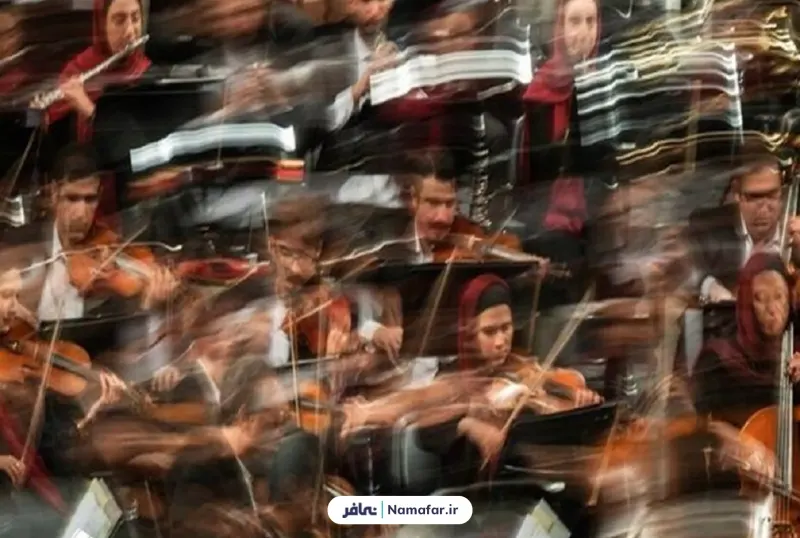
Iranian traditional music and Persian poetry have for centuries been intertwined with one another. The correspondence of Iranian musical modes with classical Persian poetry has caused these two not only to reflect one another's capacities but also to be able to help each other's richness. But the change in people's lifestyle and following that the change in their musical needs, the increase in diversity in music styles, and the change in people's taste especially of new generations are among the factors that intensify the danger of the weakening of Iranian traditional music. Among the most important strengths of the National Music Document is recognizing the worth of this ancient Iranian heritage and placing it in priority as a cultural capacity. In Article Six, various executive activities for supporting traditional music and drawing on the treasury of ancient Persian poetry have been raised, among the most important clauses of which one can point to "allocating the airtime of nationwide television networks to Iranian, ritual and regional music."
Attention to the necessity of music education at the base ages
One of the common harms in cultural policymaking is having a revolutionary approach in the sense of a sudden uprising to create vast changes, which is not practically realizable and results, if any are obtained, will not be sustainable. Understanding this important point that people's musical taste is formed not over one year and a few years but over long years and as slowly as possible, and changing it will be equally time-consuming and slow, helps us design a more rational, less costly and more efficient path. Among the strengths of this document that have taken shape as a result of a rooted and long-term view is the reference to music education in kindergartens, preschools and schools. Overall this document in numerous clauses has addressed material and spiritual support for education at various ages from childhood to adulthood in various official institutions from kindergarten to university.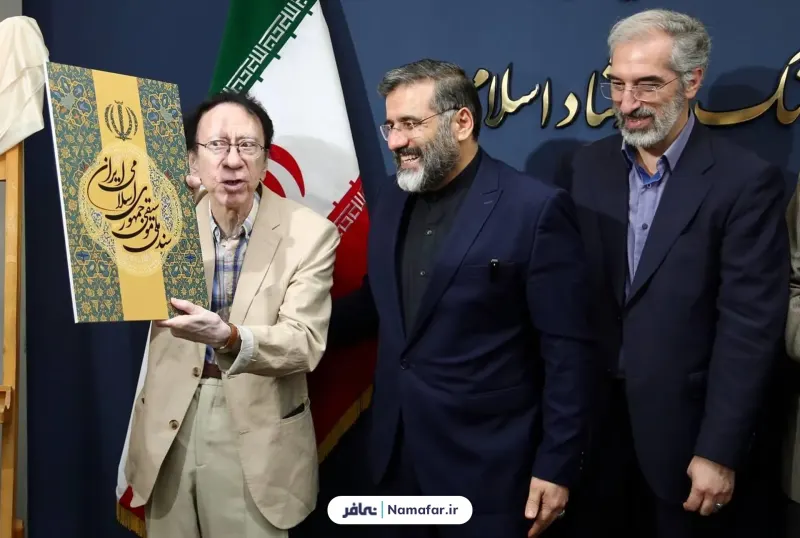
Attention to local music
Perhaps many of us Iranians still cannot distinguish the Luri language from some other local languages, but we certainly remember the song "Baro Baro Baroone Hey" that in the eighties we used to hear from IRIB antennas, and we know well that it belongs to the noble Lor people. If we are aware of the importance of local languages as supporters of the Persian language, we understand the importance of local music twofold as well. Local music can in a sense be the identity document of a people and a vessel for preserving their language. On the other hand it can also be a tool for interaction with other peoples that helps the cohesion of culture and the solidarity of society. The compilers of the National Music Document, understanding this important point, have not left local music outside the circle of their attention and in clauses have addressed support for it.Attention to the necessity of international interaction
To speak of the importance of international interaction in the arena of music we are inevitably drawn to pointing to the phenomenon of K-pop. The successful experience of South Korea shows how understanding the importance and requirements of international interactions can extend a country's cultural borders throughout the world. Any country that has the dream of cultural conquests in the world will inevitably need the tool of music. The National Music Document of the Islamic Republic too, with regard to its cultural outlooks, has had this important point in mind and has addressed support for holding international events. Also in this connection it has pointed to support for artists' performances at tourism and ecolodge destinations.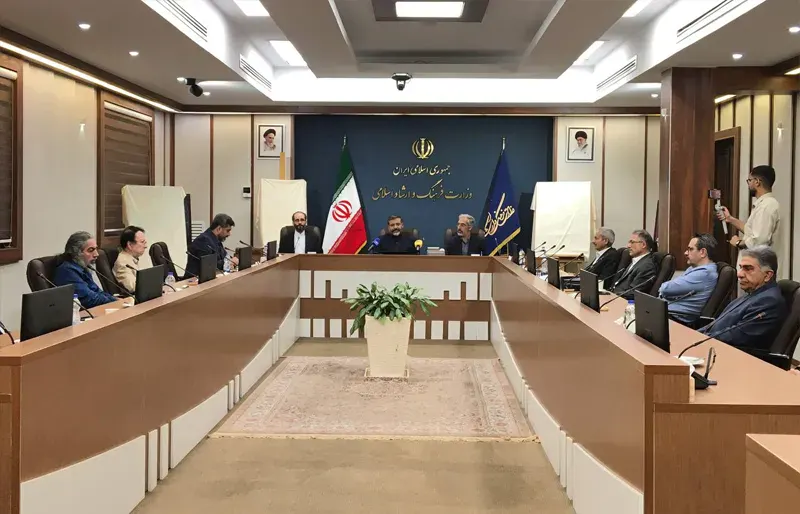
Weaknesses
Insufficient attention to the importance of form in art
The emphatic emphasis on elements such as human-making, knowledge-orientation, wisdom-orientation, ethics-centeredness and, in a single phrase, placing the entire burden of education and upbringing on the slender shoulders of music, which is seen throughout the document, without attention to artistic subtleties, can itself lead to the vulgarization of music. Art's dealing is more with the aesthetic faculty than with prudence and thinking. Art is created to stir feeling, not necessarily to justify logic. Art does not directly give counsel but prepares the human inner self to accept counsel. Even so, it is never empty of meaning but is entirely symbol and ambiguity. We should not mistake the singer for the preacher and the stage for the pulpit. Looking at artistic works produced in recent years such as songs, anthems, nowhehs and so on, we see how preferring content over form, and that only a particular type of content, can drag art down to the depths of vulgarity. In other words a weak form not only cannot be a suitable mount for conveying rich content but even slaughters the most sublime concepts. Therefore it is necessary that in policymaking and explaining the desired standards, equal with content, attention also be paid to the necessity of the solidity of form.Ignoring society's musical needs
On the other hand, emphasis and focus on a particular type of content, without attention to other content needed by society, will also be limiting in terms of the diversity of music style. In Article 4 under the title of macro policies, only music at the level of the Islamic Revolution (music based on knowledge, wisdom and the discourse of pure Islam and confronting cultural invasion in the domain of music) has been considered, and with this definition a vast spectrum of music genres and styles will have no place in the governance's macro policies and their artists will face numerous problems. Although in clause one of the document it is said that the name of a music style cannot be the criterion for evaluating it, the tenor of the document is in conflict with this proposition. Because religious and values-based content naturally requires its corresponding style and other styles will inevitably remain unused. Beyond this, why should content other than religious and values-based content not have a place in the calculations of the document's drafters? Is the content function of music limited solely to the educational domain?One must take care that the talk is not of non-sublime music but of the diversity of need. Just as we cannot say that sublime poetry is necessarily poetry of the didactic style, regarding music too we cannot make such a claim. People at times of joy, sorrow, love or the experience of any other feeling and also commensurate with various occasions will turn to poetry and music. Therefore if the goal is the elevation of Iran's music and the cultivation of audiences' taste, one should not, by focusing on a particular style and content, neglect society's other musical needs, which is equivalent to ignoring a large part of potential capacities.
Not addressing the challenges of intellectual property
One of the greatest existing challenges in Iran's music industry is the weakness of laws and mechanisms related to intellectual property, which has been neglected in this document. Copyright laws are compiled to protect the rights of creators and prevent unauthorized distribution of their works. In Iran, copyright laws are old, weak and inadequate, which has weakened economic and cultural potential and innovation mechanisms and has hindered the growth of the music industry. In the National Music Document, although the necessity of preserving artists' rights has been emphasized briefly, no measure has been presented in order to realize it. Of course solving the problem of intellectual property in Iran requires a multifaceted approach that includes legal reforms, institutional support and public awareness-raising.On this basis it is proposed that first attention be paid to the necessity of designing a legal framework for supporting copyright in music. In other words it is necessary that clear definitions of rights and obligations, executive measures and requirements, and penalties in the event of violation be presented.
Second, that attention be paid to institutional supports for safeguarding artists' rights. In many countries organizations have been established to protect intellectual property. These organizations can work closely with the government to convey the needs and concerns of the music community in order to attend to them in policymaking. They can also facilitate the process of obtaining permits and receiving royalties for artists. Creating such organizations in Iran can also strengthen the international dimension of Iranian music. In fact the weakness of copyright law and the absence of such institutions has hindered the global growth of Iranian music. Because in the global music market, strong support for copyright is very important for collaboration, distribution and advertising. When foreign artists, producers and distributors see Iran as weak in applying copyright standards, they are dissuaded from interacting with Iranian artists. This deprives Iranian artists of opportunities to reach international audiences and participate in cultural exchanges.
Increasing international collaborations such as joining intellectual-property treaties and cooperating with global organizations such as the World Intellectual Property Organization can help fill existing gaps and place opportunities for access to global markets before Iran's artists.
Effort for public awareness-raising about the necessity of supporting copyright is also important. Many Iranians still do not have a complete understanding of the impact of plagiarism and illegal distribution on the music industry and artists' livelihoods. Holding public education campaigns can highlight the value of intellectual property in society and encourage audiences toward the legal use of music. Schools, universities and the media can play an important role in this area.
Lack of understanding of the necessities of the digital world
"Continuous prevention of cultural, economic, social and political harms and crimes possible on the margins of music with special regard to cyberspace." This is the only clause present in the National Music Document that has cast a side glance at the digital space; and that with a negative and pathologizing look. In fact using the word "virtual" about a platform in which today a vast part of humans' real life flows, by itself shows how incapable some policymakers are of understanding the necessities of their age. How can one speak of cultural exchange and international outlooks but not even in a single clause address the necessity of the internet and social networks? Suppose that Iranian artists can produce the most sublime musical works according to the very definitions and ideals presented in the National Document; on which platform is it to be offered? With which tool is it to be exported to the world? Ignoring such a subject, which is rooted in unrealistic ambitions and denial of the requirements of the time, takes place while today the greater part of the revenue of the world's music industry is obtained through digital streams.Iran's music industry is now faced with a host of digital problems that arise from these very inattentions in cultural policymaking.
One of the causes of the weakness of intellectual property in Iran that we addressed earlier is the absence of digital rights management (DRM) systems. The lack of such a mechanism makes the publication of illegal content on various platforms easy. On the other hand, many music platforms that are widespread in the world such as Spotify, SoundCloud, Deezer, YouTube and so on face the problem of filtering or sanctions in Iran, which limits Iranian artists' access to global audiences and deprives them of the possibility of obtaining significant income and ultimately pushes artists and audiences toward platforms that have no commitment to copyright. The narrowing of artists' view and the reduction of the quality of their works are among the other consequences of this issue. Because music platforms are an important tool for audience analysis and communication with them for artists.
Therefore, it is necessary that policymakers, with a positive look at the internet and the digital space and an understanding of its extensive capacities, identify existing challenges and think of solutions to resolve them.
Final word
The National Music Document of the Islamic Republic of Iran is a charter that has been compiled in order to regulate, preserve and elevate the country's music culture on the basis of Islamic and Iranian values. This document was approved in 1402 (2023/24) in the Supreme Council of the Cultural Revolution and was communicated for implementation by Seyyed Ebrahim Raisi—then-head of the Supreme Council of the Cultural Revolution—to the relevant ministries and institutions. In this note, we first had a general review of the aforementioned document, then we examined its strengths and weaknesses. Putting art in the service of religion, attention to original Iranian music and the treasury of Persian poetry, attention to the necessity of music education at the base ages, attention to local music, and attention to the necessity of international interaction are among the items that were raised as strengths of the document. Insufficient attention to the importance of form in art, ignoring society's musical needs, not addressing the challenges of intellectual property, and lack of understanding of the necessities of the digital world were also examined as weaknesses of the document.
Short link: nmfr.ir/zm2
Machine-translated from Persian by Namafar; the Persian original is authoritative. Read the original in Persian