The renowned auction house Christie's, having obtained a commercial license in Saudi Arabia, intends to expand its operations in the Persian Gulf region. This move is an important turning point for Saudi culture and the arts, as Christie's will become the first international auction house to establish a permanent base in the country. The auction house's aim is to strengthen its relationships with Saudi collectors, especially the new wealthy generation, and to carry out ambitious cultural projects in the country. In Saudi Arabia, the auction house will focus on modern and contemporary art of West Asia, jewelry, and watches. Christie's has previously had a presence in the Persian Gulf region. The auction house established a branch in Dubai in 2005 and, by holding successful auctions of modern and contemporary art in the UAE, became recognized as a pioneer in this field.
In recent years, the Persian Gulf has become a hub of cultural investment, and Saudi Arabia has seen an increase in the number of museums, galleries, and cultural events launched as part of the Vision 2030 project to reduce the country's economic dependence on oil. This has made Saudi Arabia an attractive market for Christie's. The country hosts a large number of private and public art collections, biennales, and cultural institutions. Thus, Christie's move demonstrates Saudi Arabia's growing importance in the global art market.
Art in Saudi Arabia is presented as a fundamental element in the country's efforts to carry out domestic reforms and strengthen cultural diplomacy. Drawing on its extensive resources, the country seeks to realize economic and social priorities under the Vision 2030 strategy, and art is considered the central axis of these efforts so that it can attract the international art community. Among the measures taken in this direction is the creation of modern artistic spaces that are attractive to tourists and artists.
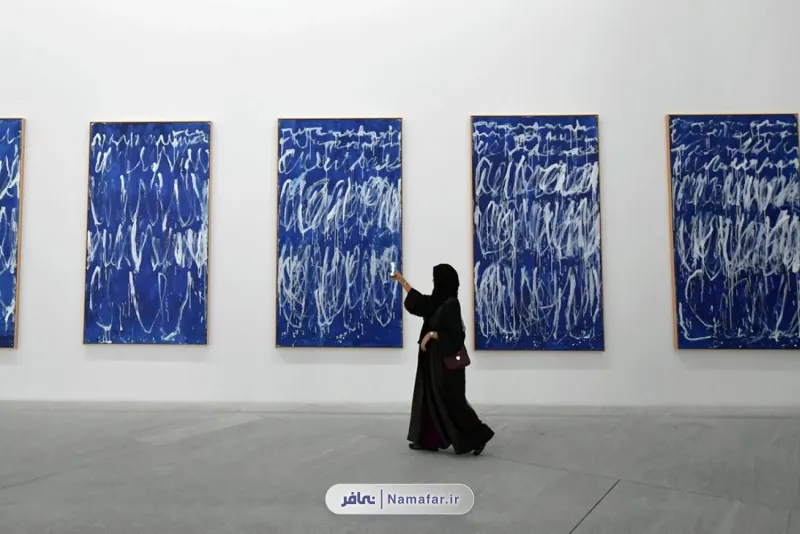
These changes also help strengthen Saudi Arabia's cultural diplomacy and soft power. Using art as a tool for connecting with other countries and different cultures, the country is seeking to expand its international relations. This approach not only helps increase global recognition of Saudi culture, but also provides an opportunity for cultural and artistic exchange. Therefore, in this article we will analyze the state of Saudi Arabia's cultural and artistic economy in order to better understand the reasons for Christie's decision to establish a branch in Riyadh.
Cultural and creative industries' 2.38 percent share of Saudi Arabia's GDP
Saudi Arabia, focusing on preserving and showcasing its cultural heritage, has prioritized the cultural sector as a driver of further development. This strategic focus is aligned with the country's Vision 2030 diversification goals. Since the Ministry of Culture was established in 2018, 11 cultural commissions have expanded the sector's influence and intend to raise its economic share to 3 percent of GDP by 2030. According to the latest statistics, the share of Saudi Arabia's cultural and creative industries in the country's GDP is 2.38 percent. Saudi Arabia also has more than 11 850 cultural centers classified as micro, small, or medium enterprises (MSMEs). The labor market in cultural fields has also grown. Based on data from the third quarter of 2022, the number of employees of both genders in direct cultural professions increased by 5.53 percent, reaching 181 709 people, mainly due to an increase in the number of chefs and baristas in the culinary arts sector. More than 64 percent of the cultural workforce is employed in these two professions.
Before the concept of cultural sectors was fully formed in Saudi Arabia, artists, patrons of the arts, and galleries operated in a limited circle. Currently, the Visual Arts Commission, together with the Diriyah Biennale Foundation and other related bodies, have provided a platform for connecting artists and exhibitions with various art communities so that they can connect to the global art scene. By creating these opportunities, Saudi artists have been enabled to showcase their creativity at local, regional, and international levels.
Rise in Saudi Arabia's exports of artworks and antiques in the first quarter of 2024
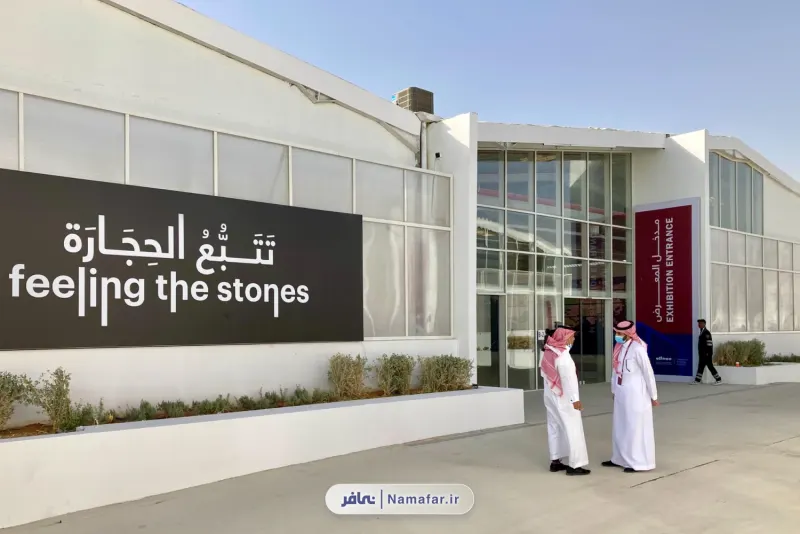
Saudi Arabia's Ministry of Culture is seeking to help realize artists' creative goals through legislation, providing financial assistance, and furnishing offices, studios, and production and development facilities, financing cultural businesses, and attracting investment, both in the short term and the long term. According to a report by the Saudi newspaper Al-Watan, the value of Saudi Arabia's exports of artworks and antiques in the first quarter of 2024 rose to $473.6 million, which, compared with $143.7 million in the first quarter of last year, indicates significant progress. This figure is expected to reach a record 2 billion Saudi rials ($533.3 million) by year-end. These exports include paintings produced by Saudi artists and sculptures made from various materials such as bronze, marble, and wood. Handmade items such as carpets, jewelry, and copper objects, as well as antiquities from various civilizations that took shape on the Arabian Peninsula, are also among these exports.
Saudi artworks are mainly exported to European countries such as the United Kingdom, France, and Italy, as well as to the United States. Arab destinations include the UAE and Qatar. In recent years, Saudi Arabia has seen remarkable growth in the tourism industry, which has played an important role in increasing interest in art in the country. The country has supported the development of the art sector by holding exhibitions and festivals.
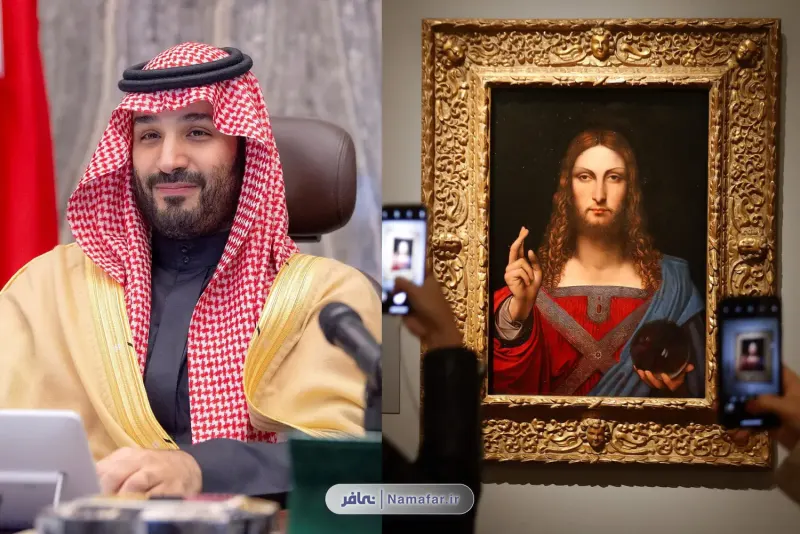
According to a Bloomberg report, the value of projects related to Saudi Arabia's Vision 2030 has reached $1.3 trillion. This plan includes the development of luxury retail infrastructure as well as artistic and cultural infrastructure. Riyadh currently hosts the annual Noor Riyadh art festival and the Diriyah Biennale. As the art sector grows, Christie's is clearly seeking to expand its operations in the country. In 2017, the auction house sold Leonardo's Salvator Mundi painting to Mohammed bin Salman, the Saudi crown prince, for $450.3 million.
The state of the art trade in Qatar and the UAE: the cultural landscape in Saudi Arabia's neighborhood
Christie's is not the only auction house paying attention to the Persian Gulf. Recently, Abu Dhabi's sovereign wealth fund concluded a one-billion-dollar contract with Sotheby's owner, Patrick Drahi, to buy a minority stake in the company. This deal took place after a sharp decline in Sotheby's revenue in the first half of 2024. Investment in the Persian Gulf is not a new subject, but we are now seeing a significant increase in this area. This indicates the desire of art companies to expand their activities and move toward regions with high financial potential, especially under current economic conditions.
Statistics indicate that imports and exports of artworks in the United Arab Emirates will exceed $2.5 billion by 2026. This forecast indicates annual growth of 4.8 percent in imports and 4.3 percent in exports from 2021. These figures indicate a significant increase in artistic activity and cultural trade in this country. The UAE, like Saudi Arabia, has moved toward economic diversification in an effort to reduce dependence on oil revenues and has invested more in the cultural and artistic sectors. This country's investments in cultural and artistic arenas, as well as the holding of international festivals and exhibitions, have been welcomed by major auctions, museum directors, gallery owners, and prominent artists from around the world.
Qatar, like the UAE, has made significant investments in culture and the arts and has arranged numerous programs for launching museums and holding artistic events. Focusing on multinational policies, these two countries are trying to represent the contemporary art of the region (Moridi and Kalantari, 1401 (2022/23)). Statistics indicate that the value of Qatar's visual arts market has increased in recent years and in 2019 reached $13.4 million. It appears that Saudi Arabia is also trying not to fall behind its neighbors in the arena of culture and the arts.
Conclusion
In recent years, Saudi Arabia has seriously pursued the strengthening and development of the field of culture and the arts. These efforts have not only helped increase this country's exports of artworks, but have also been able to attract foreign investment. The various programs Saudi Arabia is carrying out in establishing art galleries and museums and holding cultural and artistic events will help the boom of the art market in Saudi Arabia. In addition, the opening of a Christie's auction house branch in Saudi Arabia, as the world's largest auction house, can have a significant impact on this country's progress in the field of art. This move helps the boom of art in Saudi Arabia, and the Saudi art market is expected to find its place at the international level.
Namafar invites you to read the post Transformation of Saudi Arabia's cultural industries and the Entertainment Authority.
Sources
Moridi, Mohammad Reza, Kalantari, Mona (1401 (2022/23)). Paradigm shift from national art to transnational art: a study of art developments in the United Arab Emirates and Qatar. Journal of Fine Arts: Visual Arts
Machine-translated from Persian by Namafar; the Persian original is authoritative. Read the original in Persian