Imagine it is early evening and you are walking in the center of a busy city. You pass clothing boutiques that are connected to one another like train cars and stretch to the end of the street. At the far end of the street, you reach a street vendor's stall whose pile is books. You sit beside it and look for an old copy of your favorite novel. You have not yet found it when the beat of a piece of music reaches your ear. It is a street musician who is sitting farther on, right opposite the city's large cinema, and playing the hang drum. You jump up in a rush to support their art with the last remaining banknotes in your bag. You walk toward them with long steps when someone calls out: "Wood-burning painting with the design of your choice!" You remember that for your room's hallway you wanted a new painting. Now you are left, a few banknotes and the duality of music or handicrafts and a book you have not found. And the cinema? Do you not want to see this season's highest-grossing film?
What are cultural industries?
Everything we reviewed in this short imagining is a manifestation of cultural industries that weave the strands of art, entertainment, and social values into the fabric of our everyday life. Cultural industries, also known as creative industries, include goods and services that have a cultural nature. Cinema, theater, music, books, video games, apparel, handicrafts, stationery, and tourism are examples of creative industries. These industries promote cultural diversity, sustain national heritage, stimulate creative and artistic expression, and strengthen social cohesion. But their impact is not limited only to the sphere of culture and society, and they also have a notable role in economic development.
The state of the global cultural industries market
According to a UNESCO report, cultural industries annually generate a value equivalent to 2.25 trillion dollars, which amounts to about 3 percent of global gross product and creates nearly 30 million jobs worldwide. With the emergence of digital technologies, creative industries are increasingly finding their audiences at the world level and expanding their economic influence. But the growth and sustainability of these industries in each country often depend on governments' macro policies. Examining the experience of various countries shows that establishing institutions that are specifically tasked with developing cultural sectors has a notable role in implementing these policies and advancing them. One case worth studying in this matter is Saudi Arabia's General Entertainment Authority, which shows the importance of driving institutions in the growth of creative industries.
Saudi Arabia's strategy in expanding cultural industries
Saudi Arabia in 2016 established the General Entertainment Authority as part of the Vision 2030 plan. Vision 2030 is a strategic framework for transforming Saudi Arabia's economy and society through diversifying the economy, reducing reliance on oil revenues, and improving people's quality of life. One of the main goals of this vision is to increase households' spending on cultural industries from 2.9 percent to 6 percent by 2030. Saudi Arabia's General Entertainment Authority is considered one of the most important actors of this plan and plays an important role in reaching Vision 2030.
Saudi Arabia's General Entertainment Authority; a driving engine for the Saudi economy
But to what extent has the establishment of a dedicated general authority been effective on the expansion of cultural industries in Saudi Arabia?
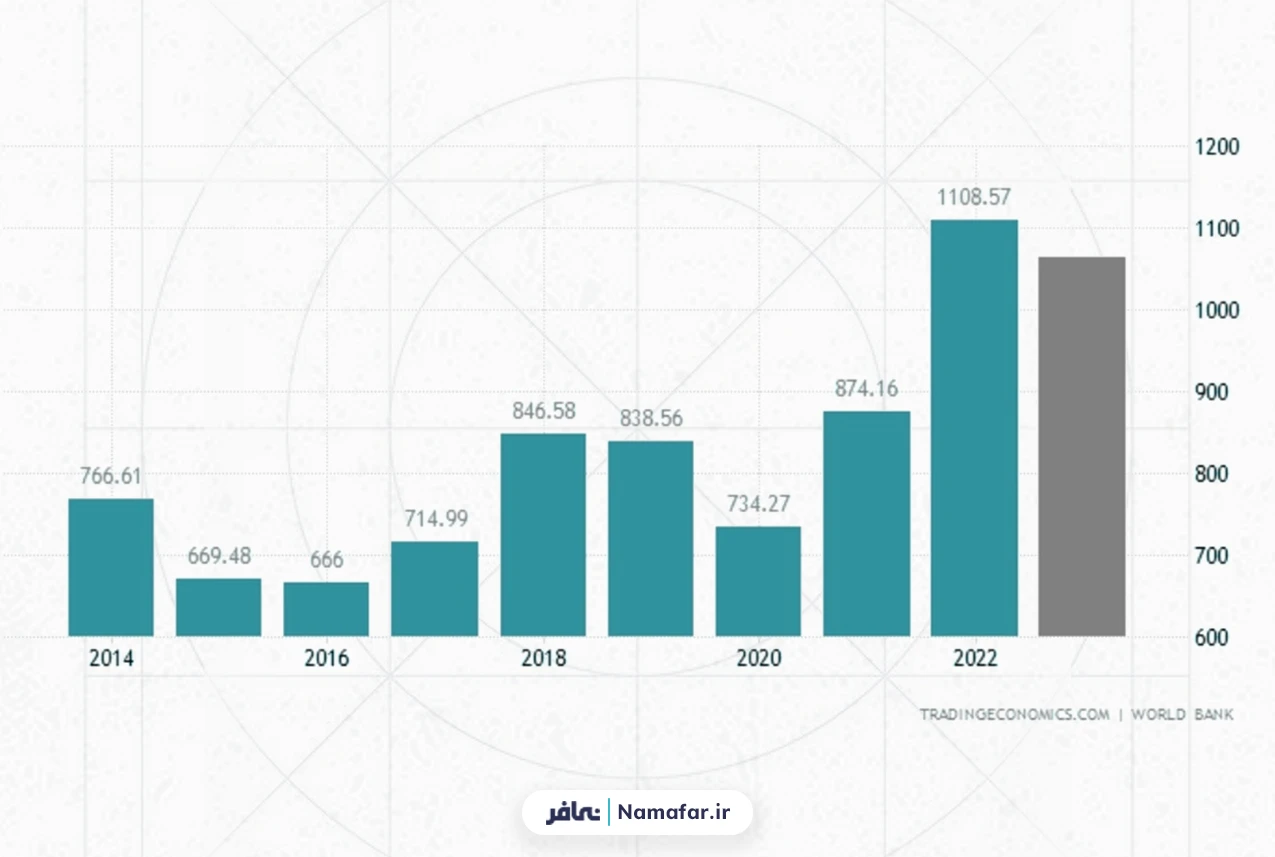
Saudi Arabia in 2022 was recognized as the world's fastest economy, and in that year the growth of its gross product share reached about 7.5 percent. The chart below shows the trend of Saudi Arabia's GDP growth, which from 2016 to 2022 has doubled.
One of the most important factors in Saudi Arabia's economic growth is the expansion of the culture and creative industries sector, such that Saudi Arabia is becoming a cultural economy. Reports show that this sector's share of GDP from 2016 onward, that is, from the time the General Entertainment Authority was established, has grown substantially and in the future will constitute a notable portion of Saudi Arabia's economy. The General Entertainment Authority intends to bring this sector's revenue to more than 23 billion dollars by 2030 and increase its share of GDP to 3 percent. In addition, creative industries have so far created many job opportunities for Saudi Arabia, and forecasts indicate that by 2030 they will be able to create more than 100 thousand jobs. Saudi Arabia's General Entertainment Authority pursues this goal through various initiatives that to this day have also had notable achievements.
Initiatives and achievements of Saudi Arabia's General Entertainment Authority: Developing entertainment infrastructure
One of the most important initiatives of Saudi Arabia's General Entertainment Authority is developing entertainment infrastructure. Projects such as Qiddiya, Jeddah, King Salman Park, and the Sports Boulevard are set to become cultural hubs. It is forecast that Qiddiya alone will attract 17 million visitors a year by 2030 and become the world's largest entertainment city. This city now houses more than 300 entertainment centers, including a stadium on top of a cliff with a capacity of 20 thousand people, motorsport facilities, the world's largest theme park, a world-class water park, golf courses, cinema, and a performing arts theater. In addition, Saudi Arabia in the past six years has focused on increasing the number of cinemas, theaters, and entertainment complexes. This country now has 66 cinemas in 22 cities.
Producing national content
Promoting national content and defining various incentives for it has been another initiative of the General Entertainment Authority. After the lifting of the 35-year cinema ban in 2018, Saudi Arabia's film industry has had a striking boom. Since the opening of Saudi Arabia's first cinemas in 2018 this sector has had a stunning 986 million dollars in revenue, which has now become a 1 billion dollar market. It is forecast that this figure will reach 1.70 billion dollars by 2030. Saudi national film production has also increased. From 2018 to 2024 nearly 2,000 films including 45 national films have been screened in Saudi Arabia.
Hosting international events
Among the other initiatives of Saudi Arabia's General Entertainment Authority one can point to hosting international events, which has raised Saudi Arabia's global image and standing and turned this country into a global tourism destination. Over the past six years Saudi Arabia has seen a striking increase in the number and scale of hosting international events in the sports, recreation, and culture sectors.
The Saudi Seasons initiative, which includes 11 entertainment festivals, has been significantly effective in strengthening Saudi Arabia's national economy and has created numerous job opportunities. For example, Riyadh Season, which is considered one of the world's largest entertainment festivals, is the record holder of 18 million visitors from around the world and has registered 10 certificates from Guinness World Records in its name.
In the field of sports too, Saudi Arabia has so far hosted prominent events such as the Saudi International golf tournament, part of the European Tour, and the Dakar Rally, which is one of the world's hardest motorsport races. Saudi Arabia hosted this race for the first time in 2020 and attracted participants from more than 60 countries of the world and turned the world's media attention toward itself. This event not only strengthened Saudi tourism, it displayed Saudi Arabia's diverse landscapes and its capacity to host large-scale international sporting events.
Diriyah E-Prix, part of the ABB FIA Formula E championship, has been a recurring event in Saudi Arabia that has solidified this country's place in the global motorsport arena.
The MDL Beast festival, which was launched in 2019 in Riyadh, is among the other prominent events that have placed Saudi Arabia on the global music map. This festival in its first edition attracted 400 thousand participants and showcased performances by famous global artists and became one of the largest music festivals in the region. This festival's success highlighted Saudi Arabia's potential for hosting large events in the global music industry.
Business and cultural conferences have also had striking growth. The Future Investment Initiative (FII), often called "Davos in the Desert," has become a main platform for global investors and policymakers.
Nurturing talent
Saudi Arabia's General Entertainment Authority, understanding the importance of talent in the entertainment industry, has arranged various programs for discovering and nurturing talent. Partnership with international bodies such as the collaborations of the MiSK Foundation provides many educational opportunities for Saudi youth. The aim of these schemes is to nurture a new generation of creative professionals who contribute to the growth and sustainability of this sector.
Closing remarks
Cultural industries, also known as creative industries, include goods and services that have a cultural nature. These industries not only help cultural elevation and social cohesion, they also have an important role in economic development. Cultural industries, which encompass a wide range of high-audience industries such as cinema, theater, books, tourism, handicrafts, apparel, music, video games, and so on, have a vast global market, such that they account for about 3 percent of global gross product. But the growth and sustainability of these industries in each country depend to a large extent on governments' macro policies and on strengthening institutions that are specifically tasked with expanding cultural sectors. In this note we examined Saudi Arabia's General Entertainment Authority as a successful example in this matter, and relying on statistics we showed how this authority was able, within six years, to develop Saudi Arabia's cultural industries, transform Saudi society, strengthen the national economy, and ultimately raise this country's global standing at the world level.
Namafar invites you to read the post Christie's auction in Saudi Arabia.
Author: Zahra Hasani
Short link: nmfr.ir/7a7
Machine-translated from Persian by Namafar; the Persian original is authoritative. Read the original in Persian