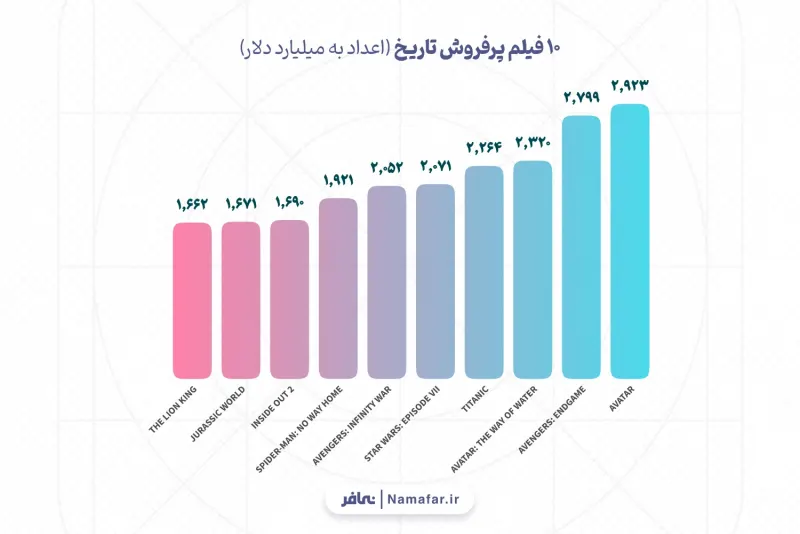
Who would have thought that when in 1923 (Solar Hijri year 1302 (1923/24)) Walt Disney, together with his brother Roy Disney, started making animation in California in the United States in the small studio "Disney Brothers Cartoon Studio," this company would in less than a hundred years become one of Hollywood's largest studios and the most influential players in the entertainment industry worldwide? Last year Disney celebrated its 100th birthday, and this year, according to the reputable Fortune 500 list, it is the 47th highest-earning company in the United States. Also, among the ten highest-grossing films in cinema history, 6 belong to Walt Disney and its subsidiaries. The films: Avengers: Endgame, Star Wars: Episode 6 The Force Awakens, Avengers: Infinity War, Spider-Man: No Way Home, Inside Out 2, and The Lion King.
Walt Disney: standard-bearer of America's creative economy
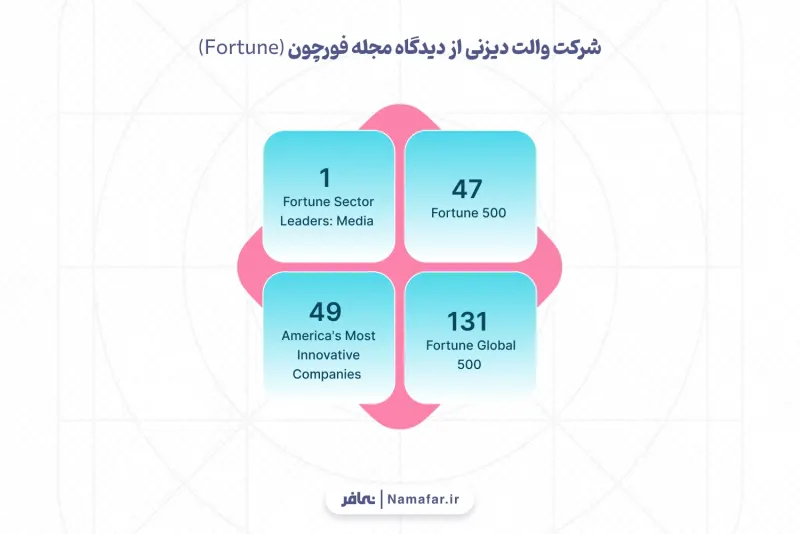
According to a report by Fortune magazine, which publishes annual rankings of the world's wealthy and of various companies based on their revenue, Walt Disney has obtained rank 47 on the list of the highest-earning companies in the United States, rank 131 on the list of the highest-earning companies in the world, first rank in the media industry, and rank 49 on the list of America's most innovative companies.
The story of Walt Disney's birth
The Walt Disney Company was founded in 1923 (Solar Hijri year 1302 (1923/24)) by Walt Disney and his brother Roy Disney. Their work began with a small studio in Los Angeles and the production of short animated series. But their great success came in 1928 with the creation of the character Mickey Mouse, who became not only the company's symbol but also one of the world's best-known animation characters. In the following decades Disney reached the height of fame with the production of successful animated films such as Snow White and the Seven Dwarfs (1937), Pinocchio (1940), and Cinderella (1950). These films contributed to unprecedented innovations in animation and defined new standards in the entertainment industry.
In the 1950s Disney, by building the Disneyland amusement park in California, expanded its activities into the tourism industry. This park quickly became one of the world's most popular leisure destinations and paved the way for the construction of Disney World in Florida. After Walt Disney's death in 1966, Disney continued to expand its activities. The acquisition of major companies such as Pixar, Marvel, and Lucasfilm made this company one of the giants of the entertainment world. The launch of the Disney+ service in 2019 also consolidated Disney's presence in the streaming world.
By 2024, Disney has received a total of 150 Academy Awards, a very considerable number; of these, 32 awards were received by Walt Disney personally. Disney has also won many other awards at various festivals for its different works.
Disney and criticisms
Disney has faced numerous criticisms for some of its older works, including films such as Song of the South (1946), because of the depiction of racial stereotypes and controversial content. These films, especially in recent decades, have been recognized as symbols of racism and discrimination.
By acquiring major companies such as Marvel, Lucasfilm (the maker of Star Wars), Pixar, and 20th Century Fox, Disney has faced accusations of creating a monopoly in the entertainment industry. Critics believe that these takeovers have reduced competition and given Disney excessive control over the film and television market.
Disney has repeatedly faced criticisms because of the image it has presented of different cultures and ethnicities in its films; some Disney films such as Aladdin and Mulan have been criticized for inaccurate or stereotypical depictions of West Asian and Eastern cultures.
Disney has also faced numerous criticisms from family-advocacy groups for depicting people with homosexual orientations in some of its works and for its support of LGBTQ+ groups.
In 2023 Disney also donated 2 million dollars to the organization Magen David Adom (MDA), which is the national pre-hospital emergency service of the Zionist regime, which faced numerous criticisms.
Merchandise, a key role in the success of the Disney empire
The Walt Disney Company is more than a film studio and has become a multifaceted giant in the entertainment industry that has reached great successes using diverse revenue strategies. One of the most important elements of this success is merchandise, or commercial products, which has played a key role in strengthening Disney's position as a global empire.
Merchandise means the production and sale of products related to characters, films, brands, or works of art. In the entertainment industry, merchandise includes the production of items such as toys, clothing, stationery, video games, and other physical products related to films, animations, or famous characters.
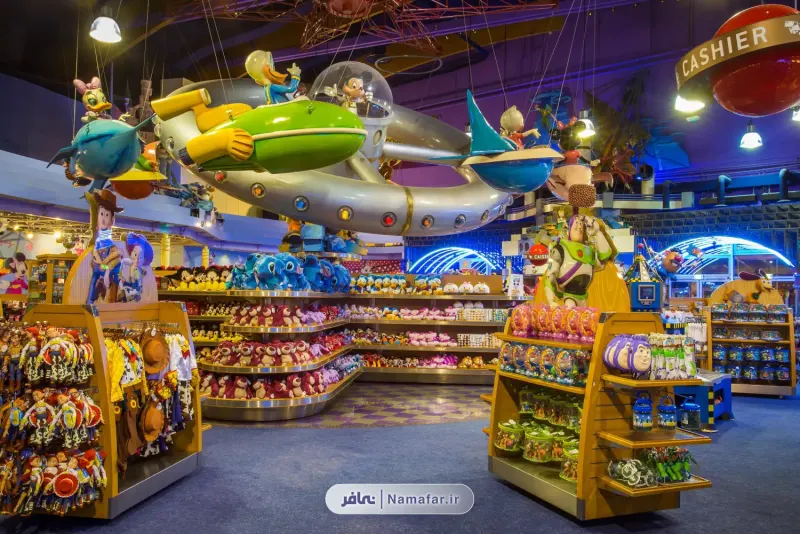
In companies such as Walt Disney, merchandise is an important part of the business model: after the success of films and characters, these ancillary products are offered to the market and help generate considerable revenue. Merchandise acts not only as a main source of revenue but also as a tool for brand development and strengthening the emotional connection with audiences.
The Walt Disney Company was not limited only to producing film and animation; by entering theme parks, television, streaming platforms, and merchandising various products, it was able to diversify its business models and transform from a film-dependent revenue source into a multi-billion-dollar empire.
For long-term success, companies must always seek diversity in their products and services and welcome new opportunities, a matter in which Iranian companies appear to be weak and each has remained alone on its own island.
Lessons from Disney's animation world
Focus on strong storytelling:
One of the factors in Disney's success is its unmatched focus on storytelling. Every animated film produced by Disney has an engaging, deep story with universal messages that audiences of different ages and cultures can connect with. Iranian animation companies too can, by focusing more on strong, local narratives, but with global subjects and themes, create stories that are well received both inside the country and in international markets.
Enduring character development:
Disney characters such as Mickey Mouse and The Lion King are examples of enduring characters that have become cultural symbols. Strong character development, interwoven with human emotions and the challenges of real life, is one of the reasons for Disney's success. Iranian animation companies can create characters with Iranian cultural roots whose stories are appealing not only to Iranian audiences but also to global audiences.
Attention to the international audience:
From the beginning Disney aimed for its animations to be able to attract global audiences. For Iranian companies, especially those seeking growth in international markets, it is necessary that, in addition to addressing national culture and stories, they also consider global aspects and deal with subjects that can be understood and identified with around the world.
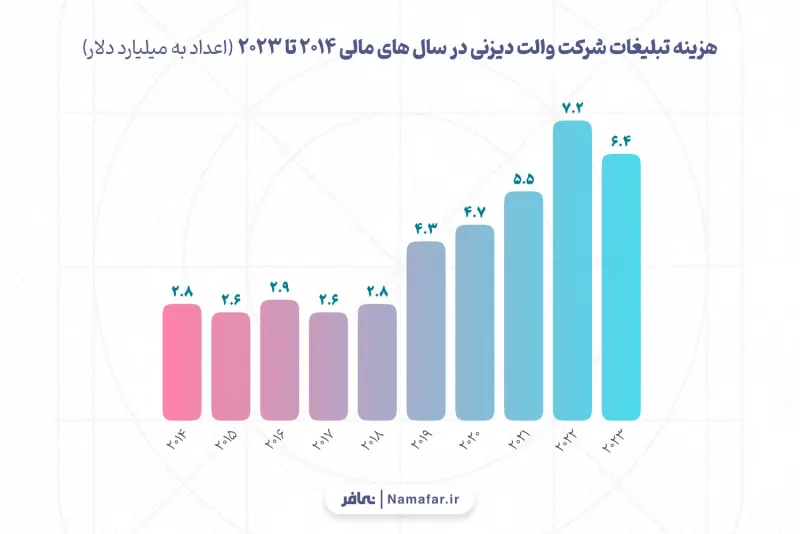
The Walt Disney Company's advertising expenditure in various years, given this company's vast scale across different industries (filmmaking, television, streaming, theme parks, and merchandise products), has been considerable.
These figures show that Disney, given the breadth of its activities in entertainment and media, allocates a large part of its budget to advertising in order to remain in global competition.
With the launch of the Disney+ streaming service in 2019, Disney sharply increased its advertising costs to introduce this service in global markets. In the same year, Disney's advertising amounted to 4.7 billion dollars, indicating Disney's focus on streaming and competition with companies such as Netflix; this amount also increased considerably the following year.
Ancillary product merchandise:
Disney is active not only in film and animation but also in the production of toys, clothing, stationery, clothing, and various ancillary products related to films and animations. Disney is also active in other entertainment sectors such as theme parks and even video games. This multimedia nature has enabled Disney to expand the world of its stories and connect with audiences from different angles. Iranian companies too can, by developing ancillary content such as books, video games, and related products, expand the world of their stories and build stronger brands.
Exact sales figures for the Walt Disney Company's ancillary products are not published separately and publicly. However, ancillary products are part of the company's merchandise licensing revenue. The Walt Disney Company usually licenses the production of ancillary products to other companies.
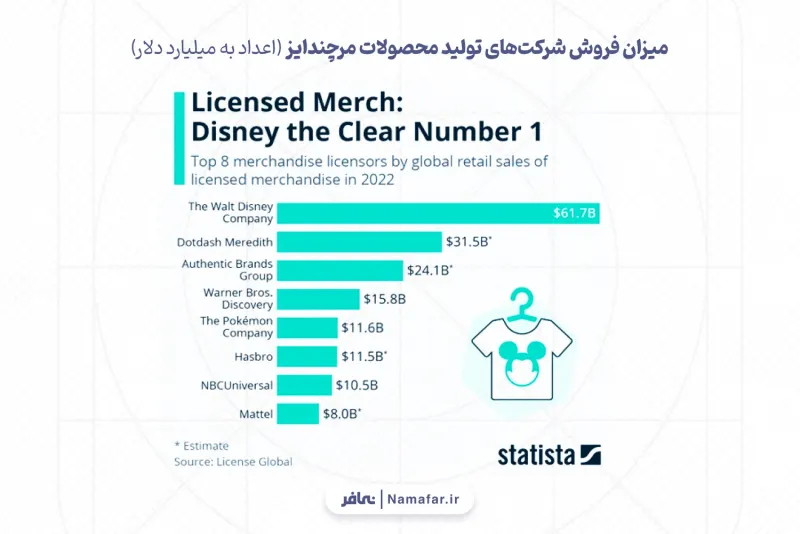
A comparison of the sales of companies producing merchandise products shows that the Walt Disney Company ranked first in merchandise product sales in 2022 at 61.7 billion, almost twice the sales of the company "Dotdash Meredith," which shows that the Walt Disney Company, by a significant margin, is the pioneer in the field of producing merchandise products.
Long-term investment and patience in success:
Disney has repeatedly proven that success requires time, investment, and patience. Many of this company's projects have been in production for years in order to reach the desired final result. For Iranian companies too, patience and long-term investment in animation and raising quality standards are of great importance so that they can achieve lasting successes.
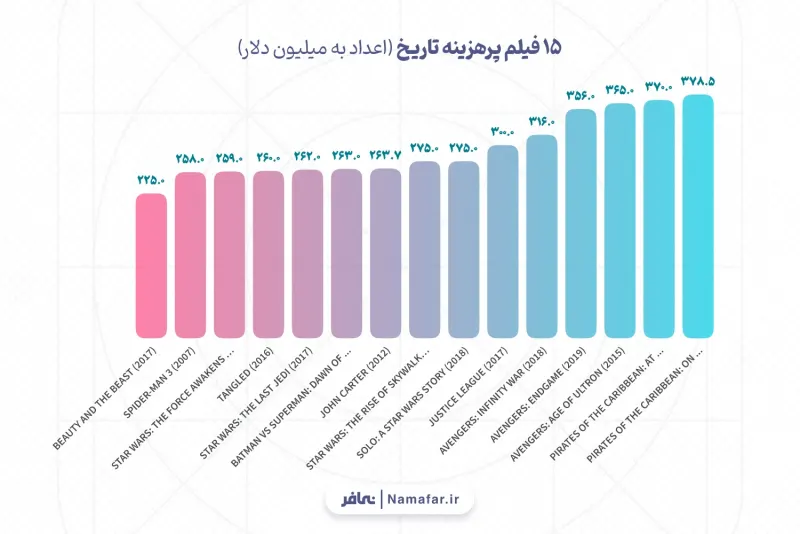
By examining the list of the most expensive films in cinema history, we notice that 12 of the 15 most expensive films in history belong to the Walt Disney Company, which indicates the Walt Disney Company's enormous investment in cinema. Of course it should be noted that the figures in the chart below cover only production costs; film studios usually also spend huge amounts on marketing films.
Most of the films that are on the list of the most expensive films are also on the list of the highest-grossing films, which shows that the investment, production, and marketing of the films have been done well and the films have also achieved high sales.
Closing remarks
The Walt Disney Company, with more than a century of history in the entertainment industry, has become one of the world's largest and most influential brands; in this short note we have tried to have a brief review of this mega-company's background and the experiences and lessons this company can hold for nascent companies in the entertainment field.
It is necessary that we pay more attention than before to the entertainment industry in our country; the entertainment industry is not only a source of recreation and rest. Films, music, and television programs can reflect a society's values, history, and traditions, strengthen cultural and social identity, or destroy a society's identity and culture, eliminate society's hope, and overthrow its values.
The entertainment industry has great power in shaping social attitudes and behaviors and can act as a constructive or destructive force. Attention to the content produced and its effects on society is a vital matter.
Namafar invites you to read Disneyland's revenue.
Machine-translated from Persian by Namafar; the Persian original is authoritative. Read the original in Persian