The Walt Disney Company, with 200 thousand employees, 88.898 billion dollars in annual gross revenue and 2.354 billion dollars in net profit, is one of the world's largest media empires. Disney's revenue strategies include several key aspects that help create and maintain stable income, such as:
1. The film and television industry
Disney is extensively active in the production and distribution of theatrical films and television programs. Disney's major subsidiaries in this area include:
Walt Disney Studios: production of animation and live-action films.
Pixar: maker of the world's finest animations
Marvel Studios: maker of blockbuster films based on comic-book characters.
Lucasfilm: producer of the Star Wars film series.
20th Century Fox: producer of films and television programs.
A noteworthy point is that many of The Walt Disney Company's products are released without this company's direct logo; Disney has well understood that the audiences of its various products are different. Using different brands enables Disney to reach its specific target markets. For example, Disney always tries to maintain its family-friendly and positive image. As a result, some products or more adult content that may not be compatible with the main brand image are released without the Disney name and under other brands, so as to prevent their association with family and children's content.
2019, a golden year for Disney
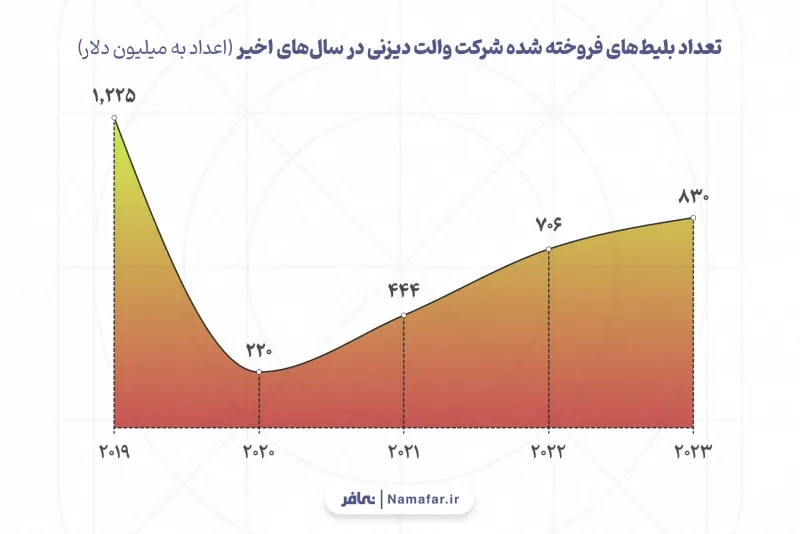
In recent years The Walt Disney Company has faced considerable ups and downs in terms of movie ticket sales. In 2019, Disney, with more than 4 billion dollars in sales at global box offices, especially with titles such as Avengers: Endgame and The Lion King, reached its peak. This year is recognized as one of Disney's most prosperous years. However, in 2020, following the coronavirus pandemic and with the closure of cinemas around the world, Disney's movie ticket sales fell sharply, and this decline was one of the largest drops in Disney's history.
When Disney+ makes up for empty box offices
In 2020, Disney was able to benefit from increased demand for digital content, and Disney+ became one of the most successful streaming services. From its launch in November 2019, this service grew rapidly. In 2021 and 2022 conditions gradually improved, and streaming services became one of the most important components of the entertainment industry. With cinema closures and quarantine restrictions, consumption of digital content increased sharply, and streaming platforms such as Disney+ became a key part of Disney's business strategy.
After COVID-19, Disney changed its content-release model and released many films and series simultaneously in cinemas and on streaming platforms. Disney, along with other streaming platforms such as Netflix and Amazon Prime Video, emerged as the primary way to access cinematic and television content in the post-COVID era. This change caused streaming to remain one of the most important parts of Disney's revenue strategy in the years ahead.
VODs owned by Disney
In recent years Disney has expanded its presence in the streaming space:
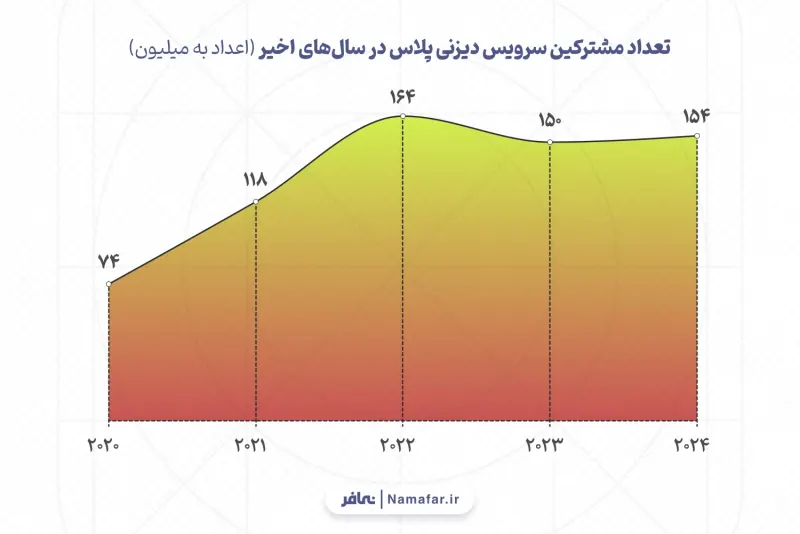
Disney+: Disney's streaming service, which offers exclusive content including Disney, Marvel, Star Wars, and Pixar films and series. Disney+, as Disney's main streaming service, has reached more than 150 million active subscribers and has become one of the world's most important streaming services, helping Disney compete well in the digital space.
Hulu: After acquiring 20th Century Fox, Disney obtained a larger share of this streaming service and now has primary ownership of it.
ESPN+: a sports streaming service owned by Disney that offers live sports content.
2. Theme parks and tourism
Disney's theme parks are among the most famous and popular tourist attractions in the world and play an important role in The Walt Disney Company's revenue generation and global success.
Disneyland:
Disneyland was Disney's first theme park, designed and built by Walt Disney in California. This park includes sections each of which is dedicated to an imaginary or adventurous world.
Disney World:
One of the world's largest entertainment destinations, located in Orlando, Florida.
In total, 6 theme park complexes have been launched by Disney in the United States, China, France, and Japan, all of which are designed around Disney characters and stories.
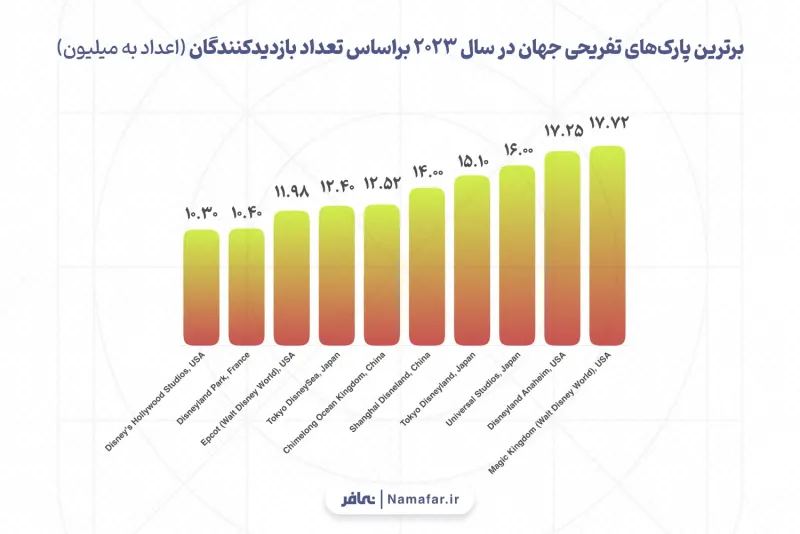
In 2023, Disney's theme parks once again took the highest rankings among the world's parks. Magic Kingdom in Florida, with 17.72 million visitors, was the world's most popular theme park. In second place was Disneyland in California, with 17.25 million visitors. In total, of the world's top ten parks by number of visitors, 8 belong to Disney theme parks.
3. Merchandise and consumer products
Disney is active in selling goods related to its films, characters, and brands:
Toys: toys based on Disney, Marvel, and Star Wars characters.
Apparel and accessories: Disney sells apparel, accessories, and goods related to its characters and films through its physical and online stores.
Publishing and books: publishing children's books, comics, and other content related to Disney characters.
Disney has established a dedicated online store named Disney Store for selling the company's merchandise, through which all kinds of merchandise related to Disney's various franchises can be purchased.
Exact sales figures for The Walt Disney Company's toys are not published separately and publicly. However, toy sales are part of the company's merchandise licensing revenue. Based on Disney's 2023 financial reports, this company's merchandise licensing revenue in 2023 was about 3.13 billion dollars. This revenue includes sales of products related to Disney, Marvel, Star Wars, and other major brands owned by Disney.
4. News and sports media
Disney is also present in news and sports media:
ABC network: one of the largest television networks in the United States, owned by Disney.
ESPN network: a major sports network that supplies an important part of Disney's revenue from advertising and broadcasting sports programs.
5. Technology
By investing in virtual reality and augmented reality, Disney has provided interactive and engaging experiences for users. One of the most prominent examples is the development of theme-park attractions such as "Star Wars: Galaxy's Edge," which allows visitors to enter the world of Star Wars in virtual and interactive environments.
Disney also uses new technologies to produce and sell merchandise. Some products are offered in interactive form and with smart capabilities, such as toys connected to an app, which are combined with augmented reality and other technologies.
6. Theater and live performance
Disney has turned some of its famous stories and animations, such as The Lion King and Beauty and the Beast, into successful Broadway theatre productions in New York.
7. Hotels
Disney owns hotels around the world that operate alongside this company's theme parks and other tourism destinations.
8. Cruises and sea voyages
By launching cruise lines under the name Disney Cruise Line, Disney has offered recreational sea voyages and provided a special experience for families.
9. Educational content production
Disney is also active through producing educational content and interactive products for children and adolescents. This content is often made available through Disney's television and online networks.
10. Video Games
Disney has played an important role in the world of video games and, by drawing on its popular brands and characters, has had a significant impact on the games industry. Disney has often used third-party companies to develop video games related to its characters and films. This strategy allows Disney to also exploit its powerful brands, such as Marvel and Star Wars, in video games.

The secret of the Disney empire's success: combining creative content with diverse revenue models
Everything begins with the production of original content. Disney first creates films, animations, or series that usually have engaging stories and memorable characters.
This stage is the core of Disney's business. From classic animations such as The Lion King and Frozen to popular Marvel and Star Wars films, Disney first produces visual content and releases it in cinemas, on television, or on digital platforms such as Disney+.
After a film or animation succeeds, Disney quickly moves toward producing merchandise related to the film's characters and stories. These products include clothing, toys, stationery, video games, and anything related to the film's characters and stories.
After the films succeed, Disney brings the characters and stories of its films into the real world and creates a live experience for fans. Disney parks are designed with a focus on creating a magical and interactive experience through the films' characters and stories.
In addition to theme parks, Disney also brings its content and characters into real life through concerts and tours.
Through its streaming platform Disney+ and also its television networks, Disney delivers its content to global audiences. This strategy enables Disney to reach more audiences and continually generate revenue from its films and series.
Disney also uses its characters and films in video games and mobile applications and thereby creates additional revenue streams.
In this model, Disney first produces powerful content and then uses this content in various parts of its business, such as merchandise, theme parks, digital media, and live experiences. This cycle causes Disney to create multiple revenue streams from every successful content production and to have a greater impact on the market and audiences.
The way The Walt Disney Company operates is based on an integrated business model in which original content (such as films, animations, and series) is placed at the heart of commercial strategies, and then added value is created through diversity in merchandise (merchandise, theme parks, and other media). In fact, Disney first produces powerful content and then expands this content across all parts of its business.
Final word
The Walt Disney Company's revenue strategy is one of the most successful and complex commercial models in the entertainment industry, drawing on several diverse aspects. This strategy includes producing diverse content, brand expansion, creating distinctive experiences for customers, and using new technologies.
Following Disney's revenue strategies can help Iranian entertainment industry companies operate more competitively in domestic and international markets. By drawing on diversity, innovation, and customer experience, these companies can achieve greater successes and strengthen their position in the entertainment industry.
Namafar invites you to read the best animation companies in the world and Iran.
Machine-translated from Persian by Namafar; the Persian original is authoritative. Read the original in Persian