Iranian animation has a longer history than most people think: from the five-thousand-year-old pottery of Shahr-e Sukhteh to the 1350s (1970s) festival short films, the 1380s (2000s) television cartoons, and the theatrical animations that in the 1390s (2010s) drew millions of admissions to the cinema. This page brings a list of the most important Iranian animations, from theatrical to series and from old to new, with the admissions figures of each.
List of Iranian theatrical animations
The most-watched Iranian feature animations, based on the number of admissions in the country's cinemas:
| Animation | Director | Year of release | Admissions |
|---|---|---|---|
| Bacheh Zerang | 1402 (2023/24) | 1,922,361 | |
| Babai Ghahraman | Hossein Saffarzadegan and Meysam Hosseini | 1403 (2024/25) | 1,570,997 |
| Yuz | 1404 (2025/26) | 1,564,647 | |
| The Elephant King | Hadi Mohammadian | 1397 (2018/19) | 1,155,792 |
| Princess of Rome | Hadi Mohammadian | 1394 (2015/16) | 918,263 |
| Dolphin Boy | Mohammad Kheirandish | 1401 (2022/23) | 910,846 |
| Lopeto | Abbas Askari | 1401 (2022/23) | 817,885 |
| Benjamin | Mohsen Enayati | 1398 (2019/20) | 620,628 |
| A Passenger from Ganora | 1402 (2023/24) | 421,785 | |
| Dolphin Boy 2 | 1404 (2025/26) | 383,529 | |
| Shangul Mangul | Kianoush and Farzad Dalvand | 1403 (2024/25) | 342,723 |
| Ruler of the Water | 1404 (2025/26) | 241,496 |
The figures are from the statistical yearbook of film box office and Iranian cinema (1364–1404 (1985–2026)) and show admissions in the main year of each film's release. The yearbook does not mark animation separately; films whose being animation we have confirmed from news sources are included. See these films' box office and international standing in Highest-grossing Iranian animations.
Iranian theatrical animations, one by one
Bacheh Zerang (1402 (2023/24))
The most-watched animation in the history of Iranian cinema with about 1.9 million admissions. "Bacheh Zerang" in Azar (November–December) 1402 (2023/24) broke the record of "The Elephant King" and in its year of release was the third most-watched film of Iranian cinema, after "Fossil" and "Hotel". This animation was later also released on home video.
Babai Ghahraman (1403 (2024/25))
The theatrical animation of Hossein Saffarzadegan and Meysam Hosseini based on Babai, the popular sheep of children's television programs, with the story of a lamb that wants to fly. "Babai Ghahraman" with about 1.6 million admissions is Iran's second most-watched animation.
The Elephant King (1397 (2018/19))
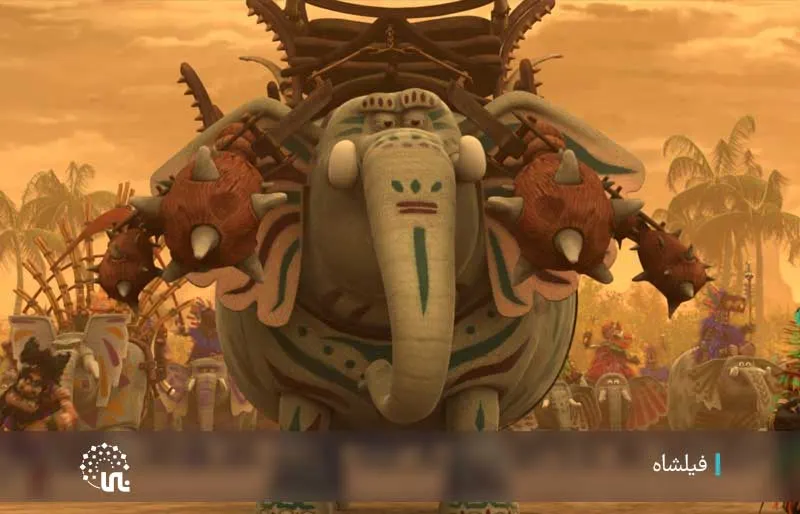
Until 1402 (2023/24) the most-watched animation in the history of Iranian cinema, made by Hadi Mohammadian and the Honarpouya group. "The Elephant King" was also released in Lebanon, Iraq, and several other countries and, according to its makers, grossed about half a million dollars in Lebanon. A mobile game and merchandise were also made for this film; something that before that was little seen in Iranian animation.
Princess of Rome (1394 (2015/16))
The first Iranian theatrical animation that became a serious box office success and had close to one million admissions. This film, which is also the work of Hadi Mohammadian, narrates a religious story for children and opened the way for later theatrical animations.
Dolphin Boy (1401 (2022/23))
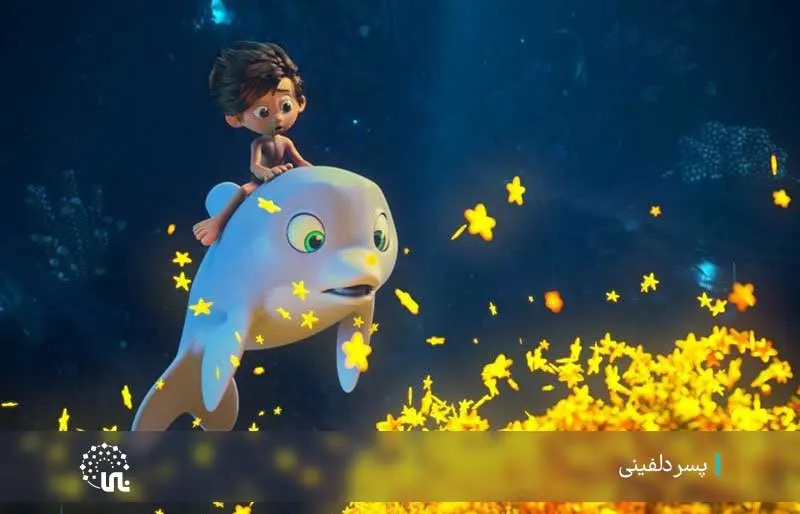
Made by Mohammad Kheirandish, with a team of about two hundred people in two years. "Dolphin Boy" is the most successful Iranian animation in the global market: according to its makers it was screened in Russia in more than two thousand halls and grossed about 1.7 million dollars, and after that it was also shown in Turkey, Serbia, Spain, and several other countries.
Lopeto (1401 (2022/23))
A 3D animation of the Soureh Animation Center directed by Abbas Askari; a world of toys with native Iranian elements and the atmosphere of the city of Kerman. "Lopeto" with about 820 thousand admissions was released in the same year as "Dolphin Boy" and won the best animation award of the Ahmedabad children's festival in India.
Benjamin (1398 (2019/20))
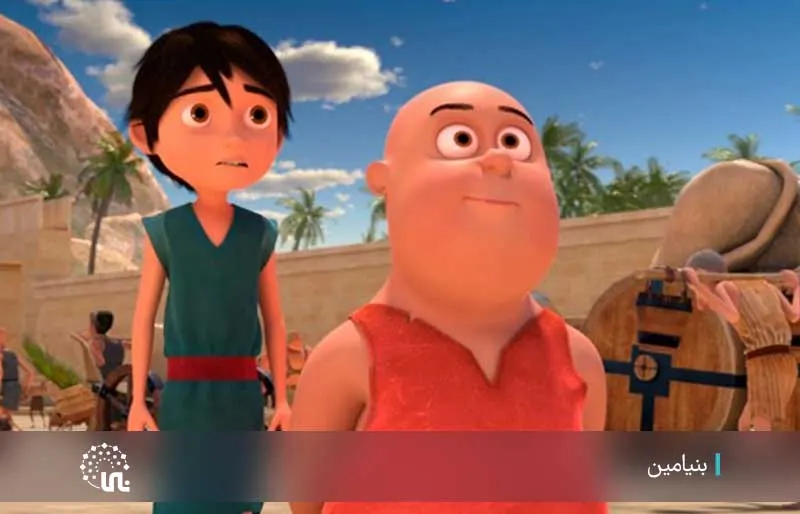
The work of a group of Kashani animators led by Mohsen Enayati. "Benjamin" appeared at many foreign festivals and at the 32nd Festival of Films for Children and Young Adults won the best animation award.
The Last Fiction
Ashkan Rahgozar's adaptation of the story of Zahhak in the Shahnameh, with a distinctive visual design and an atmosphere darker than children's animations. Its box office revenue was low, but it was seen at foreign festivals and is among the most serious efforts for adult animation in Iran.
Tehran 1500
Bahram Azimi's feature animation with a comic story about future Tehran. This film was released in the early 1390s (2010s) and was among the first serious experiences of theatrical animation for adults in Iran.
Iranian television cartoons
Most of Iranians' memory of animation goes back to television. The Saba Animation Center, affiliated with IRIB (Islamic Republic of Iran Broadcasting), has from the 1370s (1990s) been the main producer of Iranian cartoons.
Shekarestan (1387 (2008/09))
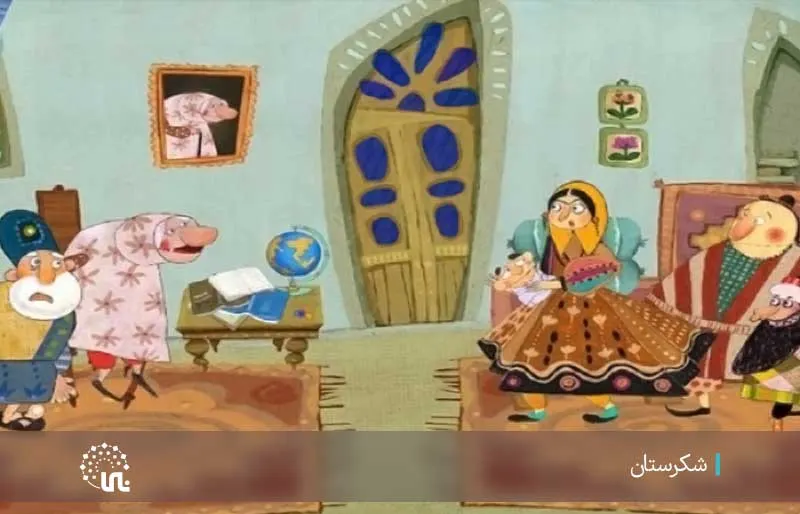
"Once upon a time, there was no one but God..." in the voice of Morteza Ahmadi was the familiar opening of "Shekarestan". Babak Nazari made this series with the cut-out technique and more than a hundred characters, and each episode was based on an Iranian proverb or tale. "Shekarestan" was broadcast in several seasons and appeared at children's festivals in China, Italy, and India. It may be the most popular Iranian cartoon of the past two decades, both for children and for adults.
Pahlevanan (1386 (2007/08))
An epic series inspired by Pouriya-ye Vali and the historical atmosphere of Khwarezm that was made in several seasons. "Pahlevanan" was also dubbed into Turkish and Arabic. The story of its IMDb score is also famous: after a mass vote by Iranian users, this site removed it from the list of top series.
Among Saba's other well-known cartoons one can name "Kalileh and Friends", "Masalnameh", "Jamshid and Khorshid", and "Battle of the Persian Gulf".
The history of animation in Iran in a few lines
- Shahr-e Sukhteh, about five thousand years ago: On a pottery goblet from Shahr-e Sukhteh in Sistan, five images in succession of a goat and a tree have been drawn. If you rotate the goblet, the goat leaps toward the tree. This goblet is considered one of the oldest examples of humankind's attempt to show movement in an image.
- The 1340s and 1350s (1960s and 1970s) SH: Iran's modern animation took shape with painter and graphic artists such as Noureddin Zarrinkelk, Farshid Mesghali, and Nafiseh Riahi. The Institute for the Intellectual Development of Children and Young Adults (Kanoon) was its main home. Zarrinkelk, who is considered the father of Iranian animation, with films such as "The Mad, Mad, Mad World" (1354 (1975/76)) made his way to world festivals.
- The 1370s and 1380s (1990s and 2000s): The Saba Center was established and television became the main producer of Iranian animation.
- From the 1390s (2010s) onward: Iranian animation reached the cinema, and "Princess of Rome", "The Elephant King", and "Dolphin Boy" showed that it can sell both at the domestic box office and in the foreign market.
Frequently asked questions
Which is the highest-grossing Iranian animation?
In terms of number of admissions, "Bacheh Zerang" (1402 (2023/24)) with about 1.9 million admissions, after that "Babai Ghahraman" (1403 (2024/25)) and "Yuz" (1404 (2025/26)), each of which had close to 1.6 million admissions. In terms of international sales, "Dolphin Boy" (1401 (2022/23)).
Which is the first Iranian theatrical animation?
The first Iranian feature animations were made in the 1370s and 1380s (1990s and 2000s), but the first theatrical animation that succeeded at the box office was "Princess of Rome" (1394 (2015/16)).
Which are the best old Iranian cartoons?
"Shekarestan" and "Pahlevanan" are among the most popular television series. In short films, the works of Noureddin Zarrinkelk and the films of the Institute for the Intellectual Development of Children and Young Adults (Kanoon) in the 1350s (1970s) are the most notable.
On the companies that have made these works, see the largest animation companies of Iran and the world, and on animation education, see the animation major in Iranian universities. The children's animation catalog and the share of Iranian works of it are also in the Digitoon dashboard.
Sources
- Statistical yearbook of film box office and Iranian cinema, 1364–1404 (1985–2026); full text of the 1401 (2022/23), 1402 (2023/24), 1403 (2024/25), and 1404 (2025/26) yearbooks in the reference reports
- Mehr News Agency, interview with the makers of "Dolphin Boy," Shahrivar (August–September) 1401 (2022/23)
- News agencies on the awards of "Lopeto" and "Benjamin," 1400 (2021/22) and 1401 (2022/23)
- Namafar, animation industry status map
Machine-translated from Persian by Namafar; the Persian original is authoritative. Read the original in Persian