A brief history of the beauty industry
When the ancient Egyptians first used kohl for beauty and to protect their eyes, they never thought a day would come when these same simple items would turn into a vast and pervasive global industry; an industry that is no longer only for kings, the nobility, or women, but that everyone—women and men, old and young, poor and rich—has become a consumer of it. Today beauty products have become an essential part of the everyday consumption basket and generate billion-dollar revenues. But what is this global market like, and what status does it have in our country? In the report ahead, relying on various statistics and data, we examine in detail the beauty products industry in the world and Iran's place in this industry.
The use of beauty products has a history of several thousand years. In ancient Egypt, women and men used kohl, mineral pigments, and fragrant oils for makeup of the eyes, skin, and hair. The ancient Greeks and Romans, too, using compounds such as plant dyes and even toxic substances such as white lead, attached importance to appearance. In that era, beauty was not only a sign of grooming, but also a representation of individuals' social status. In the Middle Ages and the Renaissance, beauty was defined in religious and class forms. Fair skin, rosy cheeks, and thin eyebrows were a symbol of aristocracy, and to achieve them, dangerous compounds were at times used. However, the real transformation of this industry began from the nineteenth century and especially the twentieth century. The Industrial Revolution, the emergence of global brands, extensive advertising, and modern media laid the ground for mass production and public consumption of beauty products. Today, the beauty industry is one of the most thriving and most innovative domains of the global economy; an industry that, beyond appearance, is linked with lifestyle, health, technology, and individual identity and has a broad share in contemporary consumer culture, although with the passage of time criticisms have also been directed at it in the domain of culture and lifestyle.
The global state of the beauty industry: market size and sustainable growth
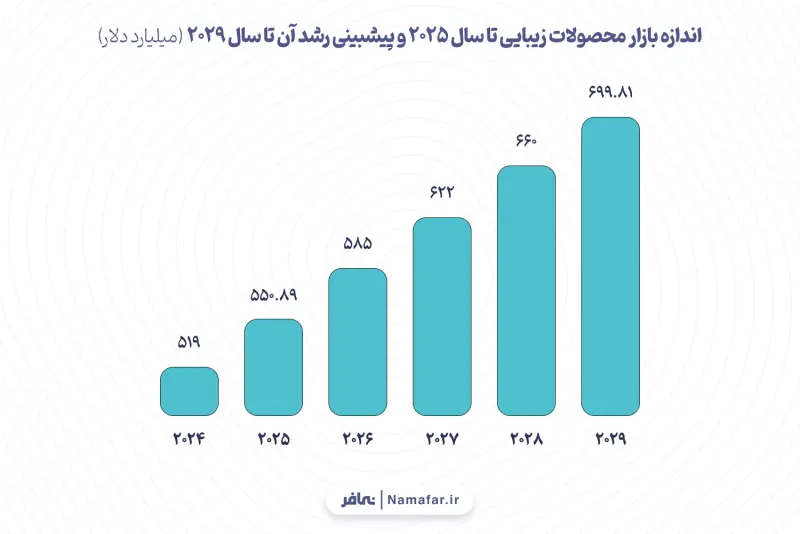
To analyze any industry, the first step is examining market size and its growth trend at the global level. These two indicators yield an initial picture of dynamism, sustainability, and investment capacity in that industry. Based on the 2024 report of the market analysis firm " The Business Research Company," the value of the global beauty and personal care products market in 2024 has been estimated at about 519 billion dollars. This market will reach 550.89 billion dollars in 2025 and is expected, with a compound annual growth rate (CAGR) of about 6.1 percent, to reach a figure of as much as 697.11 billion dollars by 2029. This continuous growth indicates the established place of the beauty industry in the global economy. Factors such as increased consumer awareness about personal care, the expansion of emerging markets, the penetration of digital brands, and lifestyle change among younger generations are counted among the main drivers of this market's growth. The beauty products market has now found striking breadth not only in the domain of makeup, but in skincare, haircare, personal hygiene, and even digital beauty technologies.
Skincare products, the unrivaled queen of the beauty market
When we expand the range of beauty products a little, the market size too will become a little larger. Based on the newest statistics that have taken this view, it is predicted that the value of the global beauty products market in 2025 will reach about 677 billion dollars. In this large market, skincare products, holding 42 percent of the total market (equivalent to 284 billion dollars), have taken first place. This category of products not only is the largest, but also experiences one of the fastest growth rates in the beauty industry; so that it is expected that by 2030 the value of this market will also pass the 310 billion dollar mark. In the chart below you also see the share of other products such as haircare, makeup, and fragrance products, which hold a smaller share of the market.
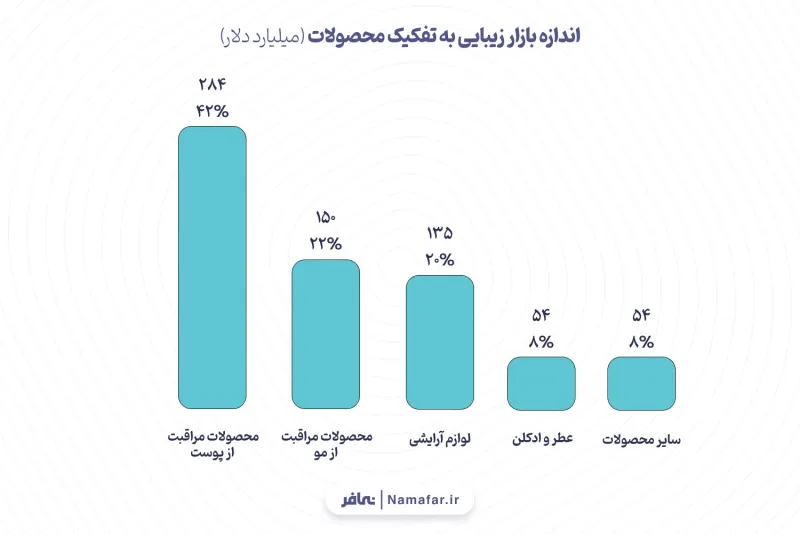
This notable growth in skincare products has multiple reasons, the most important of which is increased consumer awareness of the importance of everyday skin care. Today, use of these products is no longer limited to particular groups or special occasions, but has become an essential part of many people's lifestyle. Climate change, air pollution, and the pressures of urban life have also increased concerns about skin health, and as a result people more than in the past are seeking solutions to protect their skin. Alongside these, the influence of social media and influencers is also not deniable. Social network users every day encounter various content about the importance of skin health, and this issue has caused the use of skincare products to become a normal and popular behavior. In this same vein, statistical reports show that in recent years demand for skincare products with natural and plant-based ingredients has increased sharply. Products that use fewer chemical substances and have features such as no animal testing and sustainable packaging have gained growing popularity. For this reason, large brands and even smaller businesses that are active in the beauty products domain are investing more than in the past in skincare products, especially natural and organic types of them. Attention to these trends is of great importance for beauty industry actors, and ignoring them may mean losing important market opportunities in the future.
Men and beauty products? This industry's profitable trend
In recent years, the men's beauty products market has become one of the most attractive and highest-yielding segments of the beauty industry. According to statistics in a report published by the research institute " Facts & Factors," the value of the global men's care and beauty products market in 2022 was about 56 billion dollars, and it is predicted that this figure, with an annual growth rate of about 4.3 percent, will reach more than 81 billion dollars by 2030.
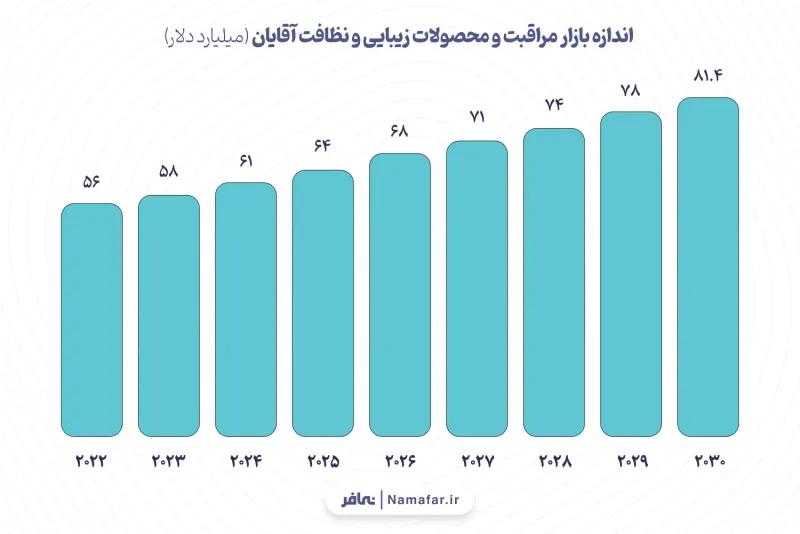
This report also shows that consumption of products such as skincare products, haircare, fragrance, and deodorant among men is increasing sharply. Among these categories, skincare and haircare products in particular have the greatest growth, and young men and new generations are increasingly turning to using these products. In 2022, the men's personal care products category alone accounted for more than 40 percent of this market's total sales. Also geographically, the Asia-Pacific market, holding more than 3 percent of the total men's beauty products market share in 2022, had the largest regional share, and it is predicted that this dominance will also continue in coming years. This issue is especially evident in countries such as China, South Korea, and Japan, where daily use of skincare and beauty products for men has become a natural and accepted part of everyday life.
Various reasons have caused men to become serious consumers of beauty and care products. Changing social and cultural attitudes is one of the key factors in this growth. The new generation of men attach more importance to their appearance, and care of skin and hair is no longer considered merely a behavior particular to women, but has become part of men's daily self-care and lifestyle. In addition, the expansion of social networks and the influence of influencers has fueled this trend. Male influencers on networks such as Instagram and TikTok continuously produce content about the importance of men's skincare and beauty and have in this way broken the taboo of consuming beauty products for men. Also, reputable global brands such as Nivea, Chanel, and L'Oreal have turned to designing and producing special products for men, which has increased men's access to and trust in these products.
In addition to these, in some Asian countries, especially South Korea and Japan, men's skincare has become an accepted culture. According to existing statistics, more than 75 percent of Korean men regularly use skincare products. This cultural acceptance has had a striking impact on the global expansion of this trend and has caused brands and manufacturing companies of care and beauty products to make greater investments in this domain. Given these factors, it is clear that men's entry into the world of beauty is not only not a passing trend, but is counted as a lasting and strategic change in the beauty industry and creates valuable opportunities for producers, marketers, and international brands.
Skincare or makeup? The skinimalism trend and its popularity
In recent years, the concept of "skinimalism" (skinimalism), which is formed from combining the two words "skin" meaning skin and "minimalism" meaning simplicity, has become one of the important trends of the beauty industry. This term means simplifying the skincare routine and minimizing the use of unnecessary products. Contrary to the initial impression, skinimalism does not necessarily mean an overall reduction in product consumption, but rather refers to purposeful consumption and the conscious selection of more effective products. In clearer terms, instead of using several makeup and skincare products that mainly have a decorative aspect, consumers prefer to use only a few basic and essential products such as a good moisturizer, daily sunscreen, and an effective treatment serum. This new approach has caused brands, too, to turn to producing simpler, multifunctional products free of extra or harmful ingredients and to change their path toward milder, more natural, and more scientific products.
According to a report by the McKinsey institute, the skincare segment has experienced significant growth since 2018 and in 2023 accounted for more than 44 percent of the global beauty market, and it is expected that through 2030 it will remain the largest and fastest sub-branch of this industry. In the United States, too, it is estimated that the value of the skincare products market will reach from 30 billion dollars in 2024 to about 40 billion dollars in 2030. Consumer research also shows that younger generations, especially Generation Z, compared with previous generations pay more attention to skin health and prefer using short and effective routines to heavy makeup. Brands such as "CeraVe, The Ordinary and Paula's Choice" have experienced growing growth, because with slogans such as "effective simplicity" they have responded exactly to the needs of this new style.
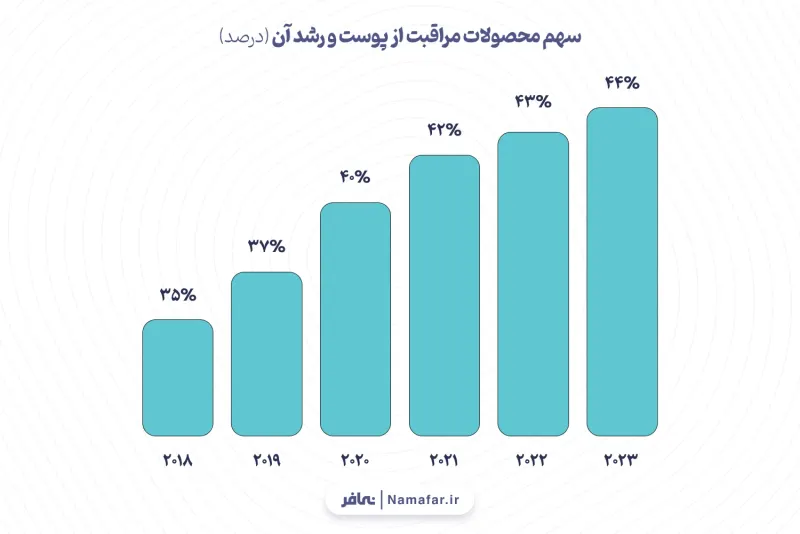
Skinimalism is in fact a response to consumers' fatigue with unrealistic advertising promises and complex formulas. In the information age, users prefer to understand products' ingredients, assess their effects, and, instead of covering the skin, strengthen it. Therefore this trend is not only a beauty inclination, but a kind of cultural and behavioral movement that shows itself in high sales, the language of advertising, simple packaging, and even the presence of science-oriented brands in global markets.
Passionate Generation Z! Their different interests and preferences and the changing market
Generation Z, meaning those born around the years 1996 to 2012, are now one of the most influential consumer groups in the global beauty market. They, not only because of their large number and growing population, but because of their lifestyle, consumption patterns, and different values, are shaping the future of this industry. This generation has grown up in the digital space, is accustomed to technology, and naturally uses online platforms for decision-making, reviewing products, and purchasing. But what truly distinguishes Generation Z is not only being digital, but a deep awareness of social, environmental, and value issues.
New studies show that more than half of Generation Z consumers, before buying beauty products, research extensively and examine products' labels, ingredients, source of production, and functional benefits. They do not settle for advertising alone, and their loyalty to brands depends on authenticity, transparency, and the brand's alignment with their individual values. Unlike older generations, who saw the brand as a sign of social status, Generation Z accepts a brand only if it is aligned with ethical principles, the environment, racial diversity, and skin health.
For example, in a global study, 54 percent of members of Generation Z said they purchase products that "alongside quality, also have a suitable price." 46 percent are willing to pay more money for brands that are nature-friendly, and 45 percent emphasize that if a brand is indifferent to "racial diversity and social acceptance," they will forgo buying it. These percentages show that Generation Z is highly selective, sensitive, and value-oriented. Contrary to the common assumption, this generation is not merely seeking discounts; only 28 percent said they purchase beauty products only at times of discount.
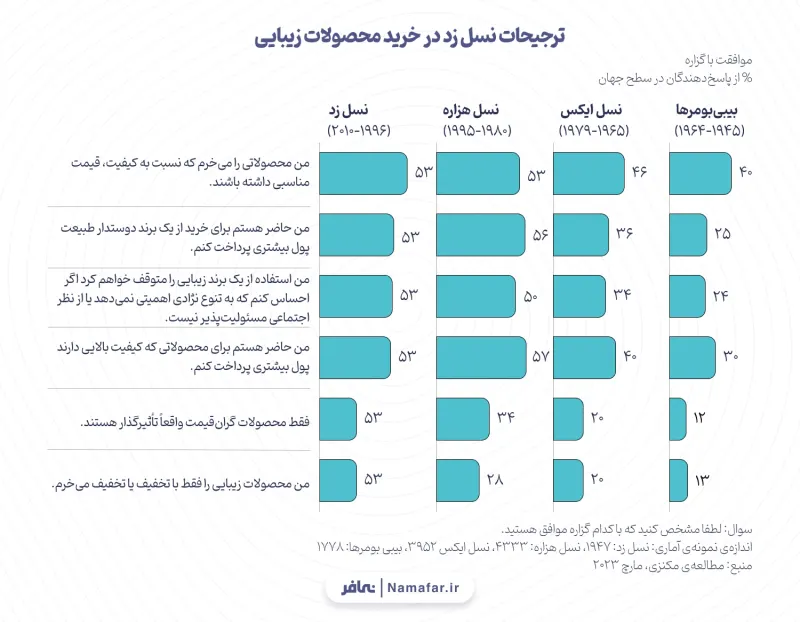
Generation Z's preference for using natural, scientific, and simple products has caused trends such as "skinimalism" or "simplicity in skincare" to gain power. They not only, instead of flashy makeup, seek real skin health, but also welcome products that are multifunctional, mild, free of harmful ingredients, and have sustainable and recyclable packaging. Labels such as "vegan, cruelty-free, clean and fragrance-free," are for them not only attractive, but essential. Another important point is this generation's hybrid purchasing behavior. Generation Z, alongside online shopping, still also has an interest in in-person shopping; especially when it is accompanied by a personalized experience, advisory services, or the possibility of testing products. Brands such as Sephora or Ulta in the United States, which have been able to offer a combination of in-person experience, digital loyalty, beauty advice, and participatory content, have been the most successful examples in attracting Generation Z. Brands that want to remain in this dynamic market must move beyond mere production and think about redefining their relationship with the Generation Z consumer. This generation sees beauty in connection with health, diversity, honesty, and impact. They look for brands that show why this product has been produced, for whom it is suitable, what effect it has, and what value it conveys. As a result, brands that lack identity, accountability, and social responsibility will quickly be removed from Generation Z's consumption basket.
Analysis of the beauty products industry in Iran
Recognizing the place of the beauty products industry in Iran requires analysis of households' behavioral and consumption trends over time. Contrary to general views that consider beauty products merely a luxury aspect of lifestyle, the reality is that this industry has taken root not only in economic layers, but in the cultural, social, and even identity dimensions of Iranian society. From this perspective, examining the share of spending on beauty services and products among households' other cultural expenditures is counted as one of the most precise and most meaningful indicators for understanding priorities, behavioral changes, and economic opportunities in this domain. Examining the seven-year trend of Iranian households' allocation of cultural resources to the beauty sector, according to data of the Statistical Centre of Iran, can yield a real picture of this industry's place, the degree of demand sustainability, and the capacities of the domestic market. On this basis, in what follows the first step of statistical analysis of Iran's market begins with a focus on the share of spending on beauty services and products of cultural expenditures.
What place do beauty products and services have in the Iranian family's basket?
Based on data of the Statistical Centre of Iran, over the years 1396–1402 (2017–2024), beauty services and products have always been in second place in the household cultural basket. This stable place, immediately after fashion and clothing, indicates the institutionalized importance of consuming beauty products and services in the economic behavior of Iranian families.
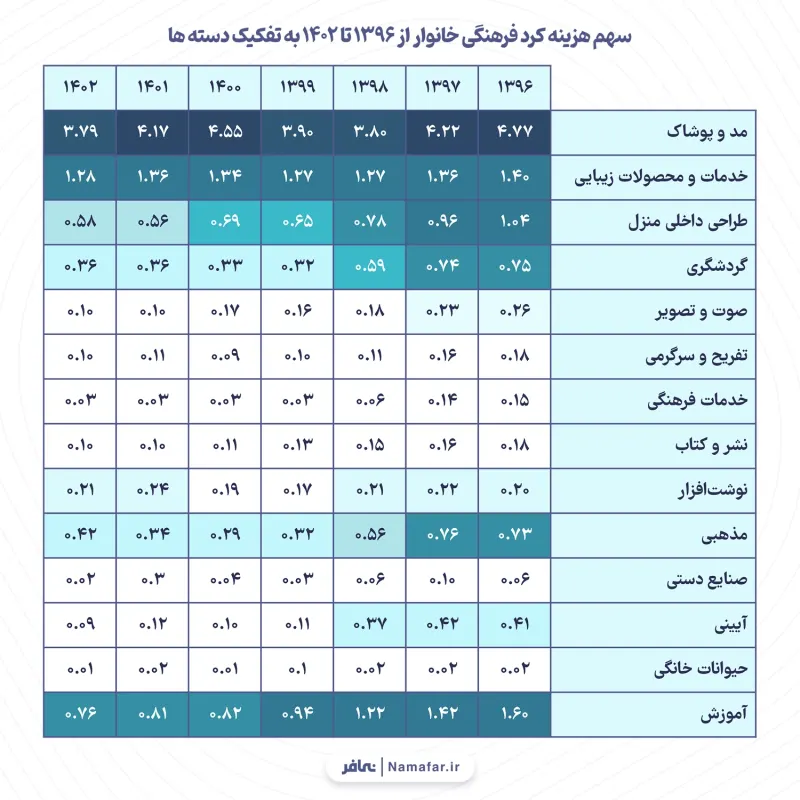
In 1402 (2023/24), this sector's share was 1 percent of households' total cultural expenditures. Although this share relative to 1401 (2022/23) (1.36 percent) experienced a slight decline, it has still retained second place. This point is important because even in years such as 1399 (2020/21), when many sectors experienced a noticeable drop in consumption, the share of beauty products did not decline strikingly, and this indicates high demand resilience.
In comparing this sector with other cultural sectors we arrive at interesting results: beauty products have had more than twice the share of home interior design (0.58 percent in 1402 (2023/24)); more than three times tourism (0.36 percent), and also more than ten times sectors such as handicrafts or cultural services.
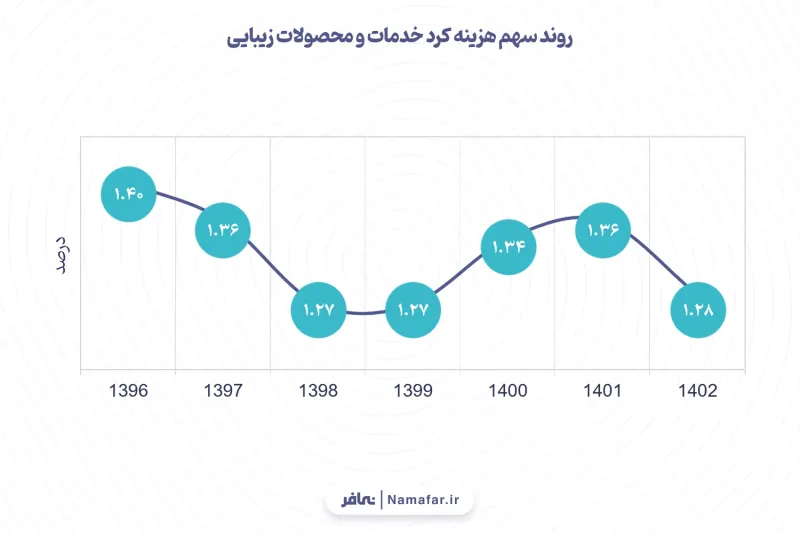
Examining the trend of households' annual spending share for beauty services and products shows that this sector, contrary to the common impression, has not only not suffered a structural drop, but after the economic shock of 1399 (2020/21) has been able, by recovering its share in 1400 (2021/22) and 1401 (2022/23), to establish a kind of behavioral sustainability in the Iranian consumer. This reversibility of the trend indicates that beauty products, in the Iranian consumer's mind, are considered part of lasting cultural and lifestyle needs; not a discretionary expense dependent on momentary welfare. In other words, even with the existence of economic fluctuations and a decline in purchasing power, the Iranian household has not, relatively speaking, retreated from spending in the beauty sector. This consumption stability has made this sector, economically, a relatively safe market.
Do Iranian households still spend on beauty despite high inflation? The effect of inflation on beauty spending
The chart below presents a clear view of changes in Iranian households' average spending in the domain of beauty services and products, taking into account the effect of inflation. According to the data, 1396 (2017/18) was the peak point of this spending and households spent, on average, 28 million rials in this sector. But after that, over three consecutive years and in conditions in which the country faced inflationary jumps and a real decline in income, this figure declined continuously and in 1398 (2019/20) and 1399 (2020/21) reached its lowest level, namely 21 million rials. This drop not only indicates the impact of economic shocks and the decline in purchasing power, but is also confirmation of the point that although beauty has a stable place in the cultural basket, in recession conditions parts of spending on it are adjustable.
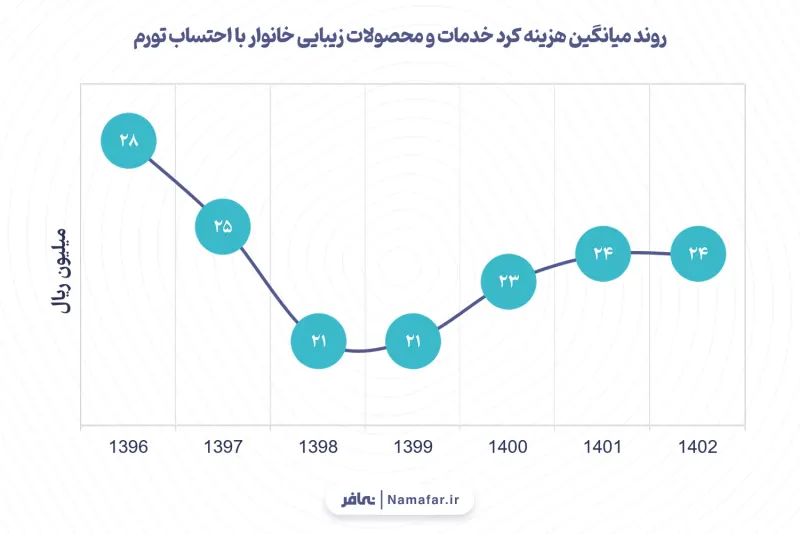
However, from 1400 (2021/22) onward, the average spending index has once again taken an upward path and reached 24 million rials in 1401 (2022/23) and 1402 (2023/24). This relative stability in the past two years, after a relative recovery in 1400 (2021/22), indicates that after passing through economic shocks, households have tried to rebuild their level of spending in this domain. This return to an upward trend and renewed stability at the level of 24 million rials is a sign of the re-stabilization of consumption behavior in this sector. Especially if we know that in 1402 (2023/24), total spending in this sector nationwide reached the striking figure of 66.78 hemt (trillion tomans), it can be said that beauty products have found a meaningful share not only from an individual perspective, but also from a macro-economic aspect, and analysis of consumption behavior in this domain can provide a strategic view for cultural and economic policymaking.
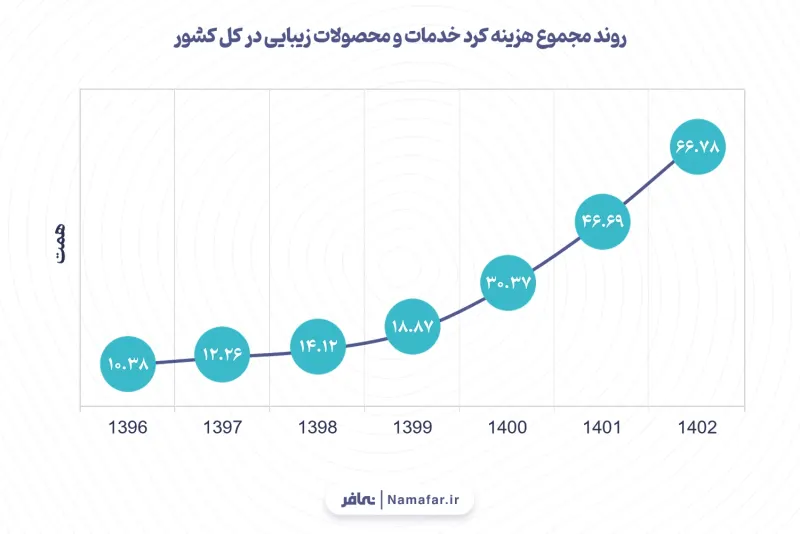
The upward trend of total spending on beauty services and products at the country level over the years 1396–1402 (2017–2024), as observed in the chart above, indicates a meaningful increase in national demand in this domain. While this figure in 1396 (2017/18) was about 10.38 hemt (trillion tomans), over six years it has reached more than 66.78 hemt (trillion tomans); that is, more than sixfold growth. This growth not only reports an increase in prices or population, but specifically indicates the expansion of the range of consumption of beauty products in more diverse layers of society. Such a trend can indicate that beauty is no longer a good particular to certain classes, but has become an element of the lifestyle of the general public of Iran, and from this respect it has high capacity for investment, entrepreneurship, and cultural policymaking.
Do only the wealthy spend on beauty?
The chart below displays the distribution of the share of spending on beauty services and products of households' total cultural expenditures in various income deciles over the years 1396–1402 (2017–2024). Contrary to the common impression, this chart shows that the beauty consumption pattern is not solely particular to the upper deciles, and consumption fluctuations in the middle and lower deciles are also notable.
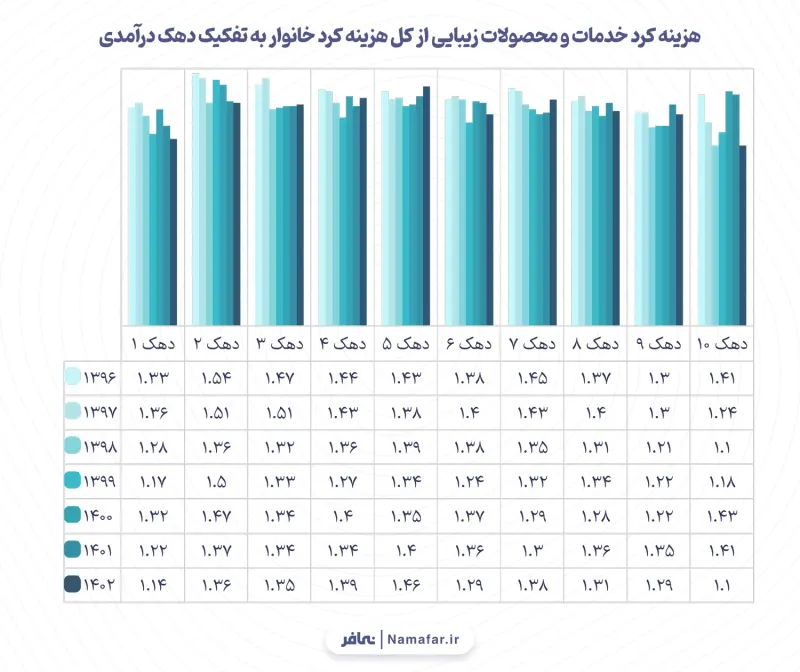
In 1402 (2023/24), the fifth decile took the highest share, a point that runs contrary to the expectation of consumption being concentrated in the tenth decile. This matter can indicate the growth of this group's consumption as a class "in transition" that in terms of lifestyle tends toward higher classes. At the opposite point, the tenth decile, which usually has the highest share, has allocated only 1.10 percent of its total cultural expenditure to beauty, which has had a striking decline relative to previous years. On the other hand, the first through third deciles have also had an almost stable or downward trend. These data show that despite the relative stability of the place of beauty products in the cultural basket, the intensity of consumption in various deciles is a function of factors beyond income alone; including cultural inclinations, access to services, or even the symbolic place of beauty in social identity-making.
The fifth decile (and not the tenth!) leads in the share of spending on beauty products
The chart below displays Iranian households' share of spending on beauty services and products among various income deciles in 1402 (2023/24). Contrary to the initial expectation that assumes that with an increase in income, the share of spending on beauty also increases, the data show that the tenth decile (the wealthiest decile) has the lowest share at 1.10 percent; while middle deciles such as the fifth and fourth, with 1.46 and 1.39 percent respectively, have recorded the highest share.
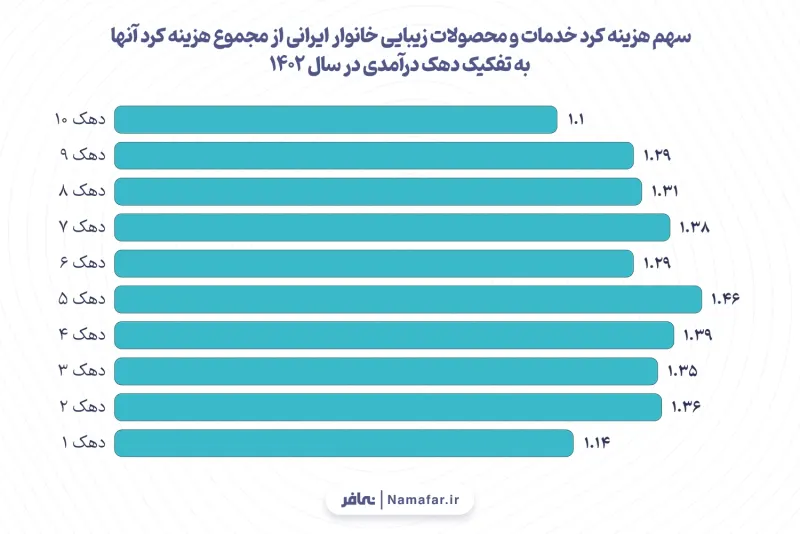
Analysis of this phenomenon shows that the upper deciles, because of the breadth of their cultural consumption pattern, have expanded their cultural expenditures into domains beyond beauty, such as travel, art, tourism, education, sport, and even social activities. This subject causes the ratio of spending on beauty products to their total cultural expenditures to decline, although its rial amount may still be high, as you observe in the chart below.
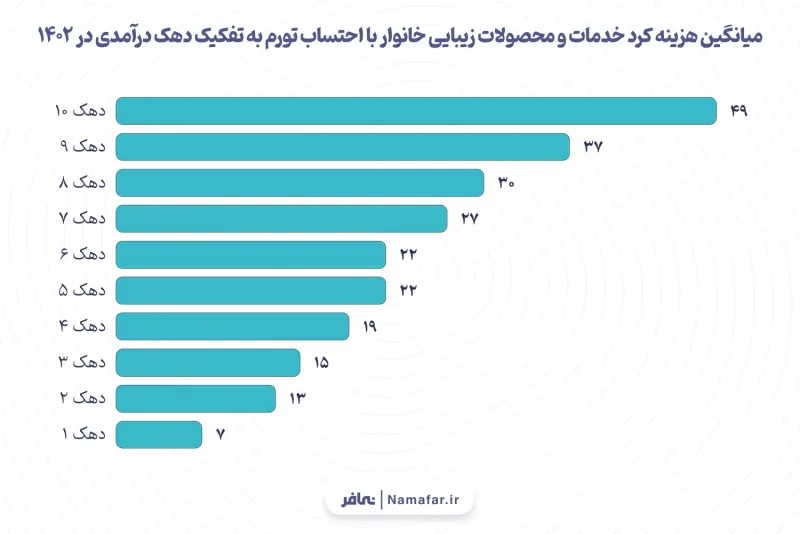
In contrast, the middle deciles, which have limited ability to compete in more expensive cultural domains, may, symbolically or in terms of identity, choose beauty as a more accessible option for expressing class and lifestyle. This matter causes their share of spending in this sector of their total cultural consumption to be seen as higher. Therefore, in analyzing such a chart one must attend to ratios alongside absolute spending and also examine the behavioral patterns of the deciles in a combined and multifactor way together.
A sevenfold class gap in consumption of beauty products and services in Iran
The table below displays the trend of Iranian households' average spending in the domain of beauty services and products, taking inflation into account, between the first and tenth deciles in the years 1396–1402 (2017–2024). As the data show, in 1402 (2023/24) tenth-decile households spent, on average, 49 million rials on beauty services, while this figure for the first decile was only 7 million rials. This difference means that the tenth decile has spent about 7 times more than the first decile.
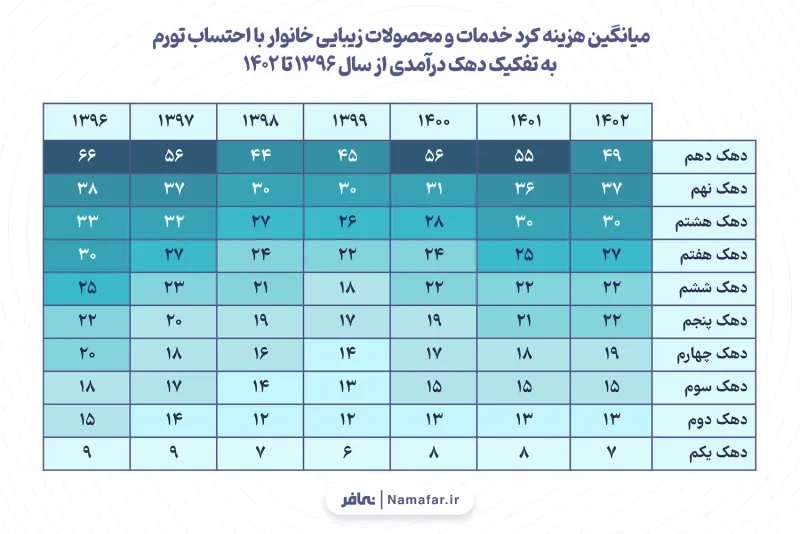
In comparison with 1396 (2017/18), when this ratio was 66 to 9, that is about 7.3 times, it is observed that the inequality ratio at the level of beauty consumption has remained almost stable over time and the spending gap between the two ends of the income spectrum has not had a meaningful decline. This persistence of the spending distance, on the one hand, indicates the more affluent classes' greater dependence on beauty consumption, which is commensurate with their lifestyle and taste, and on the other hand indicates that the lower deciles, still for economic reasons, have not found the ability to increase their spending in this domain. In other words, although the relative share of expenditure may fluctuate in some years, the absolute distance of rial consumption between the first and tenth deciles has remained structurally in place.
Beautiful south; in which of Iran's provinces is the most spent on beauty?
The chart below depicts the dispersion of the share of spending on beauty services and products of households' total cultural expenditures at the level of the country's provinces in 1402 (2023/24). Based on these data, the highest share of consumption in this domain belongs to the country's southern provinces; especially Hormozgan with 3.11 percent and Bushehr with 2.43 percent, which are situated considerably above the national average.
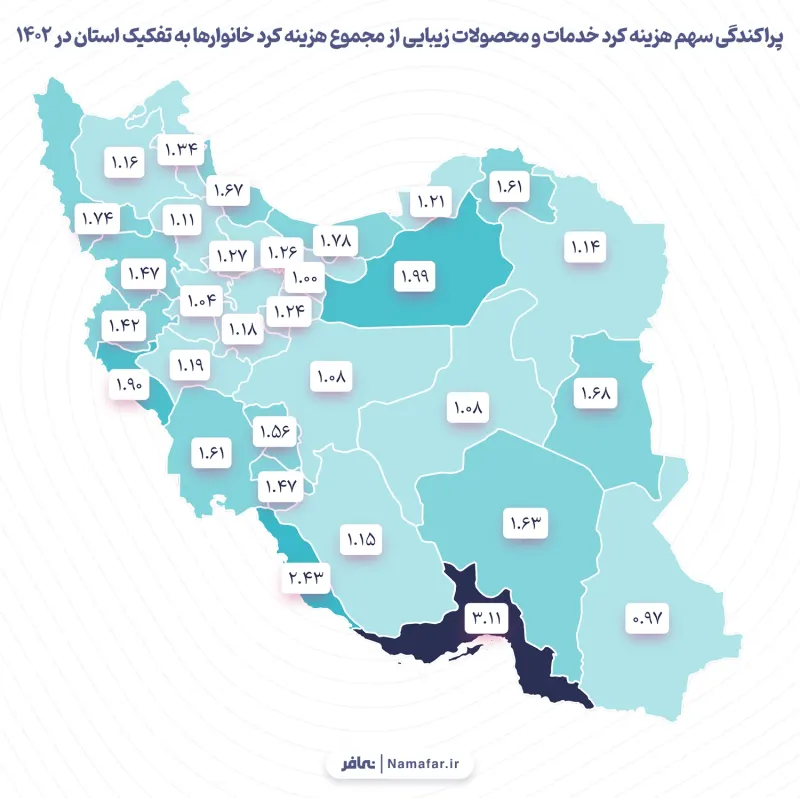
This geographic concentration in the south of the country may be a reflection of several factors: a higher inclination toward outward grooming in tropical regions, a more open and more public style of dress, a cultural structure oriented toward social display, and also a more prominent presence of beauty services businesses in these regions. It can also be supposed that the beauty industry in these provinces is considered not only consumption, but also part of the local economy. At the opposite point, provinces such as Sistan and Baluchestan (0.97 percent) and Tehran (1.00 percent) have allocated the smallest share to beauty consumption. Tehran Province's low share can be because of the breadth of households' other cultural expenditures in more diverse domains such as education, art, sport, and travel, which has caused a decline in the relative share of beauty in the Tehran household's cultural consumption basket. Overall, this geographic distribution shows that the beauty consumption pattern in Iran does not follow a simple logic of income or population, but is affected by cultural, climatic, and regional lifestyle factors.
The two charts below yield a more precise picture of the geographic behavior of consumption of beauty services and products in Iran in 1402 (2023/24): Chart 15 is households' average spending in each province (in million rials) and Chart 16 is the total spending of the provinces' households overall (in hemt (trillion tomans)).
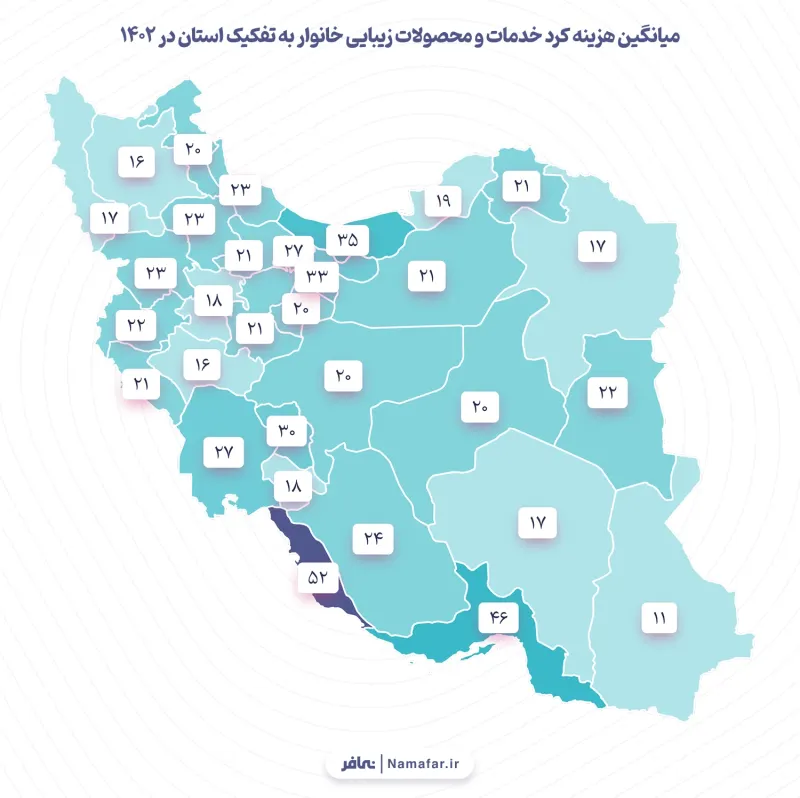
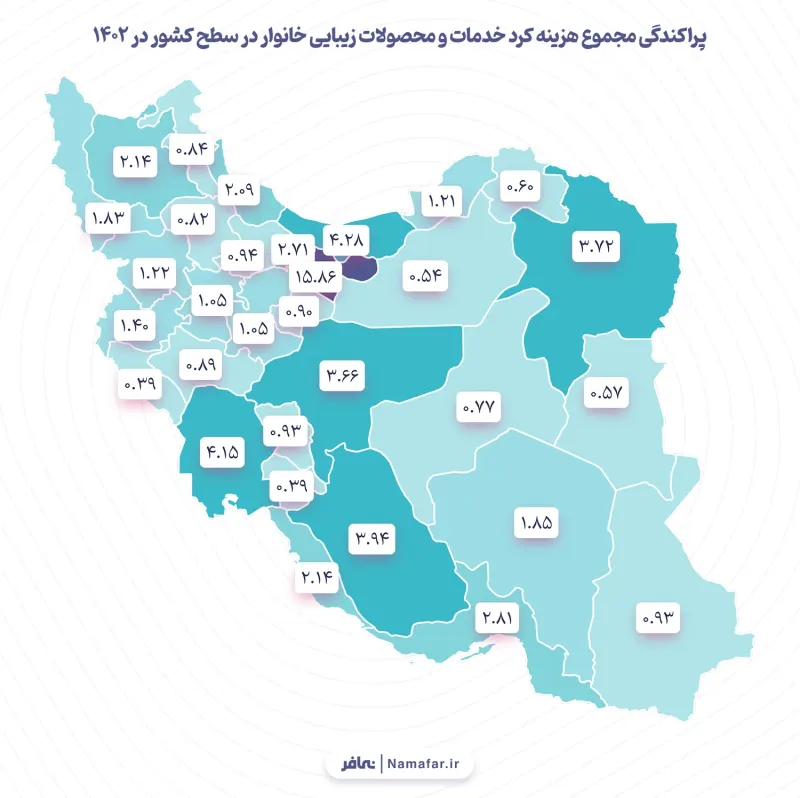
Based on Chart 15, the provinces of Bushehr (52 million rials) and Hormozgan (46 million rials) have taken the highest average household spending. This datum shows that not only is the share of spending high in these provinces (as was seen in Chart 14), but the actual amount of spending per household is also at a higher level. At the opposite point, Sistan and Baluchestan, with only 11 million rials, has had the lowest average, a matter that is related to the low income level, limited access to beauty services, and the culture of cultural consumption in this province.
But in Chart 16, which shows total spending at the provincial level, Tehran Province, with 4.28 hemt (trillion tomans), is at the top, while the average spending of the Tehran household in the previous chart was not particularly high. This apparent contradiction is fully justifiable given the large number of households in Tehran Province. In fact, the volume of consumption in Tehran is formed from the area of population breadth, not from the intensity of consumption at the household level.
On the other side, provinces such as Kohgiluyeh and Boyer-Ahmad or Ilam, despite relatively high consumption at the household level, because of a lower population, do not have much of a place in total spending. This comparison shows that to fully understand the geography of beauty consumption in Iran, one must attend both to the average indicator and to total spending. In other words, provinces such as Bushehr and Hormozgan lead in the intensity of household consumption, while provinces such as Tehran, Khorasan Razavi, and Fars, because of high population volume, play the greatest economic weight in this market. This analysis can provide different strategies for entering provincial markets for beauty product brands, cultural policymakers, and even regional trade actors.
Is beauty more prominent in the village than in the city? What do the statistics tell us?
Examining the charts below shows that in 1402 (2023/24) the share of spending on beauty services and products of total cultural expenditures in rural households was equal to 1.52 percent; while this figure for urban households has been reported as 1.24 percent. At first glance, this subject may seem contradictory, because it is expected that urban households, with more income and access, would have a higher share in this domain. But a more precise analysis of average rial spending (the chart) shows that urban households in 1402 (2023/24) spent, on average, 26 million rials and rural households 17 million rials on beauty products, that is about 1.5 times more.
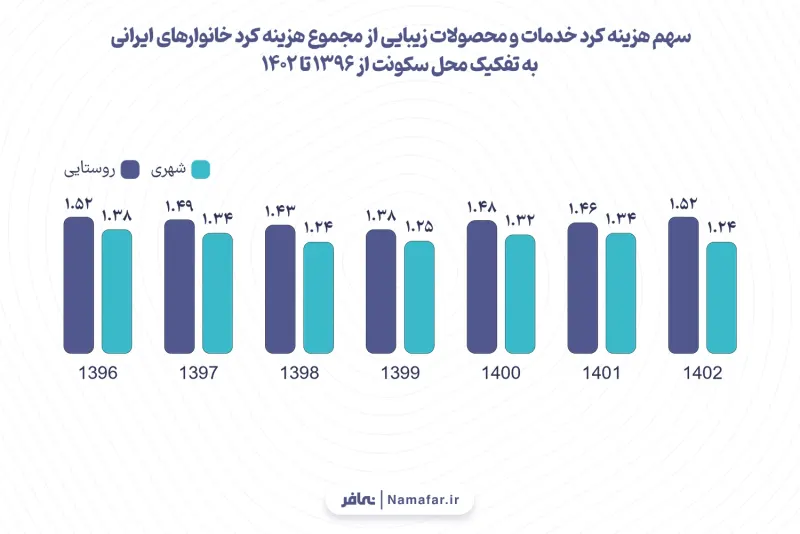
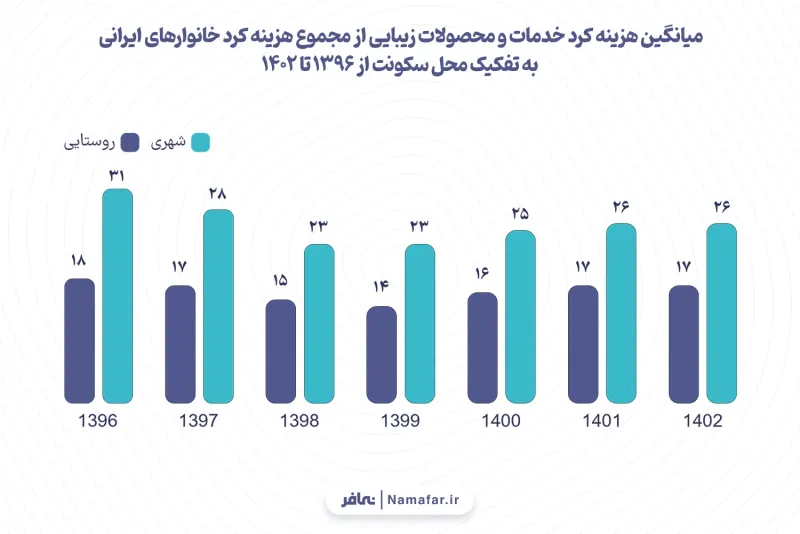
This difference at the average level shows that the actual amount of spending in the city is higher, but its ratio to total cultural expenditures is lower. The main reason for this contradiction goes back to the different consumption structure in the city and the village. In urban households, there are heavier expenditures such as housing rent, transport, food, and other consumer and service items that sharply increase their total outlays. As a result, the share of beauty services among the mass of other expenditures seems relatively smaller. In other words, although city-dwellers spend more, they allocate a smaller percentage of their total spending to beauty.
In contrast, in rural households, because of the lowness of current living costs, even a smaller expenditure on beauty can take a higher share of total cultural outlays. In addition, in many rural areas, beauty services are considered part of social interactions or the informal economy, which may be carried out at lower cost but with high cultural importance. In short, the difference in the share of beauty spending between urban and rural households arises not from a difference in interest or consumption behavior, but from a difference in the structure of the total expenditure basket. This subject must be correctly taken into account in policy analysis and marketing by economic institutions.
Workers have the largest share of beauty products but managers have the highest amount of spending!
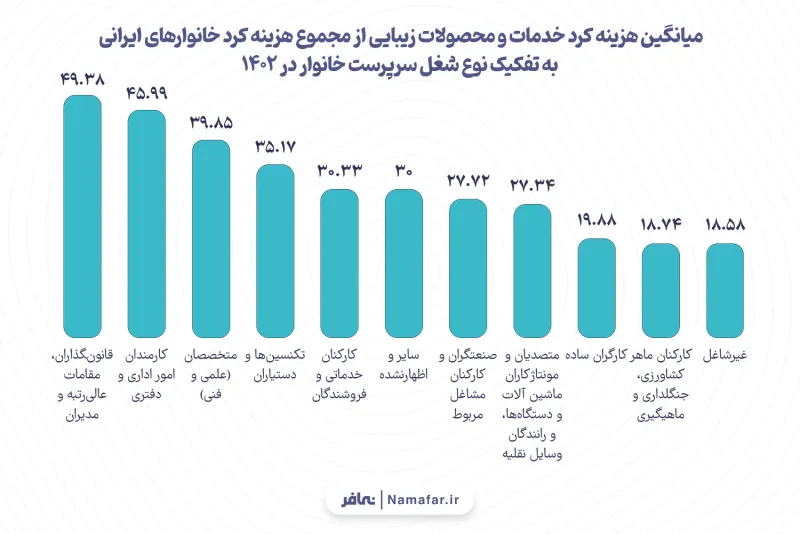
Examining Charts 18 and 19 shows that in 1402 (2023/24), there is a notable difference in the share and amount of spending on beauty products among various occupational groups. This difference not only indicates consumption preferences, but is also a reflection of these groups' purchasing power, lifestyle, and even occupational requirements.
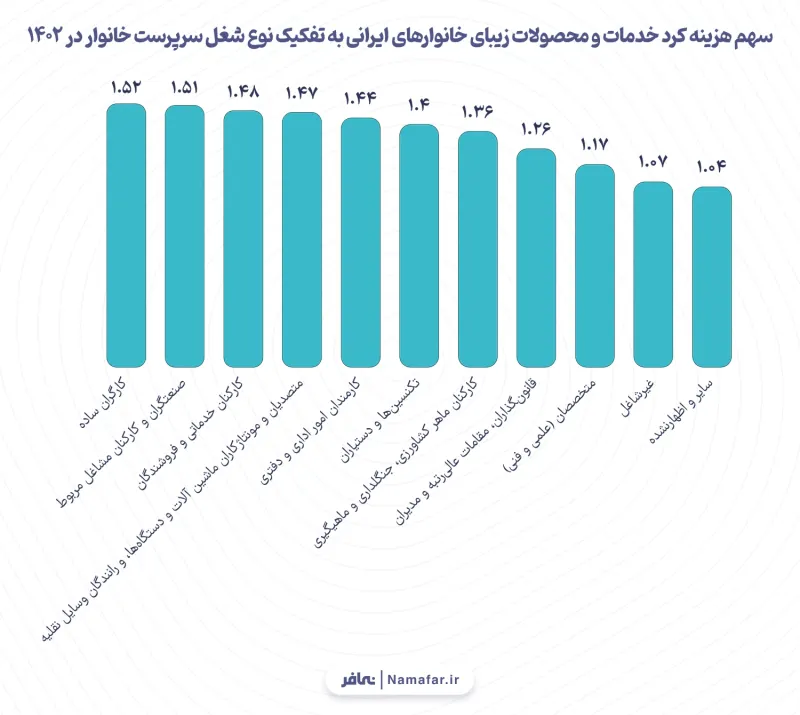
In Chart 18, the group of elementary workers has taken the largest share of spending on beauty services and products; so that households with a head in this occupational group have spent 1.52 percent of their total expenditures on this domain. After that, occupations such as machine operators, accounting, salespeople, service workers, and vehicle drivers, with a share higher than 1.4 percent, are in the next ranks. In contrast, the smallest share belongs to the "Other" group and non-occupational statuses such as "unemployed" and "not employed," whose share is about 1.02 to 1.04 percent.
But Chart 19 adds a new dimension to the examinations. In this chart, the actual amount of spending is examined in million rials, and it becomes clear that the amount of spending of groups with a high rank in share is not necessarily greater. For example, the highest average spending relates to the group of legislators, senior officials, and managers, who have spent on average 49. 8 million rials. After that, administrative and office employees are at 45.99 million rials. These groups, although they have allocated a smaller share of total expenditures to beauty, because of higher purchasing power, their actual amount of spending is very large. This matter well shows the class gap in this issue. In contrast, skilled workers in agriculture, forestry, and fishing and those not employed are at the end of the chart and their average spending is 18.74 and 18.58 million rials respectively. These figures show that even if some groups spend a larger percentage of their expenditures on beauty services, in practice they may have spent less than other groups.
In summing up it can be said:
- High-income groups usually have higher rial spending, but allocate a smaller share of their total expenditures to beauty.
- Low-income groups such as elementary workers, although overall they spend fewer rials, a larger share of their cultural basket is allocated to beauty.
These data are of high importance for analyzing the target market of beauty products; because they clearly show that marketing solely on the basis of income or occupation is not sufficient, but the ratio of spending and consumption preferences must also be taken into account alongside.
The overall state of consumption of beauty products and services in Iran
Examining the statistics and analyses shows that beauty products and services in recent years have obtained a stable and established place in the Iranian household's cultural consumption basket. Specifically from 1396 (2017/18) to 1402 (2023/24), this domain, after fashion and clothing, has always been in second rank of household cultural expenditures, so that even in difficult economic conditions and inflationary fluctuations its share has not changed much.
From a class perspective, consumption of beauty services in Iran has exited the monopoly of the upper classes and the middle groups have also shown a notable inclination toward it; deciles that, although they have a moderate financial situation, probably use beauty products with the aim of expressing lifestyle and social identity.
From a geographic perspective, too, we observe that southern provinces such as Bushehr and Hormozgan have the greatest inclination and spending in the field of beauty services; this is while large provinces such as Tehran, because of a broader distribution of expenditures, despite higher rial spending overall, have allocated a smaller share of their cultural budget to beauty.
The analyses also indicate the effective role of occupational status, level of education, and even the marital status of the household head in the amount of beauty spending. Households with an employed and homemaker head have the highest spending, and the more the level of education and the number of educated household members increase, beauty consumption too will have greater growth.
In addition, the effect of marital status is also notable; so that households with a household head who has a spouse and even households whose head is divorced, compared with other groups, have higher spending on beauty.
However, it must be noted that the expansion of consumption of beauty products, alongside its positive economic and job-creating effects, also brings threats from a cultural and social perspective. Excessive emphasis on appearance and beauty, especially when it leads to extreme consumerism and the promotion of inappropriate cultural patterns, can have long-term effects on society.
The dangerous cultural dimensions of this industry become apparent when concepts such as humans' intrinsic value, social success, and even social acceptance become dependent on criteria such as appearance, consumer brands, and the amount of use of beauty services. Such conditions, in addition to creating psychological and economic pressure on the middle and lower strata of society, can lead to deep social and cultural ruptures.
Practical proposals in the field of the beauty services and products industry in Iran
For more appropriate management of the beauty services and products market in Iran and preventing possible cultural harms, it is necessary that balanced and planned actions be taken in the cultural, economic, and social domains. In the first step, it is essential that through the media and educational and public spaces, people's awareness of the correct and reasonable use of these products be increased and the point be emphasized that beauty is not limited solely to appearance and is a more encompassing concept that also includes health, psychological calm, and self-acceptance. At the same time, policymaking must be designed in such a way that domestic production and local brands are strengthened so that, in addition to controlling the outflow of foreign currency and confronting smuggling, products commensurate with people's cultural and economic values and needs are produced and offered.
It is also necessary that companies and businesses active in this market, with a more precise understanding of the needs of various income groups, offer economical but high-quality products commensurate with Iranian culture. Such an approach can, while meeting the consumer's need, also reduce economic pressure on households. In this same vein, attention to controlling advertising and the manner of presenting products in cyberspace / online and public media is also important. The spread of incorrect and extreme advertising that promotes unreasonable and harmful consumption patterns must be prevented.
Beyond these items, the role of educational and cultural institutions is highly decisive. By promoting a critical and awareness-raising outlook in schools and universities and in formal and informal education, people must be encouraged to think more deeply about beauty standards and individual identity, and the belief must be strengthened that people's worth is formed on the basis of knowledge, skill, and character, not on appearance or the consumption of particular goods. Taken together, these measures can, while creating economic opportunities and sustainable employment, prevent the beauty industry from becoming a cultural problem and turn it into a healthy, dynamic domain aligned with the cultural and social values of Iranian society.
Closing remarks
In the final summing-up it must be said that the beauty services and products industry holds an important and growing place at the global level, such that forecasts indicate a continuous increase in demand in the years ahead, and this industry is considered one of the important economic and job-creating fields in many countries. In this regard, Iran too has not been an exception to this global trend, and beauty products have found an established place in Iranian households' consumption basket, such that even in difficult economic conditions they have not been dropped from cultural consumption priorities. Nevertheless, it is essential that, alongside exploiting this industry's economic capacities, special attention also be paid to its cultural and social dimensions so that, while creating economic development and sustainable employment, the cultural and social health of society can also be preserved and a balanced path consistent with authentic Iranian-Islamic values can be pursued.
Machine-translated from Persian by Namafar; the Persian original is authoritative. Read the original in Persian