The insatiable appetite for production and consumption in the beauty market
The beauty industry is one of the dynamic and growing industries, with a diverse range of products and services. The beauty industry includes cosmetic products and services, skin and hair care, fragrance, massage and skin treatments, and more. Given lifestyle changes, increased awareness of beauty and health, and ongoing innovations in this industry, the beauty market is expected to continue growing in the coming years. The insatiable appetite for innovation in beauty has led to high production volumes and further price growth, and this industry grew 7 percent a year from 2022 to 2024, and the global beauty market is expected to grow 5 percent a year through 2030.
As definitions of beauty expand, beauty-sector players face the mission of winning consumers' attention, rethinking markets, and proving their value away from advertising noise. The global beauty industry is currently worth about 450 billion dollars and is one of the most popular segments of the consumer goods market. For example, the men's personal-care beauty market is projected to reach about 277 billion dollars by 2030. Skin-care products are also projected to generate up to 177 billion dollars in revenue in 2025. Accordingly, this note examines the market size, the factors driving its growth, key trends, and the future outlook for the beauty industry.
The beauty industry outlook in different regions
Although there are many opportunities in beauty, obstacles including consumer fragmentation, different categories, and regional tastes have made the path ahead difficult. In the United States, the beauty market is still attractive given the market's size and strong fundamentals; but political volatility casts a shadow over forecasts. In markets such as Latin America and the Middle East, the beauty market is growing, and this creates an opportunity for global brands (along with competition from local players). China's beauty market is expected to pick up again in the medium term, although this growth is unlikely to reach pre-pandemic rates. Europe will also grow in line with global trends, although economic challenges may slow the industry's volume growth in this region. Beauty executives worldwide have their eyes on India and West Asia for the industry's future and growth, though fewer are optimistic than about China. While India and West Asia (the Middle East) are bright spots in the market, growth requires that brands familiarize themselves with local consumers' preferences and tastes and adapt to them.
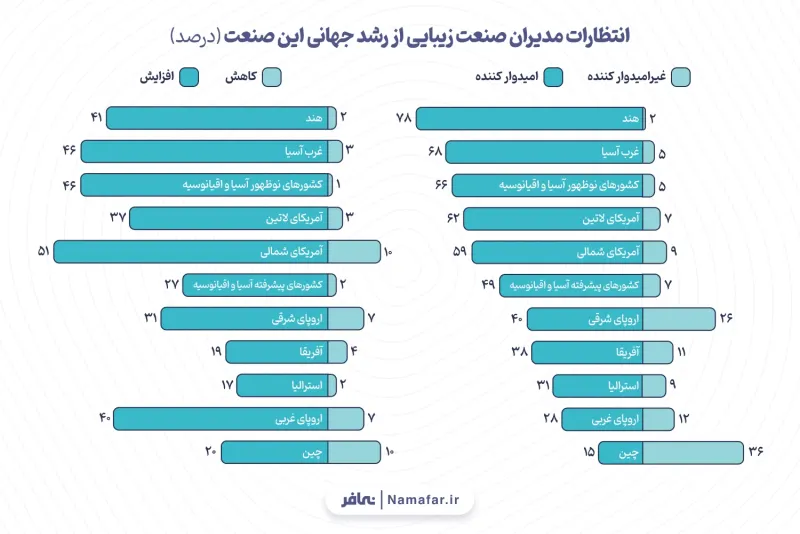
India and West Asia offer an attractive outlook for growth in the beauty-products market, while North America remains a favored priority for expanding distribution. When it comes to organizational expansion and development, nearly half of executives expect distribution in North America to increase, and 41 percent have the same view regarding India.
The beauty industry outlook in terms of price and sales volume
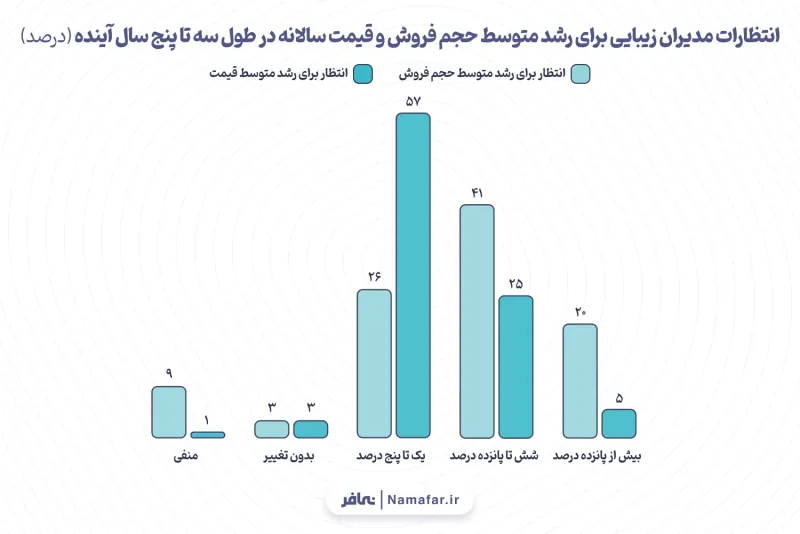
Beauty executives' expectations for average annual sales-volume growth over the next three to five years show that price growth of more than 5 percent is not a priority for many leaders, and 61 percent of beauty executives expect future gains to come from more than 5 percent growth in sales volume. Consumers are also increasingly attuned to the real value of the products and services they buy. Overall, given the limited remaining room for price increases, executives are targeting increases in sales volume.
Popularity and value of beauty products among consumers
The world is changing, and consumers' beauty preferences are changing too. Demographic shifts have transformed traditional consumer profiles. Traditional methods of the past no longer hold, and sophisticated consumer insights and hyper-personalization of products have now become important. A sharp rise in beauty spending, plus higher inflation and greater access to information, has forced buyers to pay more attention to how products are presented. One concept in the beauty industry is the "lipstick effect": consumers continue to spend on moderately luxurious items, such as lipstick, even when the economy is weak. This shows that consumers, depending on their interest, assign different value to beauty products.
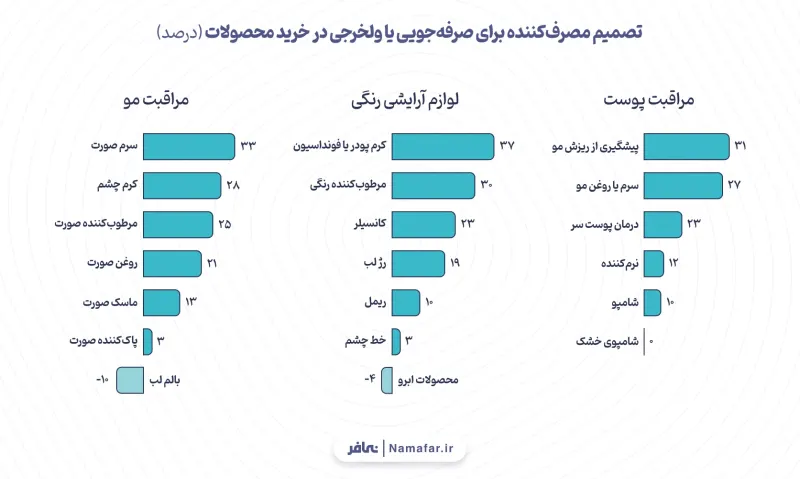
Consumers tell us that skin-care items such as face serums are more worth splurging on than face cleansers or lip balms, that foundations are more worth it than eyeliner and brow products, and that hair-loss-prevention products are more worth it than shampoos. Products that address key concerns or have meaningful functional differentiation are likely to encourage consumers to splurge; therefore, because consumers save and splurge selectively, they will likely continue to scrutinize the value of beauty products.
Features that influence the purchase of beauty products
Considerations in purchasing beauty products are evolving. Prominent and celebrity beauty-product founders have, at least over the past half-decade, been a marketing accelerator for many startup brands and have helped them reach the top. Today, celebrity founders are among the least of the factors consumers consider. Instead, consumers cite product quality as the main reason for their beauty purchases (though purchase considerations differ by category). Consumers prioritize product quality in their purchases across different categories.
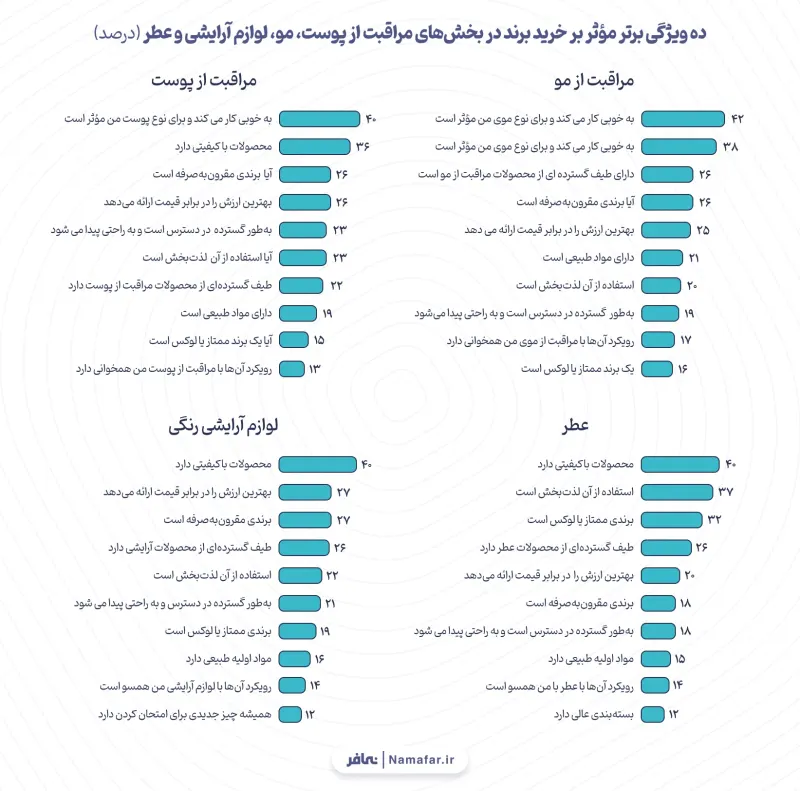
Accordingly, proper product function, effectiveness, and high quality are among the most important features affecting consumers' purchase of a product. Although celebrity founders can still raise brand awareness, a brand's staying power depends on much more. Beauty brands that once built their brand identity around founders, specific demographic groups, or a strong focus on sustainability may find that these strategies no longer drive long-term growth. Instead, buyers have focused on product effectiveness and a shared aesthetic vision.
The need to modernize commercial functions and the sales method
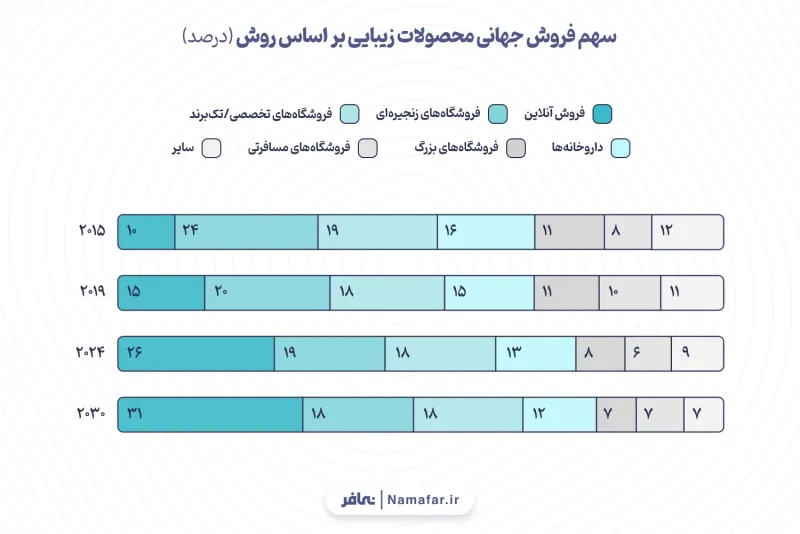
Two of the most important commercial functions of a beauty organization are marketing (sales) and distribution. The saturation of paid marketing methods has made digital advertising less effective and more expensive. Brand marketing can help rebalance this, but only if beauty-sector players can truly be authentic. The landscape of distribution methods is also changing. By 2030, online methods are expected to account for nearly one-third of global beauty-product sales (up from 26 percent in 2024), the highest share among all other methods. Specialty retailers and monobrand stores are also likely to hold their share of sales, while department stores and pharmacies may see their share of sales decline.
In 2022, beauty companies spent about 7.7 billion dollars on advertising, and cosmetics sellers reported 17.09 billion dollars in online sales. Although consumers still prefer physical stores for discovery and purchase, e-commerce has become a popular destination for buying and restocking. The convenience and access that e-commerce provides in offering and buying products, thanks to widespread discounts and fast shipping, has reshaped this category. Of course, for some brands and retailers, some of these practices may undermine the brand's position or profit margin. Instead of trying to compete on speed or promotions, managers can focus on creating engaging shopping experiences in several ways.
Regarding artificial intelligence to date, only 10 percent of surveyed executives regularly use AI, and 60 percent are still in the exploratory stage. Stronger adoption of AI (in areas such as research and development, quality control, social-media listening, and marketing personalization) can help drive greater growth and profitability. However, caution is needed when using it and communicating with the consumer, so as not to erode customer trust.
Top players in the beauty industry
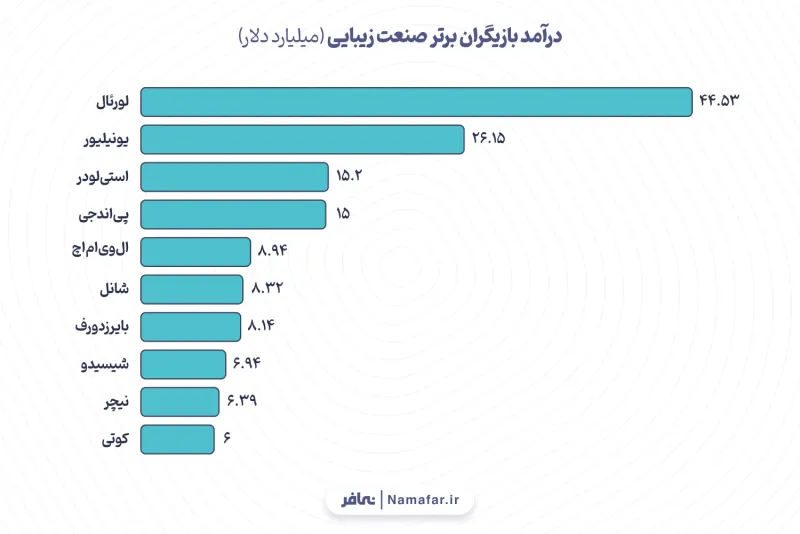
According to Statista statistics, L'Oreal, with about 45 billion dollars in global sales, is the leading company in beauty products. This beauty brand has had about 18 billion dollars more in sales than Unilever, which ranks second. Estee Lauder, P&G, and Louis Vuitton are also in the next ranks.
Final word
While the beauty industry is expected to retain its appeal (for both investors and consumers), the era of "more is better" consumerism has given way to a new focus on value, differentiation, and individuality (personalization). Addressing these components and factors can help beauty-sector players solve the current puzzle of the future challenges of this dynamic industry and drive further growth.
With its continued growth, the beauty industry offers many opportunities for investors and entrepreneurs. Given social and cultural changes, this industry will need to adapt to consumers' new needs; therefore, attention to innovation, product quality, and customer service can be the key to success in this market.
Machine-translated from Persian by Namafar; the Persian original is authoritative. Read the original in Persian