The year 2015 is a turning point in global development. "Transforming our world: the 2030 Agenda for Sustainable Development", which is abbreviated as the 2030 Agenda, was signed by the countries of the world in September 2015. The 2030 Agenda was prepared by UNESCO, which is one of the 16 specialized agencies of the United Nations, and put to the world's countries for approval. In this document, 17 overall goals and 169 detailed targets related to the overall goals are mentioned. Tourism is among the most important domains mentioned in the 2030 work program, and its name appears repeatedly in various parts of the document. For tourism goals to be implemented, a transparent implementation framework, sufficient financial resources, and investment in technology, infrastructure and human resources are needed.
Tourism has the potential to participate and play a role, directly or indirectly, in all of the goals. But this impact specifically lies in goals number 8, 12 and 14, which are respectively related to inclusive and sustainable growth, sustainable consumption and production (SCP), and the sustainable use of oceans and marine resources. In what follows we become familiar with all 17 goals mentioned in the 2030 Agenda and their relationship with tourism.
Goal 1: Against poverty
Tourism, as one of the largest economic sectors in the world with a very fast growth rate, by creating employment and the income generation that results from it, increases economic growth and development at all levels. The development of tourism in the 2030 Agenda in a sustainable form and its impact at the community level is closely related to national goals in the field of poverty reduction. Goals that are related to promoting entrepreneurship and small businesses and result in strengthening groups that receive less attention—especially youth and women.
Goal 2: The elimination of hunger
Tourism can, by promoting production and the sale of local produce in tourist destinations, increase agricultural productivity. In addition, agritourism is a growing segment of tourism that can complement traditional agricultural activities. The increase in local communities' income resulting from agritourism, although it leads to resilient agriculture, also increases the value of the tourist experience.
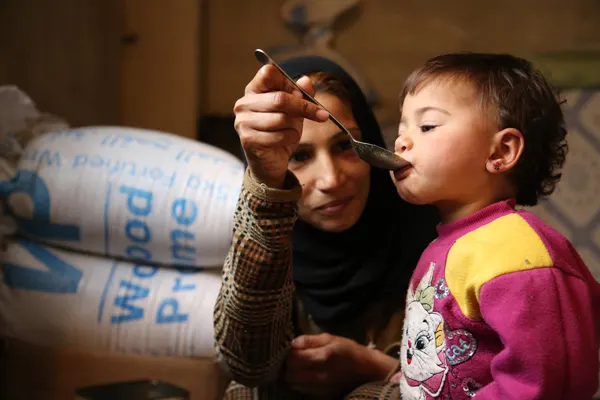 Ending hunger is the second goal among the Sustainable Development Goals.
Goal 3: Increasing health and well-being
Tourism's role in economic growth and development also has a secondary effect on health and well-being. Foreign income and tax revenue resulting from tourism can be reinvested, with the aim of improving maternal health, reducing child mortality and preventing their diseases, and so on, in health and treatment services.
Goal 4: Quality (standard) education
A trained and skilled workforce is a very important element in the progress of tourism. Investment in the professional training of employees, as well as cross-border agreements for international qualifications, standards and certificates, helps labor mobility. Youth, women, first-class citizens, indigenous people and people with special needs should especially benefit from educational facilities. Tourism has the potential to increase inclusiveness as well as to increase the value of cultures such as tolerance, peace and non-violence; just as it encompasses all aspects of global exchanges and becoming a global citizen.
Goal 5: Gender equality
Tourism, as one of the sectors with the largest share of women's employment and entrepreneurship for them, can be a platform for realizing women's abilities, their permanent employment, and women's managerial activities in various parts of society. Tourism can empower women in various ways; especially by providing jobs and also through income-generating opportunities in small- and large-scale tourism and hospitality-related jobs.
Goal 6: Treated water and sanitation (observing hygiene principles)
Tourism plays a very important role in access to and the supply of clean water as well as sanitation for all. If the useful and cost-effective use of water in the tourism sector is accompanied by correct health standards, wastewater (wasted water) management, pollution control and energy efficiency, it becomes a key factor for protecting our most precious resource.
Goal 7: Affordable and clean energy
Tourism has a considerable need for energy supply. The effort to supply energy leads to facilitating the move toward renewable energy and increasing its share in the global energy mix. With the increase in careful, long-term investments in the field of renewable energy, a great help is given to reducing greenhouse gas emissions and controlling climate change. Tourism can also play a role in providing innovative solutions related to new energies in urban, regional and remote areas.
 The development of renewable energies is among the benefits of the expansion of tourism.
Goal 8: Decent work and economic growth
Tourism is a driving force of world economic growth and at present one in every 11 jobs in the world is related to this domain. People (especially youth and women) can, by obtaining suitable job opportunities in this sector, increase their skills and develop their expertise. This sector's role in job creation is organized in target 8.9: "programmatic and implementation policies to promote sustainable tourism that creates jobs and promotes local culture and products; by 2030."
Goal 9: Industry, innovation and infrastructure
The development of tourism depends on the provision of appropriate public and private infrastructure as well as on an innovative environment. This sector also gives governments an incentive to update their infrastructure; to strengthen their industries and make them more sustainable and cleaner. In this same regard, governments must look for more high-yielding resources so that they become a tool for attracting tourists and other foreign investment resources. This in turn facilitates sustainable industrialization, which is necessary for economic growth, development and innovation.
Goal 10: Reducing inequality
If the local population and all the main stakeholders in the tourism domain have a role in the development of this industry, tourism becomes a powerful tool for community development and reducing inequalities. Tourism can play a role in urban regeneration and rural development and, by providing opportunities for advancement in the place of residence, reduce regional imbalance. Tourism is also an effective tool for developing countries' role-taking in the global economy. In 2014, the least developed countries (LDCs) earned 16.4 billion dollars in the export sector resulting from international tourism (2.6 billion dollars more than in 2000); which made tourism an important pillar in these countries' economies (7 percent of total exports) and helped some of them leave the list of least developed countries.
Goal 11: Sustainable cities and communities
A city that is not suitable for its citizens is also not a good city for tourists. Sustainable tourism can advance urban infrastructure and universal accessibility. Tourism also revitalizes declining areas and preserves heritage and national and cultural assets related to tourism. Investment in green infrastructure (more efficient transport facilities, reducing air pollution, preserving cultural heritage sites and open spaces, and so on) should lead to cities becoming smarter and greener so that both residents and tourists can benefit from it.
Goal 12: Responsible production and consumption
The part of tourism that is related to the practice of sustainable production and consumption (SCP) and plays a considerable role in accelerating the move toward sustainability. To do this, as specified in target 12.b of Goal 12, "developing and implementing tools to monitor sustainable development impacts for sustainable tourism which creates jobs, promotes local culture and products," is essential. The aim of the Sustainable Tourism Programme (STP), which emerged from the 10-Year Framework of Programmes on Sustainable Consumption and Production Patterns (10YFP), is the development of SCP actions; including innovations that lead to increased economic, social and environmental outputs.
Goal 13: Actions toward reducing climate change
Tourism plays a role in the issue of climate change and is also affected by this phenomenon. Therefore, tourism taking the lead in the domain of global responsibility toward climate change is in the industry's own interest. Tourism, by reducing energy consumption and moving toward the use of renewable resources, especially in the transport and accommodation sectors, can help overcome one of the hardest challenges of our age.
Goal 14: Life below water
Coastal and maritime tourism—the largest segment of tourism—especially in small island developing states (SIDS), depends on healthy marine ecosystems. Tourism development should be placed within integrated coastal zone management in order to help conserve and maintain vulnerable marine ecosystems and serve as a useful tool in the service of the blue economy. Target 14.7 states: "increase economic benefits to SIDS and LDCs from the sustainable use of marine resources, including through sustainable management of fisheries, aquaculture and tourism."
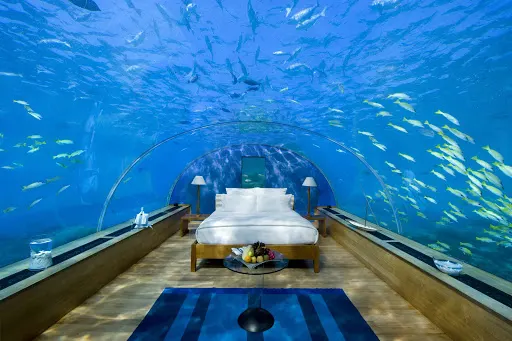 Coastal and maritime tourism is the largest segment of tourism.
Goal 15: Life on land
Magnificent landscapes, pristine forests, rich plant diversity and natural heritage sites are major reasons tourists visit a tourist destination. Tourism in the 2030 Agenda not only plays a major role in the conservation and maintenance of plant species; it also plays an important role in preserving terrestrial ecosystems, reducing waste and excessive consumption, protecting native plants and animals, and carrying out activities that raise awareness.
Goal 16: Peace and justice
Tourism revolves around billions of people from around the world with different cultural backgrounds. The presence of different people with different religious and cultural backgrounds can help improve relations and cultural tolerance. Sustainable tourism, which deals with local communities and also benefits from these same communities, can be a source of livelihood, a strengthening of cultural identities, and also a stimulus for entrepreneurial activities, and thus in this way help prevent violence and conflict so that a fundamental and integrated peace is established in communities that are in conflict with one another.
Goal 17: Cooperation in achieving the goals
Tourism in the 2030 Agenda, because of its universal nature, has the ability to strengthen public/private cooperation and partnership and to attract numerous stakeholders (international, national, regional and local) to work with one another in order to achieve the Sustainable Development Goals and other shared goals. In fact, public/private cooperation and public/private partnership are essential and fundamental foundations for the development of tourism. These two factors have increased awareness of tourism's role in realizing the 2030 Agenda.
Mapping the future with tourism
Right now, a major part of some of the world's countries' income already depends on tourism. Some countries such as Iran are potential tourism destinations in the world but have not yet taken any advantage of the opportunities ahead. Tourism in the 2030 Agenda has defined appropriate goals, and reaching them is the key to solving many problems. A world in which people simply travel around all points of the blue-and-earth globe is a world free of violence, sustainable and with a pleasant climate. In such a state, human development indicators will be very high. The eradication of poverty and economic development are among the other benefits of tourism development. Tourism dollars, if they are not more than oil dollars, are not less.
Notes:
- This piece was published under the title "Tourism in the 2030 Agenda" on the World Tourism Organization website, which Namafar translated and published in Azar (November–December) 99.
Machine-translated from Persian by Namafar; the Persian original is authoritative. Read the original in Persian