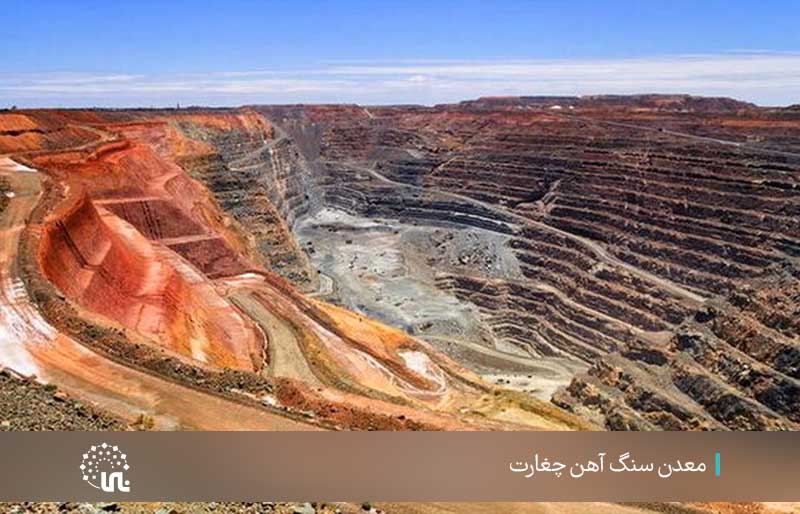
In the debates before the 96 presidential election, when the host showed an image of a mine so that the presidential candidate would comment on it, that candidate mistook the mine for a natural formation in the shape of a valley that could attract many tourists. What the debate-program host had shown was the Choghart mine, or the Bafq iron ore mine; not a valley for tourists to visit. A mine in the heart of the desert, 120 kilometers from Yazd, that after extensive extraction has today taken the shape of a strange valley. That presidential candidate's mistake became material for jokes in cyberspace. Still, while mistaking a mine for a natural valley is strange, the second part of the candidate's remarks was entirely correct: that this phenomenon could be a good attraction for tourists and visitors. That is what has happened today. Although this mine is an industrial phenomenon, it is very majestic and beautiful. Various social groups can also be interested in seeing such an industrial structure.
The Bafq iron ore mine, one of the most important industrial tourism attractions in Iran
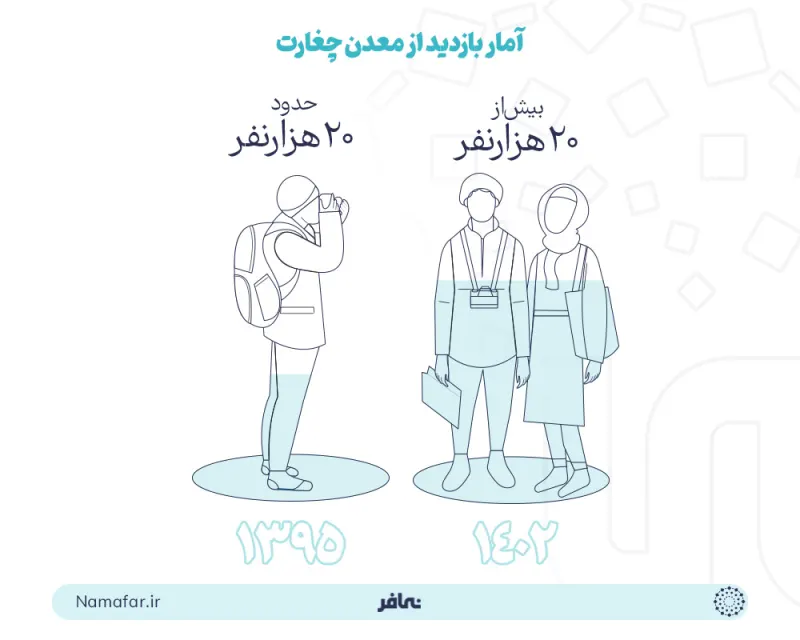
A year before the 96 presidential election, a museum had been opened at the Bafq iron ore mine that welcomed industrial tourists. The Choghart mine had such appeal that this Nowruz it attracted more than 20 thousand travelers. In this same Nowruz of 1402 (2023/24), 5491 vehicles traveled in the mine area. The largest number of visitors were from the three provinces of Yazd, Shiraz, and Kerman, that is, the provinces closest to this mine. Mine officials believe that visits to the mine grew 100 percent from 95 to 1402 (2023/24), from 10 thousand people to more than 20 thousand.
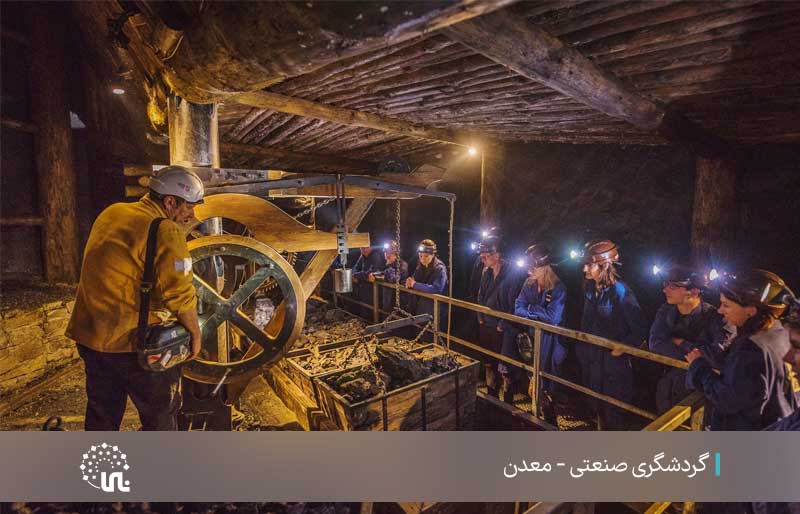
In the Bafq stone and mining museum, mining tools and equipment, images of exploration operations over the past 50 years, and so on are on display. You can also visit a collection of 219 types of mineral stones in this museum, gathered from Iran's mining regions. Visiting this mine has an astonishing feel. The many rings that grow steadily smaller until they reach the bottom of the mine testify to half a century of workers' labor in one of the hottest points in this country. This is a structure that over fifty years was slowly created by people who spent their lives in this region. What makes the idea of attracting tourists to visit the Bafq iron ore mine a fully serious one is the spread of a phenomenon called industrial tourism. Introducing enthusiasts of mining exploration and geology, as well as boosting industrial tourism in Iran, are among the reasons this museum was opened.
What is industrial tourism
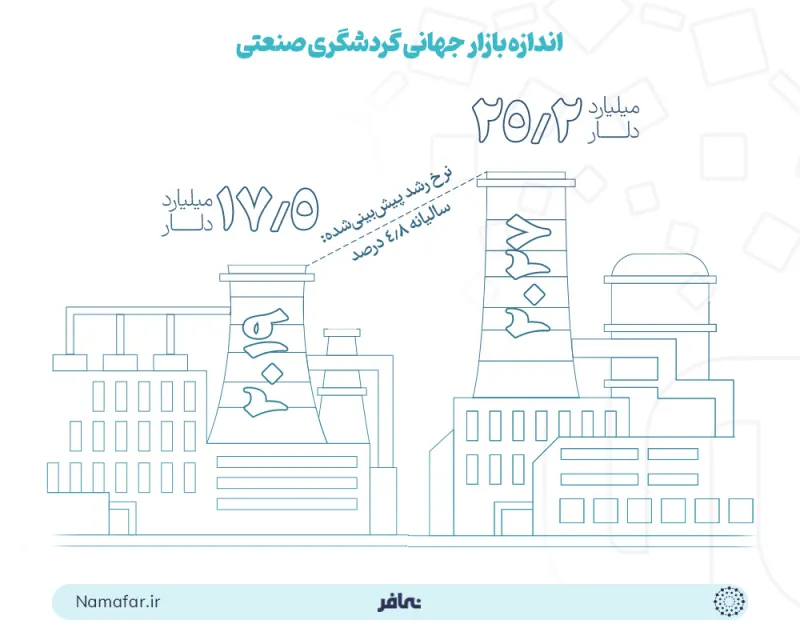
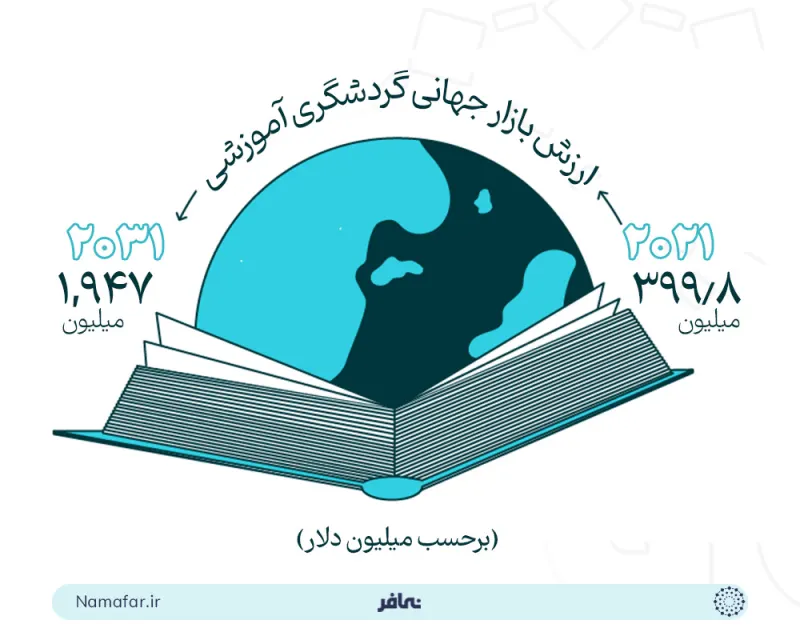
From the seventeenth century, when the industrial world took on a different shape, industrial tourism was also born. A phenomenon that today receives far more attention than in the past and has a market worth more than 17 billion dollars. In industrial tourism, the tourist travels to visit an industrial complex or one related to industry. The apparatus of industry after the Industrial Revolution is so diverse and large that it has always had enthusiasts. People eager to know by what process various industrial goods and products are made and how different machines work. This subject is also material for documentary filmmakers and those interested in visual arts. On today's social networks we often see short videos that show the complex processes of making simple products such as balloons, plastic balls, tablecloths, and goods of that kind.
What is the aim of industrial tourism
Industrial tourism is undertaken with the aim of visiting the production process of a product or becoming familiar with how industrial devices and machinery work. Apart from educational aspects and occupational and professional study, this branch of tourism also has something to offer those interested in unrepeatable experiences. The experience of being in mines, visiting oil fields, refineries and petrochemical industries, automobile factories, steel mills, power plants, as well as dams and food-product factories, are notable examples in this regard.
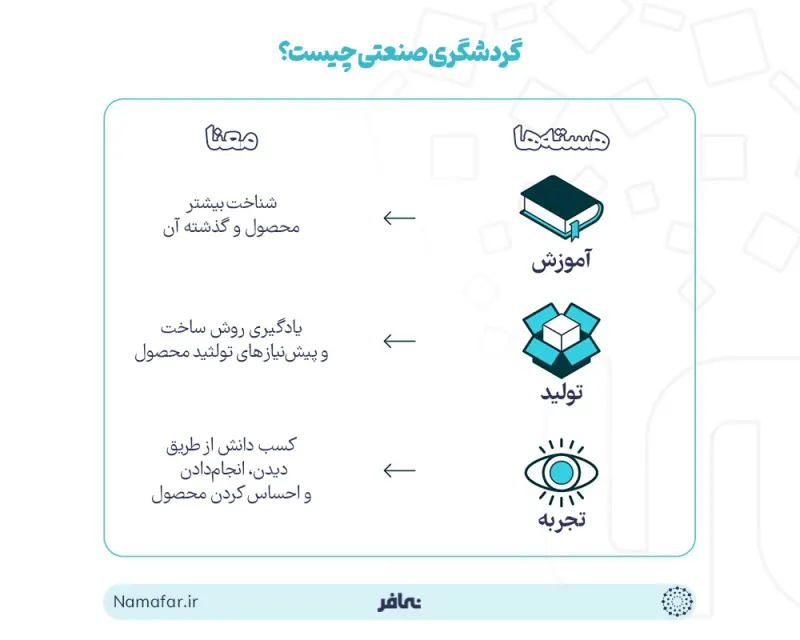
Different aims can lead a person to travel intending to visit an industry-related complex. One of the simplest of these reasons, and not the most widespread, is attractiveness. If you have traveled to the northern provinces on the Qazvin–Rasht route, you have seen a large number of industrial complexes that catch the eye. From the Mammut Industrial Town to the "Zar Grain" refinery with its nested, interwoven structures. A little farther on is the cement factory, which any curious mind would like to wander through in that strange space. Some old factories can also be a fanciful subject for leisure and travel. But the stronger and more widespread reason for industrial tourism is educational tourism itself. These two branches of tourism are so close that some sources have considered industrial tourism one of the instances of educational tourism. A concrete, tangible visit to industrial processes is an unmatched educational opportunity.
Virtual and panoramic tours have also been designed for industrial tourism. For example, on the Panoman website one can visit numerous industrial complexes for free, such as MAPNA's offshore drilling rig, the Saharkhiz factory, the Tesko factory, and other industrial plants. Educational use of industrial tourism can include a direct experience of the production process of a particular product, an organized visit to a company, a visit to an industrial heritage site, and learning the history of an industry.
Industrial heritage tourism
Industrial tourism also has a more cultural form that relates to old industrial complexes. These complexes are in principle considered a subset of countries' cultural heritage and national heritage. Industrial heritage refers to the remains of an industrial culture, such as historic factories, water towers, mills, railways, lighthouses, mines, industries and transport infrastructure, energy, or residential, religious, and educational spaces associated with industrial facilities, other buildings of that era, and also historical documents, that show the value of the history of technology from social, scientific, and architectural aspects.
Visiting these complexes, because it brings the lives of those who came before us before our eyes, is an activity that is more cultural than industrial and educational. Alongside industrial heritage, industrial archaeology should also be mentioned. The aim of this field has been to discover industrial processes in antiquity.
The Volkswagen complex, a foreign example of an industrial tourism attraction
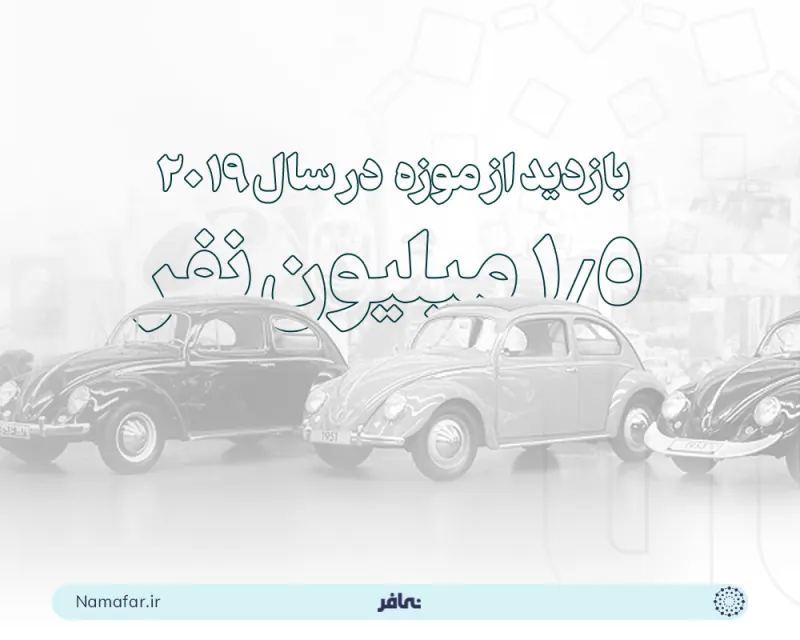
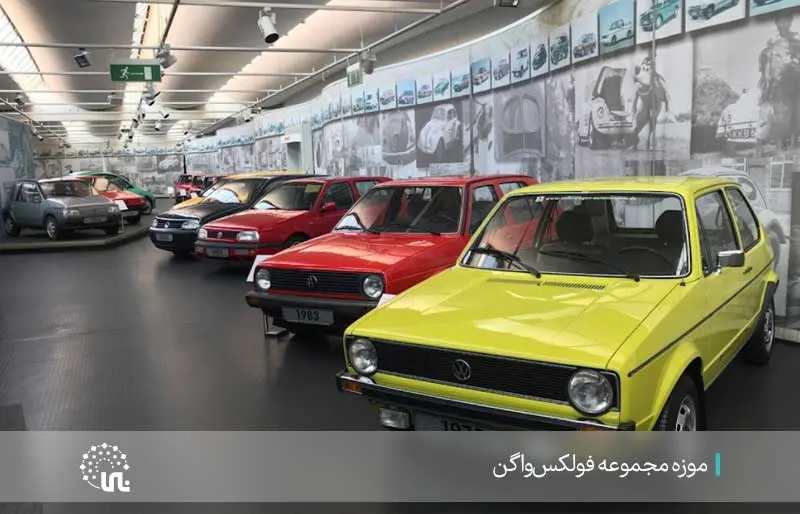
In Volkswagen's central factory there is a museum that presents the history of this company and its old, memorable products. The Volkswagen complex in Wolfsburg, Germany, has been able to offer industrial tourism and industrial heritage side by side to travelers. Each year nearly more than one million people visit Volkswagen. This can be an example of industrial heritage. But there is also a unique parking facility at this factory that makes the factory more touristic.
This parking facility consists of two tall, stylish glass towers. These two towers are designed so that they deliver Volkswagen-made cars to the customer without the slightest movement. In this way the customer tastes the pure sensation of their car moving for the first time. In the middle of these large cylinders there is an arm that moves the cars.
Conclusion
In industrial tourism as a growing branch of the tourism industry, various groups of travelers visit an industrial site. This visit can have various aims, but one of the most important is education, or educational tourism. The value of the global industrial tourism market is 17 billion dollars. This figure will reach more than 25 billion dollars by 2027. The history of people's interest in industrial tourism goes back to the Industrial Revolution and the flourishing of the industrial sphere.
The Choghart mine, or the Bafq iron ore mine, is one of the most important industrial tourism attractions in Iran. This complex was able to have more than 20 thousand visitors during Nowruz of 1402 (2023/24). Most of these visitors were from neighboring or nearby provinces of this mine. In the world, too, the Volkswagen factory is a noteworthy example of industrial tourism. This factory has a museum that displays the company's history. The company's industrial, mechanized parking also draws travelers' attention in the tourism industry, to the point that this complex had about 1.5 million visitors in 2019.
Machine-translated from Persian by Namafar; the Persian original is authoritative. Read the original in Persian