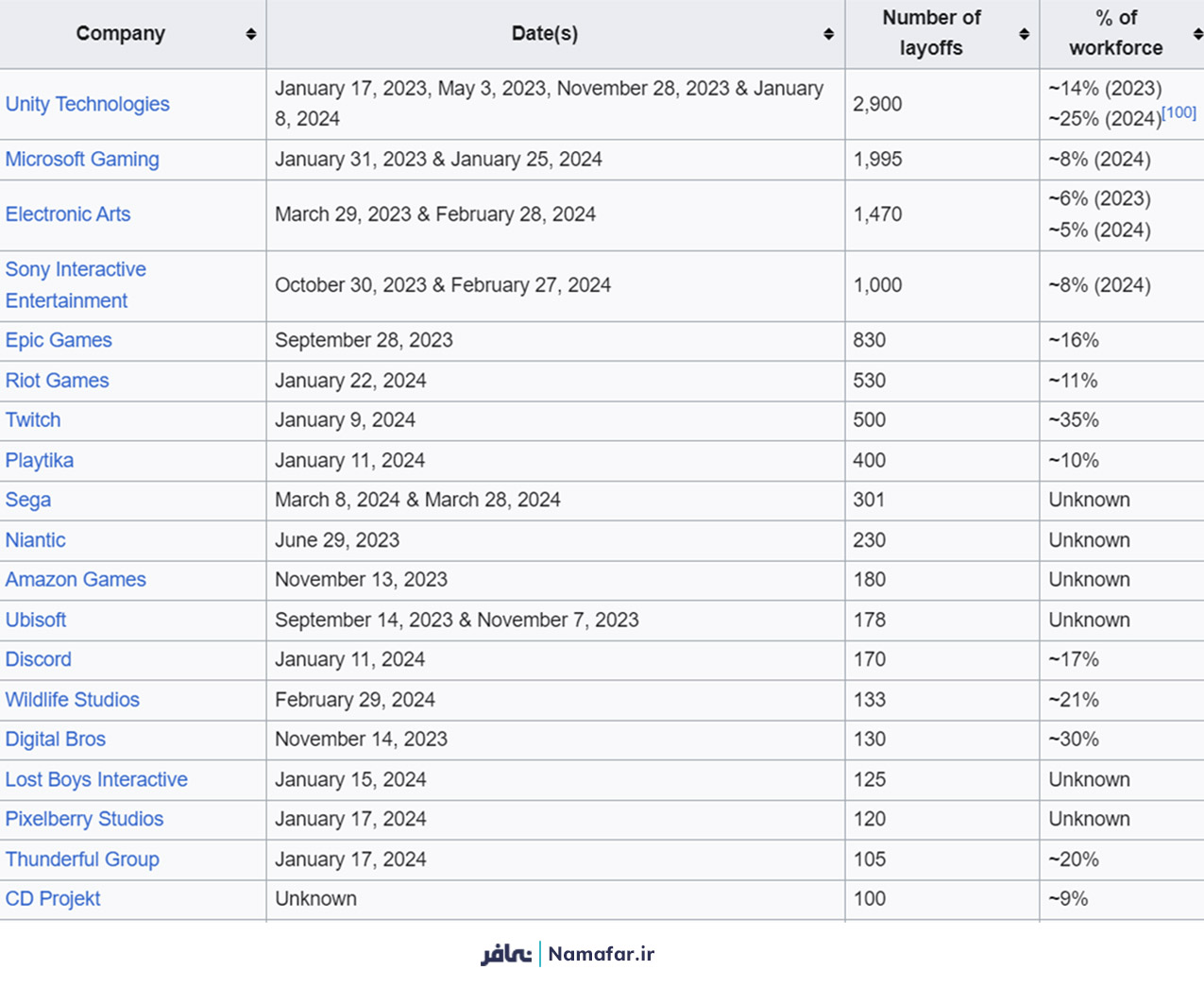
Last year, the video games industry experienced numerous layoffs. The largest game-making companies applied workforce reductions on a wide scale. In 2023, ten thousand jobs, and in January and February of 2024 alone eight thousand jobs related to the gaming industry, were eliminated. These layoffs had a significant impact on game-making studios and especially emerging companies, projects, and the overall outlook of the games industry. These effects include the delay and cancellation of projects and several video game titles, the closure of several game-making studios, or their separation from their parent studios.
All these events strengthen the conjecture that the video games industry does not have as much of a future as was imagined and that its period of recession has begun. Microsoft was one of the game-making studios that in January laid off about 8 percent of the total workforce of its games division, a percentage equal to about 2000 people. Phil Spencer, head of Xbox, attributed the cause of these workforce reductions to the slow growth of the video games industry. In his view, the slow growth of the gaming industry has forced publicly traded companies to reduce their workforces in order to cut costs.
Of course this claim of Spencer's by no means means that the computer games industry is going to shrink or lose its audiences and that another entertainment industry is going to take its place. The statistics show that the video game industry in 2024 will be larger relative to the previous year. But the main issue is that the speed of growth this industry has been undergoing over these years is not a speed expected by companies and investors. One of the results of this speed is the unreasonable growth of the widespread layoffs that this game-making industry has experienced in recent years.

A tsunami of workforce reductions in the video game industry
When layoff is spoken of, what is meant is the widespread dismissal of a group of the workforce. Layoffs of this kind are not a new subject in the computer games industry. But over the past two years these layoffs have become more frequent, and this very fact has caused a great deal of noise to be made. These layoffs have had major effects on the gaming industry, such as the cancellation of various titles and the closure of game-making studios. The Embracer Group, the Dutch video-gaming developer and publisher, between July and December last year cancelled 29 video game titles. Microsoft Gaming cancelled the title Odyssey, a game in the survival genre, while the Blizzard Entertainment team had been working on it for more than 6 years. Microsoft has also laid off many of the employees who were working on this game. Sony laid off 900 people, equivalent to 8 percent of its company, in February 2024, and this company's London branch was completely closed. This layoff had a great impact on the two prominent studios Naughty Dog and Insomniac Games and led to the cancellation of the title The Last Of Us Online. The story becomes more interesting when you know that many newly established game-making studios, such as Ridgeline Game and Deviation Game, which had been founded in 2021, were closed three years after starting work and while they had not yet released their first video game.List of the most important major layoffs in 2023 and 2024
The list of studios that were closed in 2023 and 2024 is as follows:- Campfire Cabal
- Double Loop Games
- One Player Mission
- Threshold Games
- Threaks
- Little Red Dog Games
- Wimo Games
- Deviation Games
- Crop Circle Games
- Smilegate Barcelona
- Ubisoft London
- Industrial Toys
- Versus Evil
- EA Chillingo
- Pixelopus
- Free Radical Design
- Volition
- Ridgeline Games
- London Studio
- Daedalic Entertainment (development division)
What is the cause of the layoffs at game-making companies?
Various factors can lead to these widespread layoffs. One of the determining factors is that in the development stages of a video game, the company's path changes in another direction and this change leads to many of the staff who are working on a project no longer being needed. This itself arises from a game-making studio reaching the conclusion at some point that the project it is occupied with cannot be money-making enough, or that focusing on it keeps it from focusing on other money-making projects. The cancellation of the title The Last Of Us Online and Sony's layoffs arose precisely from this cause. Neil Druckmann, head of the Naughty Dog studio, said in an interview that focusing on making an online game keeps us from continuing on the path by which we became known, namely making story-driven single-player games. The production of a bad and unprofitable product by a studio is another factor that causes the parent company or investors or publishers no longer to want to invest in that team or studio, as a result of which closure and group layoffs occur. For example, one can point to the game The Lord of The Rings: Gollum. This game was not able to meet publishers' expectations well, and as a result the German studio that made this title, namely Daedalic, was closed. Another factor that causes layoffs and closures is factors related to changes and the loss of financial resources. A good example of this factor is the company Embracer Group. Savvy Games Group, which belongs to the Public Investment Fund of Saudi Arabia, was the party that had invested two billion dollars in the Embracer company; Savvy's withdrawal from the contract caused Embracer to abandon its projects and be forced to close many of its projects and subsidiary studios.The lasting effects of COVID on the mobile games industry
The stories that were cited as factors in the layoffs of recent times are not new factors and may always happen in the video games industry. But what made the conditions of recent years more particular for this industry was the issue of COVID and market conditions. COVID pandemic conditions caused uptake of computer games to increase in a miraculous way. It was natural that this uptake of computer games would force game-making companies to expand their activities. But contrary to their expectation, with the pandemic subsiding and the market returning to its pre-pandemic state, game-making companies faced a serious recession. This issue was accompanied by rising costs and inflation. Inflation caused the ordinary costs that game-production studios had to pay to increase to a large extent.Rising costs in the video games industry
The increasing complexity of game design, the adoption of advanced technologies to create engaging and stunning visual experiences, and the rise in players' expectations for more extensive content in recent years have caused a striking increase in the costs of video game development and production. This subject, as we mentioned earlier, must be considered alongside the sluggishness of the global economy in 2024 and the rise in interest rates, which has made financing for game-making companies more challenging and harder, and has limited investment in new game design and production projects. For example, many of the fixed costs of production, such as money for electricity or the internet, increase with the rise in interest rates and inflation. According to a report cited by the Competition and Markets Authority (CMA), video game development budgets have increased in recent years. Whereas in the past the average budget allocated for producing a video game stood between 50 and 150 million dollars, games that are to be produced in 2024 and 2025 need budgets of more than 200 dollars or higher. At present some franchises such as Call of Duty and Grand Theft Auto need more than 300 and 250 million, respectively, in production costs. In such conditions, namely the increase in computer game production costs (whether because of inflation, or because of this industry's growing need to produce a better work) and also ambitious investments during the pandemic period, game-making companies are forced, in order to reduce these costs as far as possible, to cancel many of their plans and lay off their development teams in groups. For this reason it is essential for many game-making companies to examine well the video game industry in the statistics.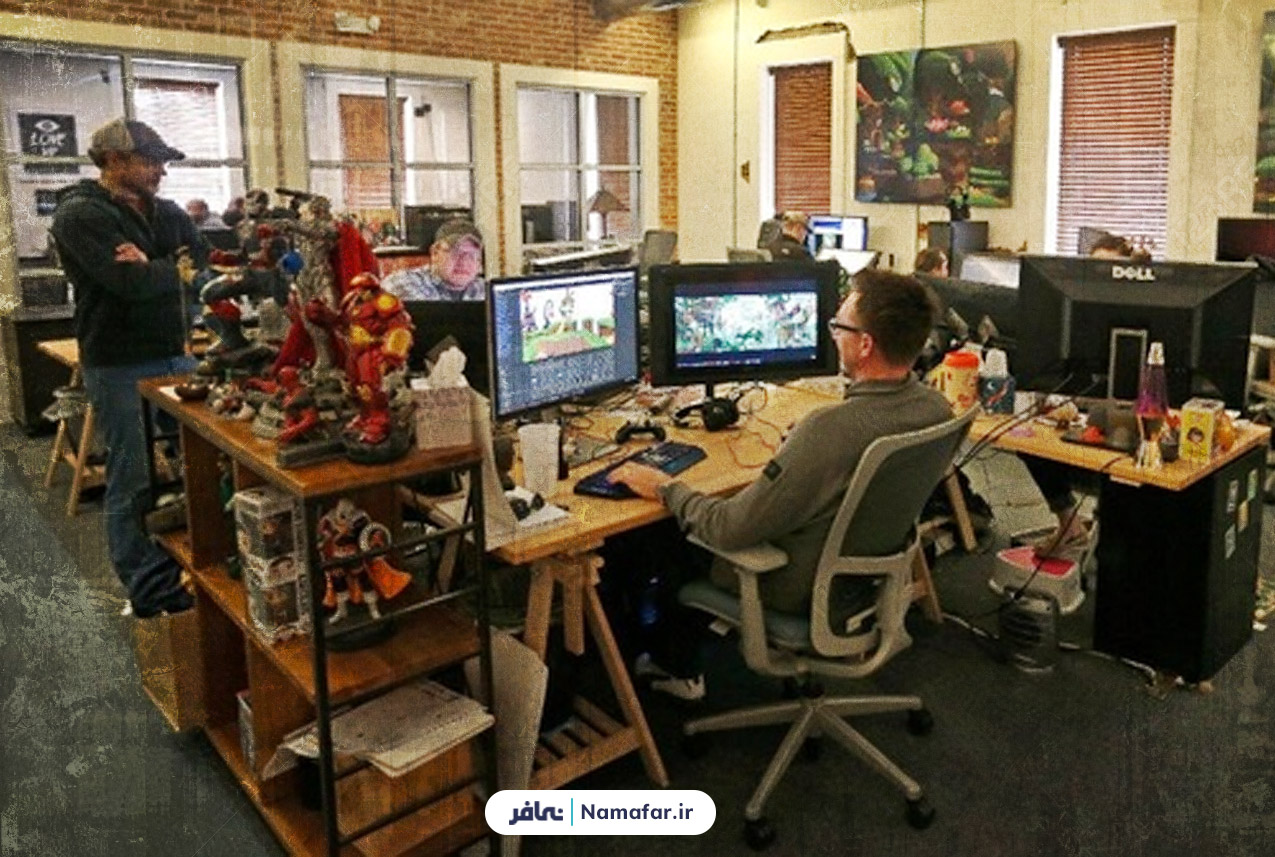
Summing up
The world's largest money-making and successful industries, over the course of their upward growth, encounter ups and downs. The game-making industry too, as the largest entertainment industry, is not an exception to this pattern. The root of the recent period's layoffs in the gaming industry is also not an issue that would fundamentally transform and overturn the overall upward trend of the video games industry. Various variables, such as market saturation and changes in consumers' tastes and behavior, affect the upward trend of an industry such as the gaming industry, but the video game industry is still young and dynamic and has diverse possibilities for growth in global markets. Identifying, examining, and knowing about the most popular video game genres can be helpful toward better growth of the games industry. The main issue that had led to the recent challenges in the games industry arose solely from the slowdown in the growth of the game-making industry, the bulk of which was the issue of COVID and inflation. The COVID pandemic created the illusion in the minds of designers and investors that the audience that had become an audience of video games in the pandemic days was a permanent audience. With the reopening of the world and the passing of the pandemic, this forecast proved wrong, and the best thing these game studios were able to do was to reduce costs, which showed itself in the closure of studios and major layoffs. Cost reduction is a policy that studios adopt so that they can retain their investors and at the same time take action to attract capital. Despite all these points, it remains to be seen whether the video gaming industry will take a lesson from crises of this kind for its future or not.Machine-translated from Persian by Namafar; the Persian original is authoritative. Read the original in Persian