Tourism is recognized as one of the important and profitable cultural and creative industries worldwide. Museums are among the elements that play an important role in the tourism industry. All of us are more or less familiar with museums and have probably visited one or more historical and archaeological, anthropological, military, palace museums or museum parks. Statista's 2023 report on the world's famous museums has presented useful and interesting statistics and information on the status of the world's museums and provides suitable insight for audiences and enthusiasts of this field. Accordingly, in the present piece and using the aforementioned report, the status of the world's museums is examined with a data-driven view.
An overview of the status of the world's museums
The market value of museums, historic sites, zoos and parks worldwide in 2022 was estimated at 60.6 billion dollars, and this figure is forecast, with a 60 percent increase, to reach about 97 billion dollars in 2023. Also, the growth trend of this market will be upward through 2027 and according to forecasts will reach more than 119 billion dollars. These data indicate a remarkable boom and transformation in the tourism and cultural heritage industry in the world. In particular, the notable growth in 2023 may stem from a shift in tourism tendencies and increased public attention to historical and natural values in various countries of the world. This trend underscores the importance of preserving cultural heritage and increasing the responsibility of international communities toward the environment and human history, which can also lead to sustainable economic benefits.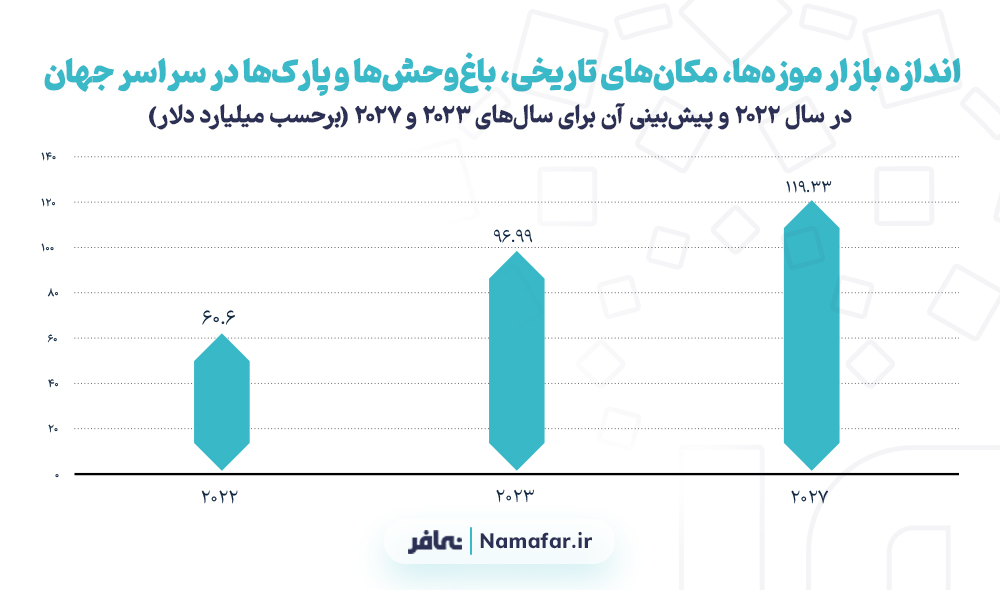 Figure 1. Market size of museums, historic sites, zoos and parks worldwide in 2022 and the forecast for 2023 and 2027 (billion dollars)
Per-capita museums of the world in various countries
According to a UNESCO report, the number of museums worldwide reaches approximately 104 thousand museums. As of March 2021, the United States, with about 101 museums per million population, has the highest per-capita number of museums in the world. Western Europe and Canada with 56.3 museums and Eastern Europe with more than 32.8 museums per million population occupy the second and third ranks of per-capita museums. Overall, as of March 2021, there have been nearly 14 museums per million population worldwide.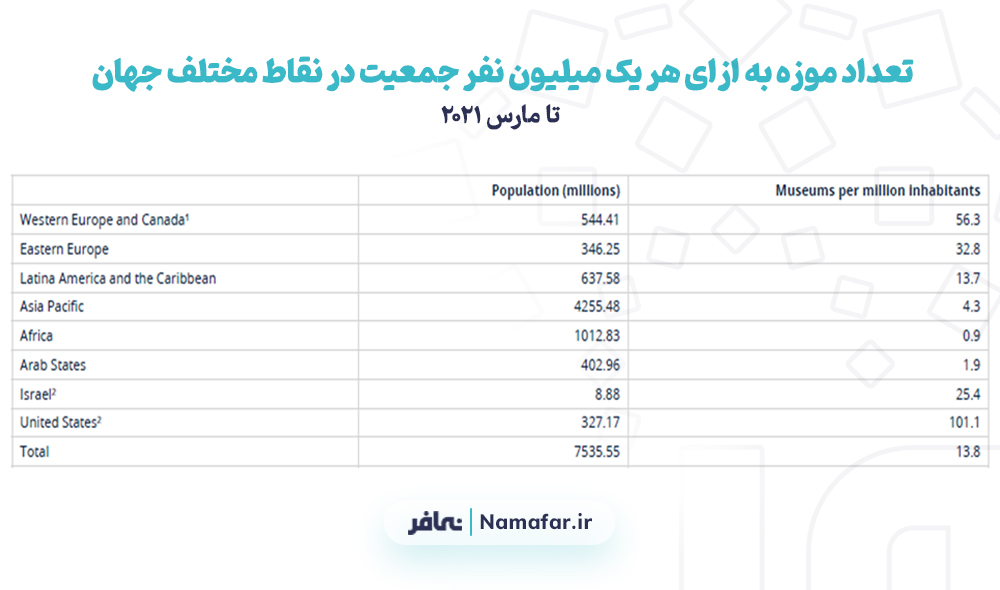
Figure 2. Number of museums per one million population in various parts of the world as of March 2021
Leading countries in museology
An examination of the world's leading countries by number of museums shows that, with more than 33 thousand museums in the United States of America, the greatest number of museums in the world is in America. Also after America, the second and third countries in the world in terms of number of museums are Germany and Japan, which have 6,741 and 5,738 museums respectively. A noteworthy point in this ranking is the gap between the number of museums in America and other countries, especially populous countries such as China. Also, per-capita museums in the first five countries, namely America, Germany, Japan, China and Russia, are respectively equal to 101, 81, 46, 4 and 38 museums per million population. These figures well show the cultural tendencies and investment in the cultural fields of various countries and the extent of their commitment to preserving and promoting cultural heritage.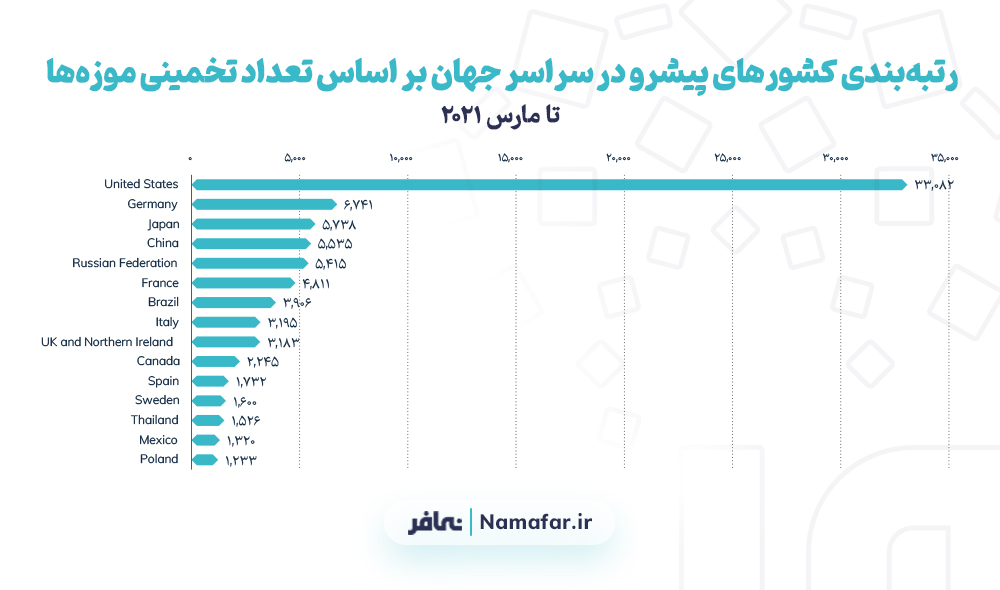
Figure 3. Ranking of leading countries worldwide based on the estimated number of museums as of March 2021
The world's most-visited museums
It may also be of interest to you which museums the world's most-visited museums are, and in which countries. The Louvre Museum in Paris, with 7.73 million visitors, is the world's most-visited museum in 2022. The Vatican Museums, with 5.08 million visitors, rank second. The Natural History Museum in London, with 4.66 million visitors, is in third place. Also the British Museum and the National Museum of Natural History in Washington, with 4.1 and 3.9 million visitors respectively, occupy the subsequent ranks. A look at the trend in the number of visitors to the world's famous museums shows that museum visits declined in 2020 and 2021. This issue relates to the coronavirus pandemic period, and the impact of COVID-19 on one of the main branches of the cultural and creative industries, namely tourism and cultural heritage, has been pronounced.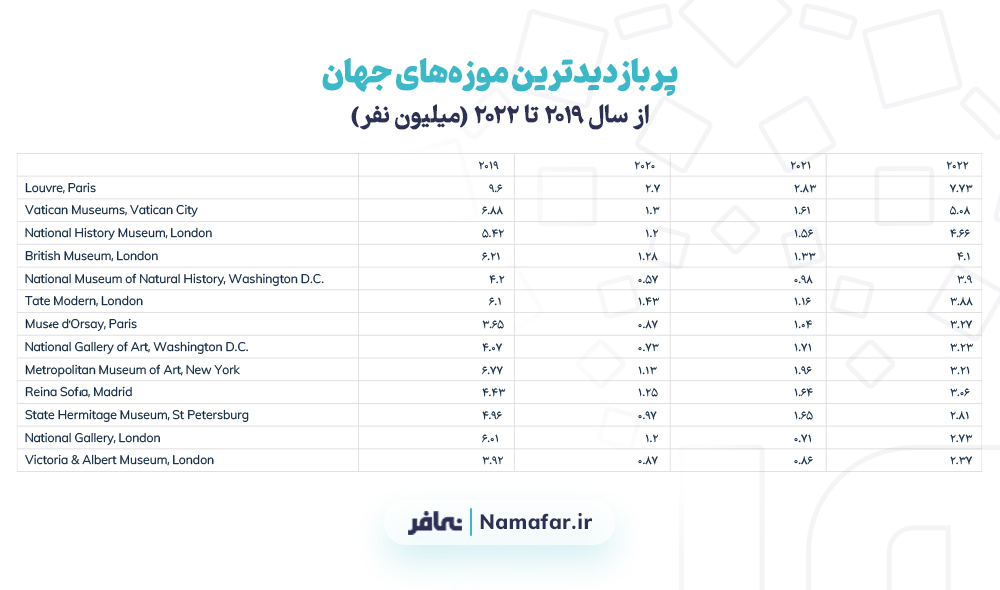
Figure 4. The world's most-visited museums from 2019 to 2022 (million people)
Museums popular on social networks
Given the role of cyberspace in advertising, attracting and accompanying the public, the number of followers of museums' social networks on four apps—TikTok, Twitter, Facebook and Instagram—has been examined and analyzed. On this basis, the highest number of followers on social networks as of March 2023 has been allocated to the Museum of Modern Art in New York in the United States, with more than 13 million followers. The Metropolitan Museum of Art in New York, Tate Gallery in Britain, the Louvre Museum in Paris and the Guggenheim Museum in New York, after the Museum of Modern Art in New York, with 10.7, 10.3, 9.2 and 6.9 million followers respectively, have taken the second through fourth ranks for the highest number of followers. Undoubtedly, given the pervasiveness of cyberspace in the digital age, using these tools for advertising and attracting audiences can, in addition to economic benefits and increasing people's visits to museums, lead to an increase in people's information and the provision of education in this field, which in turn causes an increase in productivity from the wealth of museums.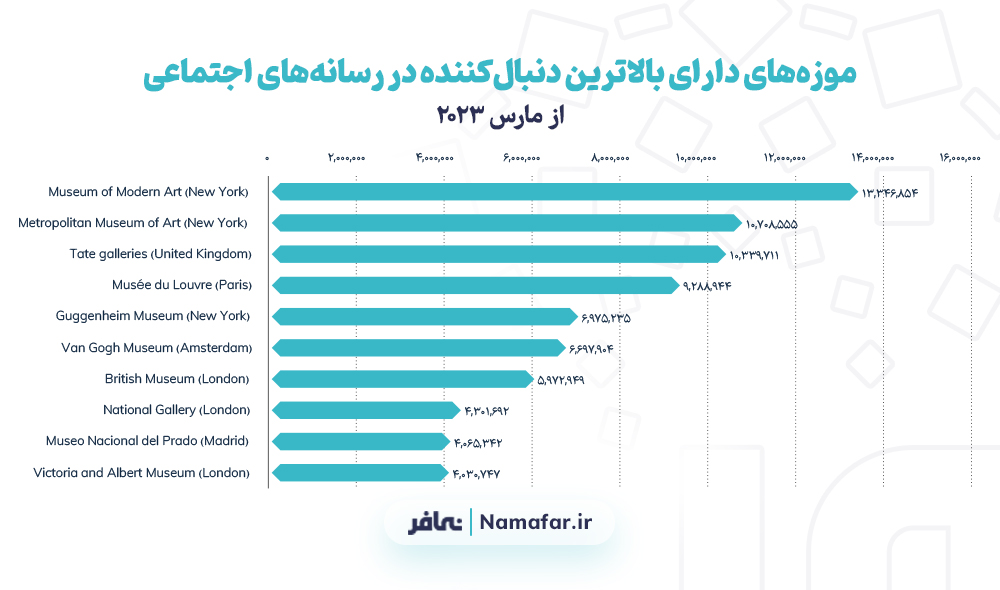
Figure 5. Museums with the highest number of followers on social media as of March 2023
Market size of the museum industry in North America
In this section the revenue size of the museum industry market in North America as the leading region in this field has been examined and analyzed. An examination of museum industry revenue in the United States indicates an increase in the value of this market from 12.6 billion dollars in 2013 to 16.8 billion dollars in 2019, with an average of about 0.7 billion dollars each year. Following the coronavirus pandemic, the market size of museum visits changed substantially and, with a decline of about 7 billion dollars, reached the figure of 9.8 billion dollars in 2020. Despite the continuation of an upward trend in 2021 and 2022, museum and cultural heritage industry revenue has still remained below the pre-pandemic level and reached 11.2 billion dollars in 2022. It is forecast that this figure will reach about 12 billion dollars in 2023.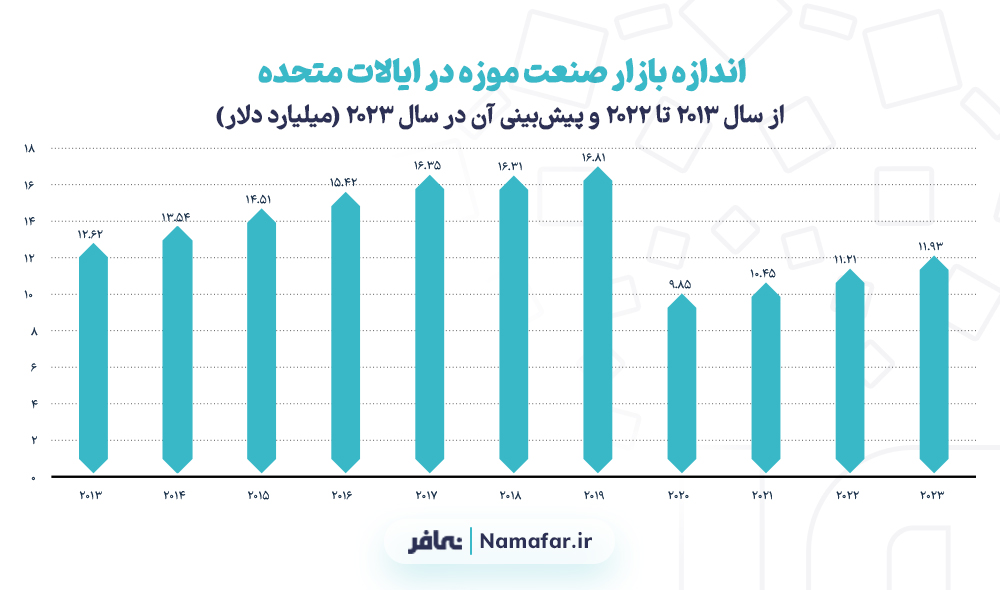 Figure 6. Market size of the museum industry in the United States from 2013 to 2022 and the forecast for 2023 (billion dollars)
Conclusion
Museums, as one of the important tourism centers of countries, because they hold valuable collections of artistic, historical and cultural works, have great appeal for audiences and can also play a significant role in the economy. So that by developing these centers it is possible to become one of the highest-earning countries in the tourism industry. For this reason, in Statista's 2023 report on the market of museums worldwide, statistics and information in this field have been presented. According to the forecasts made, the growth of this market will be upward through 2027 and will reach more than 119 billion dollars. America, with a per-capita 101 museums per million population, and the Louvre Museum in Paris, with about 8 million museum visitors, are among the leaders in this field. This indicates cultural tendencies and investment in cultural fields and the extent of commitment to preserving and promoting cultural heritage in various parts of the world. Given the future of tourism and its important role in the economy and culture, in our country Iran as well it is necessary that the infrastructure of this field be provided in a suitable form so that the abundant existing capacities can be utilized suitably.Machine-translated from Persian by Namafar; the Persian original is authoritative. Read the original in Persian