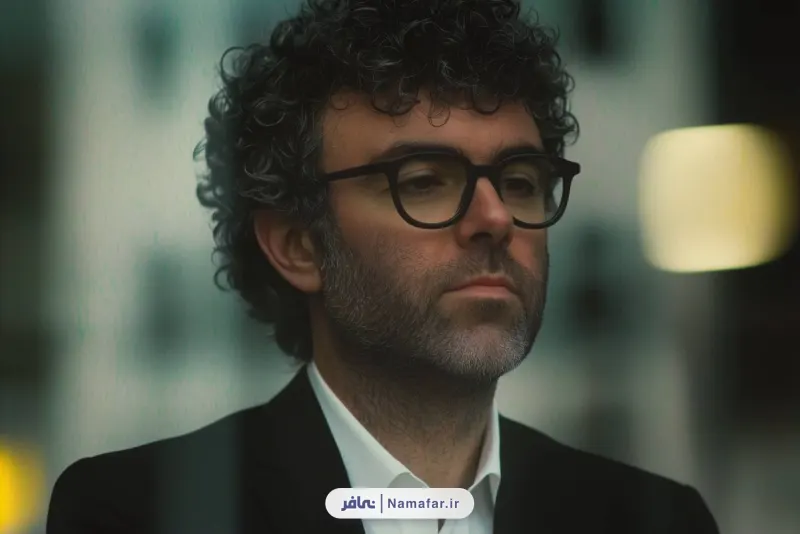
Soroush Albakhshi, director of the film "Palestine in My Eyes," in conversation with Namafar:
Artificial intelligence is a field in which we have the ability to compete with the world; unlike cinema!
Namafar: Every technology, when it becomes available to humans, gives them the possibility of realizing dreams that could appear only in their imagination. Like the dream of flight, or covering long distances in only a few hours. Artificial intelligence too became a window onto many of humanity's aspirations. Like the dream of traveling to distant and dangerous lands that most people do not have the possibility of traveling to. Lands where, even if one can travel to them, it would be hard to have high-pressure activities such as filmmaking there. Now what if there were a tool that both eliminated the need to travel and itself took on the burden of filmmaking? A tool that, like a shortcut, makes the realization of the strangest goals possible. Traveling to Palestine and the West Bank and freely and without worry making a film in that unfamiliar region is, in practice, almost impossible. But technology comes to make the impossible possible and to bring dreams of flight to expression. This is the work that Soroush Albakhshi, a graduate of Soore University and director of the film "Palestine in My Eyes," did: making a film on the subject of life in the West Bank, entirely with artificial intelligence. In what follows, you will read the full text of Namafar's conversation with this artist and the challenges and stories of producing this film:
I have been working with artificial intelligence for about a year and six months, and of course before that I was directing my films in a realist way. My academic education is in cinema, and I was very eager to experience a different space. The war genre and events connected with this phenomenon have a great deal of appeal for me. I intended to direct a work about Palestine in which the stereotypical view and angle about this country would not be present. Therefore I was looking for a human subject, and in my research I realized that most subjects are connected with the Gaza Strip. Whereas dramatic events were taking place in Palestine and the West Bank.
There are two main obstacles in the way of filmmaking in Palestine. The first obstacle is geographic restrictions; especially in the West Bank, a place where permission to enter is very difficult. The second obstacle is the high costs of traveling to these areas. Even if we have permission to enter, the costs do not suffice. Of course it is important to distance ourselves from the common stereotypes in storytelling. Usually in media narratives only the bombing of the Gaza Strip is mentioned, while in the West Bank the situation is far more terrifying. The people of this region fight for the minimums of life and every day face numerous problems.
In the process of forming the idea, I watched a great many documentaries and researched extensively. I was looking for subjects that would not be repetitive and had not been worked on much. I was looking to make a subject in the West Bank. I had asked my friends to find someone who had lived there. Fortunately I became acquainted with Ms. Ghasemian, who had lived in Palestine and Lebanon and Syria, and I asked her to describe the atmosphere there for me so that I would gain a good understanding of that environment. I asked her, how much bombing is there there? She said none. I said, how is that possible? She said: perhaps in the past few decades it has been bombed only 3 times, and only Gaza is bombed. Then I said: well, it is good that we are going to a place where a climate of war prevails but bombing, which is one of the obvious symbols of war, does not exist there.
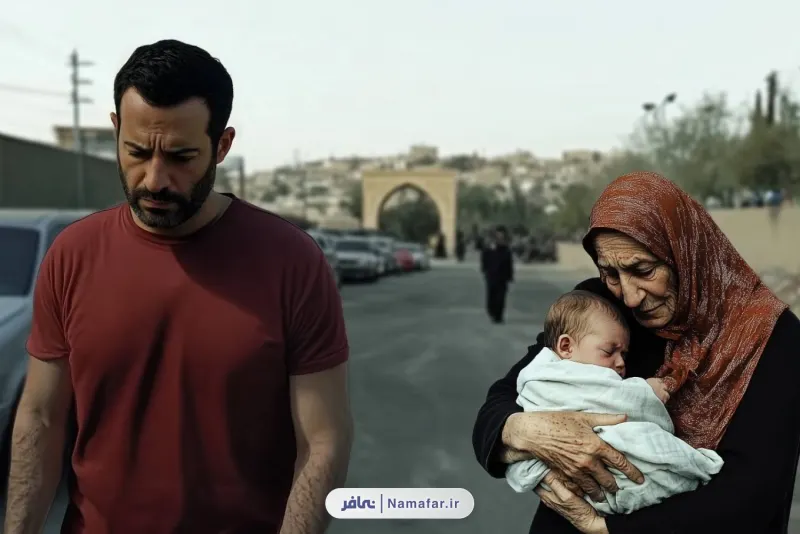
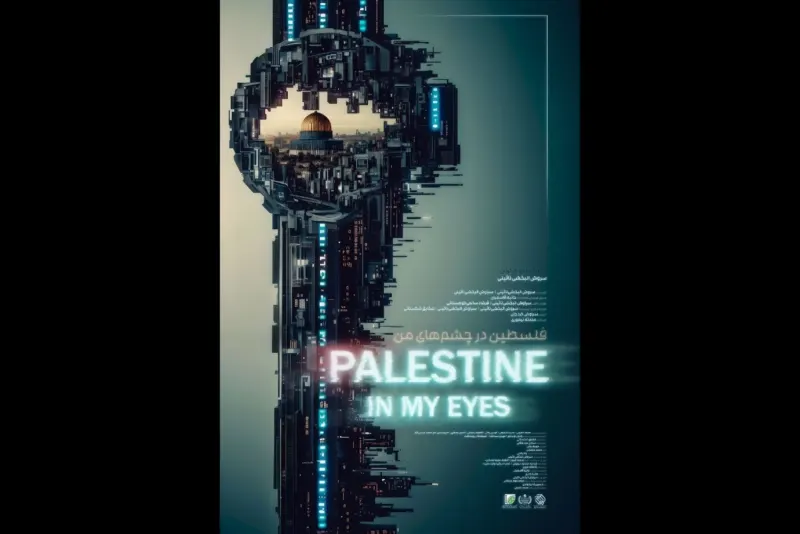 She began to tell stories, and inside the stories I came upon good subjects, and after examining them we finally arrived at the subject that became the film "Palestine in My Eyes." My film is the story of an artificial intelligence scientist who, because of not being allowed to enter the hospital, loses his pregnant wife. This film addresses the challenges that Palestinian women face and tries to show realities that have been dealt with less.
Given the limited time until the Tehran International Short Film Festival we worked very hard. We completed this one-year super-project in less than 3 months. My team and I, in 83 days, without exaggeration, worked 18 to 20 hours a day. That is, approximately 18,900 hours of work. At the last minute we got the film to the Tehran International Short Film Festival.
Lack of access to that geography and the cost of production pushed me toward producing this film with artificial intelligence. I say with certainty that from zero to one hundred our production process was with artificial intelligence. For producing images we used "Midjourney" and "ChatGPT4," for animation "Runway AI," and for sound and music production as well we drew on the capacity of "UDIO," all of whose functions are on an artificial intelligence platform. Even at the production stage we did some of the work, such as poster design and performing the music, with artificial intelligence. Only directing, editing, and sound design were not with artificial intelligence. In making a series of shots that are not very connected to one another, one can get help from artificial intelligence, but when facing a narrative work in which there is narrative and geographic unity and the character must be consistent, artificial intelligence at present is not capable and does not work. But I am sure that with the speed of progress and the addition of capabilities these challenges too will be resolved.
The greatest merit of our work is preserving the character and the environment in the film. In the story one character accompanies you and you see him in various situations such as home, the workplace, the street, and so on. No one in the world has done such a thing with artificial intelligence. In other artificial intelligence films, preserving the character is a very large challenge. Unity of space and character has been observed in our film, and we make a claim on this subject. We told a story without putting in a narrator. The environment, with the unity it has, defines itself, and this is what has distinguished our work from other artificial intelligence films in the world.
 For making a film with artificial intelligence we faced many challenges. Such as sensitivity about the subject of Palestine and Iranian accounts; three times the Iran IP was blocked and access was cut. Sanctions had a large effect on our work. In buying artificial intelligence accounts and issues related to infrastructure we faced serious problems. This caused costs to increase and we were forced to use brokers and buy accounts through intermediaries. In that case, either you have to tell a person abroad to obtain an account for you, or you have to leave it to a broker so that you can buy a 700-dollar account for 1,200 dollars. Apart from the matter of financing, for making many of the produced scenes, because of accounts being closed, we were forced to repeat the scenes. The next challenge is that if they detect an Iran IP, they close your account. This problem happened to us three or four times. Imagine we have worked on a scene and all of a sudden the account is closed. In that case we have to start the work from the beginning again because we no longer have access, and this is very hard.
Another limitation is that you cannot have a shot longer than 10 seconds. In this situation, for example when you want a character's walking to be natural, you have to increase the speed of those 10 seconds and bring the coefficient to 150 or 200. This means the length of your shot decreases from 10 seconds to 5 seconds. To make this 14-minute short film we produced 63,000 frames and 33 thousand seconds of animation.
To make these 63,000 frames and 33 thousand seconds of animation, we spent a great deal. Apart from 80 million tomans deposited by the Young Cinema Society, we covered the rest of the costs ourselves and were not supported at all. I am about 800 to 900 million tomans in debt to my own friends. At first they were going to support us but later it was not approved. They said an expert must give an opinion regarding the price of the work. We even trained personnel in the course of the work. Because there was no specialist personnel in this field. We estimated the wage cost of 15 crew members together with the cost of 90 days of lunch and dinner, separate from the money for the accounts and sound design, according to the invoice, at 1.5 billion tomans. They would say: "Doesn't artificial intelligence cause a reduction in costs?"
Of course artificial intelligence definitely reduces costs. On the other hand, conditions do not allow you to make a film in a place such as the West Bank. Now suppose you can; you would have to spend 600 or 700 thousand dollars for this location. If that figure comes to under one billion, it is a 95 percent reduction in cost. In artificial intelligence we have to reconstruct the entire production of the streets of Ramallah in the West Bank, which in the best possible case the work for one month of professional shooting costs 150 million. Camera hire costs 150 million tomans. With a rough calculation, if this film were to be made in the West Bank it would have cost about 25 billion, but with the help of artificial intelligence it was made with 5/1 billion.
 An important subject that we paid a great deal of attention to in the Palestine screenplay and researched, was the matter of Palestinian Arabic, which is completely different from Baghdadi or Syrian Arabic. For this reason in this project I found a number of Palestinian friends and asked them to speak the dialogues. One person spoke all the dialogues and I took that as a source, and with the help of artificial intelligence we extracted seven characters from it. In Iran, unfortunately, a film that is to be made about Palestine or any other country is considered with a single Arabic. Therefore, when an Arab audience looks at the work they immediately realize that this Arabic is Baghdadi Arabic or Lebanese, and they wonder why it is happening in Palestine? And right there their connection with the film is cut. We also paid attention to the fact that an Israeli soldier cannot speak Arabic fluently.
Unfortunately the media perform weakly in these areas, while there are many subjects for narration and filmmaking. If I go to the West Bank, I can at a minimum make four feature films whose stories no one has ever seen or heard, and prove that all the films that have been made so far narrate one theme.
I came upon strange subjects. I spoke with a Palestinian who was a student at the University of Doha. He said that until I got on the airplane I thought the use of an airplane was to carry bombs, or that he wished to see a train up close. In the West Bank and Gaza people are martyred every day. Really, living every day with the stress of death is not called life.
In addition to these, many criticisms were directed at me regarding the choice of the Palestine subject, which came from various political currents. Somewhere they had said it would have been better if a film were produced about the Ukraine and Russia war. In Palestine a war does not prevail and another word must be found for the events that take place there.
I must say this, that going after the Palestine subject was my own wish, but people cannot believe that someone would have gone after this subject with a personal motivation. Everyone imagines that the work is commissioned. But the reality is that I am in debt because of this project. So unlike all the filmmakers who have it commissioned to them, this issue was a little different for me. In the first degree from a historical point of view, and in the second degree from the point of view of the type of war, which in my view is completely one-sided, and finally also because of the intellectual and religious affinity we have with Palestine. But apart from alignment, this is a human issue; because in the West Bank a human catastrophe has been underway for several decades.
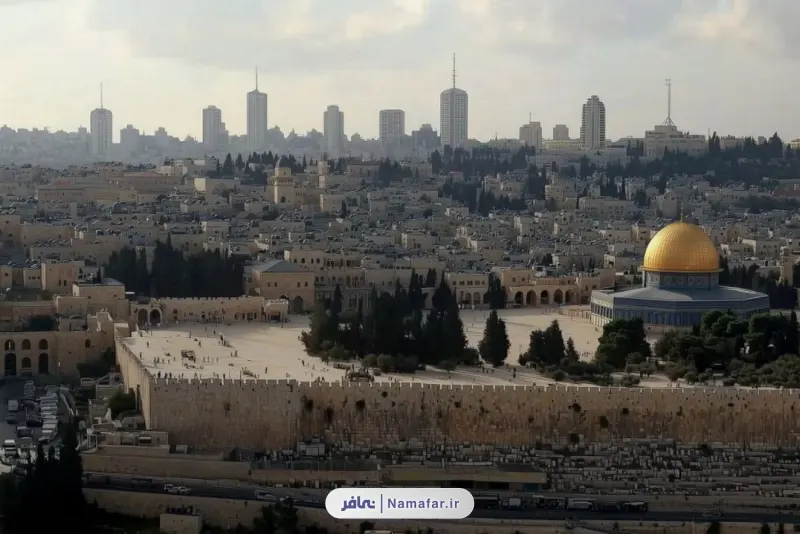
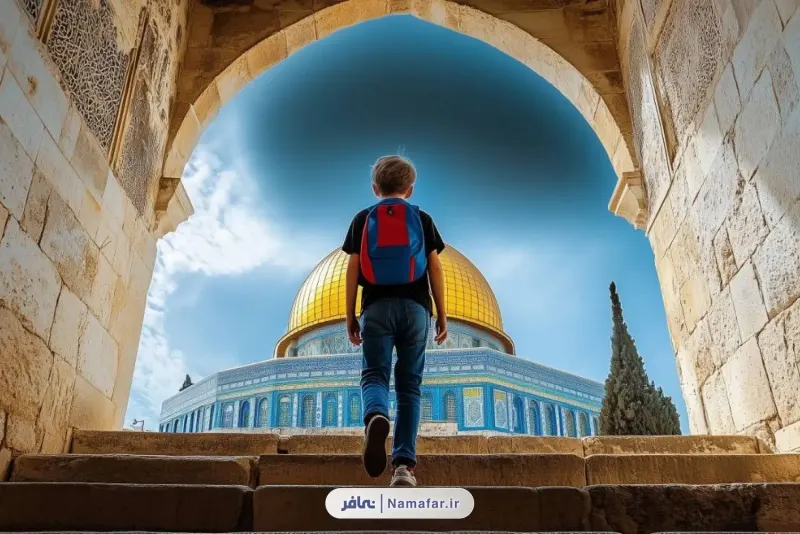 Most of our narratives of Palestine are repetitive, and most narratives to this day have been related to Gaza, but our narrative is related to the differences of the western and eastern banks. The eastern bank is where Palestinians reside. The marked differences of these two regions were very appealing to me. Both geographies belonged to Palestine but have been seized by the Israelis. For this purpose I wanted the audience to see Palestine from a new angle and hear a new narrative. Apart from all the killings, explosions, and so on, I was looking for a human narrative of this event.
In most cases interaction with artificial intelligence, its benefit is greater than its harm, and using it is inevitable. This is a platform on which we can compete with the world, and it is not like cinema. In 1895 cinema is invented and with a gap of five years it enters Iran, but we see that in terms of technology we are about 50 years behind the world. But in artificial intelligence it is not like this, and everyone has access to the same kind of equipment. For this reason we can take the lead and make a good work. In the festival's AI box, from the United States, China, Greece, Italy, and Korea, 11 works were selected from among 344 works. In that same box you see the stark difference between our work and the rest, and you realize that the two works that are from Iran are stronger than some of the other works.
In the field of producing film with the help of artificial intelligence, the necessary professional platforms must be provided and culture-building must take place. I now have an educational program on the Education Channel which, although the broadcast hour is not suitable, I play a role in this field in my own share. We must train specialist personnel. We have very intelligent human resources, and of course they need support.
Can a feature film also be made with the help of artificial intelligence?
Yes. For example one can make 4 to 5 short films of 18 minutes and connect them. The main thing is preserving the character and the environment.
In what fields do the members of your team specialize?
Some specialize in the art-generation section, who input the data and then give command codes and get output from it. In fact we had four team heads. One was professional in the prompt section, on how we should give prompts so that we receive better output. One also specialized in the image-generation section. One also in the animation section. I myself was supervising these 3 sections. There was also character creation. These 4 teams comprised 15 people. These were artists. Because we could not advance this idea with a zero-kilometer idea; it had to be guided.
I must say I also had a problem in the narrative; because of the tool that was at my disposal; it still does not show my conception one hundred percent. Even so I made my effort and, despite those limitations, I made my work. Now if I want to speak of the good points of artificial intelligence, it is that in the first place you can make the imagination you have, and you have command over the environment. For example in real work you go for filming and all of a sudden it rains and that day you lose 60 million tomans. But in artificial intelligence this problem does not exist and whenever you want you turn the system on and do the work. On the other hand, this tool can create 70 percent of your conception, and it has the capability to be aligned with your visual conception; on the condition that you have repetition and repetition. In the area of animation, this happened and we were forced to repeat many times. We had a shot that we repeated nearly 300 times until we reached what we wanted. This work took a great deal of energy from us and requires a great deal of patience; anyone who has had a hand in the fire in the field of artificial intelligence knows what producing 32 thousand seconds of animation in less than 90 days and producing 64 thousand frames in this period means!
 Given the challenges you had on the path of making the film, if you went back would you still choose artificial intelligence for making this film?
One hundred percent. We have 50 to 60 percent command, but we do not have 30 to 40 percent command, and with that same 50 60 percent, we can claim 100 percent command. Because it has the possibility of editing, for example if at a distance I want to change a shot, I go back again and make it from the beginning. This point is very important.
When one speaks of fantasy and science-fiction work, without a doubt artificial intelligence is an efficient tool. I had other screenplays as well that I could work on and perhaps they were even better and less costly, but the experience of this work was very important for me. Certainly if this same symposium takes place I would like to make this same subject again with newer facilities, and in my view if someone can make a film well with artificial intelligence, they can also make a realist film at the best quality. Because of my university education in cinema, I know the importance of a frame. But working with artificial intelligence needs a director who can change the mise-en-scene each time. Change the shot breakdown each time. Because there was a mise-en-scene in my mind and we had to do the shot breakdown relative to the facilities the system placed at our disposal. Sometimes in the middle of the way the mise-en-scene did not match the shot breakdown, so we had to change the shot breakdown or the mise-en-scene or the shots before and after, in proportion to it. So we have to take frames again. It is very hard work. We got an output of about 170 to 180 thousand of the 63-thousand frames. For this reason I can say that with this experience if I make a realist film I will make it very differently.
Which were the set of tools you used?
From the beginning we had a base that we want Midjourney and ChatGPT4 and Runway AI. For sound and music production as well, about 10 platforms were trial-and-error until we arrived at UDIO.
Wherever we ran into a problem we would go somewhere else so that perhaps we would get a better result. For example we saw that a gunshot comes out much better in Luma than in Runway. Or the movement of people works better in Runway than in Luma. For this reason we have to have almost all of them so that when necessary we can change them, and trial and error would take place.
Are you interested in documenting experience?
Yes I like it. I in general like to go down a path that others do not go. I now have a number of ideas that I try in my interviews to convey these experiences so that I can be effective for others.
You said somewhere that your work did not have a screenplay and this is hard. How did you go through the processes of the work?
In my view it is a strange piece of work. I had laid out the scenes, and because the dialogue stage comes after animation, afterward you have to put dialogue on the work you have made, which is very hard. Like when the music is made and then you want to write a lyric for it. This is very difficult. Somewhere I would see that a place for a dialogue is empty, and we would go back again and add it. It was in this way that the work was made according to the overall scenario. Of course scene by scene I would write down whatever came to my mind, and I also wanted to show in the film a number of things that Ms. Ghasemian had told me as a consultant. For example the key symbol, which is the symbol of Palestinians' hope, is very appealing to me and by itself is a feature film. For example to convey the feeling of a Palestinian old woman who has a key around her neck and hopes that one day she will return to her home and the war will end. It is an excellent subject.
Meaning in fact you started from animation and simultaneously with the animation space you started writing dialogue and creating atmosphere and continued?
Yes. We would do the animations and then the dialogue would be written.
Did it happen anywhere that because of the limitations of artificial intelligence and technical limitations, you changed what you had in mind?
Yes; that is why I said that the mise-en-scenes must constantly change. For example regarding my character's childbirth scene I had something strange in mind; then we saw that artificial intelligence imagines it as erotic! Then we would design a box in which the character has long sleeves and so on, and in this area we also had a challenge. Or regarding characters who were walking hand in hand in the park, it would not deliver this frame. Then we explained that these are father and son.
This film is 10 percent of our conception and the rest of it competes in line with all global standards. And it must be distributed at its own time. That is why someone who has no awareness of these kinds of matters says look at what has been made and so on. In fact the lack of financial support caused discouragement. I believe that if this film had been in the hands of an Arab country it would have exploded the world and made a sensation.
In the area of training personnel, what solutions do you offer so that this field takes root and a good development happens in the country in the applicability of artificial intelligence?
Culture-building must take place. There was a time when the ATM card had just come and my grandfather said we will no longer have a need for this card. With a difference of two or three years it became available to them. Now the penetrability of artificial intelligence is very fast and unavoidable. People must accept this change and feel the need and go toward it, of course on the basis of their own needs.
Do you see this trend as real? Some specialists believe that the wave that has come will disappear, like the metaverse and blockchain.
First of all, blockchain has not disappeared and in any case it has its own practical use. The same is true of the metaverse. Many people work in these two fields. In 2050, because of the spread of the metaverse, there will no longer be a border. Of course some spaces take another shape, and those who think its fever has died down are mistaken.
Today if you take ATMs away from people, their life becomes impossible. The trend of artificial intelligence is also like this. Of course if we do not have a proper interaction with it, it makes the mind lazy. Artificial intelligence, although on the one hand it truly increases the quality of some aspects of life, reduces human self-sufficiency.
Specialists in each field must be surveyed as to what they need for progress. A specialist who is training specialist personnel must himself also be up to date. Unfortunately we still have a census in the field of agriculture in this way, that they present themselves on the agricultural land and ask the farmer about the crop and its quantity. Whereas with a satellite that scans images of agricultural lands, in a fraction of a second, it analyzes all of Iran's agricultural lands in terms of type of crop, amount of crop, time of planting and harvest, and even appropriate solutions for increasing production and higher productivity. This can be generalized to all fields.
Machine-translated from Persian by Namafar; the Persian original is authoritative. Read the original in Persian