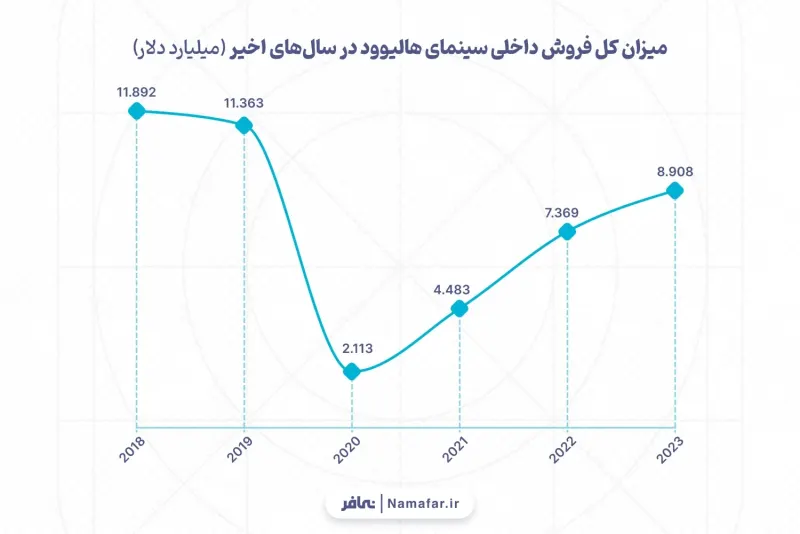
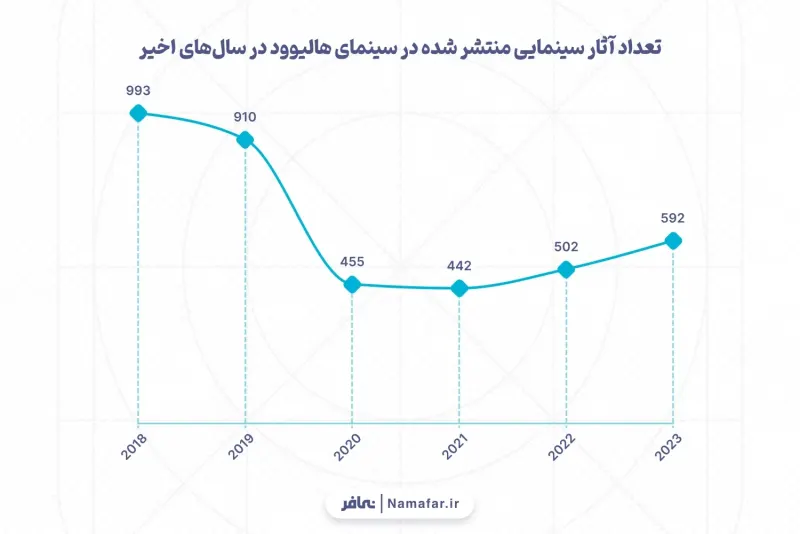
Examining the state of Hollywood cinema from 2019 to 2023 is of particular importance, because this period represents extensive transformations in business models, audience behavior, and cinema culture. In 2020, the first year of the COVID-19 pandemic, cinemas around the world were widely shut down, Hollywood box office revenue fell by more than 80 percent, and the number of titles released by Hollywood also declined from 910 films in 2019 to 455 films in 2020.
The COVID-19 pandemic caused traditional theatrical-release models to be challenged and streaming platforms to grow considerably, a change that had long-term effects on the economic structure and distribution of films. On the other hand, audience behavior also underwent change; many were forced to watch films at home, and this unsettled cinema's social place as a space for a group experience. Analyzing these transformations helps in better understanding the future of cinema and its role in the post-COVID world.
The COVID-19 pandemic: global transformations and events
In 2019, Hollywood cinema experienced unprecedented flourishing and success. Blockbuster and highly anticipated films such as Avengers: Endgame were able to break global box-office records and become the peak of franchise works. This film alone had more than 2.7 billion dollars in worldwide box office and demonstrated the lasting power of franchise works in attracting audiences. These successes were considered a turning point not only economically but also in terms of cultural impact and Hollywood's position as a center of film production.
With the start of the global COVID-19 pandemic, Hollywood's film industry faced an unprecedented challenge. The widespread closure of movie theaters and the halt of film production inflicted large financial losses on this industry. Many major projects were postponed or canceled, and studios turned toward streaming platforms to offset these losses, and traditional theatrical releases gave way to hybrid models, so that many films were released simultaneously in cinemas and digitally. These changes not only transformed how audiences access content, but also raised serious debates about the future of movie theaters and the importance of the group experience of watching a film.
The COVID-19 pandemic: accelerating the shift in media consumption patterns
Before the COVID-19 pandemic, the expansion of access to high-speed internet and the reduction of related costs had led users to gravitate toward streaming platforms such as Netflix, Amazon Prime, and Hulu. This trend indicated a gradual transformation in the media consumption pattern that, over time, not suddenly, led to the formation and consolidation of the streaming market.
With the emergence of COVID-19, changes in how media and entertainment were consumed accelerated dramatically. The COVID-19 pandemic, by restricting access to cinemas and other public spaces, pulled people toward streaming platforms.
This transformation, which had also been taking shape gradually before then, reached a turning point during COVID-19. Increased accessibility, lower costs, and the need for entertainment at home caused streaming consumption to expand rapidly, so that under quarantine conditions, online platforms became the only available option for watching content.
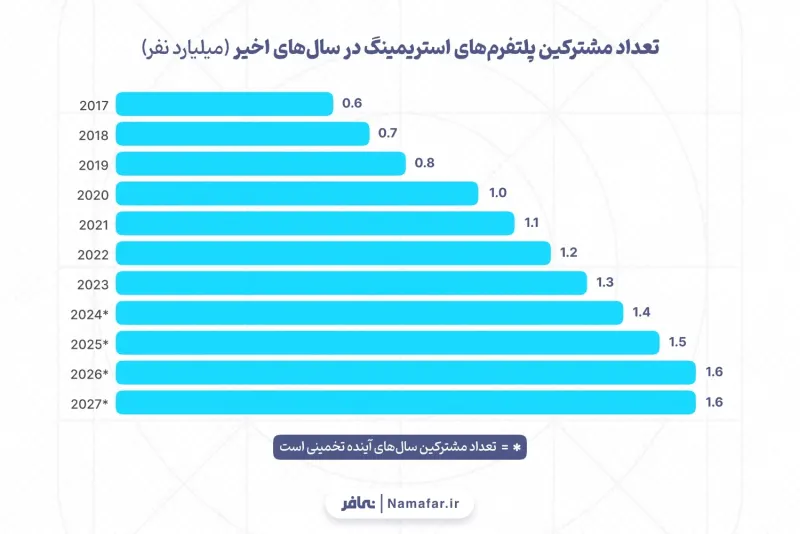
The number of streaming platform subscribers rose from 800 million in 2019 to 1.3 billion subscribers in 2023, which shows that traditional ways of watching films, despite ongoing efforts to revive them, have faded somewhat in the face of the appeal of the online experience. Even in the post-COVID period, many audiences continue to watch films at home.
Netflix still at the top of the streaming market
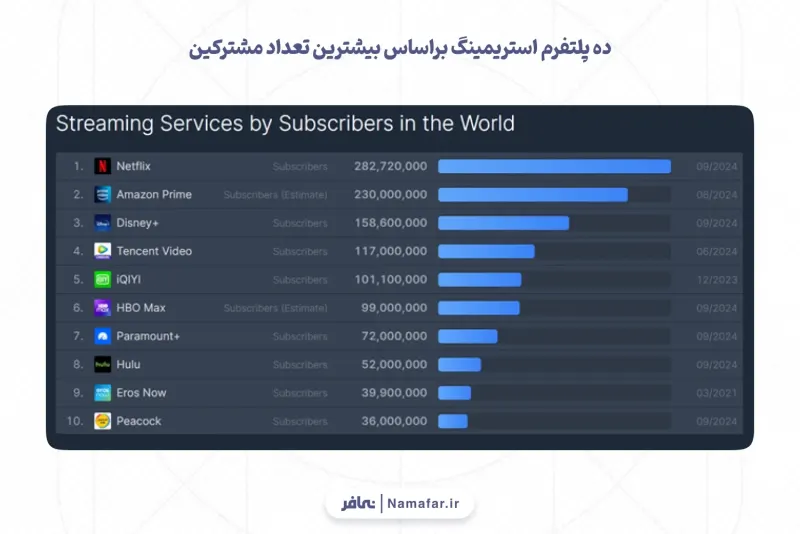
Netflix, as the first, most important, and best-known streaming platform, has found serious competitors in recent years but has remained one of the main players in the streaming industry. This platform, still with more than 280 million subscribers, leads the streaming-platform market. This is while this platform's number of subscribers in 2019 was about 167 million people. A major part of this striking growth can be attributed to the effects of the COVID-19 pandemic, which led to increased demand for digital content and home entertainment worldwide.
The advantage of online release: global and rapid access
One of the most prominent advantages of online release is the possibility of simultaneous access by audiences around the world to films. Films that are offered through streaming platforms are presented to audiences in dozens of countries on the same day of release. This feature not only increases the speed of access to content, but also creates a borderless, global experience of consuming cinematic works.
Online release is considered a striking transformation especially for people who live in remote areas or lack access to movie theaters. These people, who previously were deprived of the simultaneous experience of watching new films, can now reach the content they want without geographic limitation and instantly.
In the traditional theatrical-release model, films were first shown in cinemas in the United States and a few selected countries and then gradually reached other parts of the world. This process caused delays in global audiences' access and even the formation of informal markets. In contrast, online release has removed these limitations and provided an equal, simultaneous experience for all audiences.
Combining theatrical release with online distribution: a new approach in the post-COVID period
With the widespread closure of cinemas and the severe restrictions resulting from the COVID-19 pandemic, many film companies were looking for a way to get their films to audiences. One of the novel strategies used extensively in this period was combining limited theatrical release with online distribution. This model allowed films, simultaneously with a limited showing in movie theaters, to be released online on streaming platforms. For example, the Disney company, by releasing films such as Mulan and Black Widow, turned to this approach, and they were shown simultaneously in cinemas and on the Disney+ streaming platform. Also, Warner Bros., with the simultaneous release of films such as Wonder Woman 1984 in cinemas and on the HBO Max platform, turned this model into a standard.
Even so, this model faced serious opposition from cinema owners. Many of them believed that simultaneous release of films in cinemas and on streaming platforms could lead to a decline in the number of admissions in movie theaters and, as a result, harm to cinemas' revenues. Cinema owners were also concerned that this trend would reduce the appeal of the cinematic experience and cause a drop in ticket sales. These concerns became one of the main challenges of the film industry in the post-COVID period and were followed by many debates about the future of theatrical releases and the role of movie theaters in film distribution.
After restrictions eased and the initial wave of the pandemic subsided, some studios returned to the traditional theatrical release of films in cinemas. But some others continued with the hybrid theatrical-and-streaming model. These changes and different approaches show that the film industry is transitioning to new models of content distribution and exhibition, and that more diverse ways for audiences to access films are gradually being created.
Cinema in the post-COVID period; the effort to return to the peak
Of course, in the years after the crisis the film industry was gradually able to rebuild itself. At first, film productions that had been postponed quickly entered the production cycle, and with the reopening of theaters, new works quickly went onto cinema screens. This met with considerable audience reception, because many cinema enthusiasts who had long been deprived of the experience of watching a film in theaters returned to cinemas again after vaccination and the easing of restrictions.
Films such as Spider-Man: No Way Home 2021, Top Gun: Maverick 2023, and Avatar: The Way of Water 2022, which were released toward the end of the COVID-19 pandemic, achieved billion-dollar box office and showed that cinema is still able to attract broad audiences and restore box office revenue to pre-crisis levels.
2023 also saw a strong return of audiences to movie theaters. Films such as Barbie, Super Mario, and Oppenheimer set new box-office records. Barbie, with worldwide box office of more than 1.4 billion dollars, became the highest-grossing film of the year and showed that the collective experience of watching a film in a cinema has still retained its appeal.
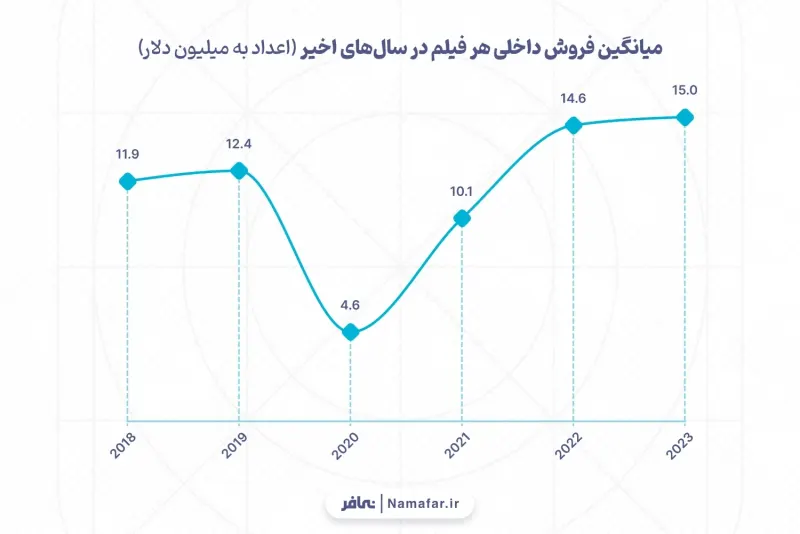
An examination of the number of titles released and the total box office of Hollywood cinema from 2019 to 2023 shows a downward trend, but when these items are compared with the average box office of each film, we realize that although the number of titles released and total box office have declined, the average domestic box office of each film has increased relative to the years before COVID-19.
This trend shows that cinema is adapting to new economic, social, and technological conditions and perhaps in the future will focus more on high-quality productions and specific audiences (instead of a high number of films).
Conclusion
Hollywood cinema, from the start of the COVID-19 pandemic to its end, experienced major transformations. In 2019, Hollywood was at the peak of its economic successes, but with the start of COVID-19 in 2020, cinemas were shut down and film production declined sharply. Studios, to offset this crisis, turned to hybrid models in which films were released simultaneously in cinemas and on streaming platforms. These changes were a solution for continuing theatrical release under restriction conditions and led to a transformation in how films are distributed and consumed.
After the pandemic eased in 2022 and cinemas reopened, audiences gradually returned to movie theaters, and films such as Barbie set new records, indicating that cinema's appeal had survived alongside streaming. Overall, the future of the film industry is moving toward a hybrid model, where cinema and streaming platforms will operate alongside one another. Studios will likely continue the simultaneous offering of films in cinemas and on online platforms, while technological advances such as virtual and augmented reality will also steer the cinematic experience toward multisensory and interactive experiences.
Machine-translated from Persian by Namafar; the Persian original is authoritative. Read the original in Persian