When we speak of the cinema industry, it means filmmakers must always strive, in addition to their artistic expression, to consider the audience's taste and preferences as well. Cinema is an art that from its very first days was bound up with two notions: the audience and industry. The workings of the cinema box office, extensive advertising, and the mass public's great reception tied this art to audience taste and reception and kept it alive. It is this industrial mechanism that makes cinema one of the most popular, most widely attended, and most influential arts. In that case the film achieves the sales the investor is looking for, and the cinema industry stays alive.
But in recent decades the role and importance of film festivals around the world has steadily grown. To the point that some filmmakers see themselves as not needing audience reception, and their most important yardstick is the festivals' criteria. According to the statistics, Iranian cinema in recent years has shown a great deal of attention to festivals.
Festival cinema and the creation of a uniform box office
Foreign festivals, through their policymaking of accepting a particular type of film, also influence the direction of cinema inside the country. Many filmmakers inside the country, from the outset and even before their film is made, take the taste and preferences of foreign festivals into account. For this reason, over the long term most Iranian films have been pulled toward the social genre, and after comedy the social genre is the second most popular genre in Iranian cinema. Because in this genre one can easily depict the stereotypes foreign festivals are looking for. Poverty, violence, depicting a frustrated and depressed society, or implying despotism in society are easily possible in this genre.
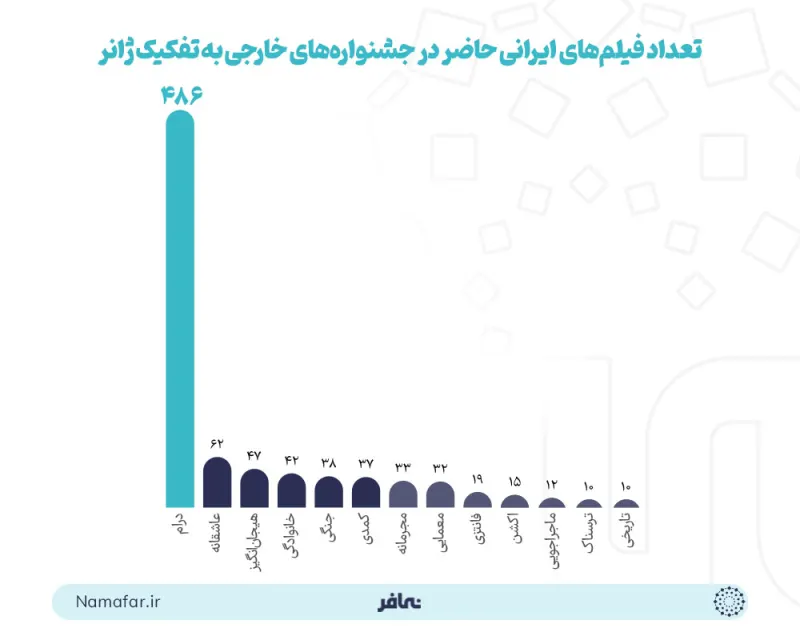
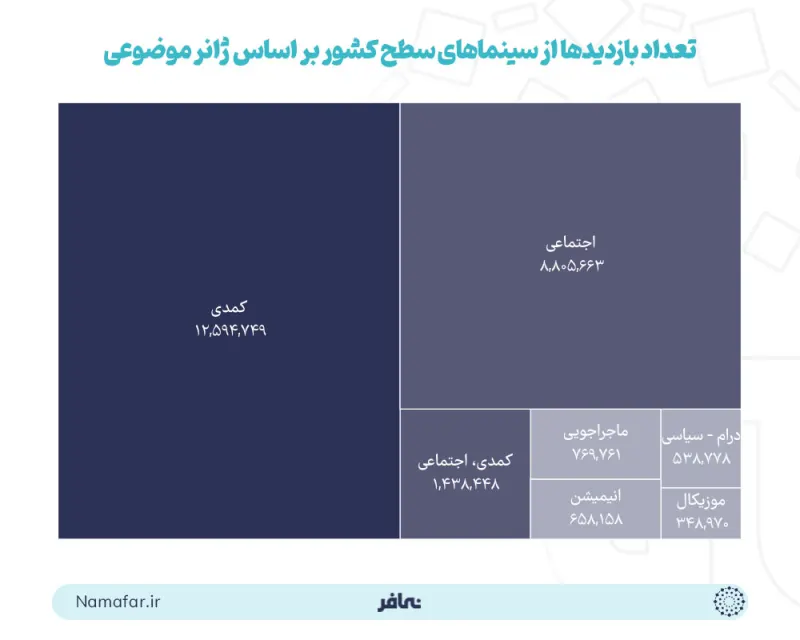 We grasp festivals' effect on the popularity of the social genre more clearly when we see that the genre that most often wins awards at Western festivals is drama. The drama genre in Iran mainly includes social works. Social is a genre that does not exist as such in world cinema and falls under the heading of drama. The gap between this genre and other award-winning genres is very large. When the filmmaker's taste is aligned with the festival's taste, it is natural that Iran's box office fills up with uniform social films. The social genre itself is not to blame, of course. The problem begins when festivals and the performance of the stereotypes they want come into play. Because in the long term, not only is a desirable image of Iran built in the world that matches Western stereotypes, but gradually the Iranian audience also comes to know itself through the image constructed by others. In fact, after a while we lose the possibility of truly knowing ourselves.
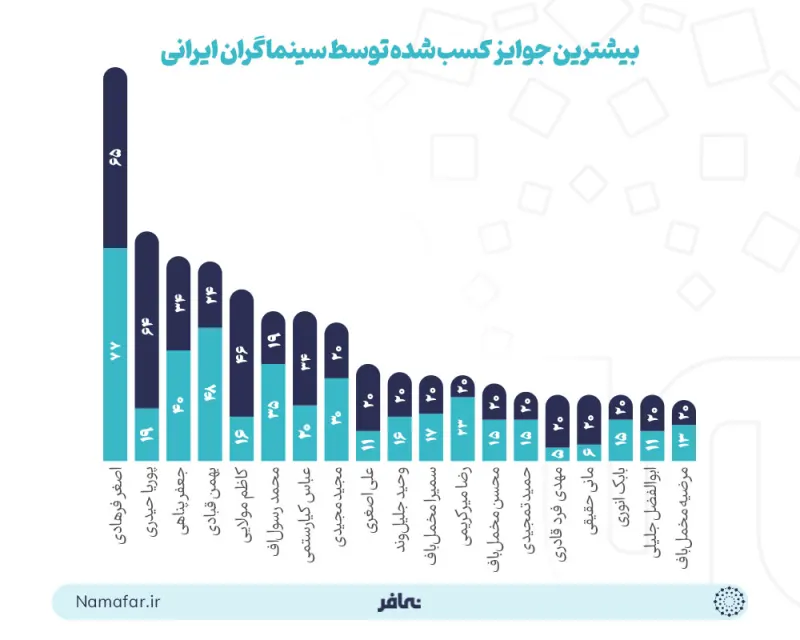
In addition, when we look at the crew and filmmakers who have received the most awards from Western festivals, we observe a particular line of thought among them. These filmmakers do not have a distinctive color palette. Just like the genres, festival directors are also close to one another in style and thought. Below we see the most awarded Iranian directors and crew at foreign festivals. At the top of these directors is Asghar Farhadi.
Dark portrayal in festival films
One of the problems of festival cinema, especially for non-Western countries such as Iran, is dark portrayal. As noted, the policymaking of film festivals is not purely artistic, and many of them pursue their own preferred cultural and political goals. Foreign festivals' interest in presenting a dark image of Iran's social atmosphere has led many filmmakers in Iran's cinematic social genre to tend toward presenting a dark image and a hopeless depiction of poverty, corruption, and all kinds of social problems.
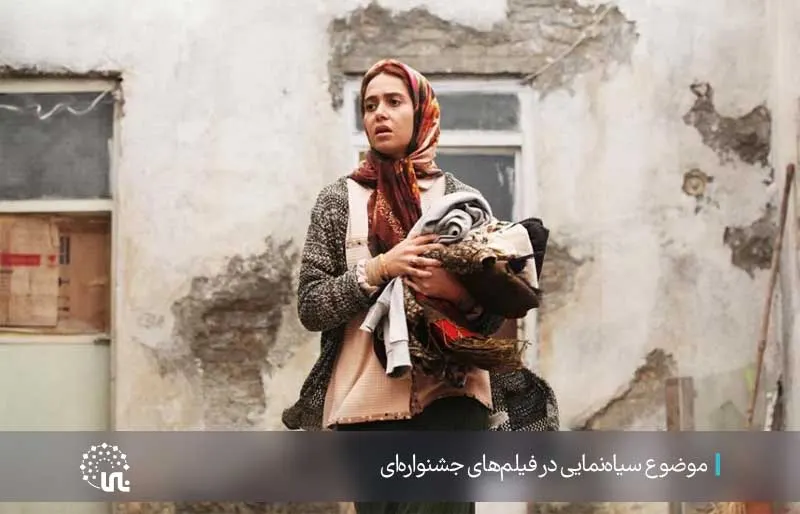
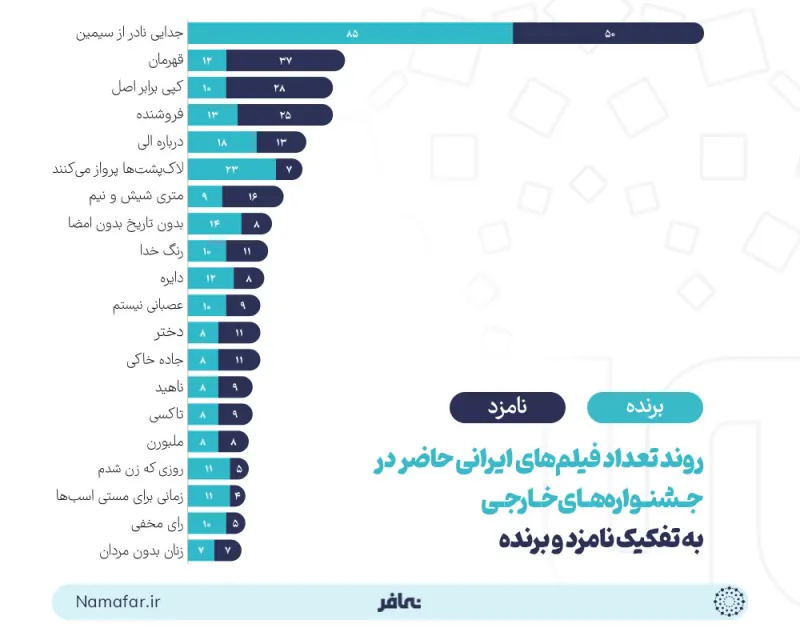
Focusing on social issues, harms, and bitterness is in itself natural and reasonable. But when the filmmaker's gaze is influenced by the wishes and policy of foreign festivals, these bitter elements take on a color of exaggeration. In this state the filmmaker tries to display the image festivals want as more intense and harsher, and gradually the approach of foreign festivals becomes the dominant approach in the country's cinema. In fact, one can say that Iranian directors' strong desire to be seen at foreign festivals encourages them to make works these festivals like. In this connection, the figure below shows the number of awards Iranian cinematic works have received at foreign festivals and indicates that films containing dark portrayal have been more warmly received by these festivals.
The pitfalls of festival cinema
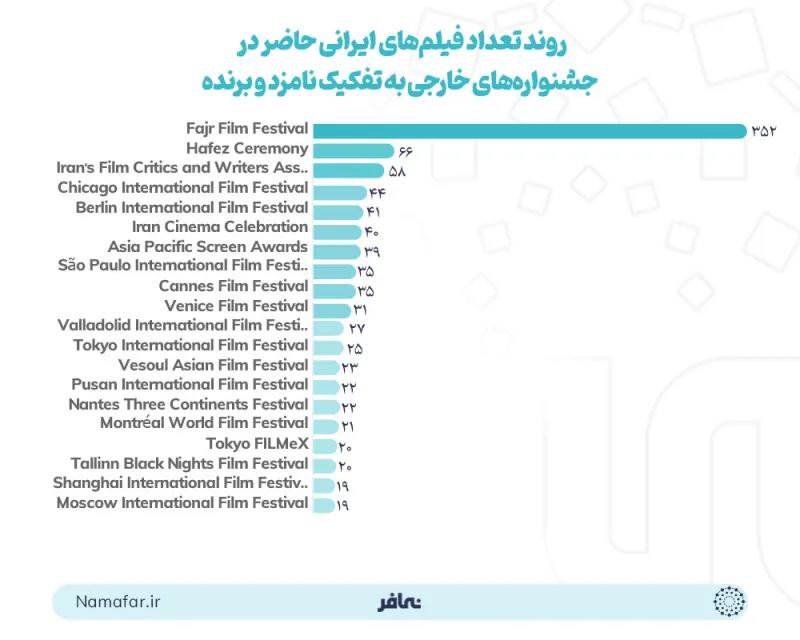
Excessive attention to festivals causes films, over time, to be made far from the audience's needs. Because the filmmaker has no need for audience reception, filmmakers see themselves as not needing to entertain the general audience, and films become intellectual and niche. Films, because they have no need for the general audience's approval, also do not consider themselves obliged to address issues that the people of their society need. Instead they prioritize the festivals' needs and policymaking. This issue is more pronounced in countries where the cinema industry is weaker. Because of the lack of attention to the cinema industry, filmmakers see festivals as one of the most important ways for their film to be seen. Of course, the existence of film festivals or taking part in them is not in itself a problem. But steering a country's cinema toward becoming festival-oriented is harmful. In the chart below we see the number of Iranian feature films that have won awards at major domestic and foreign festivals.
Exoticism, the root of festivals' embrace of dark social works
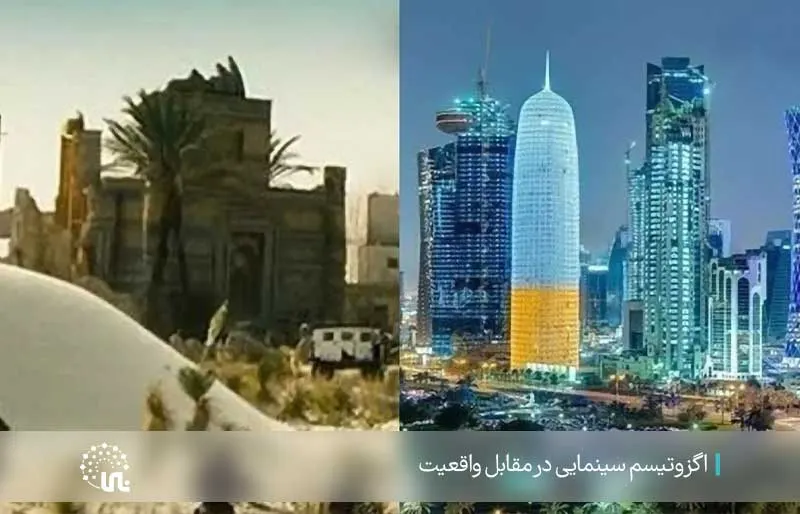
One of the policies of Western countries toward non-Western countries is that, relying on their cultural authority and power, they compel non-Western countries to know themselves as Westerners prefer. The tool for this is the phenomenon of exoticism. Exoticism means seeing oneself in the other's mirror. It means that the people of a country, to please foreigners, draw their own image to match the stereotypes formed in foreigners' minds. In this way, people of the developed world are satisfied by seeing the schemas they had of diverse cultures and geographies. It does not matter how far these schemas match reality, because people like to see what they expect. For example, in the case of the Chinese, the reality is that they do not all eat mice and bats and weasels and live crabs. Many of them, just like people in the West, eat hamburgers with French fries on streets lined with skyscrapers. The well-known food culture of China belongs only to a small part of this nation.
But the tourist has not come all this way to China to see the same things they see every day in their own town. They want to experience another world. To feel pity for that different world, to laugh at it, to analyze it, to share it on social networks, and to enjoy seeing others' amazement at their experience. Many people in Africa wear jeans and use an Apple Watch and speak French and watch Netflix at night. A scowling naked man with a thick ring through his nose represents a small group of the people of that continent.
The roots of exoticism
Edward Said, the theorist and cultural critic, says in his famous book Orientalism that Westerners look at Eastern societies in an exotic way. In other words, from Edward Said's perspective, the West, through its Orientalism, wants to confer authority on its own view of the East and thereby bring the East under its control. This is in truth not knowledge, but the deliberate construction of a knowledge in public opinion. In fact, Edward Said believes that today's image of the East is a construct of the Western mind, so that through it the West can know itself and offer a justification for its domination of the East.
Exoticism and the Western gaze on the East is a project that runs from cinema through literature and the culture and art of the East in order to influence our minds and perception. The exotic work is meant, by relying on its strangeness, its otherness, and its conformity with stereotypes, to win prizes in the West and to be appealing for the audience there. In Edward Said's words, this is a colonial project so that the West, besides distinguishing and ranking its own culture above other cultures, can make its culture appear superior. It also distorts other societies' knowledge of themselves and imposes on them the image of those societies that it accepts. One of the most important ways of carrying out this aim is the policymaking applied at film and art festivals. Because these festivals remain among the most important artistic authorities in the world.
Cinema as a tool of exoticism
The West has been active in constructing its view of the East in various fields of art and literature, including cinema. A large part of foreign festivals' attention to Eastern films also relates to this topic. International festivals often like those Eastern films that confirm their view of the East. Filmmakers' turn to subjects such as Eastern secular mysticisms, lives of poverty in the village, depicting an ugly, ruined and filthy face of cities, focusing on lower-city subcultures, urban violence and poverty, or even depicting a rural face of Iran, all lie on the path of drawing and confirming Western stereotypes of Iran. In a review, of 324 films sent to festivals from 85 to 96 (1385–1396 / 2006–2018), most of them confirm the Western view of the East that Edward Said describes. Some construct the West's preferred image of despotism in Eastern countries and Iran. Some give an image of stagnation and lack of dynamism in Iranian society and imply chaos and violence.
Festival works drifting away from audience taste
Descriptions by Western critics and audiences such as "a film from a strange world, with strange lives, homes and faces. From another planet and..." express a thirst and exotic desire of foreigners toward Iran's culture. And they also point to a hot market for festival filmmakers. Perhaps it is now clear why even bad and tedious films that have low production quality and are not received by audiences in Iran's domestic market are welcomed abroad. Abbas Kiarostami's films were not received by Iranian audiences at Iran's cinema box office. But the same films were strange and interesting at foreign festivals and for foreign audiences. IMDb website statistics show that exotic films have attracted audiences' attention more than other Iranian works.
Conclusion
The industrialization of cinema is an important factor in its growth and progress. When the ultimate success of a cinematic work is winning an award at a festival, the festival becomes a barrier to the cinema industry. Cinema, by having a wide audience, becomes an industry. Any factor that distorts the relationship between cinema and the audience strikes at the industrialization of cinema. One of these factors is excessive attention to film festivals. This phenomenon will have several results. For example, it causes a country's cinematic productions to move toward becoming exotic and toward dark portrayal. It also, by drifting away from audience taste, gradually reduces a country's cinema audience. In addition, festivals reduce the diversity of a country's cinematic works. Diversity is a requirement for attracting different groups of audiences. For example, the dominance of the social genre over Iranian cinema can be seen as the result of filmmakers' interest in festival awards and honors. Because festivals have also shown more interest in this same genre.
Machine-translated from Persian by Namafar; the Persian original is authoritative. Read the original in Persian