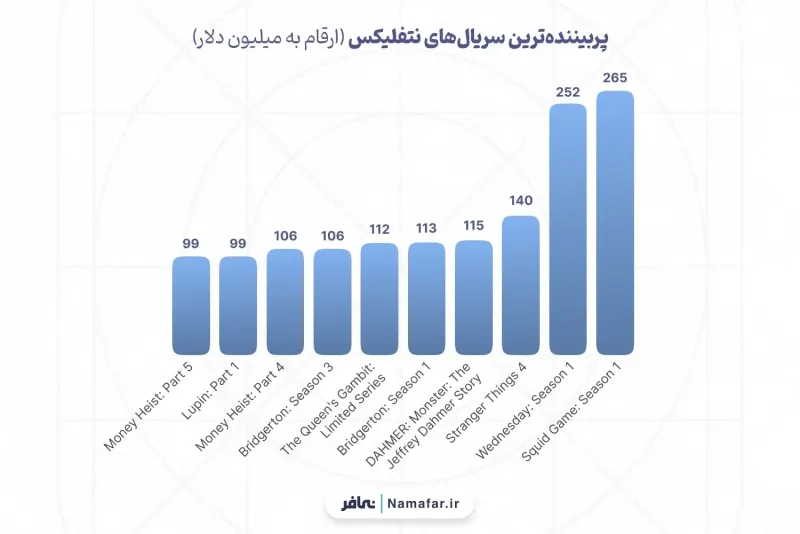
The success of the series Squid Game, which despite intense competition with high-budget Hollywood series was able to become Netflix's most-watched series with 265.2 million views, went beyond a commercial achievement and was a symbol of the consolidation of South Korea's entertainment industry's place in the world. An industry of which cinema and television are one of the most important facets.
History of South Korean cinema
South Korean cinema began from the late period of Japanese colonial rule (1910–1945). In the 1960s, directors such as Kim Ki-young and lasting works such as The Housemaid were produced. However, this golden period was short, because the 1970s and 1980s were accompanied by the dominance of state censorship and severe restrictions that hindered the creative progress of Korean cinema.
The 1990s are considered a turning point in the history of Korean cinema. In this period a new generation of filmmakers emerged who became known as the Korean New Wave. These filmmakers, including Bong Joon-ho, Park Chan-wook, and Kim Jee-woon, by combining bold narratives, social critiques, and visual creativity, took Korean cinema to a new level of quality and impact. Works such as Oldboy and Memories of Murder not only shone at international festivals, but also drew the world's attention to Korean cinema.
From Parasite to Squid Game: South Korea's global brilliance
In early 2020, the film Parasite, directed by Bong Joon-ho, made history by becoming the first non-English-language film to win the Academy Award for Best Picture. This was the first time since 1955 that the winner of the Oscar for Best Picture also won the Palme d'Or of the Cannes Film Festival. The success of this film put South Korea's industry back in the spotlight and reminded audiences that South Korean pop culture has more to it than K-pop and K-drama.
The film Parasite, with its complex and intelligent narrative about class inequality and its consequences, was able to become a global phenomenon and, in addition to the Academy Award for Best Picture, also took the awards for Best Director, Best Original Screenplay, and Best International Feature Film, and also shone at the BAFTA and Golden Globe awards.
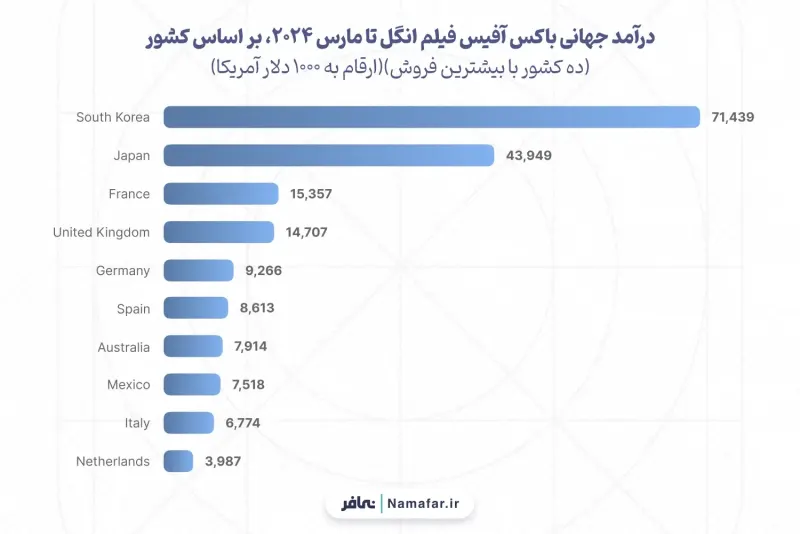
This film was made with a budget of about 11 million dollars and was able to gross more than 262 million dollars worldwide, and in addition to South Korea it also had considerable box office in Japan, France, England, and Germany.
Another astonishing success of Korean cinema and television concerned the series Squid Game, made by Hwang Dong-hyuk, which unlike many of Netflix's high-budget, glittering series was released without extensive, heavy advertising. Before releasing this series, Netflix confined itself to only a short introduction and a few promotional teasers. But the series attracted intense attention through word of mouth and social media and, only 28 days after release, reached more than 111 million viewers.
This series broke the record of 256.2 million views and 2.2 billion hours watched. In more than 90 countries it reached first place in viewership and became the most-watched series in Netflix's history on this platform.
Squid Game also made history at festivals. This series received multiple awards at the 2022 Emmy Awards, the world's most prestigious television award, and was able, as the first non-English-language series, to win the awards for Best Actor and Best Directing for a series.
Squid Game, by addressing global subjects such as heavy debts, class inequality, and economic pressures, was able to connect with audiences around the world. This series symbolically depicted intense competition for survival in modern society and sparked extensive debates about economic inequality.
Squid Game was a turning point in the history of entertainment and further expanded South Korea's cultural influence; the success of this series strengthened South Korea's cultural brand and increased demand for other Korean products, including film, music (K-Pop), and fashion.
Netflix, with more than 280 million subscribers worldwide, was a powerful platform for distributing this series. Also, providing subtitles and dubbing in various languages made access easier for diverse audiences from different parts of the world; the success of this series increased Netflix's stock value considerably. According to Bloomberg, the economic value of producing this series has been estimated at about 900 million dollars.
Given the success of the series Squid Game, production of its second season also began and it will be released on the Netflix platform on 6 Dey (December–January) 1403 (2024/25) (December 26, 2024); given the unprecedented success of the first season and audiences' high expectation for the continuation of the story, it is predicted that the second season will also meet with broad reception.
Korean cinema; a new power in the world of international filmmaking
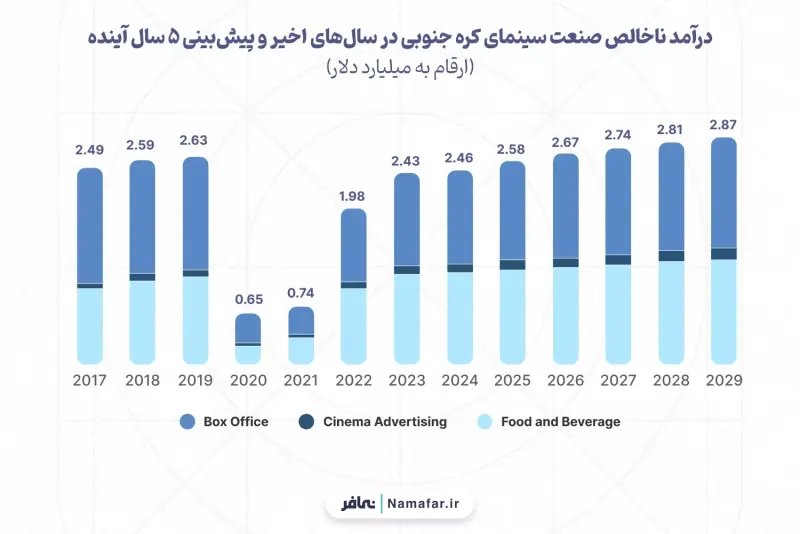
Korea's film industry has had considerable growth over the past decade, so that admissions for the first time, in 2019, exceeded 220 million people and box office recorded a record of 2.63 billion dollars.
An examination of the gross revenue of South Korea's film industry in recent years has been growing on a steady upward trend; the decline in revenue in 2020 to 2023 due to the COVID-19 pandemic has been notable.
It is predicted that the revenue of Korea's film industry will reach 2.47 billion dollars by the end of 2024 and will continue to grow on a steady upward trend.
South Korean cinema has gained great fame because of unique storytelling, innovative filmmaking techniques, and talented actors. This has led to growing demand for Korean films and, as a result, an increase in box office revenue and an overall boom in the cinema market.
The role of government policies and incentives in the growth of Korea's film industry should not be forgotten; the South Korean government has provided various incentives, including tax exemptions for film production companies and support funds for filmmakers.
These initiatives have encouraged investment in this industry and helped create a favorable environment for the development of the cinema market and have caused the ever-increasing growth of Korea's film industry; these advances have gone so far that Korean cinema can be considered a serious and capable rival to the American film industry, Hollywood; a competition that has manifested itself not only in the arena of production, but also in cultural influence and attracting global audiences.
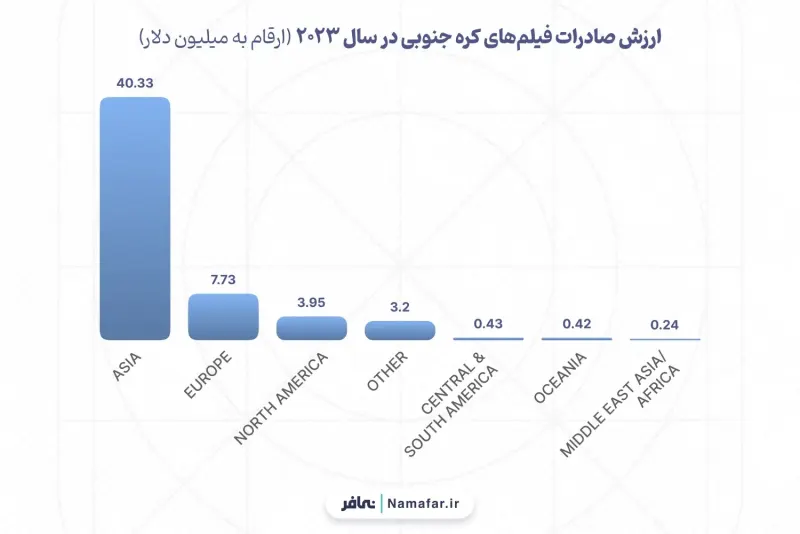
In recent years South Korea has been well able to export its films and cultural products to other countries; in one instance, in 2023 the value of films exported from South Korea was more than 56 million dollars, of which the largest exports were to Asian countries at 40.3 million dollars, and in the next ranks to European countries and North America at 7.7 and 3.9 million dollars respectively
The global impact of South Korean culture
"Hallyu" (Hallyu) is a term used to describe the popularity and success of South Korean culture around the world. This term, which in Chinese means "Korean Wave," first emerged in the 1990s and gradually became a global phenomenon. Hallyu refers to a set of Korean cultural products, including cinema, Korean pop music (K-pop), television series (K-dramas), fashion, cuisine, and even video games, that have been able to attract broad audiences in all parts of the world.
The first wave of Hallyu began in the late 1990s and early 2000s with the success of Korean series in Asian countries. Series such as Winter Sonata and Jewel in the Palace were received very enthusiastically and opened the way for the extensive export of Korea's cultural products.
The second wave of Hallyu took shape with the emergence of Korean pop music (K-pop) in the 2010s. Groups such as BTS and BLACKPINK were able, by using social networks and global platforms such as YouTube, to attract many international fans.
South Korean cinema, as one of the important pillars of Hallyu (the Korean Wave), has in recent years come to prominence on the global stage with outstanding productions. Films and series such as Parasite and Squid Game are clear examples of this success that have met with broad reception.
Korea's cultural exports; a bridge between art and the economy
South Korean cinema has become one of the tools for elevating South Korea's image at the global level, and in the country's cultural diplomacy it has been able, by combining local and global elements, to convey Korea's cultural and social messages to international audiences.
South Korea, by drawing on cinema, has become one of the most prominent cultural exporters in the world. This industry has not only played a key role in promoting Korean culture and increasing global awareness of it, but by creating new job opportunities has also strengthened economic growth.
South Korea's cultural product exports in 2022 recorded a record of 13.2 billion dollars; demand for Korean content on platforms such as Netflix has led to growth in investment in Korea's filmmaking industry and the development of cultural infrastructure.
Korea's cinematic and television works have turned this country's locations and tourism regions into popular destinations. Many fans traveled to this country to visit filming locations and experience Korean culture.
Conclusion
Korean films and series have in recent years become a global phenomenon and, with works such as the film Parasite and the series Squid Game, have crossed geographic borders. Success at prestigious global festivals such as the Oscars and the Emmys, together with record-breaking on digital platforms such as Netflix, has not only strengthened South Korea's cultural standing but has also become an effective instrument of this country's cultural diplomacy and soft power. These achievements have led to economic growth through cultural exports, attracting tourists, and increased investment in the film industry, and have presented a positive and pioneering image of South Korea on the global stage.
Machine-translated from Persian by Namafar; the Persian original is authoritative. Read the original in Persian