Centuries have passed since the time when British culture, at the height of its empire, set global aesthetic, social, and educational standards. A time when Britain's influence extended beyond military and colonial power and also shaped tastes and cultures around the world. The reason English has remained the world's lingua franca is rooted in the British Empire's trade, diplomacy, and skill in storytelling. But in the contemporary period, while British literature, music, and film have over the past fifty years regained their global popularity (such as the widespread popularity of the rock group "the Beatles" or the fantasy world of "Harry Potter"), this country's cultural exports have lost their appeal after Brexit, except for exceptional cases such as the popular series "Bridgerton."
Establishment of the Soft Power Council: a way to revive cultural influence
Now it appears the Labour government has stepped in and intends to rebuild this country's worldwide artistic influence and, through its cultural and creative industries, strengthen Britain's soft power, and to achieve this goal it has established the "Soft Power Council"; a 26-member advisory body designed to put Britain's cultural influence to work for diplomatic and economic benefit. David Lammy, the foreign secretary, said in a statement: "I created the Soft Power Council to put British expertise to work, reimagine Britain's role on the global stage, strengthen alliances, and create new partnerships."
This decision comes after years of public policies that have reduced Britain's arts and culture budget. Local government funding has fallen by 48 percent since 2017, while arts subjects have been downgraded and almost eliminated from school curricula.
Lammy told the media: "Soft power is fundamental to Britain's global impact and reputation. I am often struck by the love and respect that our music, sport, education, and institutions generate on every continent. But we as a country have not yet taken a strategic approach to these great assets. Effective use of soft power can help build relationships, deepen trust, strengthen our security, and grow the economy."
The economic gifts of Britain's cultural industries
The statistics confirm this claim. In 2023, Britain's cultural industries injected 36 billion pounds into this country's economy and supported 9,755 businesses. The broader creative industries added 124.6 billion pounds—equivalent to 5.7 percent of the country's gross value—to the British economy and employed 2.4 million people.
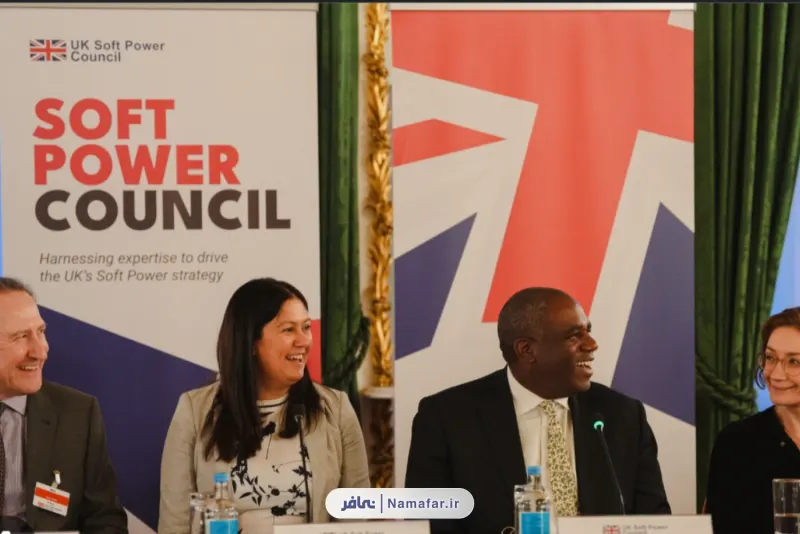
Lisa Nandy, Britain's secretary of state for culture, media and sport, emphasized an economic argument at her recent conference: "We are determined to strengthen our soft power abroad and, in turn, by focusing on creating jobs and expanding opportunities across Britain, give our economy a considerable boost." The government has also invested in this direction: on January 17, Nandy announced a 60 million pound increase in funding for the creative industries. She added: "From the Premier League and the series 'Peaky Blinders' to Adele and the BBC World Service, Britain's cultural exports display the best of this country around the world. When international investors look at Britain, it is often our landmark sporting events, performing arts, media, and creative industries that make Britain an attractive place to grow and invest."
The Soft Power Council will operate as an advisory body and is composed of key players on Britain's cultural scene. The council is chaired by Lammy and Nandy and includes prominent figures such as Tristram Hunt, director of the Victoria and Albert Museum; Peter Bazalgette, chair of the Royal College of Art; and Roland Rudd, a member of Tate's board of trustees. Also present on this council is Ewan Venters, former chief executive of Artfarm, the hospitality arm of Hauser & Wirth—a growing art empire that has creatively blurred the lines between culture and commerce.
Britain: a pioneer of cultural development strategies
Britain currently ranks among the top three countries across all major soft power indices, testimony to its long-standing leadership in cultural policy, creative economy research, and the art of turning cultural capital into economic growth. For years, British academics have examined and tested the impact of artistic and creative industries and have shown how these industries can help local regeneration and development.
Culture-based development strategies have been implemented across England and Wales since the early 2000s, so that local councils pioneered initiatives that completely transformed regions. The creative regeneration of Newcastle and Gateshead in the north of England is a clear example of how culture can be a shared tool for developing a community's human and social capital. In the late 1990s, an arts and cultural organization called "Northern Arts" was able to persuade the government to support an ambitious regeneration program named Case for Capital. This strategy allocated 400 million pounds to cultural affairs and focused on infrastructure, education, and local identity—an early model of something we now know as a "cultural district."
Newcastle used this opportunity and, drawing on its rich cultural heritage, directed resources toward the urban regeneration of the city's historic center, Grainger Town. This project not only created new commercial spaces but also included public art, cultural venues, and social services. The numbers speak for themselves: the creation of 106 new jobs, 286 businesses, 289 new homes, the restoration of 70 buildings, and the attraction of 145 million pounds of private investment to the area. Meanwhile, Gateshead took a different path and decided to redefine itself using contemporary culture and landmark cultural venues. This city allocated funding to transform the neglected Quayside area into a world-class cultural center, whose axis was the Baltic Centre for Contemporary Art (opened in 2002), the advanced music center Sage Gateshead, and the striking Millennium Bridge, which connected the two parts of Gateshead and is a symbol of cultural ambition.
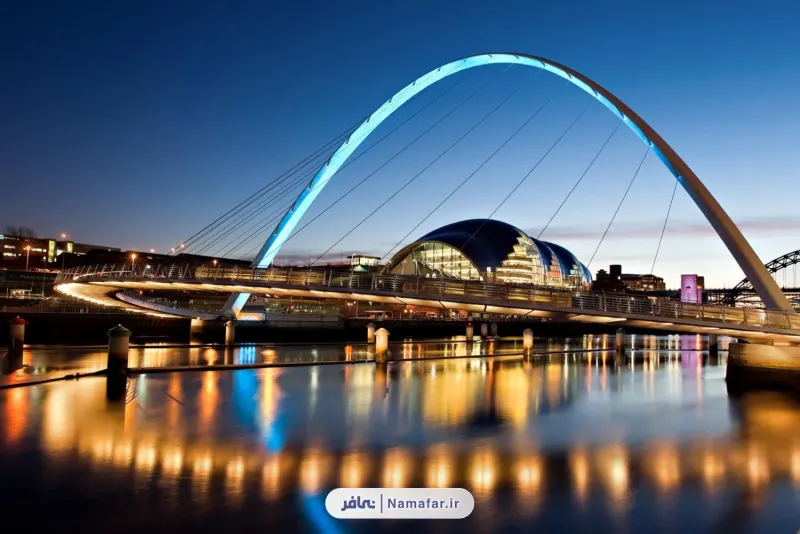
These case studies in culture-based local regeneration show that joint investment in cultural infrastructure and local governance not only led to a complete transformation of cities' image, perception, and attractiveness, but also created new economic and cultural opportunities. Cultural participation increased, communities became more engaged, and a favorable cycle of sustainable development took shape that helped the region's long-term development.
Soft power strategies in other parts of the world
In recent years, we have seen how some countries, with strategic and large-scale investments in culture and creative industries, have rewritten their global narratives. South Korea is one of the most prominent examples: from the late 1990s, the South Korean government aggressively supported its entertainment industry and recognized it as a tool for national branding and economic growth. The result of this approach was the emergence of the Korean Wave, which began with catchy K-pop songs and spectacular series and expanded into art, fashion, beauty, food, and even language learning. At that time, South Korea took inspiration from Japan's model, which had brought its culture to global fame in the 1990s and early 2000s. But unlike its neighbor, Japan's cultural dominance faded, and despite the Japanese government's recent efforts to reclaim its position, it has not yet been able to recreate the same level of international fascination.
Meanwhile, cultural budgets in the United States have been sharply reduced, including one of the most striking cases by Governor Ron DeSantis, who vetoed Florida's entire $32 million state arts budget and affected more than 600 organizations. The New York Department of Cultural Affairs also faced a budget cut of more than $25 million and pushed many budgets into deficit and forced organizations to cut staff, programs, and services. This is while these entities overall contribute at least $110 billion to the city's economic activity. Widespread protests against this decision ultimately forced New York Mayor Eric Adams to restore the annual cultural budget and allocate $111 million for the new year.
While Trump's agenda has almost no mention of culture, and there was no word of cultural policies in his inaugural speech either, his administration is expected to have deep effects on this sector. Immediate concerns include trade, especially the tariffs he is willing to impose, but broader concerns are focused on the ideological direction of his policies. Artists and cultural institutions are already awaiting further budget cuts and the constant risk of censorship.
Translation of the article U.K. Establishes a ‘Soft Power Council’ to Boost the Economy and Elevate National Identity
Machine-translated from Persian by Namafar; the Persian original is authoritative. Read the original in Persian