Africa's cultural industries are testimony to this continent's unique creativity and capacities. From crowded markets adorned with textiles to global stages on which African music resonates. These industries are not only an economic engine but the beating heart of the African continent. Cultural industries depict Africa's stories, reflect its identity, and link its past to its present.
Even so, to truly understand Africa's cultural industries one must look at them beyond artistic influence. These industries affect every dimension of countries, from economic policies to social cohesion. For example, Nollywood narrates stories that have gone beyond Africa's borders and reached the ears and eyes of global audiences. These films depict shared human experiences through uniquely African lenses. Or similarly, African fashion and design, which instead of mass production is rooted in Africa's cultural heritage, has redefined the concept of luxury in the world.
But this journey is not without obstacles. Structural challenges, financial gaps, and global market imbalances often affect the potential of these industries. In this note we seek to map the place of Africa's creative industries at the global level and examine their opportunities and challenges on the path of growth.
Overall status of the creative industries in Africa
According to a report by the United Nations Conference on Trade and Development (UNCTAD), Africa's cultural and creative industries (CCIs) produce 4.2 billion dollars annually. Although this figure is striking, Africa's creative industries are still not very developed relative to their potential. On the other hand, the growth of the cultural and creative industries across Africa is uneven. Countries such as Nigeria, South Africa, Kenya, and Egypt are in the lead because they have better infrastructure, higher investment, and greater access to international markets. In contrast, smaller or less developed countries often face problems because of insufficient budget, a lack of policy frameworks, and limited access to international markets.
Overall, the creative industries account for 1.1 percent of Africa's GDP. This figure at the global level averages 3 percent. Africa also accounts for less than 1 percent of global trade in cultural goods, which indicates that this continent's cultural capacities remain untapped.
In what follows we will have an overview of the status of Africa's most important creative sectors.
The music industry
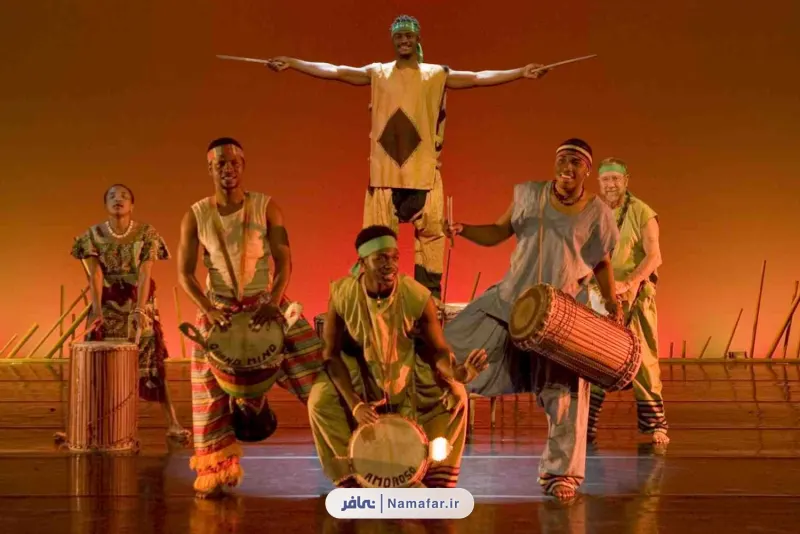
Africa's music industry is one of the creative sectors that is growing rapidly and has a considerable share in this continent's cultural and economic growth. Forecasts indicate that annual revenue of the music sector in Africa will rise from 92.9 million dollars in 2021 to 314.6 million dollars in 2026. The global rise of Afrobeats, led by artists such as Burna Wizkid, Boy, and Tiwa Savage, shows Africa's brilliance in the world of music
Even so, revenue generation in Africa's music industry still faces many challenges because of intellectual property theft and weak digital infrastructure. Only about 40 percent of Africans have access to the internet, which limits the possibility of using platforms such as Spotify and Apple Music. While these platforms are vital in modern music distribution.
The film industry
Africa's film industry—especially Nollywood in Nigeria—is one of the most prominent creative branches, producing more than 2,500 films annually. Nollywood, with 1.2 billion dollars in revenue, is the world's second-largest film producer after Bollywood. Films such as The Wedding Party and Lionheart prove this sector's profitability and its international appeal.
South Africa and Egypt are other African film hubs, the former known for its advanced production facilities and the latter for its historical film heritage.
Despite these successes, most African filmmakers face challenges such as limited budget, inadequate distribution channels, and high production costs. A UNESCO report (2021) notes that Africa accounts for only less than 1 percent of global film revenue.
The fashion industry
Africa's fashion industry has attracted global attention because of its unique designs. Countries such as Nigeria, South Africa, and Ghana are at the top of this industry. Designers such as Laduma Ngxokolo (South Africa) and Lisa Folawiyo (Nigeria) from this region have achieved global fame.
Africa's fashion industry, which is linked to local textile industries, has created employment for millions of people—especially women. For example, it is predicted that Ethiopia's textile and apparel sector will have 30 billion dollars in annual revenue by 2030.
Art and handicrafts
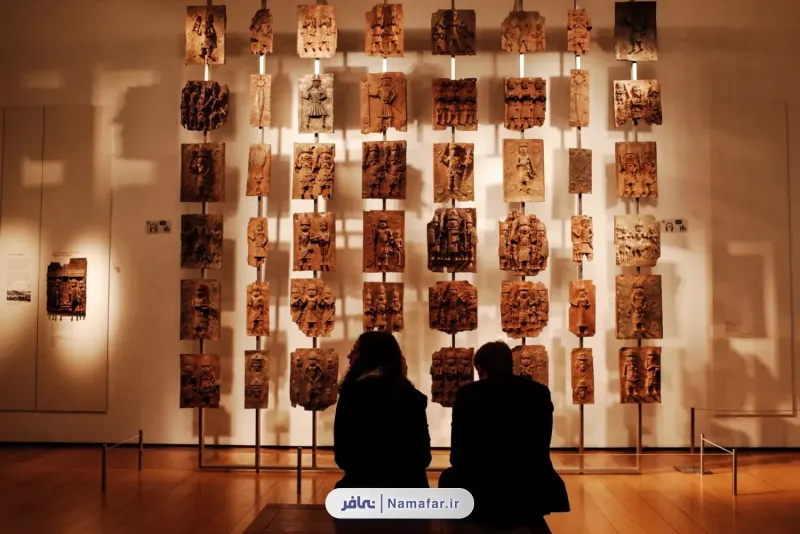
In 2018 Africa contributed 13 billion dollars to the global art market. Countries such as Nigeria, South Africa, and Morocco are its main players. Works by the Nigerian artist Njideka Akunyili Crosby have met with broad reception at international auctions, which indicates the rising popularity of African art.
Traditional handicrafts such as beadwork, basket weaving, and wood carving have considerable economic and cultural importance. For example, in Kenya the Maasai beadwork industry supports thousands of women and contributes to household income. However, craftspeople often lack the resources needed to scale up production or access global markets.
Regional distribution of the creative industries in Africa
West Africa, especially Nigeria and Ghana, dominate the music and film industry. Nigeria's Nollywood contributes 2 percent to this country's GDP. Meanwhile Ghana is emerging as a hub of digital content production. In East Africa, fashion and handicrafts are thriving. Ethiopia and Kenya are leaders in textile production and handicrafts. This region is also known for the cultural heritage of the Swahili coast.
South Africa, however, is a leader in film, music, and the visual arts, arising from better infrastructure and investment. This country's creative sector contributes 3 percent to GDP, which is one of the highest figures in Africa.
North Africa's cultural industries are more influenced by Arab and Mediterranean cultures. Egypt remains an important base for film and music, while Morocco is known for art and handicrafts.
Meanwhile, Central Africa, because of political instability and weak infrastructure, lags behind other regions. Even so, countries such as Cameroon and the Democratic Republic of the Congo have vibrant music scenes.
Challenges and opportunities
The African continent, on the path of developing the creative sectors, despite its high potential, faces numerous obstacles. One of the most important challenges is in the financing and investment segment. Most cultural businesses in Africa are financed personally, which limits their growth capacity. On the other hand, the lack of infrastructure such as theaters, galleries, and especially digital platforms hinders the development and dissemination of cultural products. Half of the 400 million people who lack mobile broadband coverage worldwide live in sub-Saharan Africa. This issue creates many limitations in the online sale of cultural goods.
Weakness of government policies and regulations is another of this region's challenges. Only a small number of African countries have comprehensive policies to support CCI. For example, only 17 African countries have ratified the UNESCO 2005 Convention on the Protection and Promotion of the Diversity of Cultural Expressions. Following defects in government laws, intellectual property theft is rampant in this region. Such that it is estimated that illegal films account for 60 percent of the DVD market in South Africa. This causes producers to be deprived of revenue on the one hand and investments to decline on the other.
The skills gap is another item that can be mentioned. The creative sector needs skilled specialists, while many African countries lack training programs. For example, only a small percentage of African universities offer courses in cultural management or digital content creation.
With all the challenges described, one cannot ignore Africa's valuable capacities in the creative sectors. One of the most important of them is the young population. Africa, with more than 60 percent of its population under 25, is the world's youngest continent. It is expected that by 2030 African youth will constitute 42 percent of the world's youth. This population are future consumers for sectors such as film and music, investment in which will be profitable. Also, these young people are a rich source of talent who can be trained as specialist workforces.
Travel and tourism, because of the existence of rich heritage in Africa, is also considered one of the region's important capacities. In 2024, tourism contributed 7.3 percent to Africa's GDP. Integrating tourism with the cultural industries can strengthen the local economy.
The African diaspora is another of Africa's cultural potentials that plays a vital role in promoting and financing the creative industries. Festivals such as Afropunk and Afrochella celebrate African culture at the global level and increase demand for African products.

Conclusion
Africa's cultural and creative industries produce 4.2 billion dollars annually. Although this figure is striking, Africa's creative industries are still not very developed relative to their potential. On the other hand, the growth of the cultural industries, and countries such as Nigeria, South Africa, Kenya, and Egypt, because they have better infrastructure, higher investment, and greater access to international markets, are in the lead. Overall, the creative industries account for 1.1 percent of Africa's GDP. Whereas this figure at the global level averages 3 percent.
In this note we had an overview of Africa's most important creative industries, including music, film, fashion, art, and handicrafts. We also examined their regional distribution.
Overall, Africa's creative industries, despite their high potential, have numerous obstacles to growth and development, the most important of which are seen in the financing and investment, infrastructure, government policies and regulations, intellectual property, and skills-gap segments. Even so, Africa also has considerable capacities. A young population, the diaspora population, and a tourism boom are among them, and focusing on them can be a way forward for Africa.
Machine-translated from Persian by Namafar; the Persian original is authoritative. Read the original in Persian