Artificial intelligence is rapidly becoming a transformative tool in many domains of creativity, and the world of comics is no exception to this rule. Comics, which are traditionally considered a hybrid art of text and image, are now, under the influence of new technologies, pushing the boundaries of creativity, production, and story narration further. Tools based on artificial intelligence, such as machine learning (ML) models and generative algorithms, have provided unprecedented opportunities for independent creators as well as the comics industry to innovate and optimize their work processes.
This article examines how the design, writing, and production of comics are being transformed by relying on artificial intelligence and analyzes its impact on both groups of independent creators and major comics publishers. By drawing on computational creativity and advanced algorithms, artificial intelligence, while challenging traditional workflows, affects artistic authenticity and redefines the essential nature of storytelling in the comics medium.
Artificial intelligence tools and technologies in comics production
Artificial intelligence in design and illustration
Artificial intelligence has made significant advances in automating and improving the process of visual creation in comics. Tools such as generative adversarial networks (GAN) have been able, by learning from existing comics datasets, to produce unique artworks. For example, Harold Cohen's AI art system named AARON, which is counted among the earliest AI systems in the arena of art, shows how machines, after extensive training on patterns and styles, can automatically create artistic designs. Likewise, modern tools such as MidJourney and DALLE enable artists to quickly produce character designs, dynamic spaces, and even experimental visual aesthetics.
Programs based on artificial intelligence decompose the conceptual space of comics art and allow combinational creativity — that is, combining familiar artistic elements in the form of new designs — to take shape. This process helps new artistic discovery as well as the preservation of stylistic coherence, both of which are essential for visual narrative. By automating tasks such as designing frames (panels), shading, and coloring, artificial intelligence enables artists to spend more time and energy deepening the story and working out the subtleties of their artistic style.
In addition, in the domain of education, new research on "AI comic strips" is focused on using artificial intelligence to support visual narrative in line with realizing learning goals. Comic tools based on artificial intelligence simplify the creation process and enable students to design coherent images together with narrative text. This process helps them express their ideas more effectively and create better narrative structure in writing. Also, some studies emphasize that AI-based comics provide an active setting for students to improve narrative structure, spatial organization, and synergy between text and image, and at the same time strengthen their critical and creative thinking.
Artificial intelligence in writing and storytelling
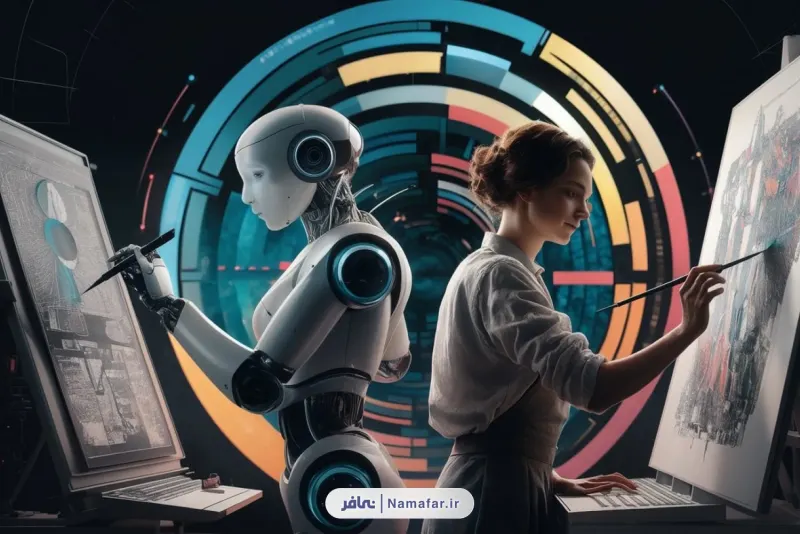
Language models based on artificial intelligence, such as GPT, have transformed the writing process. These tools help in creating storylines, dialogues, and even writing the complete screenplay of comics. For example, experimental projects such as Garkov have used artificial intelligence to reinterpret existing comic works — such as the Garfield comic series — and, by producing humorous and surreal dialogues, offer a new approach to these works.
This ability to produce combinational and exploratory creativity is aligned with Margaret Boden's models of creativity. Artificial intelligence, as a creative collaborator, offers unusual or surprising ideas that may not naturally occur to human writers. Although AI outputs still require human review and selection, collaboration between artificial intelligence and writers accelerates the ideation process and the entry of fresh perspectives.
In the domain of education, research on AI comic strips (AICS) shows that comic narratives produced by artificial intelligence support students' writing skill in recounting events. In one study, students who created AI-centered comics became more motivated and performed more successfully in developing ideas. Regular visual structures helped them organize events in a coherent form and, structurally, create better coherence in their text. Also, some studies have shown that AI comics, as an efficient tool in producing media content, with the possibility of individual work, strengthen the link between students' virtual and real experiences.
In another study, various dimensions of storytelling with artificial intelligence have been examined through analysis of the synthetic comic Fastwalkers; a work that has taken shape by drawing on AI models and datasets such as Danbooru2020. In this project, artificial intelligence has been responsible for producing not only text and images, but also other elements such as designing frames and visual compositions, although human selection and editing have played an important role in the final product. This interactive process introduces artificial intelligence not only as a creative tool but as a setting for presenting new methods in storytelling.
Artificial intelligence in production and workflow
Artificial intelligence plays a key role in optimizing the comics production workflow, especially for independent creators who have limited resources at their disposal. By automating time-consuming processes — including determining the placement of speech bubbles, text formatting, and organizing panels — artificial intelligence can make the production process smoother. Tools that draw on deep learning, such as some AI capabilities in Clip Studio Paint, help artists improve design lines and inking, while prediction algorithms, as the story advances, suggest appropriate compositions.
These advances are especially beneficial for independent comics creators who often work simultaneously in the roles of writer, artist, and producer. Artificial intelligence enables them, by spending fewer resources and in a shorter time, to achieve results at a professional level and makes access to high-quality comics production tools more widespread.
In some educational studies, students, to make comics with artificial intelligence, go through a six-stage process: ideation, initial sketches, producing images with AI tools, and finally revising the content with digital processing programs. This method shows that comic tools based on artificial intelligence establish a link between technical procedures and artistic creativity and provide the ground for creating more complex narratives.
In projects such as Neural Yorker, automation of the comics workflow goes a step further and produces single-panel cartoons with the least human intervention. In this process, several AI models that have been trained on extensive collections of cartoons and humorous themes automate every step from ideation to final publication. This approach shows that a fully automated workflow in the field of comics production and distribution is possible.
Impact on independent comics creators
Empowerment through accessibility
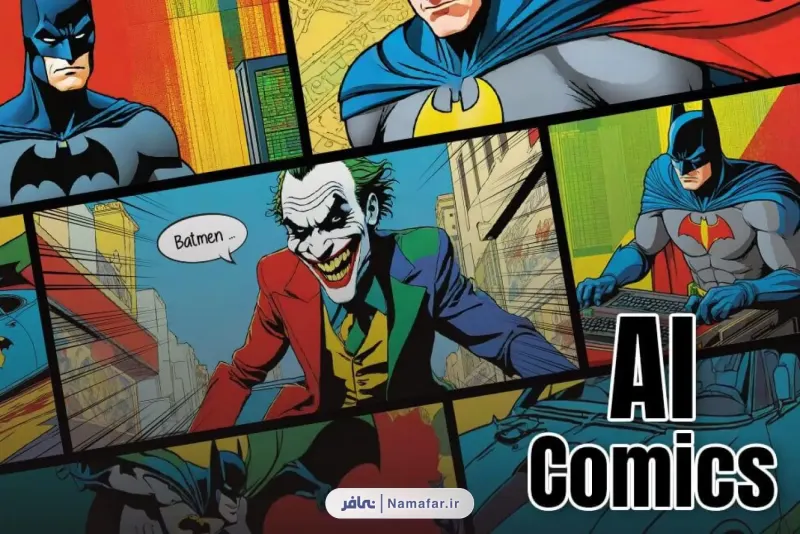
Independent comics creators are considered among the main beneficiaries of these technologies from AI tools. In the past, producing high-quality comics required access to specialized skills, expensive tools, and a considerable investment of time. Artificial intelligence breaks these limitations by providing affordable tools for producing artworks, writing, and optimizing production. For example, creators can use images produced by artificial intelligence as a substitute or a starting point for their comics and gradually revise them into final products.
AI tools also enable creators to experiment with styles and genres they might not otherwise have tried. By drawing on machine-learning models that have been trained on diverse datasets, independent artists gain access to a wide range of artistic inspirations and increase the scope of their creativity and production efficiency.
Manouach (2024) describes this as the democratization of production, where AI tools expand artists' creative impact. Independent creators can use artificial intelligence to experiment with new storytelling formats, analyze trends, and design unique multimedia content and redefine the traditional boundaries of comics.
Challenges: authenticity and overdependence
While artificial intelligence opens new doors, it also creates concerns about authenticity and artistic identity. The creative process in comics has long been praised for its human touch—a unique combination of artistic intuition and emotional storytelling. Overdependence on AI tools carries the risk of homogenizing styles or creating content that lacks authenticity.
In addition, there are still doubts about whether art produced by artificial intelligence can truly be considered "creative". As Margaret Boden argues, AI creativity often falls in the combinational and exploratory domains, not achieving the radical innovation of transformational creativity. Independent creators must balance the benefits of AI assistance with preserving their distinctive artistic voice.
Manouach's reflections on Fastwalkers further challenge perceptions related to ownership of the work and note that artificial intelligence enables artists to create new forms of storytelling outside traditional structures. However, human curation remains essential, which raises questions about the role of collaboration versus automation in creative processes.
Impact on major comics publishers
Artificial intelligence for scalability and innovation
Major comics publishers, such as Marvel and DC, are using artificial intelligence to enhance production processes at a large scale. AI systems, by analyzing market trends, readers' preferences, and sales data, participate in creative decision-making. This data-driven approach enables publishers to adjust stories, characters, and visual styles in line with the taste of target audiences.
In addition, AI tools facilitate the production line especially in long-running series. Tasks such as coloring, lettering the text inside bubbles, and maintaining visual continuity—which usually require a large amount of human labor—are increasingly automated with the help of artificial intelligence. As a result, creative teams can focus more on narrative innovation and artistic experiments.
Some researchers believe that generative AI will soon become an integral part of comics production systems. This transformation, alongside redefining creativity, enables artists, by examining vast datasets, to discover emerging patterns and trends. Such a transformation challenges traditional production models and at the same time provides new opportunities for innovation.
Ethical and industrial implications
The entry of artificial intelligence into the arena of large-scale comics production raises numerous ethical questions about the replacement of labor forces and creative ownership. The more control artificial intelligence obtains over artistic processes, the more concerns increase regarding its impact on traditional roles, such as illustrators, colorists, and writers.
Also, the discussion over intellectual property and the authenticity of works has not yet reached a conclusion. If a tool based on artificial intelligence, using datasets obtained from human works, produces a new comic work or text, in whose possession will the ownership rights of that new work be? These challenges require that appropriate legal and ethical frameworks take shape so that, while observing fairness, the creators of artistic works are also properly appreciated and compensated.
Ethical and creative discussions
- Artificial intelligence versus human creativity
One of the contentious debates surrounding comics produced with artificial intelligence is whether they can reach the emotional depth and authenticity of works created by humans. Human creativity is deeply rooted in life experiences, emotional intuition, and unique viewpoints that are difficult for artificial intelligence to reproduce. However, as Postema and Manouach (2024) note, synthetic comics, by creating experimental formats that explore the "hidden spaces" in the data, challenge traditional concepts of storytelling. This raises the issue of whether authenticity can exist in art produced by artificial intelligence when this art relies on prior datasets.
The power of artificial intelligence lies in the ability to combine and explore large volumes of data, discover patterns, and produce novel ideas. However, the emotional resonance of comics often depends on the deliberate choices and interpretive acts of human creators. Critics argue that while comics produced by artificial intelligence may reach technical skill, they risk falling into patterns of homogenizing style and lacking the emotional subtlety of human arts.
- Ownership and copyright
The use of artificial intelligence in creating comics raises significant legal and ethical questions about ownership and copyright. When an AI tool produces comics art or screenplays based on datasets extracted from works created by humans, to whom does ownership of the resulting content belong? Legal frameworks have not yet adapted to these developments and have placed creators, developers, and publishers in an ambiguous zone.
In the creation of Fastwalkers, Postema and Manouach note that datasets such as Danbooru2020, which are central for training AI models, include millions of tagged media files contributed by online communities. The blurred lines between data ownership and creative output complicate attribution and intellectual property rights. The question of accountability is also raised: should AI developers or users be responsible if AI outputs violate copyright? This lack of transparency requires the establishment of clear legal and ethical guidelines for comics produced by artificial intelligence.
- The place of artificial intelligence
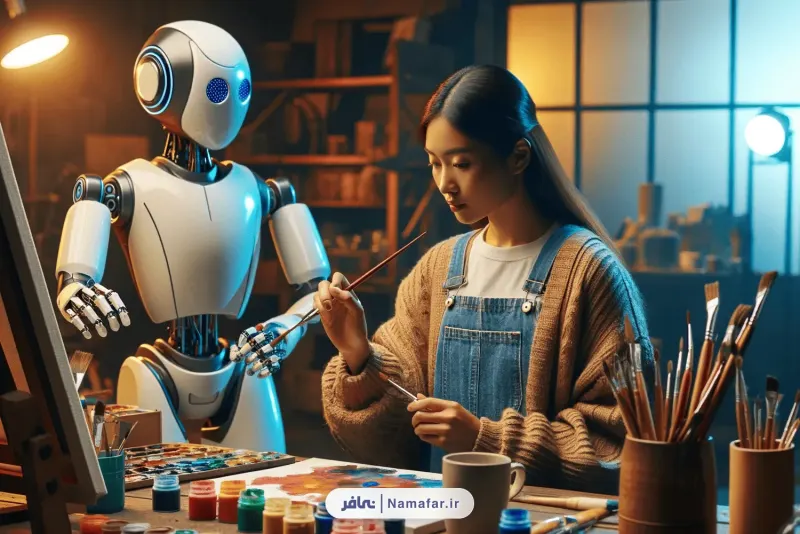
Instead of looking at artificial intelligence as a substitute for human creativity, many artists and researchers support using it as a collaborative tool. AI's capacity for rapid prototyping, pattern recognition, and data synthesis can strengthen human creativity and allow artists to focus on higher-level decisions in storytelling and art.
Manouach emphasizes that tools such as The Neural Yorker show how artificial intelligence can help artists explore nontraditional storytelling formats and act as a "creative partner" that challenges existing artistic conventions while expanding the possibilities of the medium. This collaborative relationship shows AI's potential to push the boundaries of comics as an art without diminishing the artist's role.
- Synthetic comics
Artificial intelligence offers an unprecedented opportunity to produce entirely new forms of storytelling that are often called synthetic comics. These works, using AI's ability to produce content that is abstract, nonlinear, and experimental, break traditional narrative structures. For example, Fastwalkers, by violating traditional comics layouts and reading habits, encourages readers to "browse" rather than follow a linear storyline.
Postema and Manouach argue that synthetic comics create a unique space for reimagining this medium. By detaching narrative and visual conventions, these works invite readers to engage with comics in novel forms. However, this shift also raises questions about accessibility and audience acceptance. Will synthetic comics attract broader audiences, or will their experimental nature confine them to particular markets? These questions remain at the center of the ongoing evolution of artificial intelligence in creating comics.
6. Case studies and real-world examples
- Garkov Garkov is an experimental project that uses artificial intelligence to produce surreal and humorous dialogues in Garfield comic strips. Using machine-learning models trained on textual data, this project reinterprets existing content by producing unexpected and often absurd conversations among the characters. This demonstrates AI's ability to reproduce familiar media into innovative and playful formats that appeal to particular audiences interested in experimental humor.
- AI-based web comics Independent creators are increasingly using AI tools to simplify the production of screenplay and panel art. By automating time-consuming work processes, artificial intelligence enables creators to focus on storytelling and stylistic experiments. Projects such as Fastwalkers and The Neural Yorker show how independent artists draw on artificial intelligence to produce high-quality content with limited resources and often experiment with new formats and themes.
- Artificial intelligence in education
Diana Elfira's research on AI comic strips (AICS) shows the educational potential of artificial intelligence in comics. AI tools improve students' storytelling and writing skills by making it possible to create engaging visual narratives. This process strengthens creativity and motivation and helps students structure their ideas and develop coherent narratives. These tools also elevate visual and verbal literacy, which makes them effective for classroom learning.
- AI comics as art
Bedi's study (2023) examines how AI comics support creative and multimedia learning processes. This research highlights the role of AI in strengthening critical thinking, organizational skills, and storytelling abilities among students. AI comic tools encourage exploration of artistic styles and the integration of multimedia elements, which improve both the creative process and the final output.
- Fastwalkers Fastwalkers is an artificial comic produced jointly with AI tools and datasets such as Danbooru2020. This project shows how machine-learning models can rethink storytelling methods by generating experimental panel layouts and nonlinear narratives. The process of creating this comic involved human curation, introducing AI as a creative partner that enables innovative methods in storytelling.
- The Neural Yorker The Neural Yorker is an automated AI system that generates single-panel cartoons daily. Using several machine-learning models trained on extensive datasets, this system automates every stage from ideation to visual production. This project demonstrates AI's potential to streamline the creation and distribution of comics and offers a glimpse of a fully automated storytelling future.
Comic market insights
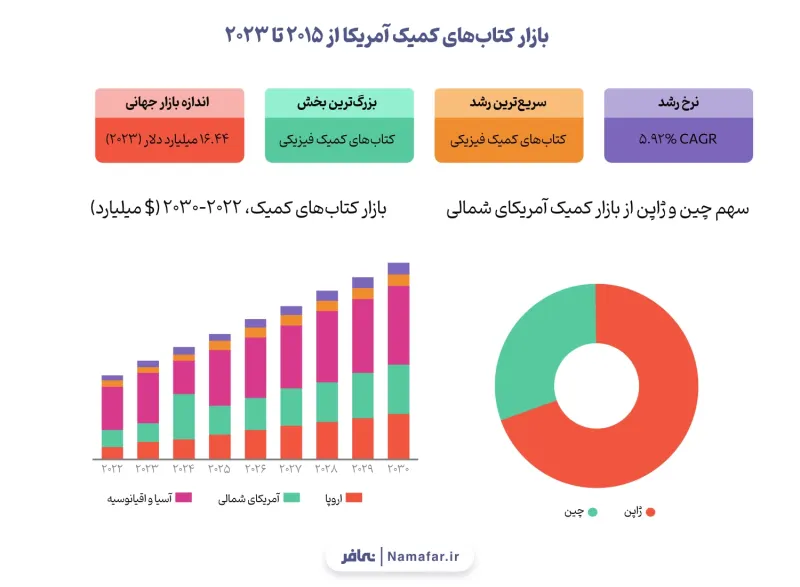
The comic book market in 2023 was valued at 16.44 billion dollars and is projected to grow from 17.41 billion dollars in 2024 to 27.58 billion dollars by 2032, at a compound annual growth rate (CAGR) of 5.92% in the forecast period (2025-2032).
The rising popularity of comic books worldwide is attributed to the growing number of publishers that offer engaging narratives and appealing artwork. These books, with positive messages, help readers improve their vocabulary, take them into an imaginary and wondrous world, and instill values in them.
These products are available in various genres, including romance, science, fantasy, and other genres. Government initiatives to promote comic books in order to encourage children to read and learn have made a notable contribution to the expansion of this market.
The global outbreak of the coronavirus pandemic (COVID-19) led to an increase in online activity. According to data published by Mint in March 2020, coronavirus lockdowns encouraged people to spend more time at home, which led to increased use of mobile apps, books and comic books, and more.
In addition, it was observed that mobile browsing activity increased by about 40 percent. Comic books have long been popular and continue to grow in popularity worldwide. These books not only have entertainment and recreational value for readers but also help develop vocabulary.
Also, a considerable number of people have turned especially to digital comic books as a leisure pastime, a shift driven by the requirement to stay at home.
Survey results: audiences and generative AI and the comic book industry
The integration of generative AI into the comic book industry has produced mixed reactions. On the one hand, visual artists raise serious concerns about copyright and the economic effects of this technology, and on the other, the general audience in some studies has shown a more positive reception. To examine consumers' views more closely, a study was conducted with the aim of designing and evaluating an AI-generated comic and carrying out related surveys.
Design of the AI-generated comic
This comic was produced with the aim of creating a standalone work and avoiding copyright issues using Midjourney AI. The images were designed in a minimalist black-and-white style inspired by manga so that both originality would be preserved and audience feedback on the quality of the work could be examined without the influence of preconceptions. Despite success in designing many scenes, challenges were observed in depicting complex multi-character interactions in a single frame. This project in total required 12 hours of time and 250 prompts.
Study method and survey
The study was conducted with 108 participants in three different settings: two comic book stores in Pittsburgh and related online communities. Participants were divided into two groups:
- Group Areviewed the comic without being informed of the use of AI.
- Group B were informed before evaluation that the work had been produced by AI.
After reading the comic, questions were asked about enjoyment, narrative conveyance, emotional impact, coherence, and perceived value of the work. Demographic information and views on AI in the comic book industry were also collected.
Key findings
- Overall view of AI in comics: Unlike some general studies, the participants in this study did not have a positive view of the use of AI in comics. Concerns were expressed about ownership of the work, transparency in production, and a threat to traditional art.
- Willingness to purchase AI-generated comics:
- 43.52 percent had no willingness to purchase.
- 44.44 percent had no definite opinion.
- 12.04 percent showed a willingness to purchase.
These results indicate consumers' caution and concern about AI-generated content and emphasize the need to attend to transparency and ethical principles in the use of this technology.
The study shows that while some audiences are eager for innovation, there are serious concerns about originality, ownership, and preserving traditional artistic methods. For progress and broader acceptance, AI technologies must take consumers' feelings into account and focus on the ethical integration of this technology into the comic book industry.
- Future trend of AI in the comic industry:
- It is still unclear whether generative AI will become established in the comic industry.
- Consumers will probably connect less with comics they know have AI images, but they may be willing to purchase under the right conditions.
- The role of AI as a tool:
- Many participants believed that AI should be used as a tool, not a replacement.
- These models can make initial concepts feasible for those who, for financial reasons, are unable to create works.
- Some were also aware that AI models can be trained using artists' own art for artists who have difficulty with drawing, and can be effective.
- Concern about transparency and artistic rights:
- The majority of participants believed that generative AI needs transparency and that without copyright laws and additional regulations it can be a threat to artists.
- Artists can be confident that fans care about their artworks and stories.
The integration of generative AI into the comic book industry has produced mixed reactions. On the one hand, visual artists raise serious concerns about copyright and the economic effects of this technology, and on the other, the general audience in some studies has shown a more positive reception. To examine consumers' views more closely, a study was conducted with the aim of designing and evaluating an AI-generated comic and carrying out related surveys.
Understanding of AI
- No significant difference: Analysis of responses based on familiarity with AI did not show a significant difference.
- Fewer than 17% of participants answered that they do not know how generative AI models work.
- In Group B only 5 participants gave this answer, so further research is needed.
Artists versus non-artists
- No significant difference in responses:
- Participants were asked whether they identified themselves as a visual or comics artist (professional, amateur, or hobbyist).
- Responses were divided into two groups:
- Those who answered yes or to some extent were classified as artists.
- A no answer was treated as non-artists.
- The responses were aligned with our current knowledge about the views of artists and illustrators in part one, and showed that comics fans agree with artists' views on how AI should be treated in the comics industry.
These data show that online communities may be more sensitive to the introduction of AI and its ethical and economic implications for comic book artists. Unfortunately, these intense sentiments made collecting a larger sample difficult and further research is needed.
Difference in the survey of the two bookstores
The Phantom of the Attic Comics comic book store is a pedestrian-friendly store in Oakland, Pittsburgh, located near the University of Pittsburgh and Carnegie Mellon University. Despite the expectation of a large presence of university students, many of the study's participants were frequent visitors to the store and came from diverse age groups. Only a small number of participants (4 out of 36) identified themselves as "non-serious" readers. The majority of respondents in this store stated that they would not purchase a comic book with AI-generated pages.
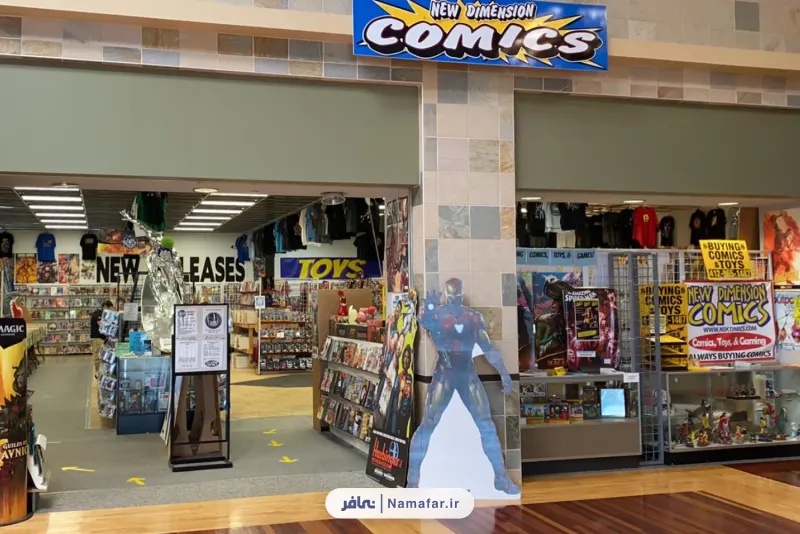
The New Dimension Comics store is the largest comic book retail chain in the Pittsburgh area. This store is located in the Waterfront area in Homestead, Pennsylvania. As a larger location, in addition to comic books it also sells many unrelated goods and attracted fans of games such as Dungeons & Dragons, Magic: The Gathering, and video game collections. This meant that many participants in this study (26 out of 60) identified themselves as "non-serious" readers. Only 31 percent of respondents in this store stated that they would not purchase a comic book with AI-generated pages. These particular differences may indicate that the amount of reading affects the responses.
Final word
The integration of AI into comics promises a future full of creative possibilities. AI can lead to the creation of comics with very high personalization for each reader, interactive storytelling experiences, and even entirely new art forms that go beyond traditional limits. These possibilities arise from AI's ability to analyze user preferences, predict trends, and create dynamic content, which results in deeper audience engagement.
One important path of innovation is the development of interactive comics that respond to the reader's choices in real time. By using natural language processing (NLP) and generative models, these comics can change narratives based on user input and create immersive storytelling experiences similar to video games. This level of customization can redefine how audiences interact with this medium and turn passive readers into active participants.
Another potential that exists is the emergence of artificial comics that use AI to explore abstract and experimental forms of storytelling. These works, by generating nonlinear stories, unconventional visual designs, and entirely new genres, challenge traditional narrative structures. Projects such as Fastwalkers and The Neural Yorker are examples of this, showing how AI can push the boundaries of creativity while also calling into question traditional concepts of authorship and artistic intent.
However, the future of AI in comics also depends on addressing ethical and practical challenges. For example, ensuring that AI-generated content respects intellectual property rights and avoids reproducing biases present in training datasets is vital. Legal frameworks must be updated to clarify ownership and attribution of works created by AI. In addition, creators must maintain a balance between automation and human creativity and ensure that AI functions as a complementary tool, not a replacement.
As Manovich suggests, the next generation of comics artists may increasingly embrace AI not only as a tool but as a creative partner in system design and storytelling. This coexistence can redefine creative processes and expand the range of what comics can achieve as an art form. By leveraging AI's capabilities while preserving the essence of human creativity, the comics industry stands on the threshold of a transformative era.
Machine-translated from Persian by Namafar; the Persian original is authoritative. Read the original in Persian