Vicast is a strategic space for preserving the content and innovation value chain. The name "Vicast" is a blend of the two words Video and Cast. Video is a symbol of the richest type of content, because in it all forms of content production—including text, audio, and image—are fully present, and alongside these elements, other soft components such as message, feeling, and color are also combined with film and sound. The word "Cast" is also a specialized term that refers to production planning with a focus on production personnel. For this reason, Vicast's founders believe this innovation center is a complete reflection of all the requirements for producing rich content.
Hossein Khosravi, 41, a board member and co-founder of the Vicast innovation center, speaks of the efforts and experiences that he and his brothers applied over more than twenty years to bring this innovation center's sapling to fruition.
Below you can read the full text of this interview:
Please tell us about the original idea and the motivations for forming Vicast.
Vicast is the product of two important experiences. The first experience relates to our family business, whose activity began in earnest in 1373 (1994/95) in content production. From 1389 (2010/11) we focused our attention in a specialized way on science and technology, and finally, from 1395 (2016/17) we actively entered the ecosystem. During these two and a half decades before Vicast was formed, by producing professional content for centers such as large industrial holdings, government organizations, private companies, and institutions such as IRIB (Islamic Republic of Iran Broadcasting), we gradually came to recognize the gap of a specialized content-production platform. This gap made the need to create a professional setting more tangible for us and, coinciding with the formation of the innovation space in the country, led us to become familiar with the language of the startup ecosystem, knowledge-based companies, and venture capital.
Then, the second experience that linked our path more seriously to the ecosystem was the founding of a venture capital company. Combining this accumulated knowledge and years of professional activity with practical experience in the startup ecosystem—as an investor, business founder, and advisor—led us to the conclusion that a content hub is necessary. Thus Vicast, with the mission of creating a specialized content-production center, was established in the second hangar of Azadi Innovation Factory. Vicast was in fact an accelerator that differed in form from its other counterparts. One could say it operated more like a startup studio; a specialized combination of common acceleration models and the industry's requirements.
How and in what setting did your experience of connecting with the country's innovation ecosystem take shape?
We are four brothers who have worked in culture and the arts since the 1370s (1990s). And Vicast originated and was born from our family history in this field. In fact, studio spaces were like a second home for us, and we were always attached to them. Even our childhood toys were related to cinema and television. Love of art and media led us from the very beginning to work in various cultural and artistic branches and to gain diverse experiences in areas such as assistant directing, editing, and producing in different genres.
Our focus on producing technology content meant that, with the expansion of the startup wave in the country, we gradually became familiar with this ecosystem as well. I remember that for a long time the basement of our father's house had been turned into a studio, and we worked there.
What factors led Vicast to enter Azadi Innovation Factory, and what impact did this move have on your development?
We were in the midst of founding Vicast when we learned that Azadi Innovation Factory in western Tehran was on the verge of opening. After initial assessments, we concluded that our presence in this factory could create considerable added value both for us and for the factory and the people active in it. The idea of creating a place like today's Vicast had taken shape in our minds in the early 1380s (2000s); but presence in the innovation factory gave this idea new life and caused our concepts and plans to take more serious form in this space.
The story of official registration began from here, and we established Vicast in the form of a national multipurpose cultural-artistic institute. The main goal was to implement a new mode of acceleration compatible with the requirements of businesses and the sensitivities of artistic activities.
Presence in Azadi Innovation Factory was a win-win for us and other brands. For example, nearly eight thousand people from various figures, including artists, scientific and cultural personalities, inventors, and entrepreneurs, came and went to the factory through our studio activities. This, on the one hand, meant Vicast had an effective share in developing the innovation factory's brand; and on the other, presence in this attractive space provided valuable opportunities for our group.
What is your differentiator and value proposition for customers?
At Vicast we have always tried to preserve several fundamental principles:
One: From the very beginning we based our movement on the language governing the innovation ecosystem. That is, we distanced ourselves from the traditional space of the specialized content-production field. And by using an open-innovation approach and a supportive outlook, we pursued the path of market development with the logic and language of the innovation ecosystem.
Two: In this ecosystem, corporate governance has no meaning; most actors in this field operate as natural persons, independent production offices, or in smaller forms such as freelancers. For this reason we tried to adapt the language of company management to the center's working environment as much as possible. In the VCAST accelerator, startup teams, with the guidance and mentoring of content-industry specialists, as well as with financial and infrastructure support, become sustainable businesses that turn the wheel of the country's content economy.
Three: While trying to create the necessary infrastructure for standard, mass content production, we focused our main attention on the design and production process. We guided all teams along the path of strengthening production capabilities and provided them with a labor market. We put our technical knowledge and experiences at their disposal and, with cash and non-cash, material and non-material investments, supported them comprehensively.
How many personnel are currently working at Vicast?
The content production field is project-based. That is, in startups, depending on the type, volume, and size of projects, the workforce is added and reduced. Even so, on average in the Vicast portfolio group, between eighty and one hundred people have always been directly engaged. In addition, depending on market conditions and project volume, at various times, in one month financial payments have also been made indirectly for about two hundred to three hundred people.
How do you define Vicast's main areas of activity?
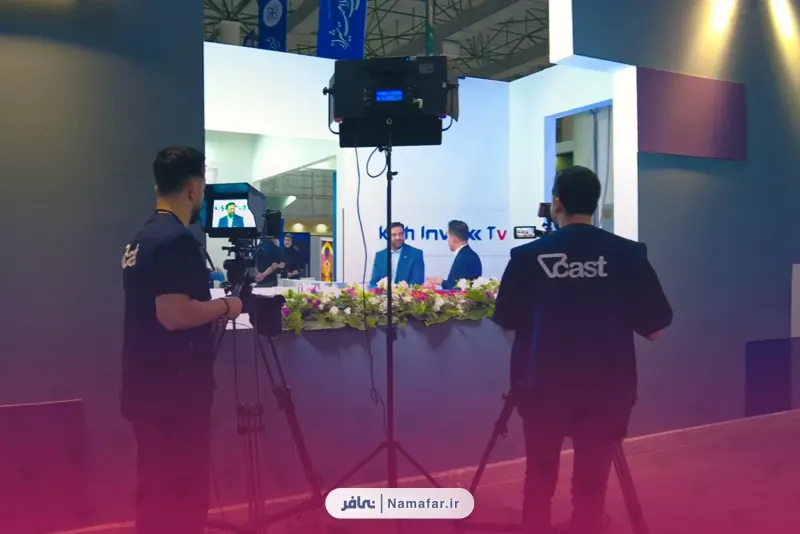
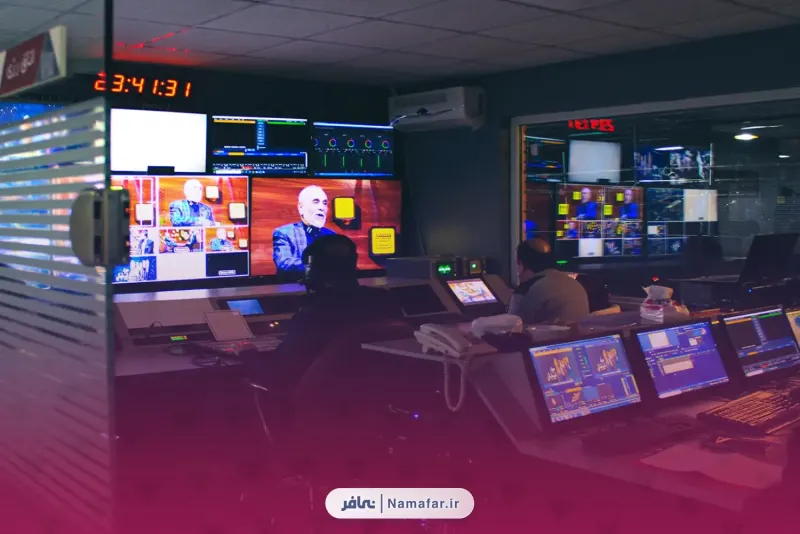
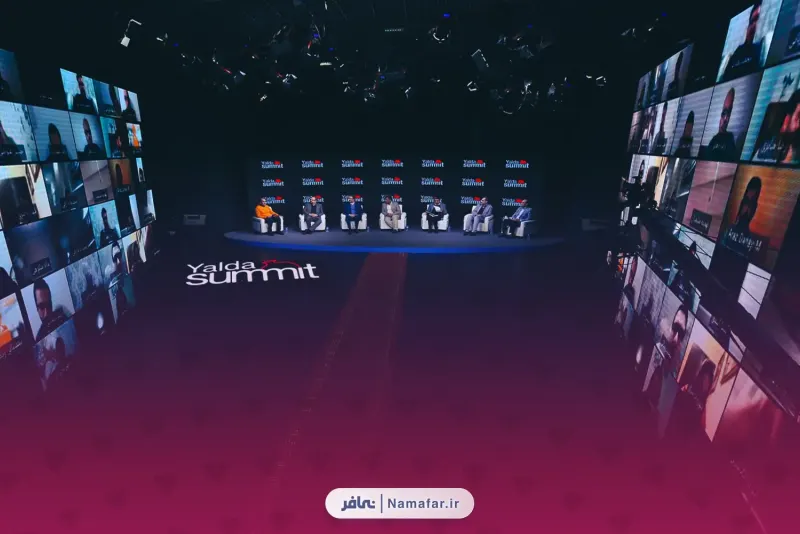
Vicast has defined its activities in several main areas. Through market research we identified serious problems in studio infrastructure. With the development of communications technologies, a serious gap in studio space in the country was strongly felt, and in general the studio system was in serious need of revision and improvement. Until then, studios of large dimensions suitable for professional productions existed only at IRIB (Islamic Republic of Iran Broadcasting); while the organization, the private sector, and emerging platforms all needed more studio spaces. Vicast was formed with the aim of filling this very gap and today is known as the country's largest private-sector studio. In a space of six hundred square meters, we have tried to make up for some of the existing gaps in this field.
At the start of activity, Vicast's focus was on the advertising industry. From the beginning we fully examined this industry's content needs so that we could provide the necessary infrastructure. In the first year and a half of activity, we succeeded in upgrading the value chain in the advertising industry and connecting traditional industries with the innovative space. We also gradually expanded the range of our activities. Today some studios offer studio services; but Vicast's distinction is that it offers its services as "studio hoteling" and in the form of a complete package. We are not merely a provider of hardware services; rather, like a producer or a content-production agency, we offer all the services needed to produce and realize content projects in one place.
One of our advantages is that we have a history of activity on both sides of the table—both as a producer and as a commissioner; therefore we understand the needs better and offer effective solutions for them.
Today Vicast, offering more than forty specialized services in content production, has capable, specialist, and up-to-date teams. We strive, relying on knowledge, experience, skill, and a young, creative spirit, at all stages of pre-production, production, and content release, to help brands along the path of using content monetization opportunities and attracting audiences. All these achievements clearly show the importance and power of content marketing and the necessity of using it for brand growth.
What services do you provide to startups and other ecosystem actors?
Vicast is essentially a Persian-content hub that has brought together the "pre-production," "production," and "post-production" chain of the content industry so as to house the content-production process in a complete and coherent form. Vicast is also considered a specialized accelerator in content production and media services, in which startup teams can, by using the experience and guidance of content-industry mentors, smooth their growth path. And relying on financial support and using Vicast's professional infrastructure, they can improve their working process. Startups based at Vicast cover all stages from strategy design to content release.
In this complex, content-industry infrastructure services such as image, sound, and stop-motion studios, consulting, mentorship, and networking with content-industry experts, as well as investment services, are provided to actors and startups in this field. In addition, Vicast's subsidiary teams offer various specialized services to the startup and knowledge-based ecosystem, including:
In the advertising industry: at the pre-production stage, services such as branding, content strategy design, content calendar design, creative and artistic ideation, and campaign design; at the production stage, social-network content production, website content production, SEO, textual content production, graphics, motion graphics, stop-motion, photography, and production of advertising videos; and at the release stage, digital marketing and media buying.
In the animation industry: production of animated films and series including pre-production, production, and post-production, commercialization, merchandising, and animation export.
In the cinema and television industry: production of television programs, series, and films, providing VFX services and specialized post-production services.
And in the sound and music industry: composing, poetry and lyrics, podcast production, sound design for animated and live-action films and series, sound design for advertising teasers, recording sound and music, dubbing, and also mixing and mastering services.
What have Vicast's most important achievements been to date?
- Creating the largest standard studio infrastructure in video broadcast in the country's private sector, for use by content-industry actors and startup and knowledge-based ecosystems;
- Creating studio infrastructure in sound and music, for use by industry actors and innovation and knowledge-based ecosystems;
- Creating and developing startups in the advertising industry value chain, with the aim of providing 360-degree services;
- Creating and developing startups in the animation industry value chain, with a focus on producing films and series, exporting animation products, and commercializing them;
- Creating and developing startups active in the cinema and television industry;
- Entering the creation of the sound and music industry value chain.
Have you so far used government facilities or support funds?
To date we have received facilities neither from the Innovation and Prosperity Fund nor from other financing institutions. The only exception was the Fund for Development of New Technologies belonging to Pardis Technology Park, and that too has been settled.
An important issue here is the neglect of creative industries. These industries, in economic classification, are recognized as service companies and are not considered manufacturing. For this reason, to operate they are required to obtain a permit from the Ministry of Culture and Islamic Guidance, under the title of cultural-artistic institute. As a result, unlike private joint-stock companies or limited-liability companies, which can benefit from financial facilities on the basis of their working capital or fixed assets, these groups are usually deprived of access to such support.
How do you assess advances in artificial intelligence in content production? Do you see this technology as an opportunity or a threat?
In my view, the arrival and advance of artificial intelligence is both an opportunity and a threat. It can neither be denied nor ignored. One must, with a correct analysis of the working environment, make optimal use of artificial intelligence in line with existing needs and keep one's knowledge in this field up to date and effective.
Over the past two years, in producing many custom products and services for companies, we have used artificial intelligence capacities effectively. In this connection, at Vicast we have held more than 15 workshops in artificial intelligence and content production; workshops that have especially covered the fields of cinema, animation, and music.
What advice do you have for young people interested in entrepreneurship?
In my view, a young person in the 18-to-35 age range should accumulate experience; by entering large companies, learn company-management skills, and take part in various training courses. Entering the entrepreneurship space depends on the individual's temperament and degree of risk-taking. Someone with a risk-averse temperament cannot succeed in the world of entrepreneurship. In addition, for continuous activities in entrepreneurship to reach desirable results, one must be patient and hopeful, and most important of all, come to the belief that in the field of soft war, it is creative people who create authority.
Tell us about the challenges and obstacles you have experienced on the path of developing creative industries.
Creative industries not being taken seriously, not having priority in planning, and policymakers' incorrect and purely cost-centered view of this field are among the main challenges facing the development of creative industries. On the other hand, no specific heading has been defined for developing these industries so that, on that basis, a specific demand could be made of governing institutions. Private-sector investors, too, because of the nascent nature of this field, the high risk of profitability, and markets not having taken shape, have not found sufficient motivation to enter and inject capital into this sector. Also, the absence of suitable networks and platforms for offering, selling, and exporting creative cultural products is considered another serious problem in this field.
Machine-translated from Persian by Namafar; the Persian original is authoritative. Read the original in Persian