"Let me say, every wealthy person has called me about TikTok!"
At last, TikTok was blocked nationwide in the United States on the last day of Biden's presidency; but only for 16 hours. On his first working day as the new president, Trump announced: "TikTok is back," and then gave it a 75-day deadline for ByteDance to implement the U.S. Congress law and hand TikTok over to American companies. The first sentence of the text had also been said by Trump, addressing reporters. He also raised the possibility of forming a partnership to manage this platform and said he was seeking a 50-50 partnership between the United States and the Chinese company that owns it, but he did not provide more details. Trump also announced that he might impose new trade tariffs against China if a deal for this platform is not done. He added: if Beijing rejects the deal, "this will be considered a hostile act."
What do the Chinese say?
Chinese officials had previously rejected requests for a sale and described the United States' arguments last March as "sheer thieves' logic." However, the Chinese Foreign Ministry spokesperson in the recent episode showed a relatively softer position and said: "Regarding actions such as operations and the acquisition of businesses, we believe that these decisions should be made independently by companies; if Chinese companies are involved, China's laws and regulations must be observed."
When TikTok conquers America
For years there has been a challenge between the United States' sovereignty and the Chinese platform TikTok. On one side, this platform has faced accusations of spying for the Chinese government and national security concerns, and on the other, because of its deep cultural impact on the young generation, it has provoked abundant criticism. Although the importance of the first issue is certainly greater than that of the second.
TikTok has a special place among social networks. This platform, which is run by the Chinese holding ByteDance, has succeeded in becoming one of the most important social networks around the world. According to the data presented, TikTok, with 1.582 billion monthly active users, ranks fifth globally. Only Facebook, YouTube, Instagram, and WhatsApp have been able to surpass this platform in number of active users. Of course, taking into account this platform's users in China itself, this figure reaches 2.417 billion users and TikTok sits in third place.
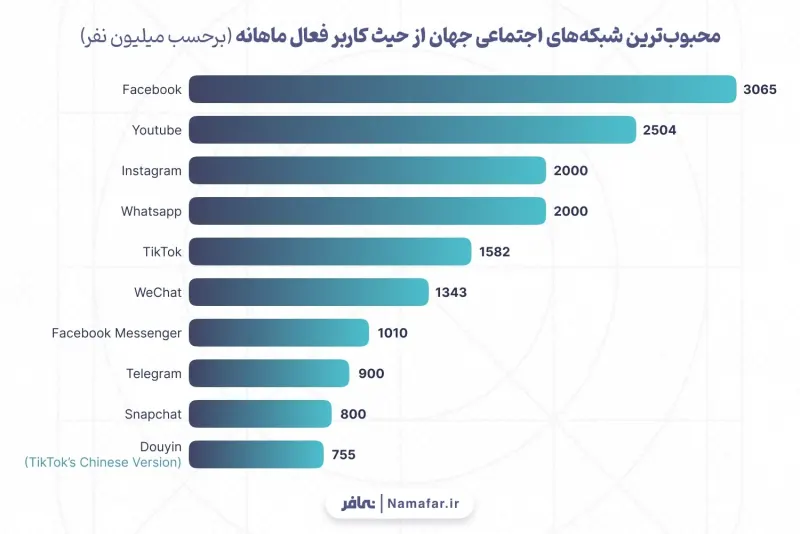
TikTok's smart algorithm, which presents recommended content with very high precision based on users' interests, is considered one of the main reasons for this platform's success. But this same algorithm has also brought concerns, because many critics believe this technology may lead to the collection of users' sensitive data for the Chinese government.
Statistics show that TikTok has grown strikingly not only in number of active users but also in revenue generation. According to forecasts, this platform's revenue has increased from $2 billion in 2020 to $18 billion in 2023, and this figure is expected to reach about $54 billion by 2027. A major part of this revenue is supplied by digital advertising, because many large brands, due to access to a young and dynamic community, have moved their advertising to this platform. Also, in-app purchases and collaboration with brands play an important role in supplying TikTok's financial resources.
TikTok's unmatched popularity in the United States has turned it into a sensitive subject in this country's domestic and foreign policy. The United States, with more than at least 120 million active users, is considered TikTok's second-largest market in the world. Although this platform is known in China itself as Douyin and in this country has more than 835 million users. That is, counting China, America holds third rank in the number of TikTok users.
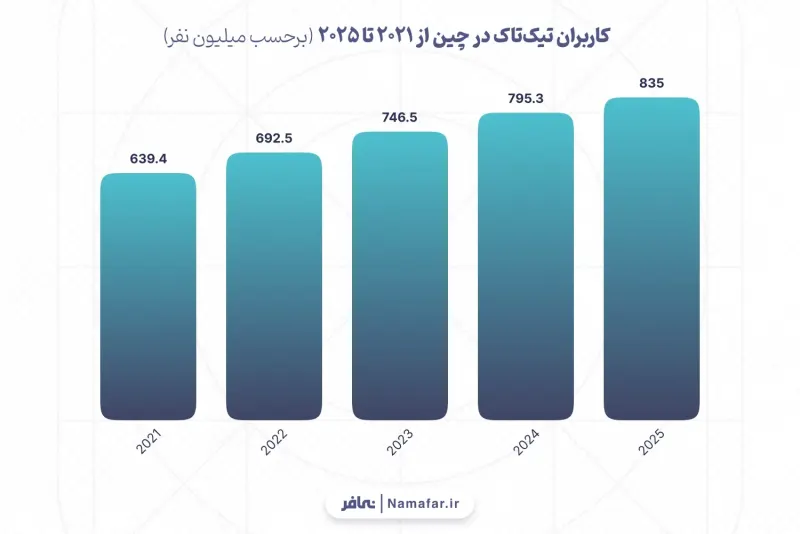
But this same popularity has brought many challenges for this platform. The U.S. government has repeatedly announced that TikTok may share its users' data with the Chinese government. These concerns reached a peak especially during Donald Trump's presidency, and the proposal of a complete ban on TikTok in this country became one of the controversial topics of American policy.
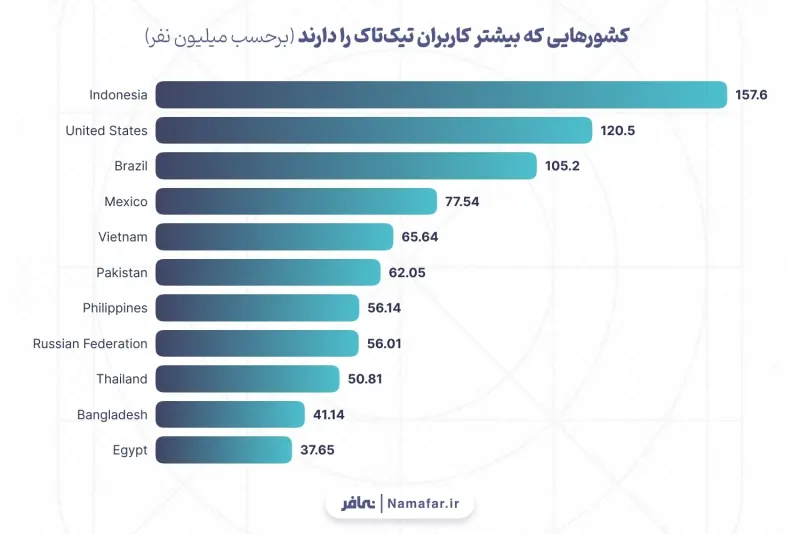
Why does no one protest?
The question is why the TikTok ban did not face widespread popular protests. Although some sources have estimated this platform's American users at around 170 million, serious real-world or online campaigns in opposition to blocking TikTok are not to be seen. How is it possible that the people of a democratic society so readily go along with the filtering of a popular platform?
Forced liberation from TikTok addiction
Some American journalists and writers, like a New York Times writer, believe that many TikTok users, instead of expressing anger and protest, have considered this ban a kind of "blessing in disguise." Because in this way they are freed from the bonds of a platform they are addicted to, and without this ban they cannot free themselves from addiction to TikTok. TikTok has the status of a kind of narcotic that, although people are dependent on it, they do not like it and know that with continued use of it they suffer various harms.
TikTok's unsocial character
Another reason for this matter goes back to TikTok's particular design. Unlike Facebook or Instagram, which allow users to connect with their friends and family, TikTok focuses more on content produced by unknown people. This feature has created a completely different and relatively passive experience for users, many of whom may not feel much attachment to access to this platform. Human beings do not form a sense of belonging to a completely virtual space unconnected to real and offline life, and they migrate from it more easily.
The existence of numerous alternative platforms for TikTok
On the other hand, TikTok's success has caused many other social networks to introduce similar features. Instagram, YouTube, X, and even Snapchat have in recent years tried to retain their users by offering capabilities similar to TikTok. This has caused some users to find alternatives for a TikTok-like experience. Also, some critics believe that TikTok's success in America depends more on competitors' weakness in offering appealing content than on this platform's popularity.
A statistical look at the TikTok ban in American society
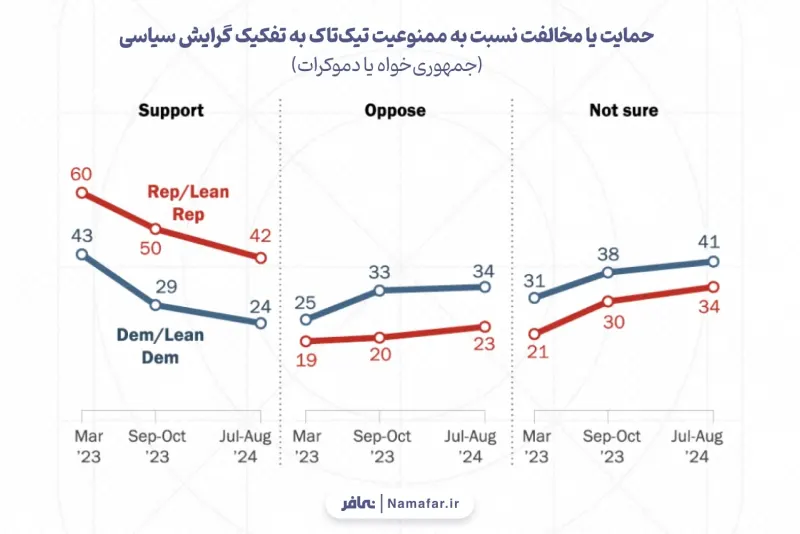
In any case, at present it appears that those in America who agree with a TikTok ban are still more numerous than those who support this platform. Based on a Pew Research Center survey conducted between July 15 and August 4, 2024, the share of Americans who support a government ban on TikTok has now reached 32%; of course this is while this figure in fall 2023 was 38% and in March 2023 was 50%.
Meanwhile, 28% of Americans oppose a TikTok ban, a figure that has had a 6 percent increase relative to the 22% figure in March 2023. Also, the share of people who are unsure about a TikTok ban has increased from 28% in March 2023 to 39%.
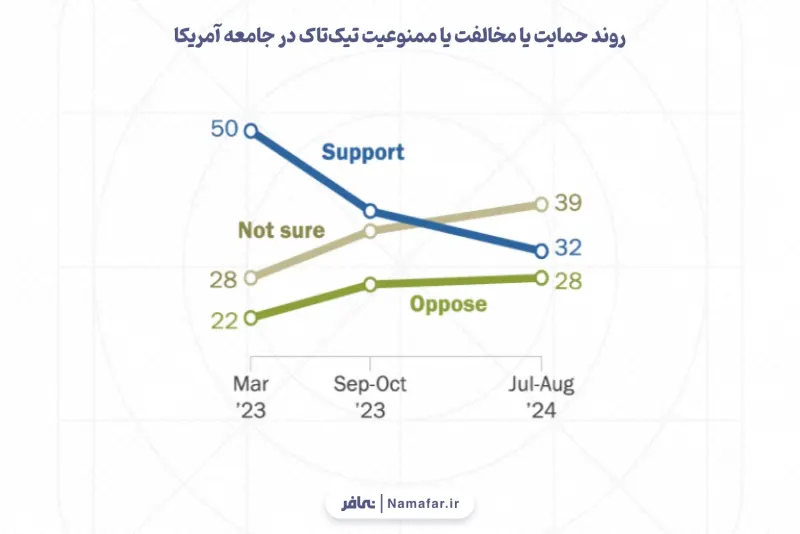
Even with the decline in support for a TikTok ban, views in America still differ on the basis of political party. Republicans and independents leaning Republican support a ban more than Democrats and independents leaning Democrat (42% versus 24%). However, support in both parties has declined; in March 2023, 60% of Republicans and 43% of Democrats supported a ban.
Views also differ significantly on the basis of use or non-use of TikTok. TikTok users more often oppose a ban (61%) than support it (10%), while non-users are divided almost equally between support (42%) and uncertainty (43%), and 15% oppose it. Support for a ban in both groups has declined since March 2023; among non-users, support has fallen from 60% to 42%, and among users from 19% to 10%.
Overall, based on the Pew Research Center survey, public support for a TikTok ban in the United States is declining, and many Americans have doubts about such a ban occurring.
TikTok's challenges in America are not limited only to security issues. This platform has also been criticized because of its cultural effects. TikTok has become one of the main tools for producing and promoting cultural and social content, much of which, from the viewpoint of conservative groups, is in conflict with traditional American values. This has caused TikTok to become a platform for culture wars in the United States.
A TikTok ban in America is not cost-free for this country either and can have wide-ranging consequences. Economically, this ban can lead to billions of dollars in losses for American companies that use this platform for advertising and marketing. Also, thousands of content creators who earn income from TikTok may lose their jobs. On the other hand, a TikTok ban can lead to reduced cultural interactions between America and China and be used as one of the tools of soft war in this geopolitical conflict.
But is a TikTok ban really an appropriate solution for addressing security concerns? Many analysts believe that instead of a complete ban, the existing problems can be resolved by increasing transparency in data management and closer cooperation with lawmakers. TikTok in recent months has tried, by making changes in privacy policies and data storage, to win the trust of users and American officials. But these efforts so far have not been able to resolve the fundamental concerns.
TikTok's future in America still remains in a haze of uncertainty. This platform, which has become one of the most important symbols of Chinese technology's success, does not appear likely to leave the field of competition anytime soon. But political and economic pressures have placed it in a difficult position. For continued activity in the American market, TikTok needs to adopt smarter and more transparent strategies. Will this platform be able to get through this crisis and continue on its growth path? Only time will answer this question.
Machine-translated from Persian by Namafar; the Persian original is authoritative. Read the original in Persian