Crises such as war confront not only governments and official institutions, but also emerging actors in the technology field, with a fundamental question: are they merely producers of services, or can they, in sensitive moments, become part of society's supportive fabric?
In this connection, the experience of Ficoland—a child-centered digital platform—is a noteworthy example. The team of this app, in the midst of the imposed war of the Zionist regime against our country, decided to make access to its services free for all users. This seemingly simple measure raises important questions about the role of technology in crises, the place of educational/entertainment platforms in building psychological resilience, and the capacity for social action in private-sector startups.
In a conversation with Elham Rahmani, product owner (Product Owner) of Ficoland, we have not merely introduced this decision; rather we have asked about its inner logic, its relation to the business model, users' feedback, and the possibility of continuing such an approach in the current economic space. Can social responsibility be turned into a structural part of children's digital platforms? Is this experience a repeatable model, or a temporary exception in the heart of a crisis?
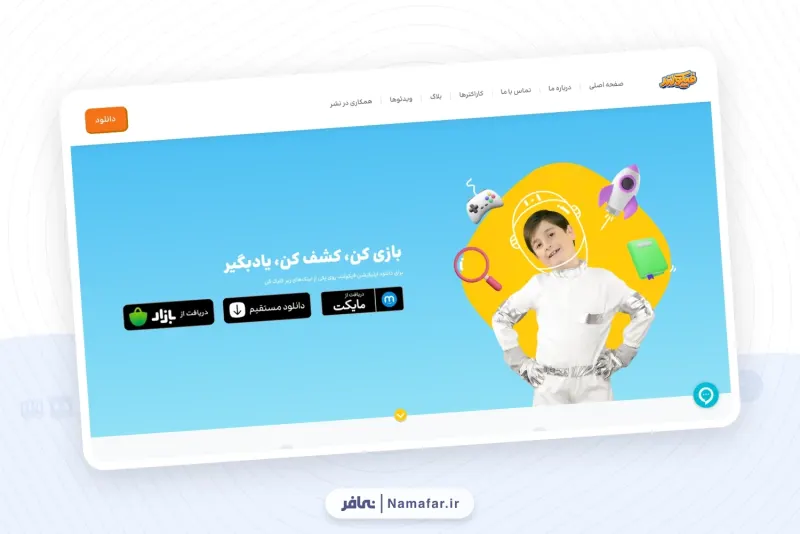
From dream to product: Ficoland's business model and user experience
If you wanted to introduce Ficoland in one sentence, what would you say?
Ficoland is an upbringing-centered digital space that has been built with a combination of the science of child psychology, experience design, and content creativity so that every child can, in a safe, appealing, and instructive world, live their childhood.
With what aim was Ficoland launched, and what need of families has it targeted?
The idea of Ficoland began from a dream: that children could, in a safe digital space, play with peace of mind, learn, cultivate their power of imagination, and alongside that discover important concepts about themselves and the world around them. We paid attention to the concern of parents who were dissatisfied with online content; content that was either very superficial and unsafe, or overly dry and merely educational. Our goal was to create a point of balance; a space in which play, education, safety, and love for the child are in flow at the same time.
Are your principal audience children or parents? How do your strategies engage these two groups?
Our heart is with the children and our eye is on the concerns of parents. In fact, our principal audience is the family; with all the concerns and needs of its members.
For children, we have created an imaginative world in which they feel that everything has been designed inspired by their needs and interests. To address parents' concerns, we have also focused on upbringing solutions and building a safe social space. Our goal is to create a three-sided relationship among Ficoland, the child, and the family.
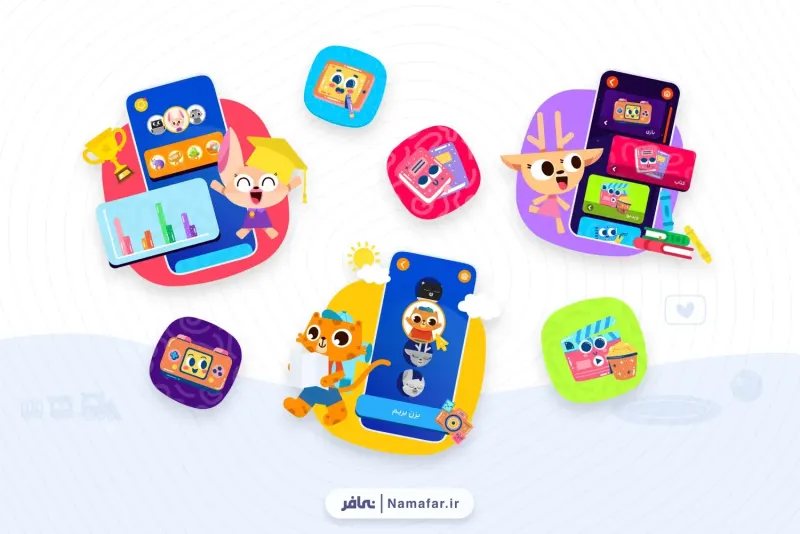
What revenue model do you have? Do you use a monthly subscription or separate packages?
We use a subscription model so that costs for parents are predictable and fair.
Of course in today's crisis conditions, in which families are dealing with various issues including war and anxiety, we decided to place the app completely free of charge at users' disposal. Because we believe that commitment to children's mental health is not merely an economic responsibility, but a human and social duty.
How do you create a balance between educational and entertaining content?
We believe that learning becomes lasting when the child learns in the course of play.
For this reason, we have drawn on video, books, and games to convey to the child concepts such as cooperation, recognizing emotions, basic skills, and creativity indirectly and in the setting of an enjoyable experience. Our ultimate goal is that the child learn, without feeling that they are sitting in a classroom.
What method do you use to analyze children's behavior and interests? Is your approach data-driven?
Yes, but not merely by relying on statistics and charts. We try to understand in which part of Ficoland's world each child spends the most time, what content is more appealing for them, and by what methods they learn better. Of course we carry out all of these analyses with full observance of privacy. For us data is only a tool for better recognizing children, not a means for advertising or applying pressure.
Do you cooperate with psychologists or child specialists in designing content?
We prepare and review all content under the supervision of psychologists and child specialists. For us it is very important that the content, in addition to being appealing and entertaining, also be psychologically healthy, deep, and suited to the child's delicate spirit.
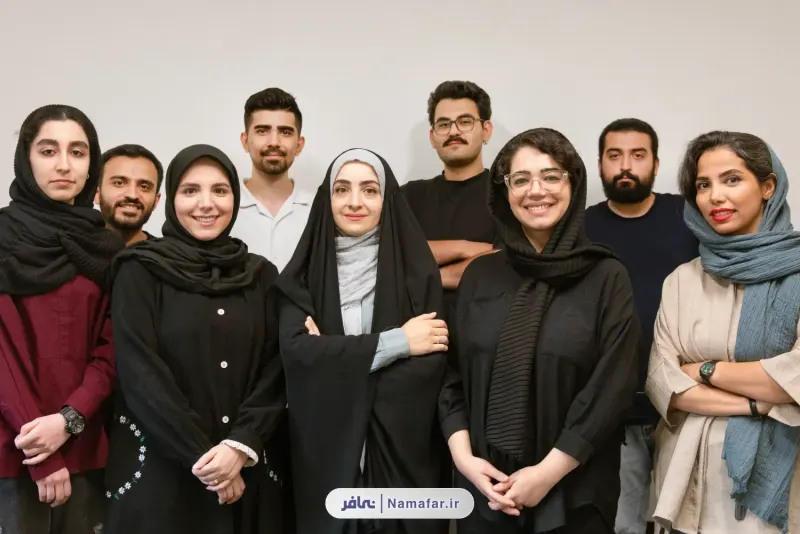
What has been your greatest challenge in designing the user experience for children?
Children neither read menus like adults, nor have much patience, nor forgive mistakes!
Our greatest challenge has been designing a simple, appealing, and at the same time practical visual experience; an experience that is usable for a two-year-old child and at the same time is not boring for an eight-year-old child. In fact, our design has taken shape with heart, patience, and an empathetic look at the world of childhood.
What are your future plans for developing Ficoland?
We have large dreams in mind. Our aim is the globalization of Ficoland; because children in every point of the world need imagination and safety. We also intend to make more interactive content; such as personalized stories and playable cartoons. We are also developing a version especially for parents so that they can better follow their child's path of growth. In one sentence, we want Ficoland to become an intimate friend for all members of the family.
Ficoland's response to the crisis: social measures during the war
What factor caused you to decide, in the midst of the war, to offer free or social services?
On days when "safety" for many families had moved away from its usual meaning, and children were caught up in premature and unfamiliar anxieties, we could not remain indifferent.
We work with children, for the world of childhood. And we believe that childhood is the right of all children even in the heart of crises.
On those days we asked ourselves: if Ficoland cannot in such moments be a companion and a refuge for children, then what value does all our effort have? That is how we decided to make access to Ficoland free for everyone; so that every child, in every place, could experience a moment of calm, joy, and play.
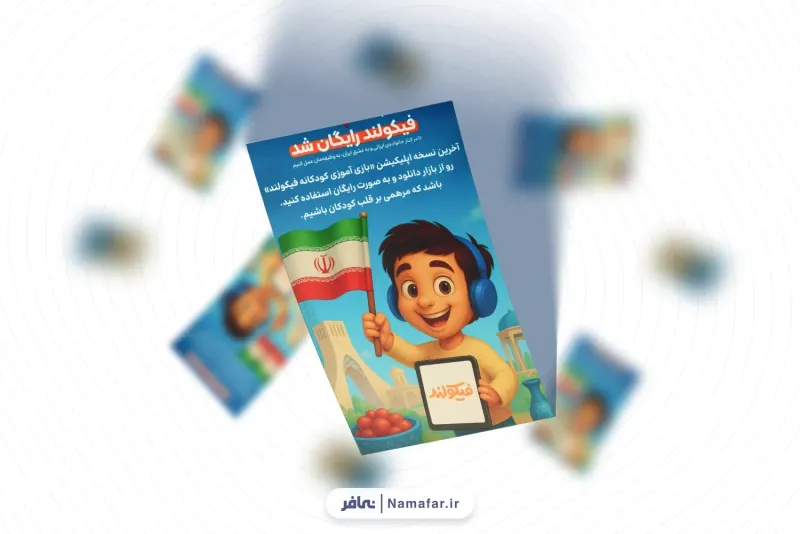
What services did you offer free of charge or as social services?
We placed complete access to the app, without any limitation on using the games, books, and videos, at children's disposal. Alongside that, on our social networks, we published posts and solutions about parents' encountering a child's anxiety and managing crisis in the family, so that we would both build a safe space for the children and be an effective companion for parents.
Did you also receive positive feedback?
Yes, families sent us messages of thanks on a wide scale.
To what extent did this measure have an effect in increasing parents' trust or children's engagement?
Despite the limitations that existed at that time in access to the internet and the difficult conditions that had been created both for us and for users, this move had positive and encouraging effects.
Do you intend to turn social-responsibility services into a permanent part of Ficoland?
Offering services that bring about families' and users' satisfaction and peace of mind has always been among Ficoland's principal priorities and still is. The recent experience taught us that even a simple children's app, if it is built with the right intention and with love, can have a role beyond mere entertainment: the role of a small hope in the heart of crises.
At Ficoland we have always tried to be a companion to children and families; not only in happy moments, but in difficult times as well, like a candle in the dark, to have an encouraging and calming presence for them.
Did you cooperate with psychology or educational institutions in this project?
Drawing on the counsel of psychologists has always been an inseparable part of Ficoland's path and still is.
A look to the future: recommendations and achievements
From your viewpoint, what is the most important factor of success in attracting and retaining users on child-centered platforms?
In the child's world, play and growth are not separate from each other. We have tried to build a space in which every moment of play is an opportunity for learning and every story is a support for imagination.
When parents see that their child is happy, is growing, and is safe, this trust turns into lasting companionship.
What differences exist between marketing for children and for parents, and how do you manage this balance?
Marketing for the child is an invitation to the world of imagination; whereas for the parent, it is an invitation to assurance.
The child is attracted by color, sound, story, and play; but the parent is looking for a goal, meaning, and educational value.
We always have two layers in the content: one for the child's excitement, and the other for the parent's calm and assurance. Our content must both astonish the child and persuade the parent.
If you wanted to introduce one of Ficoland's achievements as a model to other child-centered startups, what is it?
The production of high-quality content has always been Ficoland's winning card and still is; content that is created with care, delicacy, and knowledge of the child's world.
What recommendation do you have for startups that intend to enter the field of children's education or entertainment?
1. Do not see the child as a "customer"; they are a complete human being with a unique world.
2. First, learn to listen; to children, parents, and educators.
3. Do not design only for the eye; design for the heart.
4. Do not treat child psychology and an upbringing approach as a show; live it.
5. And most important of all, if you present content to a child, make sure that your own child also feels at ease with it.
In the end, the child's world is a delicate and noble space; if you intend to enter, enter with respect.
Machine-translated from Persian by Namafar; the Persian original is authoritative. Read the original in Persian