Social distancing has, more than ever before, added to the importance of digital channels. Although lockdown has led to the development of digital channels, companies will in the long run face difficulties. Consumer demand in this space has increased and brands must act as fast as possible in delivering on demand. The apparel industry in COVID has seen a great deal of damage. Apparel sellers are trying every door to stay safe from COVID's fierce waves and are also trying to carry their experiences into the post-COVID period.
COVID's effects on apparel retail
If the digital domain is to be strengthened, the time is now. After offline retail channels were closed because of the coronavirus pandemic, inefficient fashion companies were pushed to the margins. Traditional sellers suffer the greatest loss in this. These sellers have no way to make up for their lost sales, or they face limitations in this regard. Many omnichannel businesses for the first time examined what Digital First (people who quickly move their business to a new medium that has gained popularity) is and how it works. It seems that even after the crisis is over, this change in the way of attracting customers will still remain in place.
The global fashion industry's reliance on digital channels overnight reached the bursting point. This caused trouble for physical stores and especially retailers, and in addition for small marketers who, mentally, do not have the ability to adopt digital first. The apparel industry in COVID has in a sense fallen ill and is trying in various ways to vaccinate itself. In what follows we address some different tricks for overcoming COVID's problems.
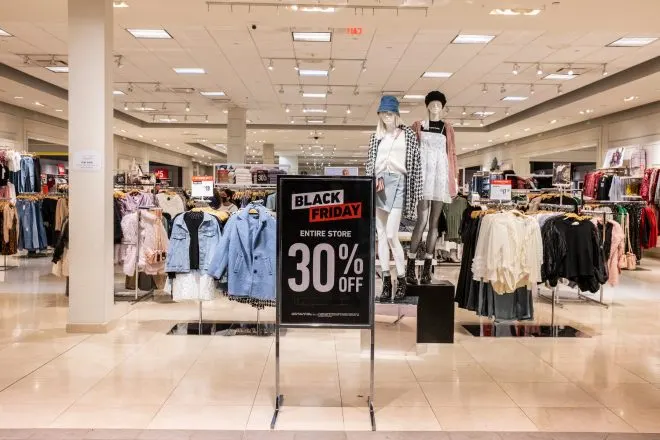 Empty Black Friday at apparel shopping centers.
COVID's role in increasing internet use
Leading the change in the fashion industry and entering the digital arena requires adopting newer methods of attracting customers. Brands' attention to digital activity draws people to digital shopping. A McKinsey survey suggests that in April 2020, almost one-quarter of American and European consumers would spend more time on social channels. The present crisis has also caused 13 percent growth in visits to online retail in Europe. Brands must use this opportunity not only to compete in this arena, but to take the lead in the digital arena.
Simon Siegel, director and senior analyst at BMO Capital, says: "Working at home or staying at home may cause idle time (hours not spent working) to increase; although marketing opportunities may not lead to the needed revenue." He adds: "Whether they turn this opportunity into revenue or not is another story."
In fact, adopting a broader outlook on the online domain is challenging. Despite the increase in advertising on virtual media, it is expected that online sales of the apparel industry in COVID among American and European consumers will decline by 44 percent; a figure that is not much different from the 49 percent decline expected in the offline shopping domain from April 2020.
 During the coronavirus pandemic, online shopping has to some extent replaced offline shopping.
WeChat in the role of savior
But in the meantime, a glimmer of hope has appeared in Asia. In China, the rapid response of brands and digital retailers in improving and upgrading digital platforms has led to consumers adapting to the new conditions. During China's lockdown, Nike achieved good sales by using Taobao (Taobao) online media (livestream) bloggers. Also Peacebird (a local fashion group), as a result of creatively attracting customers to digital channels including WeChat, was able to increase its digital sales. These channels, through more than 41 promotional programs carried out together with influencers, were able to attract 1.77 million consumers.
Regional virtual media provided brands and retailers with numerous solutions. Between January and February 2020, during the peak of the coronavirus outbreak in China, WeChat faced a 159 percent increase in the volume of financial transactions for fashion brands' mini-programs. WeChat's features allow store employees to send messages to users and complete the purchase, and are in fact an essential source of income for brands harmed by the COVID quagmire. Through WeChat groups, companies can draw customers toward themselves and integrate their profiles into their brand account.
 WeChat in China is among the successful examples of online sales.
Livestream effects on digital sales
Another digital solution of retailers during lockdown in China was livestream sessions on WeChat or platforms such as Yizhibo (Yizhibo). The number of Chinese brands that have had livestreams on Taobao has increased by 700 percent. Livestream turned empty stores of luxury brands into virtual shopping places full of staff. As can be seen on apps such as Xiaohongshu and Taobao, brand video chats with a salesperson or an advertising influencer with executive supervisors have had a good result.
In March 2020, some executives such as Chief Executive Officer GiovanniPungetti, Greater China APAC of the OTB group, which controlled brands such as Marni, Diesel and Maison Margiela, embraced the livestream advertising experience. He said about this: "This method is a completely different business method for us. Through this we can reach different parts of China and start new businesses." He also added: "I always remind our shareholders in Italy that what we are learning now is an additional weapon in normal conditions and we can use it for our growth in the future (with greater reach in different places)."
What does the future look like?
During the pandemic everything is shrouded in uncertainty, but it is expected that people will get used to this situation. Consumers, observing social distancing, still avoid being in crowded places; as a result, recovery of the situation will be a gradual process. Even with the reopening of stores, brands will still be active in the digital arena because of the change in the type of customer demand. When it comes to talent, time, resource allocation and future investments, digital programs must be given priority and marketing costs must also be spent on digital channels, and ROI (return on investment) must also be fully monitored.
The strongest market players are strengthening their digital capabilities. This enables them to invest in future opportunities and protect their business. Alongside taking the lead in various methods of attracting the online consumer, more investment must also be made in existing digital capabilities. Livestream services, omnichannel (all-purpose channel) capabilities and online advertising platforms are only a drop in this vast sea.
The recent turn toward the digital arena, after the crisis period is over, will still remain in consumers' way of shopping. But this will come at a cost for most apparel players. Since digital sales are less profitable than physical retail, operators must invent a balanced model that, taking the customer experience into account, gives priority to digital growth in an integrated way. Let us remember that digital sales are not the master key to lost revenues.
Notes:
Machine-translated from Persian by Namafar; the Persian original is authoritative. Read the original in Persian