Iranians are a people who speak in poetry and walk on poetry. Understanding this sentence is not very difficult for those who have the experience of stepping on an Iranian handwoven carpet. One of the most important inventions of the people of Iran has been turning the carpet from a mere good into an applied art. So much so that every piece of an Iranian rug can be framed on the wall as a precious painting. The combination and proportion of some outward elements such as the design, color, and motif of the handwoven carpet and its dimensions with inward factors such as Islamic thoughts and Iranian temperaments has created such an effect that it can be considered a complete embodiment of Iran's culture and art. In the history of the Iranian handwoven carpet, for hundreds of years Iranians have introduced themselves to the world with the art of rug-weaving and have made of it a profitable industry.
Iran's best carpet brands
Iran's handwoven carpet industry for consecutive years in the 1380s (2000s) held first rank in the world. But by taking a downward course over the past two decades, it has now fallen to fourth rank and is in a 90 percent slump. Iran's carpet industry now continues its life, albeit half-alive, with more than 10 thousand carpet production workshops and 2 million carpet workers and weavers.
Iranian machine-made carpet factories and producing companies have also, in this midst, been able to find a good place for themselves. Of course, branding in Iran's carpet industry differs from other industries. In this industry, instead of the workshop's name, the name of the city and region of the carpet's weave is recognized. Therefore, if we want to know the best Iranian carpet brands, we must look for the carpet- and rug-producing cities, which we introduce below.
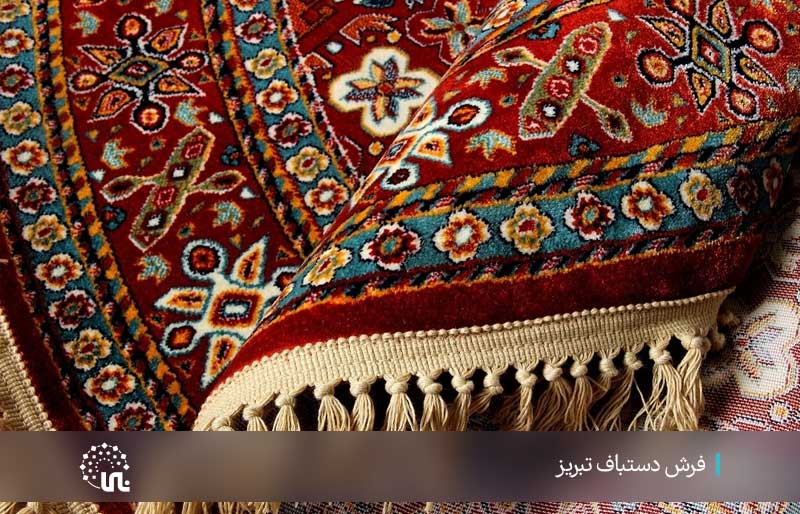
Tabriz carpet
The Tabriz handwoven carpet is among the finest-weave handwoven carpets of Iran; its warps are often of cotton, and the weft and pile of wool, and its weave is done two-weft and symmetrical. The Tabriz Salari design carpet, Tabriz Heriz carpet, Tabriz Mahi carpet, Tabriz Olya design carpet, Nami, Gonbad, Golestan, Tabriz Khatibi carpet, and Gol-Abrisham are among the best-known designs of the Tabriz handwoven carpet. Among them the Mahi design is more common. The Mahi pattern is obtained from the repetition of flower designs around which sharp leaves have gathered and which appear similar to fish swimming in a lake. In other designs, images of mosques, ancient palaces, and battle scenes are also seen, and sometimes poems by great poets such as Saadi, Hafez, Ferdowsi, Khayyam, or Shahriar are also inscribed on its border.
The most prominent feature of the various kinds of Tabriz carpet of Iran is its color, which is prepared in Tabriz's own old dye-houses. The diversity of colors used in the Tabriz carpet is so great that some of them have no name at all. Using color instead of motif to fill the carpet's empty spaces is one of the characteristics of the Tabriz rug. Also, employing the shading technique gives the motifs a raised and natural state and brings it close to a realistic Tabriz pictorial carpet.
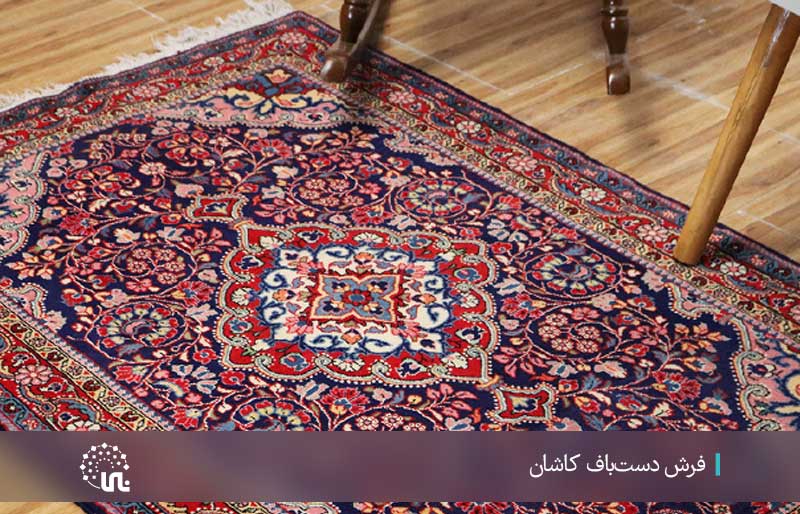
Kashan carpet
Annually more than 1,500 meters of Kashan handwoven carpet are woven, and two principles, quality and beauty, have brought it worldwide fame. The most common Kashan carpet design is the central medallion around which linear motifs such as leaves and eslimi designs are drawn. Its distinguishing feature from other Iranian carpets is the dense motifs that form around the central medallion. The mehrabi design, the Kashan afshan design carpet, derakhti, and Mohtasham are also among the other designs of the Kashan handwoven carpet.
One way of recognizing the features of Iran's Kashan carpet is its mild and pleasing color scheme. Because it is usually woven with pastel colors, and blue, indigo, red, and ivory in the motifs give it life. Sometimes rug-weavers use the shading technique to create visual depth, which makes the Kashan handwoven carpet resemble a watercolor painting. This technique is seen more in the Kashan Mohtasham carpet. The weave of Kashan machine-made and handwoven carpet, too, like the Kerman carpet, is mainly two-weft and with Persian knots. Wool, cotton, and silk are among the fibers used in the various kinds of Kashan-woven rug and carpet.
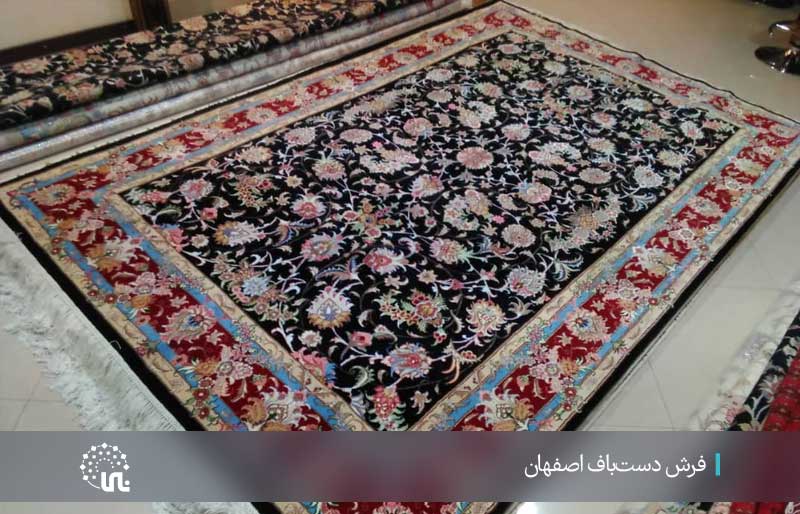
Isfahan carpet
Have you seen Ali Qapu Palace? The lachak of its entrances, which is decorated with haft-rang tiles and eslimi lines. Its interior designs, which are adorned with beautiful gol-o-boteh, shekargah, animal, and bird motifs. From imagining those motifs on a rug, we arrive at the Isfahan handwoven carpet. It is not unlikely that Isfahani rug-weavers have taken their designs from this city's architecture. The main structure of Isfahan carpet designs is the lachak-and-toranj pattern, in which beautiful eslimi lines move freely in the field. Khata'i stems together with Shah Abbasi flowers also form the under-pattern of the Isfahan rug. Shekargah, goldani, mehrabi, and afshan designs are also seen a great deal in Isfahan machine-made and handwoven carpets.
Since the weave of Iran's Isfahan carpet is two-weft and with asymmetrical knots, it is sometimes mistaken for Kashan carpets. Whereas the Kashan carpet has more regular wefts than the Isfahan carpet. In the period of the prevalence of textiles in Isfahan, cotton was spun by hand with a spindle. For that reason the foundation of the Isfahan handwoven carpet took shape on hand-spun cotton wefts. Hand-spinning cotton caused the thickness of the warp to be greater in some places and less in others. This lack of uniformity is not only not a negative feature, it creates greater appeal in the Iranian handwoven carpet.
The Isfahan carpet is woven from dense cotton, wool, and silk warps. Cheerful colors such as red, blue, and ivory are among the main colors of the Isfahan rug. Of course with an emphasis on traditional colors such as cream, khaki, and navy.
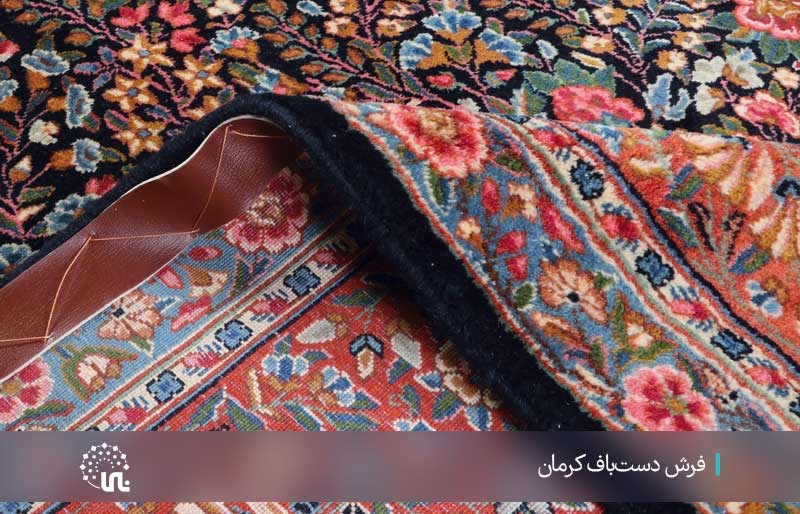
Kerman carpet
"The more it is walked on, the finer it becomes!" We have heard this proverb a great deal about the Kerman rug. Kerman, a province with a thousand-year history that, because of its geographic position, has always been far from the reach of enemies. Remaining safe from military battles on the one hand, and the lack of prosperity of agriculture in this region on the other, provided an opportunity for the people of Kerman to occupy themselves with arts such as the art of rug-weaving. In explaining the antiquity of Kerman carpets it is enough that one of their first admirers was Marco Polo.
The Kerman carpet of Iran, which like most handwoven carpets reflects Iranians' nature-loving spirit, is identifiable by gol-o-boteh motifs and unique colors in a blue and red range. On average, between 15 and 30 different colors are used in each Kerman rug pattern. The best-known Kerman carpet design is the goldani design, a masterpiece remaining from the Safavid era. In this design, one or two vases are placed at the center and the field of the rug is filled with large Shah Abbasi flowers. The Ravar Sabzikar design, Quranic frame, kheshti, jangali, lachak-toranj, and shekargah are among the best-known designs of the Kerman handwoven carpet.
The use of natural fibers and a fine weave matching the designs is the most important component in the beauty of this Kerman handwoven carpet. In Kerman Iranian machine-made and handwoven carpet, wool is used as pile and cotton for warp and weft. Silk, however, has little use. The weave of the Kerman rug is also done two-weft and with the Persian knot.
Overall, the various kinds of Kerman handwoven and machine-made carpet can be divided into two groups, urban-woven and nomadic-woven. The city of Ravar in Kerman is the most important center of urban-woven rugs, and Sirjan is the most important center of nomadic-woven carpets. Among the large producers of Kerman handwoven carpet in Iran one can name Ahmad Yazdanpanah, known as Deylameqani, Mohammad Arjmand Kermani, titled the Sultan of Kerman Carpet, the Azhdari brothers, and the Rashidi brothers.
Qom carpet
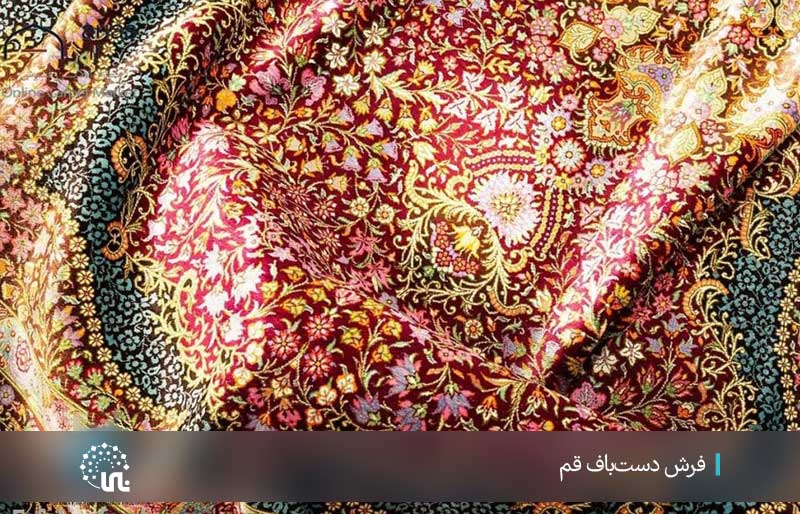
The city of Qom is often known for sohan, but the handwoven carpet is also among this city's souvenirs that has worldwide fame. Of course its antiquity is less than 90 years. The most important characteristic of the Qom handwoven carpet, which has created a great advantage for it, is the extreme regularity in its warp and weft. In many handwoven carpets of other regions, much sloppiness is seen on the back of the carpet, of which the Qom carpet is free. To the extent that there is usually doubt as to whether it is handmade or machine-made. Only from the type of design and pattern of the Qom carpet can its being handwoven be recognized. The knots of the Iranian Qom handwoven carpet are very fine and dense, which makes its weave difficult.
Among the various designs of the Qom handwoven carpet one can name the katibei, mehrabi, geometric, boteh, derakhti, Qom afshan design carpet, moharramat, Zell-e Soltani, and lachak-toranj. In weaving the Iranian Qom carpet a wide range of colors is used that sometimes reaches 40 colors. This carpet is woven more in homes than in workshops, but there are also enterprises that operate in this field on a larger scale. Parishan, the Makbaf Institute, Anarakian, Arsalani, and Hashemian are among the main centers of the Qom handwoven carpet.
Iranian machine-made carpet
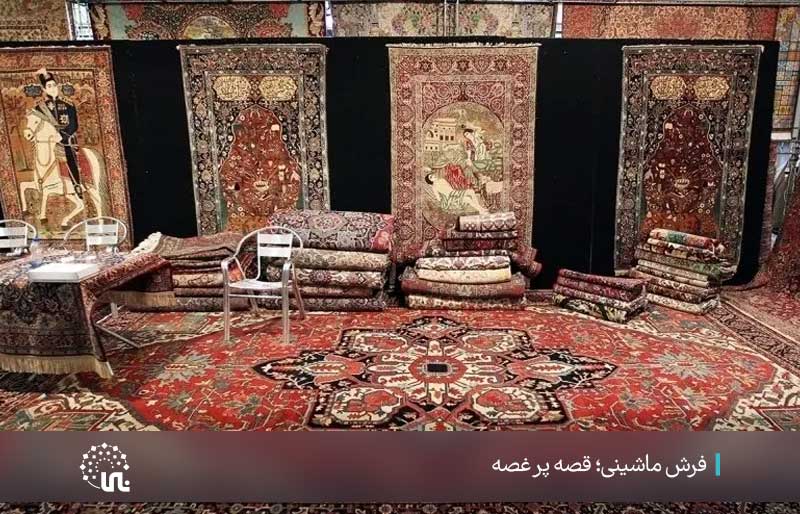
The machine-made carpet industry in Iran also has a situation similar to the handwoven carpet. Iranian machine-made carpet exports, which constitute 50 percent of all textile-sector exports, are now in a 500 million dollar slump. Machine-made carpet factories in Iran operate at 60 to 65 percent of their capacity.
The place of Iran's machine-made carpet in the world is fifth rank. More than 30 thousand people are employed in this industry, which constitutes 10 percent of all employment in the textile industries.
The best Iranian machine-made carpet brand
There are many well-known Iranian machine-made carpet brands that have been active in this field for many years. They have been able to create high satisfaction and trust for their customers. The best Iranian machine-made carpet brands are Qeytaran Carpet, Kavir Yazd Carpet of Iran, Setareh Kourosh Carpet, Payar Carpet, Savin machine-made carpet, Iranian Negin Mashhad Carpet, Niavaran, and Khaterh Kashan machine-made carpet.
Closing remarks
The carpet industry in Iran is one of the important sources of foreign-exchange income. Given the special place of the Iranian rug in global markets and also the country's need to reduce dependence on oil revenues, efforts toward carpet exports can help the country's economic growth. The machine-made and handwoven carpet industry over the past forty years has seen many fluctuations and now, for a decade, because of structural, managerial, production, commercial, and trade gaps, has a downward trend.
Iran's handwoven carpet stands in fourth place and Iran's machine-made carpet in fifth place in the world, a place that is considered a fall for the Iranian carpet industry. In this situation, however, many carpet-weaving brands continue their activity. In the Kashan, Tabriz, Isfahan, and Qom handwoven carpet industry they are considered among the top producing regions. In the Iranian machine-made carpet industry too, Qeytaran Carpet, Kavir Yazd, Setareh Kourosh, Payar, Savin, Negin Mashhad, Niavaran, and Khaterh Kashan have created high satisfaction and trust for their customers.
Sources
- Alireza Haeri, IRNA (1401 (2022/23)), Economy / Industry and mining, https://www.irna.ir/news/84974307/the-machine-made-carpet-industry-from-conquering-markets-to-incorrect-figures-of-some-media
- Marzieh Farahani, Farahancarpet (1401 (2022/23)), Blog / Handwoven carpet, https://farahancarpet.com/fa/kashan-handmade-carpets/
Machine-translated from Persian by Namafar; the Persian original is authoritative. Read the original in Persian