Close your eyes for a few seconds and think of the film Papillon and Star Wars, or the old, nostalgic series From the Northern Land. What is the first thing that comes to mind? Few people, at the sight of snowfall in the winter cold, have not had the theme melody of From the Northern Land come to mind. Likewise, few have heard the name of the film Papillon without the harmonica tune of its score taking shape in their mind. Can these films be imagined without their scores? Indeed, if famous works of cinema—both those we have named and other great films such as The Godfather and Saving Private Ryan—had no score, what would happen to the audience and its emotions? For example, without The Godfather's score, would the result the directors expected for the audience be the one they had in mind?
The importance of the score in a film
A large part of what stirs the viewer's feelings while watching a film is the job of the film score. To grasp why a score is necessary in cinema, imagine a moment when the lead actor is walking by the sea. At the same time he is revisiting memories of his lost child, who once played on this very beach. If no mournful music plays in the background, and a track with a horror theme is used instead, or if the sequence passes entirely in silence, what would stir the viewer's sympathy in that sensitive moment? A film score helps shape how we understand the film's images and also steers our feelings in interpreting sequences and characters' behavior. The importance of the score for a film's impact is that it turns that work into a better film.
Types of film music
The classification of types of film score is based on the relationship the musical pieces establish with the film's images, events, and characters. That is because there are different approaches to using a score in a film. One can choose for each character in the film to have a dedicated piece. One can choose for each mood, for example suspense and excitement, to have a dedicated piece. One can also prefer that a collection of the best score tracks have pieces that have no kinship or resemblance to one another and are matched only to the mood of the film's scenes.
Score aligned with the film's images
In this type of music, all instruments move in line with the mood of the images shown in the film. In other words, the composer has brought everything shown in the film into being with the help of sound. Every scene in the film, depending on the feeling it evokes, has a score. This type of film music has not been very successful because it creates a false sense of excitement in the audience.
Referential score
In this type of film music, every event in the film has its own theme. This mood must be such that it is recognizable for the viewer. That is, whenever the audience hears this music anywhere in the film, it should be able to form the image of the related situation in its mind, or be reminded of it. This style of film score was used extensively in operas from 1840 onward. Suppose that in a film, whenever a mystery or a suspicious and strange incident occurs, a particular piece is played. Hearing it over the course of the film, the audience expects to encounter another mysterious episode.
Leitmotif in film music
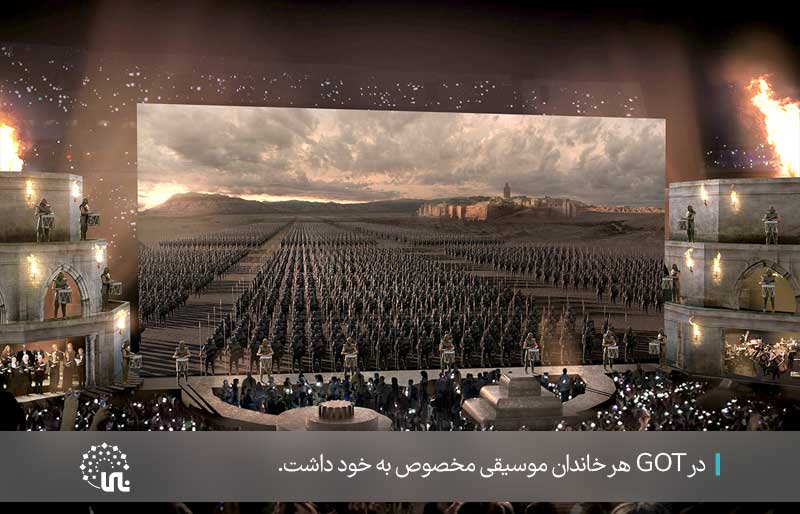
It is a repeating theme or motif that refers independently to a character or subject. The difference in this technique of writing film music is that in this case the score takes the form of a leitmotif and points the audience toward something such as an event or one of the film's characters. For example, the composers of the score for the series Game of Thrones had a dedicated motif for each house.
Wagner's music
The term leitmotif is tightly bound to Richard Wagner, the German composer, conductor, and music theorist. He is also remembered as a continuation of Beethoven's path. One of the main reasons for his fame is his operas. He is known as one of the most influential figures in film music. Wagner laid the foundations for using the leitmotif style as early as the 1850s. He had even assigned a dedicated leitmotif to each of the characters in his operas. Of course, using this style also had problems, such as the impossibility of changing the leitmotifs. Because if any of them changed for any reason, it would lose its function in the film.
Selected score
This type of film music was used for films and series without regard to the factor of consistency. In other words, in a selected-score collection the chosen pieces do not necessarily have to be of the same kind. It is enough that they match the film's scenes. Use of this style of series and film score was very common in the years 48 and 50 CE in American Hollywood cinema, especially in Elvis Presley films. But excessive use of it made the effect of music on films negative rather than positive. So the selected score was no longer used, and its useful life was only between 10 and 12 years.
Of course, this problem was solved in the 60s by drawing on writing music for films and series based on the sounds of events that occurred in the film itself. One of the main reasons was the spread of electronic and electroacoustic music, which also played a significant role in making the work easier. Because at that time the process of composing a score for a film, from the beginning until the film was ready for release, was extremely exhausting.
Using this method, given the limited facilities of that time, was a double-edged sword for several reasons. First, directors could not be sure of the result until the film's release. Because the most that would let a director know how the film score would work was the film composer playing it on the piano. Doing this was no guarantee that the musical work would perform well on the film when it was screened.
Second, film composers in practice had no independence of their own. Because final approval of the work was always in the directors' hands. In many cases directors made mistakes in terms of musical knowledge. Among the prominent artists of that time was Michelangelo Antonioni, the Italian post-neorealist director and one of the most influential directors of his time, whose decade of activity is known for the beginning of Antonioni's distinctive cinema and his 1960s trilogy. His techniques were so particular and creative that years later they were used by people such as Peter Stephen Paul Brook, the innovative British theater and film director. Among his notable innovations was the use of selected scores for his films, which solved many of the problems of writing a film score at that time.
Stages of writing a film score
Writing a score for films and series has stages different from ordinary composing and music-making. Because the audience is going to hear this music in the background of a film. The necessary coordination must exist between the scores and the film's situations. This coordination requires another coordination among the director, the composer, and the editor. The composer must know for which moments they want to write a score. The director must also supervise how the editor uses the musical pieces. In brief, the stages of writing a film score can be listed as follows.
- Music in the Post-Production | The process of creating a score from the ideation stage through mastering the track
- Spotting Session | This is the most important part of composing a film score. In fact the director holds sessions with the composer and the sound editor to review how the film's musical pieces will be made and what they will be like, their duration, the budget required for the work, and so on.
- Temp Track | Providing the composer with a collection of the best scores approved by the director, in order to convey the director's idea and view more clearly so that similar music can be written. This is done mainly to save on the costs and time of producing the film and series.
- Timing Notes ( Hitpoint ) | Determining the interval in which the score is present in the film, and also determining the peaks and troughs of the music in a series or film.
- Mock-Ups ( Locked Edit ) | The final version of the film music, in which change is no longer possible.
- Director mikromanagen | Management and supervision in the stages of creating and editing a theatrical film's score, especially in its final version.
Timing in writing a film score
Another important matter in writing a series and film score is its timing. In other words, it sometimes happens that for a two-hour film there are only 20 days to write the score. This puts the film composer under intense pressure. For example, the composer of the score for Lawrence of Arabia finished composing the film and the stages of writing the original score for this 222-minute film around the clock and in only four weeks. By his own account, over the course of a day and night he slept only two or three hours.
The world's best film-score companies
- Sony Music Entertainment : average annual revenue in 2022 ( 8.3 billion dollars)
- Independent Music Labels : average annual revenue in 2021 (9.9 billion dollars)
- Warner Music Group : average annual revenue in 2021 (5.9 billion dollars)
The world's best film scores
The American Film Institute (AFI), as a national arts organization, was formed with the aim of preserving America's film heritage in order to educate the next generations of filmmakers. It has also compiled various lists of the elements that make up a film, in order to honor artists and their works. These elements include hero, star, film, score, quotation, and so on. Among them, a list titled 100 Years, 100 Best Film Scores has also been introduced by this institute, and in this section we turn to only three of the best scores in the history of Hollywood cinema.
The Star Wars score by John Williams
This film was first released in 1977 and in only 42 movie theaters. In the first week it achieved a box office of more than 3 million dollars. After its worldwide release, and over the following year, its box office also reached more than 400 million dollars. For this reason Star Wars is remembered as one of the highest-grossing films in the history of world cinema.
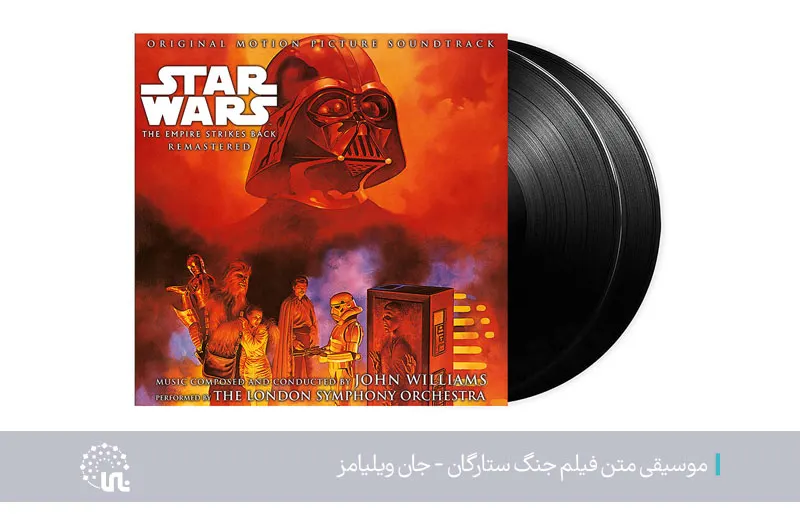
The Star Wars music was written by John Williams, the American composer, pianist, and conductor. The score of the Star Wars series was recognized by the American Film Institute (AFI) as the first and most important top film score in the history of Hollywood cinema. The Library of Congress music collection also, in 2004, because of this work's cultural, historical, and aesthetic importance, registered it in the National Recording Registry.
The Gone with the Wind score by Max Steiner
The American film Gone with the Wind is an epic romantic drama directed by Victor Fleming. Its release took place in 1939, and with unprecedented box office it held the record as the highest-grossing film in Hollywood cinema for 32 years. Reception and popularity of Gone with the Wind were so great that over the century it achieved a record of 20 re-releases.
The running time of Gone with the Wind is about 221 minutes, which together with its overture, the intermission music, and the film's entrance and exit music comes to roughly 238 minutes.
Max Steiner was an American composer of Austrian origin who was chosen by David Selznick, the director of Gone with the Wind, to compose it. He had been working for the RKO company since the early 1930s and was loaned by Warner Bros., which had had a contract with Steiner since 1936, to Selznick to write the Gone with the Wind score.
Writing the score for Gone with the Wind took twelve weeks. Because of the volume and intensity of the work, five orchestras, including Hugo Friedhofer, Maurice de Packh, Bernard Kaun, Adolph Deutsch, and Reginald, were employed by Max Steiner. The duration of the Gone with the Wind score was 2 hours and 36 minutes, which is referred to as the longest score ever written in the history of Hollywood cinema.
Most of the Gone with the Wind series score was written by Max Steiner, inspired by folk and patriotic music and with the aim of giving shape to the Scarlett theme.
The Lawrence of Arabia score by Maurice Jarre
The British film Lawrence of Arabia was a historical epic drama directed by David Lean that was released in 1962. It is remembered as one of the masterpieces in the history of cinema, especially in the field of film music. The composer of Lawrence of Arabia was the French Maurice Jarre, among Hollywood's famous composers. This musician also has the scores for the film Mohammad, Messenger of God and the music for the film Omar Mukhtar on his record.
It is interesting to know that Maurice Jarre was not originally supposed to write the score for Lawrence of Arabia. The job had been offered to composers such as Malcolm Arnold, William Walton, Benjamin Britten, and Aram Khachaturian. David Lean, the director of Lawrence of Arabia, had asked him to write music only for parts of it. But in the short time he had, Jarre wrote the music for the entire film, which in fact Lean also liked. The Lawrence of Arabia score won the Academy Award for Best Original Score in the world. Maurice Jarre also succeeded in winning two other Academy Awards in the Best Film Score category for the films Doctor Zhivago - 1965 and A Passage to India - 1984.
Final word
A score is an essential feature of a film. Parallel, referential, leitmotif, and selected scores are types of series and film scores. Over time, companies emerged to write scores for films. Among them one may mention Sony Music Entertainment, with revenue of 8.3 billion dollars. In the history of cinema, some works have a special bond with their score. Such as the Star Wars score by John Williams, which in the American Film Institute's list is one of the finest scores. As other examples one may point to the films Gone with the Wind and Lawrence of Arabia.
In any case, just as we cannot imagine life without sound and music, imagining a film without sound and a score will certainly also be hard. This is the miracle of music's effect on film, which time and again has been able, on its own, to convey the film's semantic and verbal load to the audience. Truly this famous sentence refers to this very quality of music: "Where words fall short, music begins." How beautifully Master Nader Mashayekhi, the Iranian composer and conductor, has endorsed this remark: "Music begins with listening."
Sources
https://www.afi.com/ AFI's 100 YEARS...100 SONGS
Machine-translated from Persian by Namafar; the Persian original is authoritative. Read the original in Persian