Turkey's music industry is an artistic combination of traditional melodies and modern pop. Being situated on the axes of Eastern, Western, Mediterranean, Middle Eastern, and Islamic culture caused the Ottomans, over the period of their rule, to witness continual conflicts between East and West, Christianity and Islam, tradition and modernity. These conflicts ultimately made of Turkey a colorful cultural portrait. The cultural diversity present has been reflected in this country's music and has formed different and often contrasting styles. In this note stay with us as we take a brief look at this industry in Turkey.

Turkish music, from Ottoman palaces to European concerts
Turkey's music was formed by combining the music of the countries of Central Asia, Byzantium, the Balkans, Iran, the Arab lands, the Ottomans, and the Roma over various historical periods, and a little later Western notes also mixed in to produce a wide range of musical styles. Drawing on Western musical techniques gave a new direction to Turkish music and helped it become global. Such that in 2022 Ibrahim Tatlises, the most famous Turkish singer, held his concert with the presence of 3500 of his English fans in the city of London. Tatlises also announced the holding of more concerts in Germany, Austria, and France for 2023.

Turkey's music after Islam
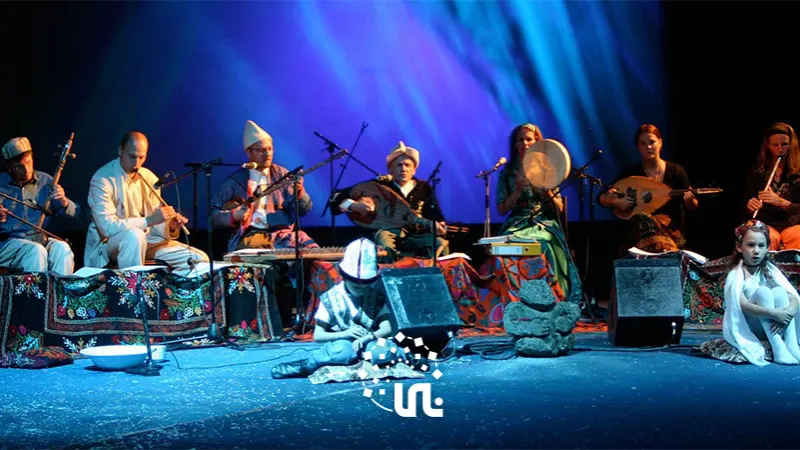
Although Islamic leaders have always had differing positions toward music, it appears that Turkey's music, more than being influenced by the rulings of sharia, has had its eye on the rite of Sufism. The rich history of Sufi music in Turkey confirms this. Meanwhile, Rumi's role in the musical culture of the people of this country cannot be ignored. Still today in Konya ceremonies are held to commemorate this late poet that are based on the rite of Sufism. At these ceremonies people, while playing the ney flute and beating the drum, perform the Sama dance. This Sufi view of music, at the outset, gave greater freedom to the growth and development of music in Turkey. Later—especially during the seventeenth and eighteenth centuries—close cooperation occurred between mystical music performers and secular performers, which was part of the early process of secularization of Ottoman society.
Anatolian music on the path of becoming modern
In a period when the local people of Anatolia were trying to develop Turkey's folk music, urban intellectuals were seeking to expand the classical style. Sultan Abdulmejid also hired an Italian composer to teach European music in the Ottoman army. With the collapse of the empire, modernists pursued the dream of modernizing Turkish music through combining Eastern and Western music. In this way the Republic of Turkey began a program to make European classical music inspired by Turkish folk songs. Efforts to incorporate Turkish folk music into European music largely failed. Instead, these teachings resulted in the incorporation of the Western musical style into Turkey's music. The best example of it is Anadolu pop, which was a combination of local melodies with classical instruments such as guitar, bass, and drums.
The place of Turkey's music industry in the global arena
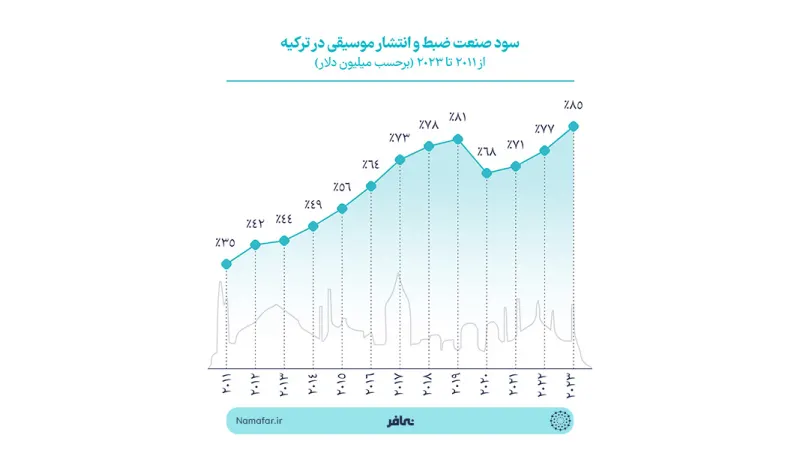
Keeping pace with global trends has greatly helped increase the popularity of Turkish music outside Turkey's borders. Even so, Turkey has not yet been able to turn music into a profitable industry. An examination of countries' income from the production and publication of music in past years shows that the United States, Japan, the United Kingdom, Germany, France, China, South Korea, Canada, Australia, and Italy are the world's highest-earning countries.
The United States, with 7.7 billion dollars in income in 2022, was at the top of the table and Italy, with 151 million dollars, at the bottom of the table. Whereas this figure in Turkey was only 70 million dollars. Although Turkey has the lowest per-capita income from the music industry among European countries, in 2017, with a 96 percent leap, it saw the highest rate of income increase at the global level and had a growing trend through 2020. With such a trend one can be hopeful about the future of Turkey's music industry.
Factors in the growth of music in Turkey
The development of digital streaming services such as YouTube, Spotify, and Deezer has had a striking impact on increasing the rate of music playback in Turkey. Such that in 2017 Turkey, with the highest percentage increase in streaming, was Europe's top country, and after that it also grew steadily. In 2021 Turkey overtook some important global markets such as the United Kingdom and was recognized as the world's fourth country after Japan, Colombia, and Poland in terms of streaming growth speed.
About 15 percent of this country's total music consumption is outside Turkey itself. Two important components can play a role in creating this figure: first, the increase in emigration of the people of Turkey, or the Turkish diaspora. Second, the large population of Turks who are not from Turkey. The population of Turkish-speakers around the world is estimated at more than 400 million people, of whom only 85 million live in Turkey.
International companies' attention to Turkey's music industry
One of Turkey's successes in recent years has been attracting the attention of music recording and distribution companies. Many large commercial brands such as "Warner Music Group" have found an opportunity to expand their business in this country and have invested in music producers in Turkey. Warner Group, in cooperation with Turkey's Dogan Group, opened a company in Istanbul in 2019. Also the VIN association officially joined the association of independent music companies of Turkey.
The music popular with the people of Turkey
Pop, classical, rock, and hip-hop are, respectively, the most popular music styles in Turkey. According to Uzelli, demand for foreign songs in Turkey is more from residents of urban areas who have a higher level of education and income. Even so, the success of YouTube channels such as NetD and Muzicplay that play Turkish music shows that Turkey's traditional music market is still dominated by local artists. It should be noted that YouTube is the most popular music streaming service in Turkey.

The role of educational policymaking in the growth of Turkey's music industry
The arrival of the cassette tape in Turkey in the 1970s is considered one of the most important events in the country's music history. Stars who had become famous performing in nightclubs could now enter homes, schools and gatherings. A decade later, television took the place of the clubs and, although it had only one channel, became a venue for musical performance.
This country's government measures have had a substantial impact on the growth of Turkey's music industry. A notable development in these years was the establishment of Turkish music choirs by the Ministry of Culture, which became popular through concerts and television programs. The Turkish government's next step was to build a conservatory, or music academy, focused on practical music training. This school, founded in 1355 (1976/77), trained many prominent instrumentalists and singers, and its activity has continued without interruption to this day.
There are now more than 30 conservatories under state universities in Turkey. Most of these conservatories are devoted solely to teaching Western classical music. Some of these institutions, however, which had started as "Western music conservatories," have recently added world and Turkish music departments to their organizations and are turning into national conservatories.
The influence of Iranian music on Turkish music
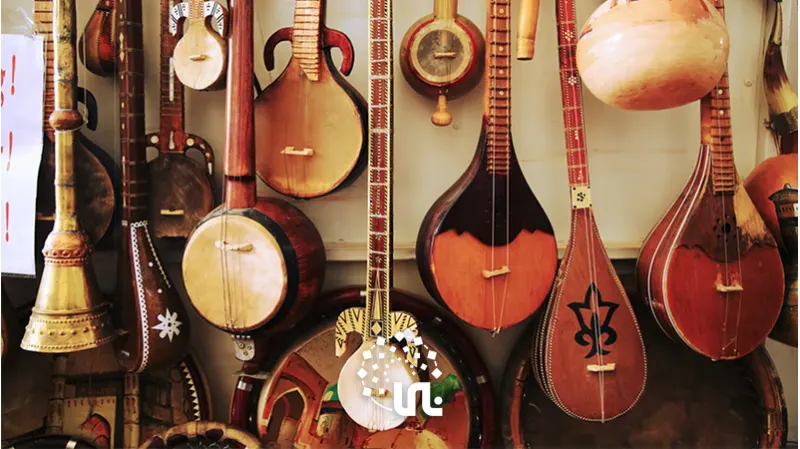
If we want a fuller understanding of Turkish music, we cannot avoid examining the influence of Iranian music, because Iranian music has a large share in the evolution of Turkish music. The commonalities between Iranian and Turkish music are so numerous that they cannot be regarded as independent of each other. In fact, Iranian music is one of the foundations of Turkish music. For example, the Greek goblet drum known as the "toubeleki," which belongs to the family of the Turkish instrument called the "dembelak," must have its roots in the Iranian goblet drum known as the "dombak."
Many Western musical instruments also have roots in Eastern instruments that later underwent changes and are now examined under the heading of "the influence of Western music on Turkey's music industry." For example, the guitar closely resembles the Iranian stringed instrument known as the "tar," and the presence of the word tar in guitar is not accidental. The principles of the piano can be sought in the santur, and Turkish and Arab zurnas are also taken from similar Iranian instruments. Percussion instruments, too, were carried from the East to Western lands; for example, the French word "tabor," the name of a European instrument used in the Middle Ages, is taken from the Persian word "tabireh."
Conclusion
Turkey's culture is a blend of Eastern and Western cultures, a combination that has arisen because of Turkey's geopolitical position and its continual confrontation with the conflicts of the two powers of East and West. Turkey's historical trajectory is also reflected in the music of this land and represents the country's efforts to modernize while preserving traditional values.
Although Turkey's music industry has not yet ranked among the world's leading music industries, its streams and revenue have seen striking growth since 2017. The country is likely soon to become one of the world's emerging markets. This growth is the result of the development of digital services more than of the government's cultural and economic policies. Turkey's geographic position, its association with Islam and, on the other hand, having a secular political system are factors that can help Turkey find a consumer market both in Eastern and Islamic countries and in Western countries. The large population of Turkish speakers outside Turkey can also cover a substantial share of this consumer market, which would require greater attention by the Turkish government to the music industry and its commercial potential.
Sources
www.andoluuniversity.com
www.ifpi.org
www.uzelli.com
www.sonosuite.com
www.statista.com
Machine-translated from Persian by Namafar; the Persian original is authoritative. Read the original in Persian