In England, the creative industries generated 91.8 billion pounds of gross value added in 2016, which shows annual growth of 7.6 percent. This is while, according to the UK Creative Industries Federation, the annual growth of the whole English economy is 3.5 percent.
In the 2017 research we saw that governments recognize a kind of need to ensure the economic viability of creative jobs and sustainable demand for local creative output. The government, by reducing barriers to entry, strives to increase market efficiency and understands the importance of strengthening the connections that are vital for creative-industry professionals. We examined more than 240 government activities in more than 20 different culture-based and creative markets and found that when governments pursue such a holistic approach, the growth needed to deliver economic, cultural and social rewards is accelerated.
By visiting Namafar magazine you can access the latest reports on the creative industries.
Various support opportunities in the creative industries
The creative industries include a broad set of companies and types of media. An umbrella that brings together everyone from technicians and management professionals to artists and designers. Smart governments quickly recognize the fact that each of the different creative industries has specific needs. Although highly centralized programs may be effective in some cases, in other cases local activities that are carried out in collaboration with stakeholders, from government and businesses to universities and nongovernmental organizations, have the best performance.
Also companies can operate at very diverse scales; from independent professionals to small businesses to large studios. This fact means that there is no single model suited to all companies for supporting participants in the creative industries. In addition, compared with many other sectors of the economy, policy interventions in the creative industries, the most important examples of which are nurturing creative talent and encouraging the development of intellectual property (IP), must be carefully targeted so as to help the greatest possible success of individual artists and creative companies, of any size.
Our research has focused on cataloging and overall assessment of government interventions across the value chain. We examined how governments intervene in order to supply talent and capability, generate demand for creative content and intellectual property, and ensure the efficiency and smoothness of the market; interventions that we categorize as the supply side, the demand side and market efficiency. We specifically examined three major creative industries: film and television, music and video games.
There is no single model suited to all companies for supporting participants in the creative industries.
Film and television
One of the major challenges is fostering an ecosystem to support film and television through developing service providers (such as visual-effects artists, set designers and audio-equipment providers) that tend toward small and medium-sized enterprises (SMEs). Another challenge is increasing the level of access to affordable studio and production infrastructure. Meanwhile, training in the occupational and technical skills necessary to earn income from their creative talent is essential for artists and small and medium-sized enterprises.
Successful examples of government support in the cinema and television sector
Some governments invest in smaller studios to help retain talent and develop intellectual property. For example, IDC (the Industrial Development Corporation of South Africa), as a government institution, has undertaken equity and co-investments in production facilities and can have a stake in high-risk, high-return projects.
Governments also, by encouraging leading global studios and filmmaking companies to create content in their markets, work toward increasing foreign direct investment. Some governments also consider investment incentives. For example, Malaysia, in return for receiving a minimum of local costs, gives foreign film and series production companies a 30 percent cash rebate.
In New York City, the Mayor's Office of Media and Entertainment is building skills at the local level through collaboration with industry on training programs aimed at encouraging young people to enter this industry and increasing the skills of those who currently work in this industry. These initiatives include a production-assistant training program that provides unemployed young people of the city with the training and facilities needed to enter the film-production stage; another program for media-company employees that covers 70 percent of the costs related to training in technical, creative and business skills.
India, to strengthen market efficiency, through its Film Facilitation Office is creating one-stop shops that can quickly control permits and provide applicants with data and information related to filming locations. National film offices and one-stop shops are relatively inexpensive ways that are easy to set up and that can, through helping attract large productions, be very effective in increasing the economic growth of the creative industries.
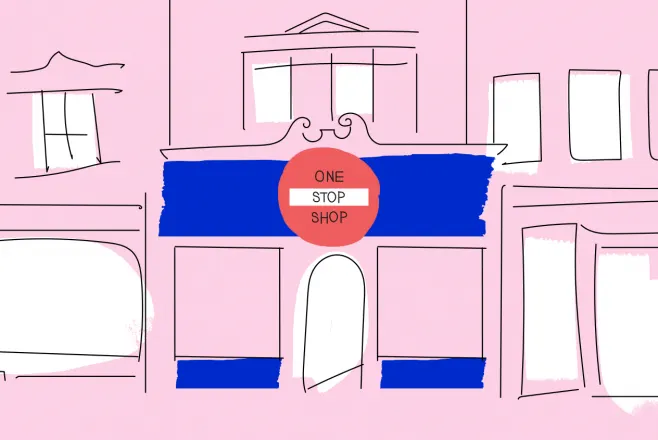 One-stop offices, or One Stop Shops, are used for quick access to information from start to finish.
Music
To increase the prosperity of this industry, governments must make it possible for artists to earn income from their talents and create financially sustainable jobs. Methods of doing this include expanding access to performance, production and practice spaces and reducing living costs. Specific government initiatives can range from allocating a budget for training programs and creating accelerator centers to developing music centers across the country, which provide artists with inexpensive urban space for practice or living.
For example, in Nashville in the United States, the Ryman Lofts program, which was created by the Nashville Music Council of the United States, provides subsidized living for vetted musicians. In Canada, Toronto's multimedia accelerator houses the Music Den center, which by offering consulting, technical equipment, recording studios and editing suites provides the synergistic space needed to create innovative, technology-related tools and services for the music industry.
In Nashville in the United States, the Ryman Lofts program, which was created by the Nashville Music Council of the United States, provides subsidized living for vetted musicians.
Successful examples of government support in the music sector
Canada's music accelerator, as an entrepreneurial program for artists, is a suitable example of training programs. This program, with government support, brings together stakeholders from across the industry to provide, with the backing of a government subsidy, training in the fields of music copyright, social-network marketing and signing with recording companies.
 Training can make a substantial contribution to the development of the creative industries.
In some cases, governments make large investments in infrastructure. South Korea has invested more than 200 million dollars in places such as Gocheok Sky Dome to be used for K-pop concerts, which attract national and global stars. The South Korean government is also creating 29 cultural centers in 25 major countries to spread the popularity of K-pop at the global level. Support for creating trade exhibitions and festivals is a tool for expanding artists' access to international markets; also city branding helps connect talent with audiences and the broad flourishing of local business.
Meanwhile, as in the film and television industry, governments are launching one-stop shops for quick access to permits and access to public data such as information related to audiences and available performance spaces. This approach is being pursued in New York City, where the Mayor's Office of Media and Entertainment has created a one-stop shop for this city's music industry. In addition to creating permit-facilitation programs, this shop facilitates obtaining a permit for holding festivals and crowded programs. Alongside this shop, the SpaceFinder database makes the process of finding practice and performance locations easy for musicians. Some governments have also established other types of units to play the role of representing musicians, and dedicated municipal offices, such as the cities of New York and Nashville, specifically deal with administration and policymaking in the music arena.
Video games
One of the main goals in this high-risk industry is ensuring the survival and guaranteeing the possibility of growth of smaller game-making studios. This goal can be supplied through a range of measures: through financing businesses with the backing of a subsidy, joint investments and participation in high-risk investments, to supporting a healthy flow of talent by establishing accelerator centers and providing training opportunities. For example, in Canada, the government by investing in high-risk investment funds invests in small local studios. The Canadian government also grants credit guarantees to large studios and game-production companies so that they establish local offices and create local jobs.
As in other creative industries, the main priority is ensuring that artists and small businesses have access to investors, resources and specialists of this industry. For example, the Sweden Game Arena, a video-game center in the city of Skövde, is a private-public partnership that helps students, using offices, equipment and specialist consulting funded by the government budget, collaborate in developing video games. This center also helps connect students and startups with existing companies and investors.
Financing businesses with the backing of a subsidy, joint investments and participation in high-risk investments to supporting a healthy flow of talent by establishing accelerator centers and providing training opportunities
Successful examples of government support in the video-game sector
Meanwhile, tax holidays and fast-track visas are a means of attracting foreign talent and stars. For example, in Japan, the government, through a system similar to the system used for professional athletes, gives work visas to international video-game players.
One proven method for promoting the game-making industry is turning it into a national sport that is supported by competitions and television coverage. In 2000, South Korea's Ministry of Culture, Sports and Tourism established the Korea e-Sports Association (KeSPA) to promote the level of national e-sports. In 2003, China recognized e-sports as an official sport, and in 2008 it selected a video-game star as a torchbearer of the Beijing Olympic Games. Part of the result of these countries' pioneering efforts will be the presence of video games as a medal-winning event at the 2022 Asian Games.
To support video-game businesses (especially those that include artificial intelligence, virtual reality and augmented reality), governments must provide incentives for studios so that, as we have seen in the film and television industry, they undertake the development and retention of local intellectual property. For example, in France, the Video Game Support Fund (FAJV) was established to pay a subsidy to local companies that are producing content and retaining their intellectual-property rights. In 2015, the Video Game Support Fund supported 47 projects with a value of as much as 3.8 million euros.
Government and the creative industries
The creative industries, which were first raised in the Australian government budget in 1994, today are very important and effective in every country's economic growth. The trillion-dollar market of these industries can, with government support, see further growth and, while creating job opportunities, help countries' social and cultural cohesion. Governments can help the growth of this industry in various ways such as granting an educational subsidy or tax exemptions for foreign companies.
Notes:
- This piece, under the title "How Governments are Sparking Growth in Creative Industries", has been published on the site bcg.com, which Namafar translated and published in Dey (December–January) 99 (2020/21).
Machine-translated from Persian by Namafar; the Persian original is authoritative. Read the original in Persian