The United Arab Emirates has in recent years experienced remarkable economic and cultural progress and, by aligning these two domains, has become the third-highest cultural economy among developing countries. By employing a set of smart strategies, this country has been able to reduce its dependence on oil as its primary source of revenue and, instead, by strengthening the cultural and creative sectors, achieve sustainable economic growth and diversification. The Ministry of Culture and Youth is one of the most important actors that assists the UAE government on the path to realizing its visions. In this note, we will first look at the UAE's creative industries. Then we will examine in detail the actions of the Ministry of Culture and Youth in this regard.
Definition of the cultural and creative industries in the UAE statement
The UAE cultural and creative industries (CCI) definition statement covers the ideation, making, production, distribution, and dissemination of goods and services with creative expression and cultural celebration that affect economic and social development. Cultural and natural heritage, books and the press, performing arts and celebration, audio, visual, and interactive media, visual arts and handicrafts, and design and creative services are among the sectors of the UAE's cultural and creative industries. These six sectors together have 25 subsectors with direct economic outputs that operate effectively in line with the policy of economic diversification.
Status of the United Arab Emirates' creative industries
According to an estimate by the Federal Competitiveness and Statistics Centre (FCSC), the cultural and creative industries contributed 2.9 percent to the UAE's GDP in 2018 and have since continually been on a growth path. Dubai now ranks first in the world in foreign direct investment in the creative industries. According to Dubai FDI Monitor data published by the Dubai Department of Economy and Tourism, this city attracted 898 projects in 2023, nearly double the previous year. Capital inflows also increased 60 percent, reaching 11.8 billion dirhams. In addition, in 2023 more than 21 thousand new jobs were created in this sector through foreign investment alone, a 74 percent increase relative to the previous year. There are now 22 free zones across the United Arab Emirates that deal with the cultural and creative industries.
Duties of the Ministry of Culture in developing the UAE's creative industries
This remarkable growth of the UAE in the creative industries sector has not come about by chance, but under the influence of strategic governance and targeted investment in the cultural sector. The Ministry of Culture and Youth (MCY) is one of the most important institutions that helps the UAE government achieve its cultural and economic visions. With the outlook of "a culture that inspires the world and empowers youth to build the future," this ministry strengthens the cultural sectors—which include two sections, "arts and heritage" and "cultural and creative industries." The mission of the "cultural and creative industries" section is:
-Promoting investment in the cultural and creative industries in order to activate this sector in the UAE's national economy
-Supporting the UAE government's efforts to strengthen private cultural sectors and create small and medium-sized enterprises in the cultural and creative industries
-Drawing on the talents and interests of youth in creating cultural projects, increasing flexible jobs for them, and maximizing youth's contribution to the national economy
-Supporting the design and development of cultural products in order to keep pace with global trends and discover new local and international markets
But the main point is this: given the breadth of the cultural sectors and the multiplicity of the UAE Ministry of Culture's duties, around a large global goal and not merely a national one, how has this ministry been able to pursue its missions in the creative industries branch and also achieve notable results?
Organizational chart of the UAE Ministry of Culture
The image below shows the organizational chart of the United Arab Emirates' Ministry of Culture and Youth.
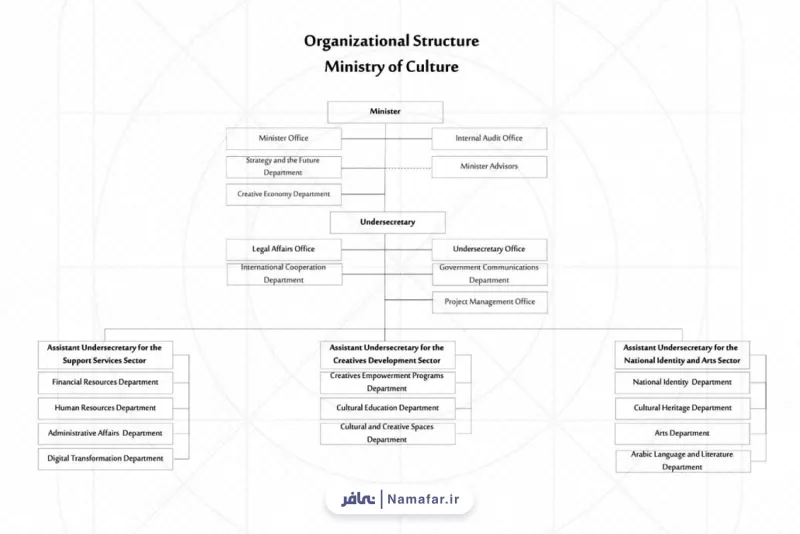
As can be seen in the image, the UAE Ministry of Culture has two main roles: the minister and the undersecretary. The undersecretary also has three assistants, one of whom is the "Assistant Undersecretary for Creative Industries Development." This assistant oversees three departments: "Regulation of the cultural and creative industries," "Promotion of the cultural and creative industries," and "Creative economy." In fact, one of the most important initiatives of the UAE Ministry of Culture is the appointment of a special assistant who is exclusively responsible for advancing the departments related to the cultural and creative industries. This indicates a precise strategy for the creative industries sector that has been able to deliver remarkable achievements and turn the UAE into one of the most successful countries in the cultural economy. In what follows, relying on trends related to recent years, we will take a deeper look at MCY's contributions to CCI.
The most important actions of the Ministry of Culture under the special assistant's leadership
Implementing macro policies
The Ministry of Culture plays an important role in implementing the government's macro policies. One of these policies is the National Strategy 2031, which began in 2021 and whose goal is to increase the UAE cultural and creative industries' share to 5 percent of national GDP by 2031. The Ministry of Culture's most important action in implementing this program has been tying cultural and economic goals to one another, which has produced notable results. Strengthening the UAE's position on the global cultural map, attracting cultural talent and creative entrepreneurs from around the world, increasing the number of companies active in this sector, creating new jobs in the creative industries, increasing the average income of those employed in the cultural and creative industries, and attracting freelancers and creative startups are among the other goals and results of Strategy 2031. So much so that it can be said that, within the framework of this ambitious program, the UAE can by 2031 become a global leader for the creative industries.
Cultural diplomacy and promoting dialogue among cultures
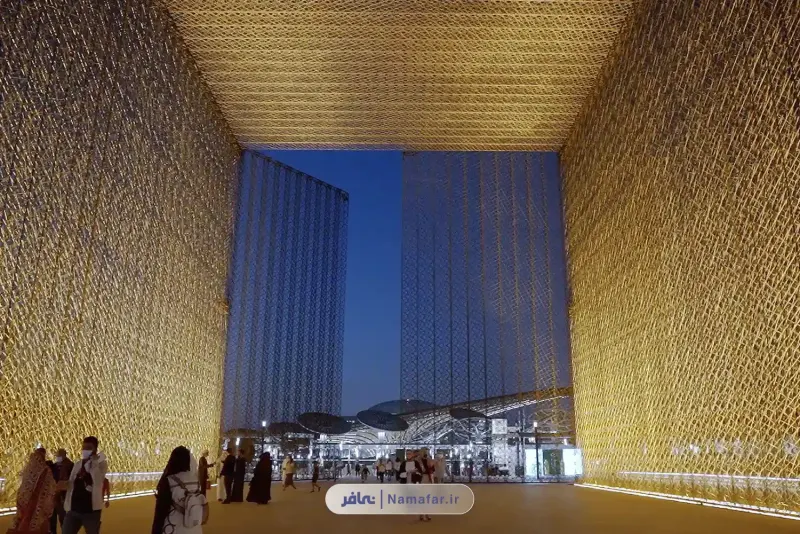
The Ministry of Culture and Youth has played a significant role in using cultural diplomacy to promote dialogue among cultures and increase the UAE's global influence. By participating in holding global events, this ministry has introduced the UAE as an important actor on the world's cultural stage. One of the most prominent examples is Expo 2020 Dubai, at which the UAE showcased its cultural heritage and creative industries. This event brought together more than 190 countries, attracted 24 million global visitors, and provided a platform for Emirati artists to engage with the world.
Another example is the Smithsonian Folklife Festival (one of the world's prominent cultural-artistic events), which was held in 2022 in Washington, D.C. That year, with the support of the UAE Ministry of Culture, more than 50 Emirati artists took part in the festival and attracted considerable attention. Their mission was to introduce the UAE's contemporary culture and art to the world.
In addition, the ministry has signed numerous cultural agreements with countries and international organizations that facilitate intercultural cooperation. These agreements—especially those related to the protection of intellectual property (IP)—increase opportunities for Emirati artists to operate on global platforms and thereby expand the scope of their influence. The UAE's improved ranking in global cultural indices is evidence of the UAE Ministry of Culture's successful efforts in this field. For example, in 2024 (for the second consecutive year) the UAE obtained rank 10 in the Global Soft Power Index and stood as the only Persian Gulf country among the world's top soft powers. That year, the UAE was recognized as one of the countries that has made the most progress since 2020.
Focus on education and talent development
Talent development can be considered the cornerstone of the Ministry of Culture's programs. Since the development of the creative economy depends on a skilled and innovative workforce, this ministry has launched various schemes to nurture young Emirati talent. Partnership with various institutions and the provision of training courses are a key part of these schemes. The Ministry of Culture collaborates with leading educational institutions to introduce specialized courses in creative fields—from fine arts and design to film and media. In addition, it also supports scholarships and exchange programs that allow Emirati students to study abroad and be exposed to global creative trends.
Another action by the Ministry of Culture is the creation of training centers and creative academies that have created an opportunity for young artists to grow professional skills. These centers provide mentoring courses, technical training, and also access to various resources for young specialists.
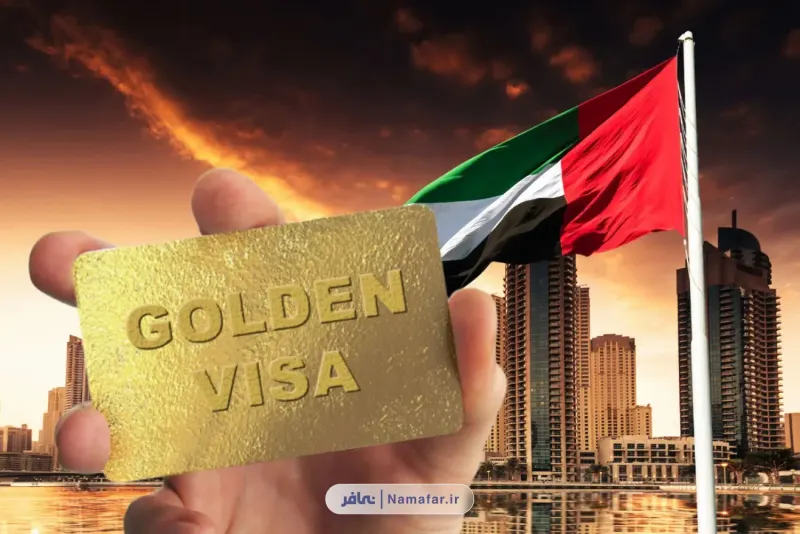
Among the Ministry of Culture's other initiatives to support talent is the Golden Visa scheme. The UAE has designed a long-term residence visa system for five or ten years that, if the conditions are met, is automatically renewed for specific groups including investors, entrepreneurs, and specialized talent. This new system gives UAE residents, foreign immigrants, and their families who wish to work, live, and study in the country the possibility of long-term residence without the need for a sponsor, with one hundred percent ownership inside the UAE.
The summer camp is another example. This event, which is held annually, gives participants an opportunity to learn new skills and keep pace with the latest knowledge trends.
The Visual Arts Association can also be mentioned as another example. This exhibition is the largest visual arts exhibition in the Persian Gulf, whose aim is to celebrate the creativity of the UAE, Saudi Arabia, Kuwait, Bahrain, Qatar, and Oman, and it is held every two years in one of these countries. At this event, various programs and training workshops are held for creative artists, and prizes are also awarded.
Conclusion
Over the past years the United Arab Emirates has sought, by reducing its dependence on oil revenues on the one hand and strengthening the cultural and creative sectors on the other, to achieve sustainable economic growth and diversification. So much so that it is now the third-highest creative economy among developing countries. One of the most important institutions that has accompanied the UAE government in this direction is the Ministry of Culture and Youth. This ministry's most important action has been the appointment of a special assistant to the undersecretary who has been exclusively responsible for advancing the departments related to the cultural and creative industries. In this note we have examined the Ministry of Culture's actions, under the leadership of the special assistant to the undersecretary, to develop the cultural and creative industries.
Machine-translated from Persian by Namafar; the Persian original is authoritative. Read the original in Persian