Some may have thought that with the dominance of video games, the market for physical toys would go slack. Even so, the buying and selling of toys in past years has always faced growth, and it is imagined that it will increase from 122.9 billion dollars in 2022 to 183.15 billion dollars by 2030. World population growth and the turn toward smart, hi-tech and interactive toys can be counted among the factors effective in the growth of the toy market in the world.
Even so, where is Iran's place in the global toy market? Can Iran go along with this current and increase its share in this thriving market? This is possible if fundamental reforms are made in some matters. Including reducing government stewardship and handing affairs over to trade unions, efforts to develop the supply chain of Iranian toys in various countries including neighboring countries, providing tax exemptions to domestic producers, and encouraging cooperation of knowledge-based companies and toy makers in order to combine toys with new technologies, among these matters.
Global toy market statistics
The toy industry in recent years has a remarkable story. Unlike the popular animation Toy Story, which displayed toys' struggle for survival, the global toy market is booming more every day. The value of the toy market in the United States of America in 1990 was as much as 13.4 billion dollars and in 2022 reached 29.2 billion dollars; that is 2.17 times. This increase in value is also seen in the global market. Global toy turnover in 2017 was as much as 90.3 billion dollars and in 2022 reached 107.4. That is, it was accompanied by a compound annual growth rate of 3.5 percent. The above statistics have been provided by the Circana group.
What is a toy? The definition of this word differs in various studies, and market research companies, depending on their definition, include product groups in the market they examine. For example, the Statista group has announced global toy industry revenue in 2022 as 122.9 dollars. The Indian market research company The Insight Partners, by publishing its recent study, has also stated that it expects the children's toy market to increase from 122.9 billion dollars in 2022 to 183.15 billion dollars by 2030 and to witness a compound annual growth rate of 5.1 percent.
Factors in the growth of toy market value in the world
Population increase around the world, the shift in inclination from old traditional toys to modern electronic hi-tech toys, increased demand for purchasing sensory toys for children with special needs such as children with autism, and the use of smart toys are cited as the main factors in the growth of global toy market turnover. Alongside these, the prevalence of social networks has not been without effect in the expansion of the toy industry.
Smart and Hi-Tec toys
The rapid advance of technology has led to the making of innovative and interactive toys that increasingly attract children's attention. Some new toys use new technologies such as the Internet of Things and smart devices to enhance children's experience and learning. For example, Fisher-Price (Fisher Price) has brought smart teddy bears to the market that can be controlled with smart gadgets. This has great appeal both for children and for parents.
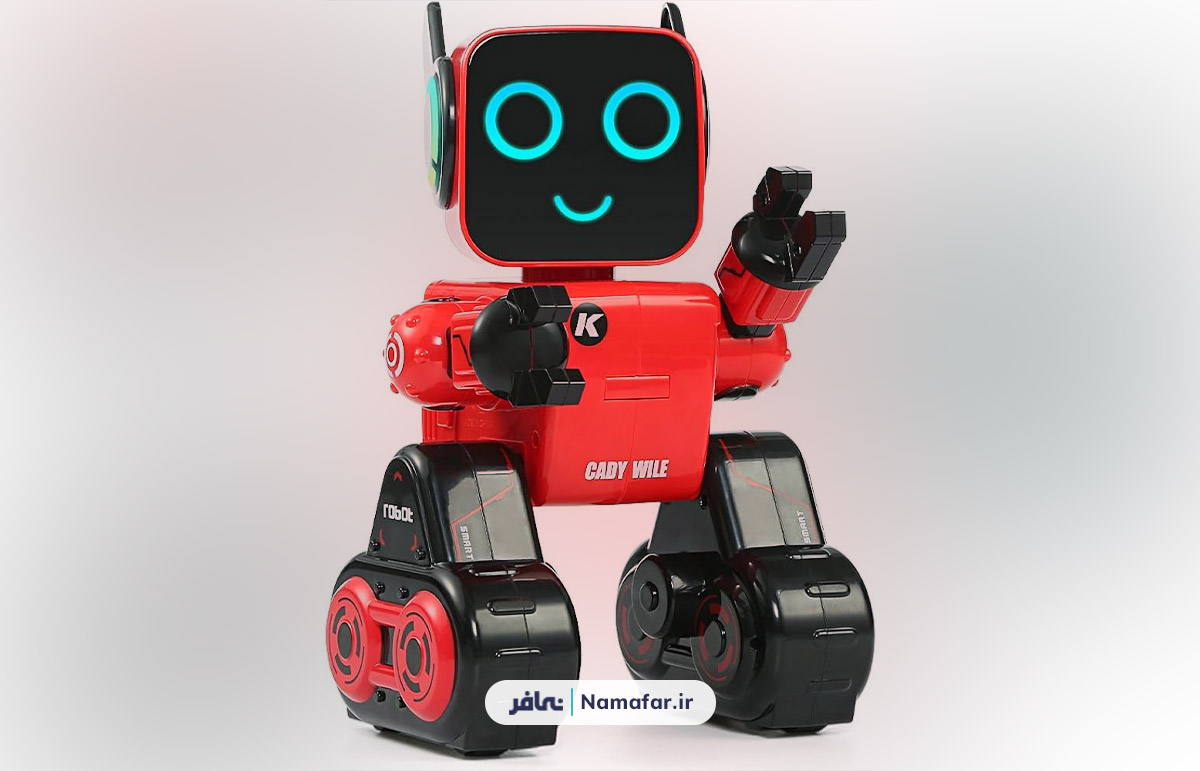
On the other hand, the use of augmented reality technology, artificial intelligence and robotics in toys creates a unique and appealing play experience for children. Children in the digital age are surrounded by smartphones, tablets and other smart gadgets, and it is natural that they are drawn toward playthings that speak of those same technologies.
Interactive toys
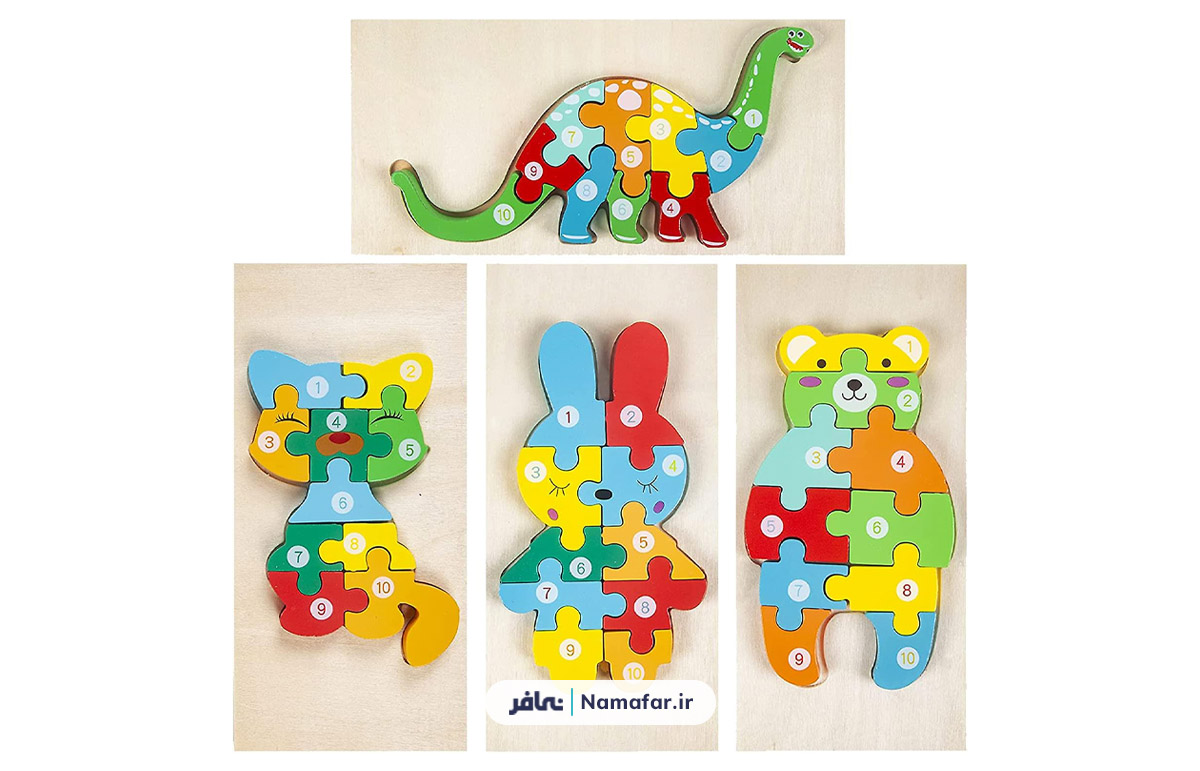
Parents and experts in the field of education day by day come to realize the educational benefits of smart hi-tech toys. The world's largest toy companies, to design new toys in response to this need, focus on combining entertainment and education. Toy manufacturing companies are moving toward designs that help children learn problem-solving skills, critical thinking and creativity. These interactive toys often have features that encourage learning through playing.
The effect of social networks on toy sales
The emergence of online platforms and e-commerce has made access to a wide range of toys around the world easy for consumers. This matter has led to the global exchange of toys across different cultures and regions. Social media and online reviews, such as reading buyers' comments on a product in online stores or social networks, also significantly shape consumer choices. Because parents usually, before buying a new toy, look for the recommendations and opinions of other parents.
An enemy may become a cause of good
One of the reasons for the turn of children's and parents' attention from traditional toys to hi-tech toys was COVID. In fact, the COVID-19 pandemic accelerated the turn toward advanced-technology toys. In a period when families were forced to spend more time at home and with limited outdoor activity, parents turned to technology-based toys to keep their children entertained indoors, especially toys that, alongside entertainment, also provided a learning experience for their children.
It should be noted that while these toys strengthen one or more skills in children, one should not neglect motor and group games and presence in outdoor space, which strengthen many skills, including social skills, in children.
The world's most popular toys
The world of children's toys, based on product type, is divided into construction toys such as LEGO, figurines (such as superhero figures) and dolls, soft toys, puzzles, and mind games and so on. Soft toys are dolls with a human or animal or object design that are stuffed with soft and velvety fabrics. These squishy soft toys have great appeal and are poised for further growth in the market. In 2022, sales of types of dolls, various stickers, Star Wars boxes, space sets and types of LEGO accounted for the world's best-selling toys.The toy story in Iran
Although Woody (the hero of Toy Story) is doing well in the global market, in Iran he must, like his animation, fight for survival. For years the volume of imports has weighed on Iran's market and narrowed the field for domestic production. Although official import statistics may be half of exports, even so, smuggled toys dominate the market.
Toy imports were banned until the early 80s (the 1380s / 2001–2011). From the early 80s the Toy Supervision Council was established by the Supreme Cultural Council and supervision of toy imports was assigned to this council. Meaning that toy importers, in addition to observing legal and customs matters to clear their toys, must also have the approval of the Toy Supervision Council. These measures, although they have reduced the amount of toy smuggling, have not been able to take the market out of the hands of smuggled goods.
Absence of statistics, absence of transparency
Unfortunately one of the problems of our country is the absence of statistical transparency. This lack of transparency has caused every institution or official, on the basis of their own particular definitions, to present statistics that often also contradict other statistics. If we review together the statistics that officials of the field have presented of this industry in recent years, we become more aware of this matter:
Vice President for Science and Technology: According to the statistics, the global financial turnover of the toy industry is 100 billion dollars a year and Iran's share of this field is estimated at 300 million dollars; that is, it becomes three-tenths of a percent. Of the 300 million dollars of toy financial turnover, 100 million dollars of it is allocated to domestic toys.
Toy Supervision Council: In 1400 (2021/22) nearly 23 thousand types of toy entered the country from customs points with a value of 21 million dollars.
Director General of the Creative Industries Office of the Ministry of Industry, Mine and Trade: Toy exports in 1401 (2022/23) were about 38 million and 500 thousand dollars. In the same year about 13 million and 500 thousand dollars of imports were carried out. In 1401 (2022/23) about 23 million toy units were registered by producers holding a permit. A target of producing 31 million toy units in 1402 (2023/24) has been set.
Chair of the board of the Iran Toy Manufacturers Association: The financial turnover of the toy industry is 300 million dollars a year, of which of this large market only between 30 and 35 percent relates to domestic production and the rest of the market is supplied from official or unofficial imports. Per-capita toy consumption in Iran, given a population of 20 million toy consumers, is 15 dollars a year. This figure on average in the world is 400 dollars, in Australia, France and Germany 500 dollars, in Turkey 70 dollars.
Acting head of the National Center for Creative Industries: In 1399 (2020/21) the equivalent of 376 million dollars of toy smuggling took place, of which 152 million dollars was allocated to electronic toys. Toy exports in 1399 (2020/21) were under 30 million dollars, which in 1401 (2022/23) reached 38 million dollars, and the target for 1402 (2023/24) is fifty million dollars.
Chair of the board of the Toy Manufacturers Association: Iran's toy industry has nearly 20 million dollars of domestic toy production a year and about 160 million dollars of legal and illegal toy imports are also carried out, but toy financial turnover in Iran is about 300 million dollars a year. Because the gap between the produced price and the market price is very large.
Ways of developing Iran's toy industry
For a larger share of the toy market to be allocated to domestic products, fundamental reforms in some matters are needed. Reducing government stewardship and handing affairs over to trade unions, reviewing previous beliefs and conceptions, efforts to develop the supply chain in various countries including neighboring countries, providing tax exemptions to domestic producers and so on are among the measures that can be taken in this direction.
1. Let the union become the steward of toys
In principle the main steward of an industry is the trade unions. But because of the diversity of materials and technology used in producing toy products, this branch in Iran has no specified steward. Toy producers are of several categories that, based on the materials used, obtain licenses from various unions including plastics, woodworkers and haberdashery. Some producers also have a factory and workshop license from the Ministry of Industry, Mine and Trade. A large number of toy producers also have no permit.
Although the Toy Manufacturers Association has begun its activity for some years, its members' licenses are in various fields. The chair of the board of this association in Tir (June–July) 1402 (2023/24) announced the number of official toy producers in Iran as more than 250, but it is not clear whether all these producers are members of this association or not.
2. Let imports be organized
Although imports are a rival of domestic producers, given the volume of domestic production and the difference in the type of products produced domestically, it can be said that imports, if organized, cannot harm the domestic market. Toy producers in Iran are mostly active in the section of mind and educational games, and a gap of other types of toy is felt in the market.
In 1401 (2022/23) the effort of the Ministry of Industry, Mine and Trade was to give an import permit only for the raw materials and equipment needed by the toy industry so that exports of the final product would also increase. In fact, this ministry's policy is to allow imports solely for equipment, modernization and in the event of launching a new production line or the absence of raw materials, and in some final products whose domestic production is not possible or whose production is not economical. Even so, the amount of toy smuggling into the country shows that to reduce it more measures must be thought of in the field of imports.
3. Production must be economical
In the toy industry economic viability is an important matter. When in China a particular type of toy is produced at a particular scale and dimensions, many countries do not go after these products. Some toys in the world also have only two or three producers; because the production volume is so high that it is not worth any country entering that industry, and this matter has no relation to production capability. On this basis, one must put one's hand on products whose production has economic viability.
4. Finding new markets
Today self-sufficiency in all industries is an obsolete view. To reduce production costs and in order to strengthen cooperation instead of competition and also to guarantee a market for the final product, efforts are made to disperse the supply chain geographically so that mutual dependence among countries comes about. The least benefit of this is guaranteeing a market in the countries that participate in producing the final product. Since toy exports are mostly to neighboring countries, expanding the supply chain to those countries can guarantee a market for the final product.
5. Localization or commercialization
Insistence on localizing products and producing national products may for a period, with government support, be effective, but when the umbrella of government support is removed from that industry or product it quickly loses its market. Those domestic products have the possibility of surviving in the toy market that have the ability to compete with global products, and this is tested not in the domestic market but in competition with global products in global markets.
"Dara and Sara," which can be recalled as the first examples of native toys in Iran, received attention for a short period and after that went to the margins. Whereas the Kolah Ghermezi or Jenab Khan dolls, without government support (albeit in a short period), quickly found their market domestically. Some domestic products, although they have high quality, are not very well known. For example, the Viona product is an example of the design of a toy in a world class that has been brought to market by a knowledge-based company and has a high possibility of commercialization.
What, alongside quality, has great importance is commercialization of the product. Many Western cultural products such as "Barbie," "SpongeBob" and so on that have extraordinary sales around the world owe their fortune and fame to the cultural market-making that takes place in the form of product commercialization. On this basis, the priority in supporting domestic producers should be commercialization of products.
6. Combining technology with toys
An examination of the activity of the world's 10 largest toy producers shows that all these companies are creators of high-technology products and their effort is to make smart products. With these interpretations, taking a share of the toy market in coming years may be a more difficult task. Even so, supporting knowledge-based companies and the cooperation of these companies with toy producers can to some extent help in not falling behind the current of the world today.

Toy or computer game
In closing a key point must be noted, and that is the necessity of distinguishing physical toys from digital games and video games. What perhaps some parents and specialists neglect is the effect of toys on the growth of a child's spatial intelligence and social skills. Toys, especially items that are used in group games, will have a considerable effect on the growth of the child's emotional intelligence and social skills. Digital games, with the spread of smartphones, have gained great popularity. But it should be noted that what helps more in the child's socialization is the experience of play in the real world. Digital games less often create such a possibility and cause inactivity, depression and numerous other problems.
A suggestion
One of the matters that toy industry actors pay less attention to is investing in group games and developing a possibility for children's play. It is suggested to the government and public institutions that instead of insisting on producing domestic toys, they focus their concentration on developing public play spaces for children. At present, these spaces are seen more in parks or exist in playhouses and kindergartens. Parks in cities are limited and playhouses and kindergartens also have a high cost that the lower-middle class may not be able to afford.
Developing these play spaces in neighborhood houses, commercial complexes and even in schools is necessary. Public institutions, by supporting the private sector through providing suitable space for establishing a playhouse, tax exemptions and so on, both provide the ground for entrepreneurship for the private sector and help the employment of people in society. The development of children's play places is especially suitable for internships of students of Farhangian universities and psychology, and part-time employment of teachers and housewives.
Machine-translated from Persian by Namafar; the Persian original is authoritative. Read the original in Persian