After a hundred years, once again! What slogan could have been more enticing than this for holding the world's largest sporting event once more in one of the most tourist-friendly tourism destinations in the world? The last time the city of Paris, the capital of France, hosted these competitions was 1924, and now in 2024 it was once again this historic city's turn to welcome athletes and tourists from around the world. This event is not only attractive for sports fans, but will also have a major impact on this country's tourism industry. The Olympics is an opportunity for France, while holding the competitions, to introduce its culture, history, and beauties to millions of visitors from around the world and in this way to strengthen its economy. Although this work has placed a hard path before France, attention to its profits will probably also justify the costs.
An outlook on tourism in France and Paris
France, as the world's most popular tourism destination, welcomes millions of international tourists every year. The beating heart of France's tourism is nowhere but the city of art, the city of lovers, or the same Paris.According to United Nations statistics, France with 90.9 million visitors in 2019 was the world's most visited country, and after it the United States with 79.3 million visitors in the same year is in second place. Between 2010 and 2022 France on average welcomed 77.8 million overnight international tourists annually. It is no surprise that 2020, with 41.7 million people, had the lowest number of visitors because of travel restrictions during the coronavirus pandemic. In 2022, tourism in France recovered with 79.4 million overnight visitors, which compared with 48.4 million overnight visitors in 2021 was a 64 percent increase.
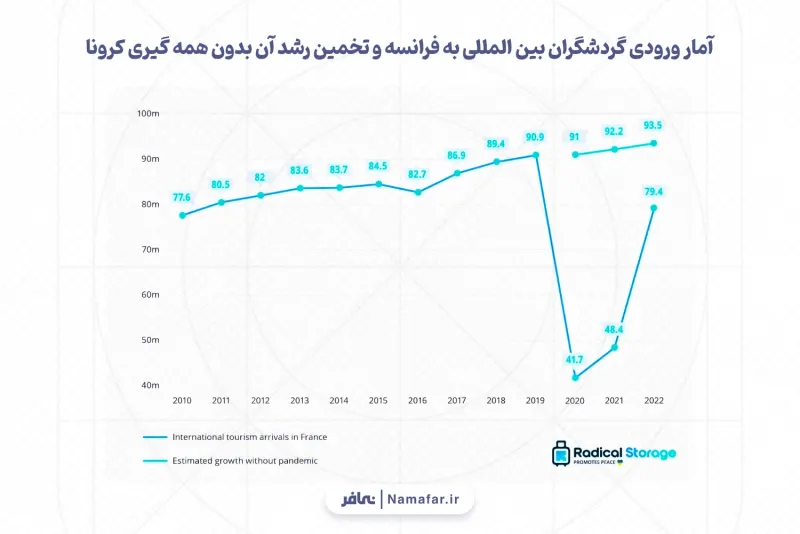
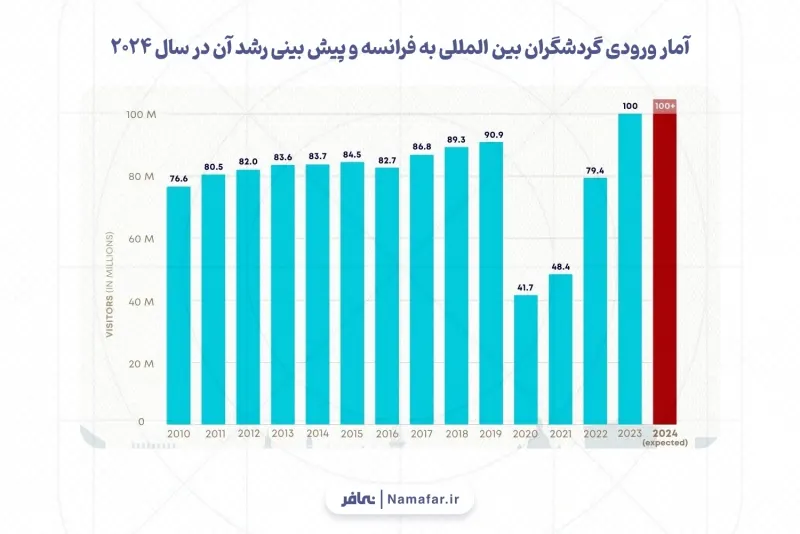
It is also forecast that without the COVID pandemic, France's upward trend of attracting tourists would have continued steadily. In 2023, with the lifting of health directives and effective advertising, inbound tourists to France reached a record 100 million people. This figure was also the record for the highest tourist arrivals to a country in 2023. It is forecast that given the holding of the Paris Olympics in 2024, this record will even rise to more than 101 million. With this trend France will probably remain the world's most attractive destination until 2025.
Paris's share of France's tourists
But how much is Paris's share of this volume of tourists? In recent years more than one-third of France's international tourists have traveled to Paris. But in 2023 Paris, with a total of more than 47 million domestic and international tourists, is still behind its 2019 record from the pre-pandemic days. It is forecast that the holding of the Olympics will break this record in 2024 and Paris will for the first time after the COVID pandemic surpass the figure of fifty million annual tourists.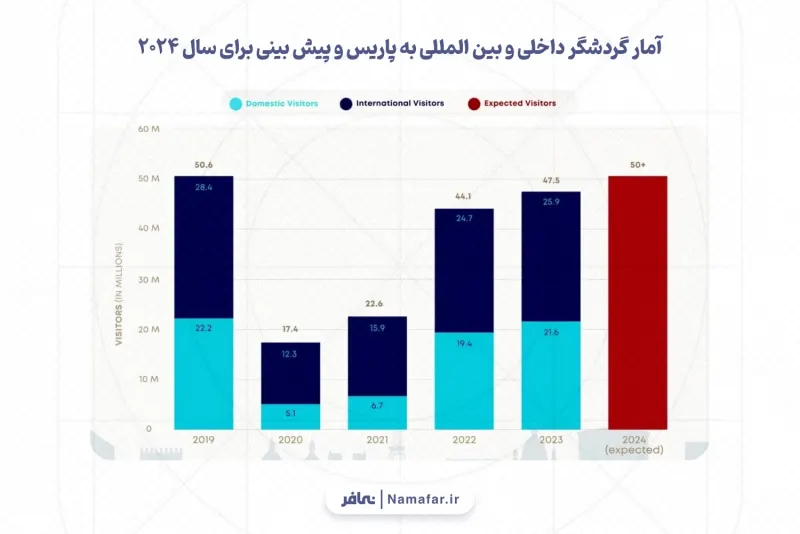
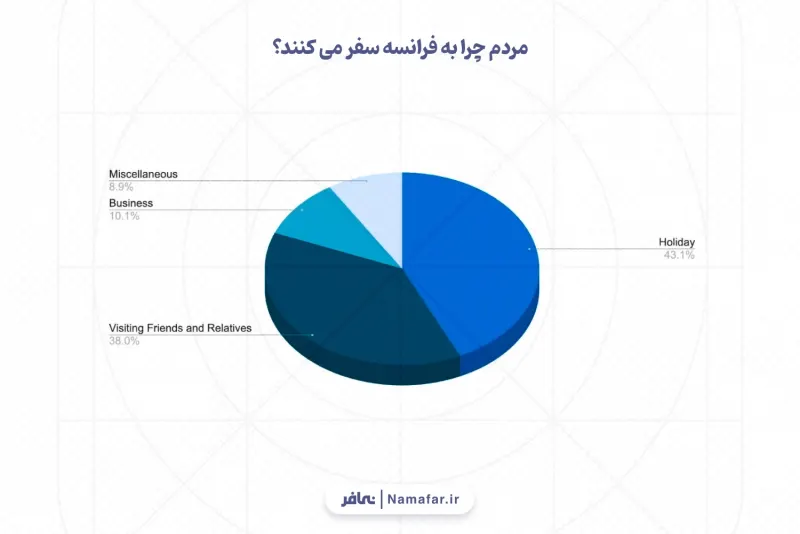
A rich history, excellent food, and sights such as the Eiffel Tower and the Louvre Museum caused the most important reason for travel to France in 2022 to be spending holidays in this country. More than 40 percent of tourists in this year traveled to this country for leisure on holiday. 38 percent of tourists travel to France to visit friends and relatives. France also annually hosts millions of tourists with business purposes who constitute about 10 percent of all tourists; large cities such as Paris and Lyon hold important global business events that attract professionals from around the world. People also travel to France for other personal reasons such as attending special events, education, or healthcare.
Disneyland; the most popular attraction of the city of art
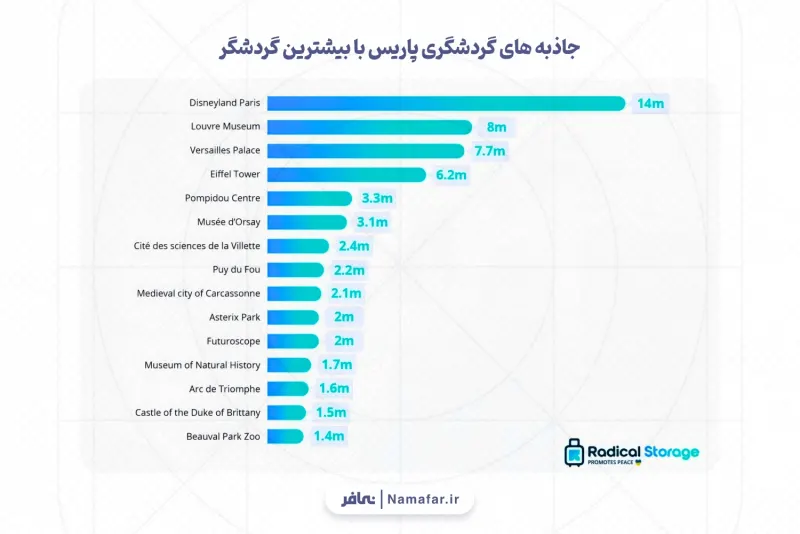
France is known as the cradle of the civilization and culture of the modern West and therefore has abundant historical, cultural, and artistic attractions for tourists. Nevertheless the highest annual visits are not for historical attractions. It is Disneyland Paris, with 14 million annual visitors, that has been the most popular place for tourists. This large amusement park was the second Disneyland that opened outside the United States, and from that day until now more than 350 million people have visited this park. This park is also the most visited theme park in Europe, which annually brings Disney huge profits; it is said that in 2023 alone this park brought 343 million dollars of profit for Disney.After Disneyland Paris, cultural, artistic, and historical attractions have had the most visits. The Louvre Museum, which is the world's largest museum and carries a treasure of human experiences, on average annually attracts 8 million visitors, and after it stands the Palace of Versailles, the principal residence of the kings of France from the time of Louis XIV to Louis XVI. This palace has been adorned by several generations of architects, sculptors, and decorators and displays for tourists an example of a royal residence in the full sense from several centuries ago. The Eiffel Tower, Paris's famous symbol, also welcomes more than six million tourists annually.
One of the most important indicators examined in international tourism is the number of nights a tourist stays in that country, and naturally the longer this time is, the better that country's ability to attract and retain tourists will be. But how long do tourists stay in France? The number of nights an international visitor stays in France varies depending on various factors including the visitors' origin of travel. The chart below addresses international arrivals from the European Union, the Americas, Asia, Africa, and Oceania.

As you can see, people who travel to France from European Union countries have, in an interesting way, the highest probability of staying only one or two nights. Of course most of these people prefer a stay range of four to six days or seven to thirteen days. Also the longest stays in France are undertaken by travelers originating from Africa, of whom according to statistics more than 57 percent have had a stay of more than 7 days in France.
France and hosting the Olympics 2024
But a country with this brilliant tourism, what need does it have to hold a costly event such as the Olympics when even without it it is the world's most attractive tourism destination? The answer is that hosting large global events such as the Olympics or the World Cup is done on the basis of different motives and causes: sometimes it is arranged to draw global attention to a city and turn it into a nascent tourist attraction, where here that event has the role of a catalyst or accelerator. Sometimes this hosting is to revive the brand of a tourist city and put it back on the map. In other cases a capable and famous city takes on hosting so that it can, incidentally, use all its capacity and take its high capacities to a level beyond the existing situation and further consolidate itself as a global tourism destination. Specifically, Paris's action to host the Olympics has been undertaken with a motive similar to the third category.
The small but balanced budget of the Paris Olympics
Past experiences have shown that if the host does not act intelligently, control of the Olympics hosting budget turns into a large nightmare that will inflict huge financial losses on the host. But the French appeared reasonably successful in this field and held these games with a budget smaller than previous editions. In the chart below you see the budget spent on holding the Olympics in recent editions.
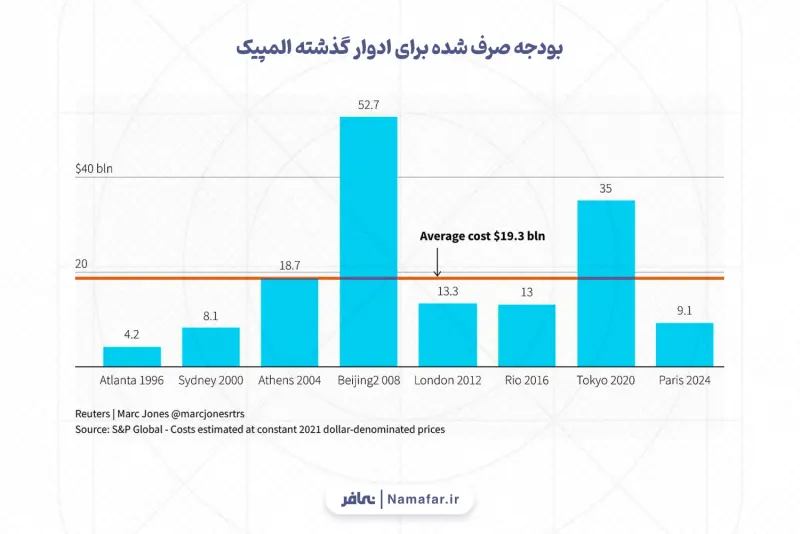
The initial budget for the Paris 2024 Olympics is estimated at about eight billion dollars, but this budget, given additional costs, according to some reports was increased to 9.7 billion dollars. Paris, with all the imposed costs, ultimately held the Olympics with less than ten billion dollars, which was cheaper than its previous editions, and this means less than 25 percent deviation from the original budget, which compared with the Rio Olympics with 350 percent and the Tokyo Olympics with 280 percent is considered a much better figure.
It is expected that this budget will be divided between 4.5 billion euros for new venues and facilities and another 4.4 billion euros for related operating costs such as hosting and creating transport networks. Ticket sales and television and marketing deals should bring about 4.2 billion euros, which covers something around 96 percent of the total budget. Also the tax that the government takes from crowded restaurants and hotels at full capacity and also from the tourists themselves will cover another part of the costs.
But what has caused this very low cost in this edition? The main cause goes back to preexisting infrastructure. About 95 percent of the venues that were intended for use in the Paris Olympic Games existed before this city's bid to host the games. Only three items were built after that: the 1.6 billion dollar Olympic Village, the 190 million dollar aquatics center, and a 150 million dollar gymnastics and badminton stadium.
France's arrangements for the Paris Olympics
France, using extensive budget and infrastructure for the 2024 Olympics, is not only seeking to hold a successful sporting event, but is trying to use this opportunity to create a lasting transformation in the city of Paris and its surrounding areas. Public transport projects, the renovation of sports venues, and a focus on environmental sustainability are all signs of France's commitment to holding a green and sustainable Olympics that can have positive effects on this country's economy and tourism in the years ahead. In what follows we examine more closely some of France's programs for this matter:When we live in an age in which the danger of terrorism and extremism rages from every side, preserving the security of any event is the first priority, especially if that event is held in an incident-prone and sensitive country such as France. For this purpose France announced that it has prepared 45 thousand police and soldiers to preserve the security of this large event and has also made use of private contractors in this field. In April, Macron, the president of France, spoke of alternative plans for the opening ceremony so that, if there is a security threat to this ceremony, the opening is moved there.
The country of France has always been known for its strikes and riots, and if this incident occurs during the Olympic Games it will certainly be a major embarrassment for this country. Therefore the French government has agreed to grant bonuses and use other incentives to prevent a strike by government employees.
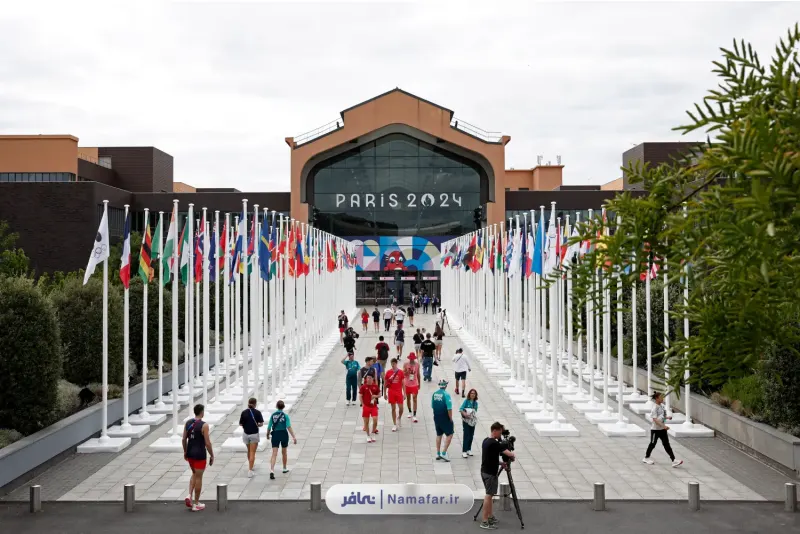
In the previous section we said that among France's largest costs for the Olympics was the construction of the Olympic Village at a cost of 1.6 billion dollars. This village, which has been built in the Saint-Denis area in the north of Paris, will host more than 15,000 athletes from around the world, which has been designed entirely using renewable energies and after the Olympics will be converted into a residential area.
We spoke of the balanced budget for holding the Olympic event, but one cannot forget France's ancillary infrastructure costs for preparing the Olympics: France, for athletes to swim in the Seine River, was forced to clean this river, which cost it 1.5 billion dollars. In addition 3.8 billion dollars was spent in this period on expanding metro line 14 through the massive Grand Paris Express project.
To host millions of tourists and facilitate their travel, Paris has extensive projects underway to improve the public transport network. One of the most important projects is the development of the Grand Paris Express line, which includes the construction and expansion of more than 200 kilometers of new metro lines and 68 new stations. This project will not only be efficient for tourists during the Olympics, but will also in the long term help improve the quality of transport in Paris.
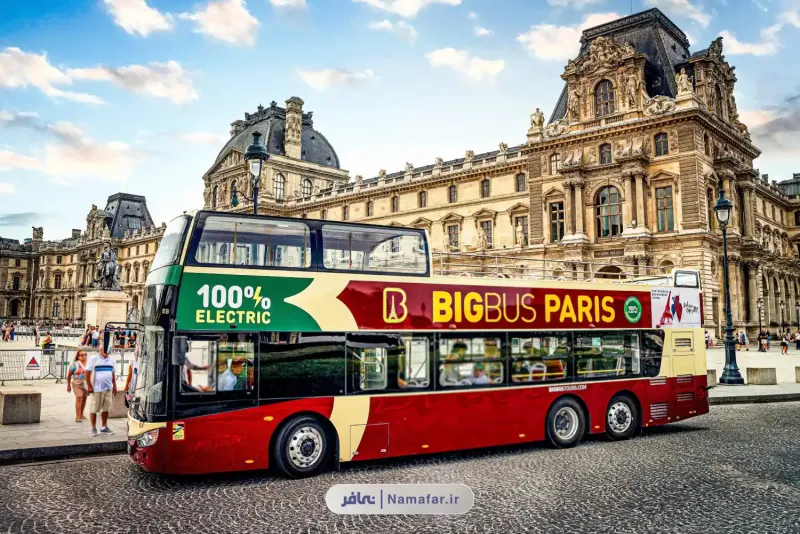
France has not settled for simply hosting this event and has pledged to hold the "greenest Games in history," which, by reducing carbon emissions by 55 percent, aligns with the climate goals of the Paris Agreement. France's secondary motive for using existing structures for 95 percent of venues is precisely this minimizing of environmental impacts. Among Paris's other plans for holding these competitions as green as possible, the following can be mentioned: using electric buses to transport athletes and spectators, using green and sustainable buildings as the athletes' village and competition venues, extensive programs for waste reduction and recycling during the Games, and using sustainable and green fuels.
The 2024 Paris Olympics will not be limited to sporting competitions; this event has been planned as an opportunity to showcase France's culture and art to the world. Paris 2024, by combining sport and culture in a unique experience, seeks to introduce its country's cultural values to millions of international visitors. To this end, the Olympic organizing committee has planned a series of cultural events during the Games, some of which we mention:
Cultural and artistic festivals: One of the most prominent cultural aspects of the Paris Olympics is the cultural and artistic festivals held throughout the city and even outside Paris. These festivals include diverse programs in visual arts, theater, cinema, and street performances. In these programs, local and international artists will have the opportunity to display their works. Public parks, squares, and streets of Paris will be turned into stages for performances and concerts, so that visitors can, at the same time as watching the competitions, also benefit from cultural experiences.
Olympic Nights: A special event named Olympic Nights has been designed that is held during Paris's summer nights. This event, which is a kind of nighttime celebration, will be staged at key points in the city such as the Eiffel Tower and the Champs-Elysees. On these nights, light and sound shows, music concerts, and street celebrations are held that attract thousands of spectators and tourists.
Historical and artistic exhibitions: During the 2024 Olympics, Paris's famous museums and art galleries, such as the Louvre Museum and the Centre Georges Pompidou, will hold special exhibitions to commemorate the Olympics and the history of sport. These exhibitions are held on topics such as the history of the Olympics, the impact of sport on culture and art, and the place of sport in various civilizations.
The Olympics' impact on tourism and the economy of France and Paris
The purpose of accepting Olympic hosting for any country, given its staggering and very heavy costs, is not merely holding a flawless sporting event or even simply attracting tourists; rather, an event such as the Paris Olympics not only helps attract millions of international tourists, but will also act as an economic engine for Paris and the country of France. In what follows we examine some of the most important economic and tourism impacts of this event:Increase in the number of tourists and direct revenues
Paris in 2023 received more than 47 million tourists. According to forecasts, the number of visitors during the 2024 Olympics will reach about 15 million people (11 million Olympic visitors and another 4 million Paralympic visitors), of whom 5 million will be international tourists. This increase in tourist numbers due to the Olympics can bring Paris's tourist count to a record-breaking 51 million and cover the shortfall in tourist growth caused by the COVID-19 pandemic period. This is also true for France itself, because the Olympics this year can attract a high number of tourists to the country such that even if COVID-19 had not occurred, this tourist growth would not have been realized.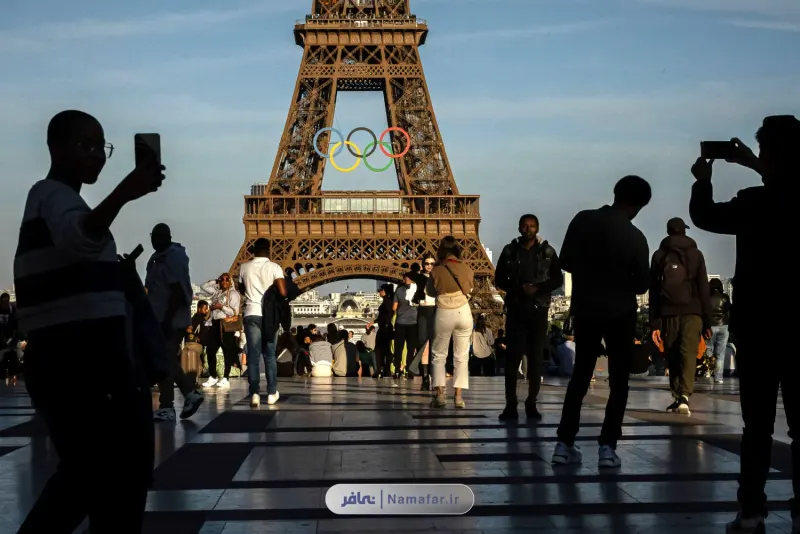
Tourism revenue
According to estimates made, each international tourist spends an average of 200 euros per day during their stay in Paris, which includes costs of accommodation, transportation, food, and shopping. This figure will result in the injection of about 7.5 billion euros in direct revenue into France's economy. These revenues not only help hotels, restaurants, and tourist services, but also lead to improvement of the local economy.Impact on employment and job opportunities
Holding the 2024 Olympics will have a significant impact on France's labor market. The French government predicts that about 250 thousand new jobs will be created in various fields, including tourism services, construction, event management, and security. These job opportunities will include temporary jobs for the duration of the Olympics as well as long-term jobs in infrastructure and development projects. Some of the jobs and positions that can benefit greatly from the Olympic period include:- Hospitality and accommodation sector: It is estimated that the hotel occupancy rate can rise to 98 percent during the Games. Due to increased demand, a 25 percent increase in general housing prices is expected.
- Restaurant and retail jobs: Paris restaurants can welcome about 30 percent more customers than usual, leading to a potential 20 percent increase in revenue. Retail stores, especially in central Paris, predict that sales will increase by about 40 percent during the Games.
- Transportation and infrastructure: Public transit use is expected to increase by 15 percent as people tour the city and its Olympic venues. It is estimated that about 6.8 billion euros will be invested in urban infrastructure improvements related to the Games, improving mobility and connectivity for residents and tourists.
Economic growth and foreign investment
Estimates show that the 2024 Olympics will inject about 10.7 billion euros into France's economy, of which the share of the Ile-de-France region, where Paris is located, is 5.7 billion euros alone. This figure includes direct and indirect costs associated with holding the Olympics, such as infrastructure investments, tourism revenues, and private- and public-sector spending. The French government also uses the Olympics as a tool to attract foreign investment. Many international investors take advantage of the economic opportunities created by the Olympics.Long-term impacts on the economy
The economic impacts of the Olympics are not limited to the period of the competitions. The infrastructure and development projects created during Olympic preparations can, over the long term, help improve the economic situation of Paris and surrounding areas. Improvements to public transportation, increased accommodation capacity, and development of Paris's peripheral areas are among the projects that will have lasting economic effects. It is predicted that this event, because of the Games' long-term impact on tourism and the economy, will create about 119000 jobs annually from 2024 to 2030.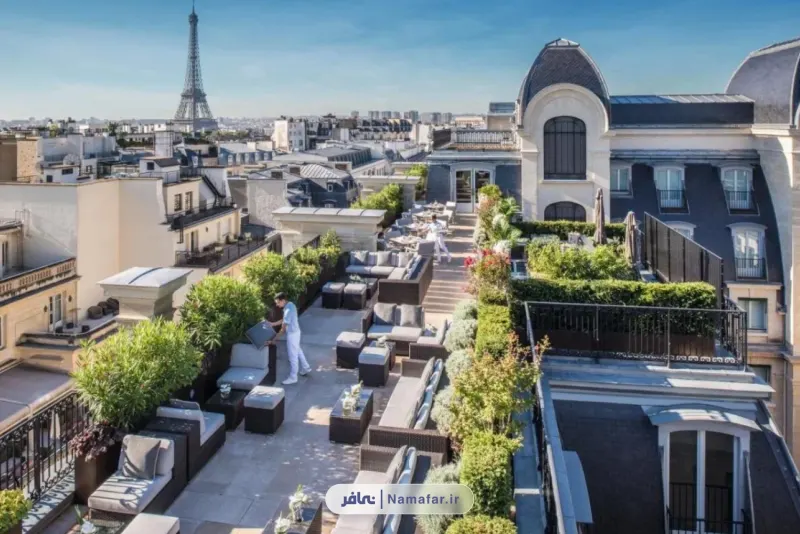
Increased global fame and attracting tourists after the Olympics
Holding the Olympics will have a significant impact on increasing Paris's global fame as a tourism destination. Extensive television broadcasting and international media coverage of this event will turn Paris into one of the world's most important tourism destinations. After the Olympics, an increase in the number of tourists to Paris and France is expected. Examples of this trend have been observed in past Olympics:- Increase in tourists after the 2012 London Olympics: After the 2012 London Olympics, the number of tourists to this city in subsequent years increased by 12 percent.
- 1992 Barcelona Olympics: The 1992 Barcelona Olympics also led to an increase in international tourists, so that in the decade after the Olympics, Barcelona's tourist numbers increased by 75 percent and the city became known as one of the most touristic international destinations.
Given these patterns, the 2024 Olympics is also expected to lead to sustainable growth in France's tourism after the Games. Improved infrastructure and promotional projects can help attract new tourists as well as repeat international visitors. Based on current forecasts, the Paris Olympic Games are expected to bring two to four million additional tourists annually to France in the coming years.
France's travel and tourism industry is expected to grow 3 percent each year over the next ten years. This rate is twice as fast as the overall growth rate of France's economy. By 2033, this industry could be worth more than 297 billion euros and account for 9.7 percent of the country's economy.
Final word
For us Iranians, who both have a great interest in elite sport and are a hospitable people, hosting an international sporting event can certainly be very appealing and enjoyable. Especially when our country is a growing economy on the path to becoming a regional power, these international events will become more important and necessary than before, both economically and culturally. Also, Iran's abundant historical, artistic, and cultural tourism capacities make us an attractive host for this type of event. But unfortunately at present, due to insufficient infrastructure, the absence of domestic and foreign investment, incorrect administrative methods, and inadequate and at times wrong policymaking, hosting major events such as the Olympics or the Asian Games is a dream for us.In the meantime, however, one should not stop trying, and the first step is learning from successful experiences. The 2024 Paris Olympics is a relatively successful example from whose abundant experiences in various fields we can benefit. These events are a historic opportunity to strengthen France's tourism and economy that, with the presence of millions of tourists from around the world, will act as a driving engine for the development of sports tourism. Given the sustainable programs and improved infrastructure, Paris can not only offer visitors a unique experience, but also provide a basis for attracting more tourists in the years after the Olympics. France's plan to take advantage of this sporting event has been arranged so that, besides the tourism sector, other sectors of France's economy also benefit from it. The 2024 Olympics clearly demonstrates France's effort to combine sport with culture and the economy and shows more than before this country's determination for sustainability and strengthening its position as the world's leading tourism destination.
Short link: nmfr.ir/u39
Machine-translated from Persian by Namafar; the Persian original is authoritative. Read the original in Persian