From Tintin's adventures in the world's strangest places to superheroes flying over tall skyscrapers and the creation of extraordinary science-fiction worlds, the coated and glossy pages of comics have always been full of astonishing colorful images. At a time when cinema had not yet reached sufficient technologies to create wondrous dreams and strange images, and animation too was in its early days, it was comic strips that carried the burden of dream-making for millions of people on this planet. The comics medium rose to fame and popularity from the mid-1930s and, from a few decades later, was recognized as a serious artistic medium, but that was not the only side of the story. As with any other popular medium, its economic aspect became prominent for producers, and gradually comics too entered the competition alongside other creative industries.
A brief history of the comics industry
The comics industry has undergone many transformations from the time of its emergence in the 1930s to the present. In America the Golden Age of comics, which usually refers to the years 1938 to 1956, began with the introduction of heroic characters such as Superman, Batman, and Captain America and caused a dramatic leap in comics sales and popularity. Comics sales in this era were such that in 1945 alone, more than 60 million comic copies were sold per month. Many people, especially children and adolescents, became captivated by superhero adventures, and comics came to be known as an entertaining and accessible medium.
With the arrival of the 1950s, comics sales declined for various reasons, including social and cultural concerns about their negative effects. In 1954, the formation of the Comics Code Authority (Comics Code Authority) imposed many restrictions on comics content, which caused a sharp drop in comics print runs. In these years, some publishers were forced to shift their focus from superpowered heroes to romance or science-fiction stories so they could pass the ethical code.
The Silver Age of comics
In the 1960s, a period known as the Silver Age of comics, we again witnessed growth in comics sales. Marvel and DC, by introducing new and diverse heroes such as Spider-Man and the Fantastic Four, succeeded in reviving the market. Statistics show that annual comics sales in this era reached about 300 million copies. This growth continued into the 1980s, when the comics market entered a new stage with the publication of darker and more mature stories.
In the 1990s, with the emergence of independent publishers and limited printings, the comics industry reached a new peak, but in the late years of the same decade the market suffered a severe slump. Even so, from 2000 onward, and with the growth of digital media and the theatrical release of films adapted from comics, sales flourished again and annual comics revenue in the current era multiplied several times over.
Comics on the Green Continent
In Europe too, comics were very popular from those early decades. The Adventures of Tintin series by Herge, introduced in 1929, became one of the most widely read European comics. In the 1950s, Tintin sales reached several million copies a year, and by the 1970s this series had been translated into more than 70 languages and about 200 million copies of it had been sold worldwide. French and Belgian comics such as Asterix also achieved great successes in the 1960s, and millions of copies of them were sold in Europe and other parts of the world. Through the 2000s, European comics sales were still growing and the value of Europe's comics market reached billions of dollars.
Japanese comics, or manga
One cannot speak of comics and not mention Japanese comics, or manga. In Japan, the manga industry, which took shape in earnest from the 1950s, became one of the most thriving sectors of popular culture. Osamu Tezuka, the manga artist and cartoonist known as the father of manga, had a great impact on the growth of this industry. In the 1980s, manga reached the height of its popularity and the print runs of some manga reached millions of copies a month. In recent years, the manga market has continued to grow and its value in 2021 was more than 5 billion dollars.
This trend indicates the impact of cultural, social, and technological transformations on the comics industry and clearly shows how this medium has been able to adapt to changes over time and to the needs of its audience.
The comics market
At present, the comics industry in the world is in a growing state, and this trend is expected to continue in the coming years. As you can see in the chart below, according to a Mordor Intelligence report, the value of the global comics market in 2022 was about 7.79 billion dollars, and it is expected that by 2030, at a compound annual growth rate (CAGR) of 5.37 percent, it will reach 17.52 billion dollars. Factors such as the popularity of films and series adapted from comics and manga, the growth of digital sales, and public interest in cultural products related to comics have further boosted this market. Also, the digital comics segment is developing at an annual growth rate of 13.4 percent through 2030, and the print segment still holds a large share of the market.
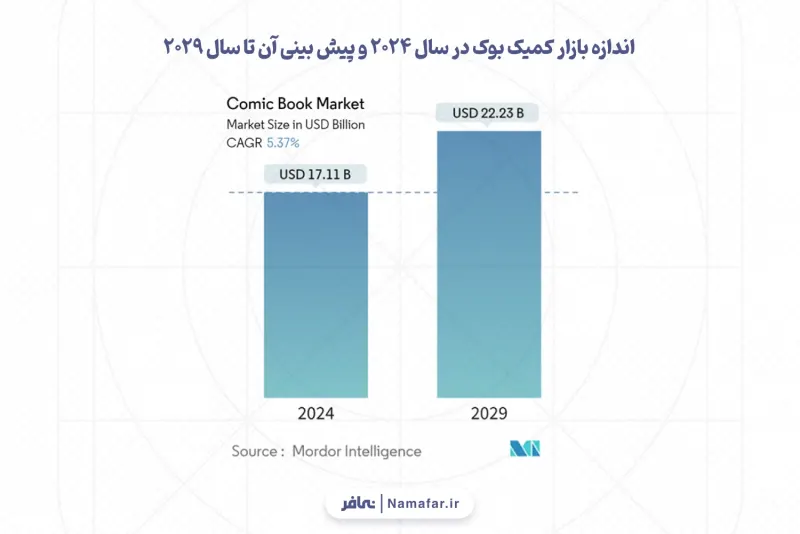
The global comics market has experienced substantial growth in several geographic regions. Asia, especially Japan, holds the largest share of the manga market. Also, Europe, with a compound annual growth rate of 20.2 percent through 2030, will see a dramatic expansion in the comics and manga market.
Comics audiences
Comic books have since the last century been considered a popular medium for young audiences, but more precise statistics point to interesting results. In the past it was assumed that most comics readers were only children and adolescents, or that regarding gender only a small percentage of women counted as comics readers, but the statistical results say something else.
As you can see in the chart below, the range of comics audiences is broad. According to the figures below, which were obtained from American comics readers, the average age of comics readers is 34, and only 18 percent of comics readers are under 18, and of course a substantial percentage is made up of young people, and comics are also popular among middle-aged readers.
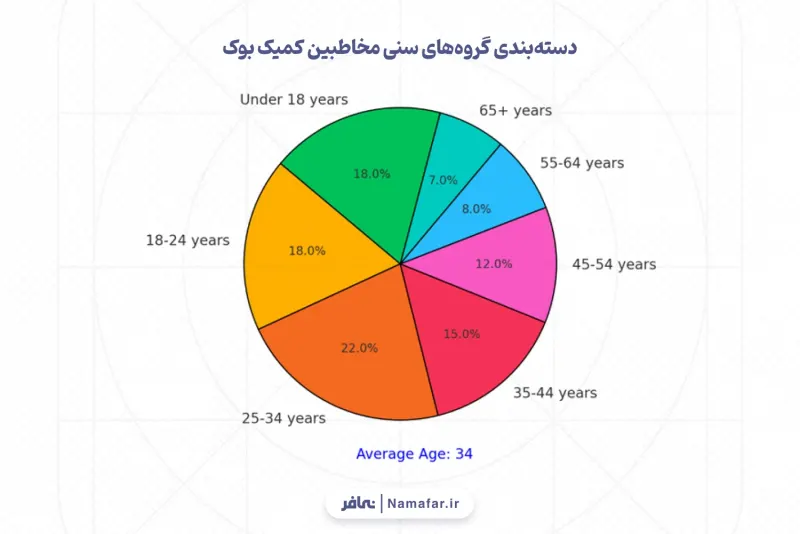
In the next chart you can see that the percentage distribution of female and male comics audiences is very close, a result contrary to many social assumptions that, because of violent content, regard comics as exclusively of interest to men.
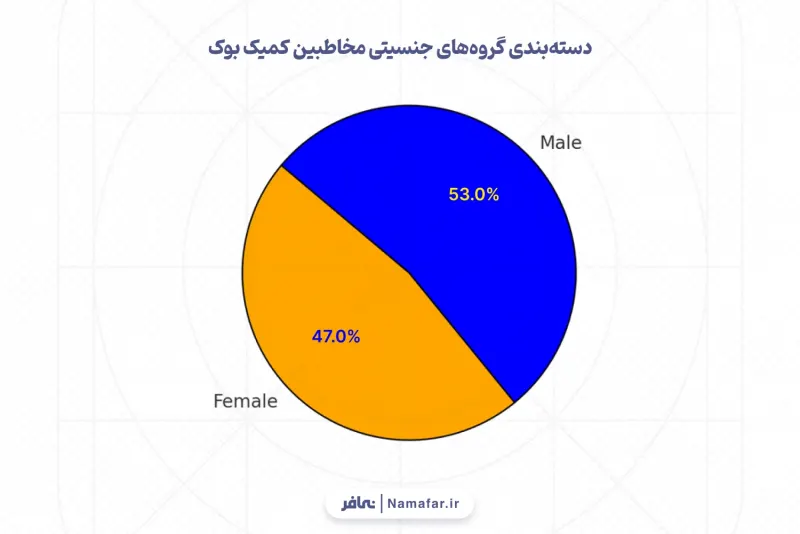
If we enter more detailed information and examine these readers' level of education, we see that a substantial share of them are educated. As you can see in the chart below, ten percent of comics readers in America have only a high school diploma, and half of them have a bachelor's degree or higher.
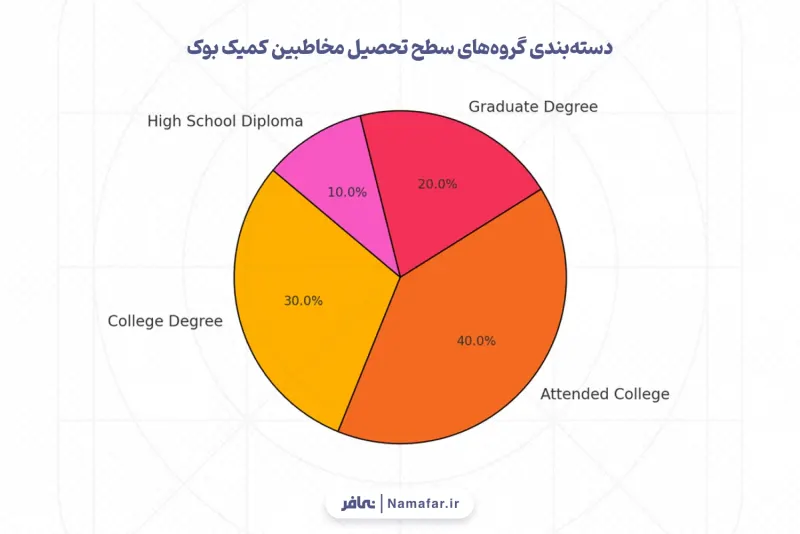
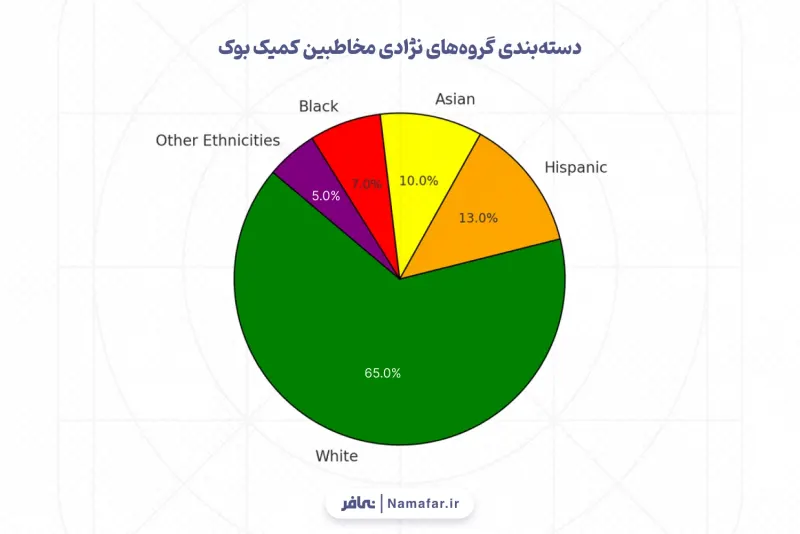
In the racial analysis of comics readers we encounter a high percentage of White people, which, given the abundance of White savior superheroes, is not a surprising occurrence. After that, Latino readers are observed at 13 percent, and Asians at 10 percent in the next rank. The interesting point here is that only seven percent of these readers are Black.
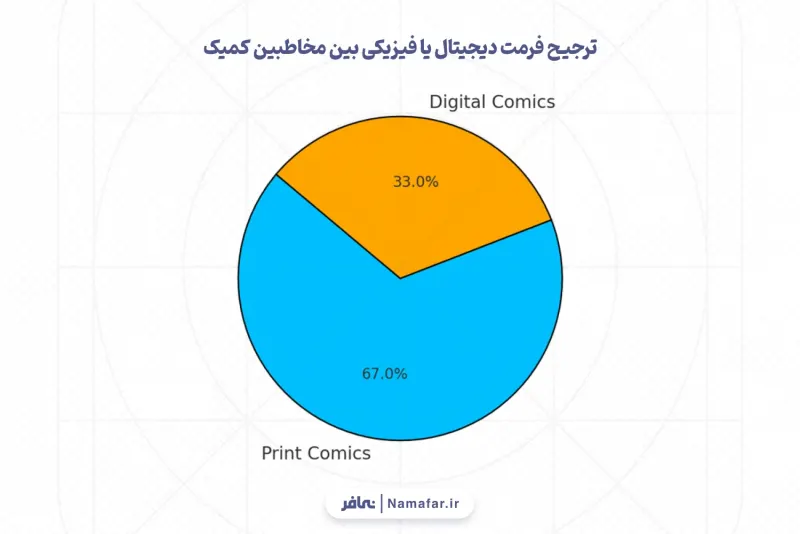
Until before the 2000s, when digital and online media had not yet become widespread, the only way to read comics, as with books and magazines, was to obtain physical copies of them. But from that time on, the way comics are published and purchased, like books, also changed. Readers could both obtain a physical copy of the book in the traditional way and had the option of buying and reading a digital copy. In the chart below you can see that still more than two-thirds of readers prefer buying a physical copy to a digital copy. In addition, interest in having physical copies among readers is very high: 80 percent of comics readers prefer to have physical copies of their favorite comics, and only 20 percent of them exclusively read comics digitally and have no interest at all in a physical copy. 45 percent of readers use both digital and print copies, which indicates flexibility and interest in both types of format.
When we look more closely at comics readers' purchasing habits, we notice their extensive engagement with this medium and their active financial participation in this industry. On average, each comics reader spends 21 dollars a month on buying comics, and about 78 percent of readers purchase comics at least once a month. 55 percent of readers buy exclusively from comic shops, while 35 percent prefer to buy from online retailers. In addition, 25 percent of readers have a reservation list at their local stores so that their favorite copies are obtained automatically at the time of release.
Also, many readers are interested in ancillary and comics-related products; 50 percent of them purchase comics ancillary products such as action figures. 10 percent of comics readers also collect these books as an investment. 40 percent of comics readers have sold or donated part of their collection, and 35 percent of readers have also participated in crowdfunding campaigns for comics projects. These habits show that interest in comics goes beyond simple reading and has turned into a financial commitment and a deeper participation in this subculture.
Comics printing and publishing
When one speaks of the comics industry, before anything else our minds turn to the printing and publishing industry. Comics have a special place across the broad expanse of this industry because they sit between book publishing and the publishing of magazines and newspapers, both in terms of content and from the standpoint of their form. Most comics are neither as day-to-day as magazines nor do they reach the depth of books; even their format is something between the two. For this reason, comics sales require their own particular audiences, and this is a task that comics publishers have handled well.
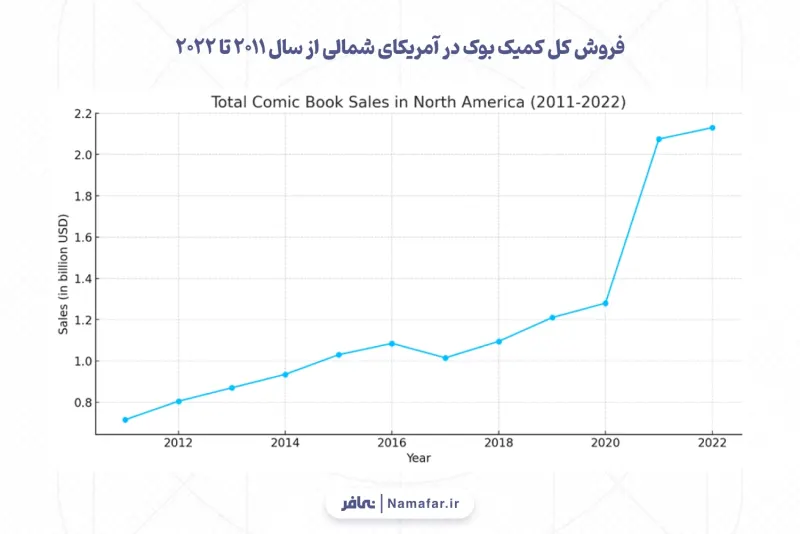
In the chart below you can see total comics sales in North America from 2011. In all years except one, sales have been increasing. Also, in 2021 we witnessed a jump in sales figures, which we will examine further on.
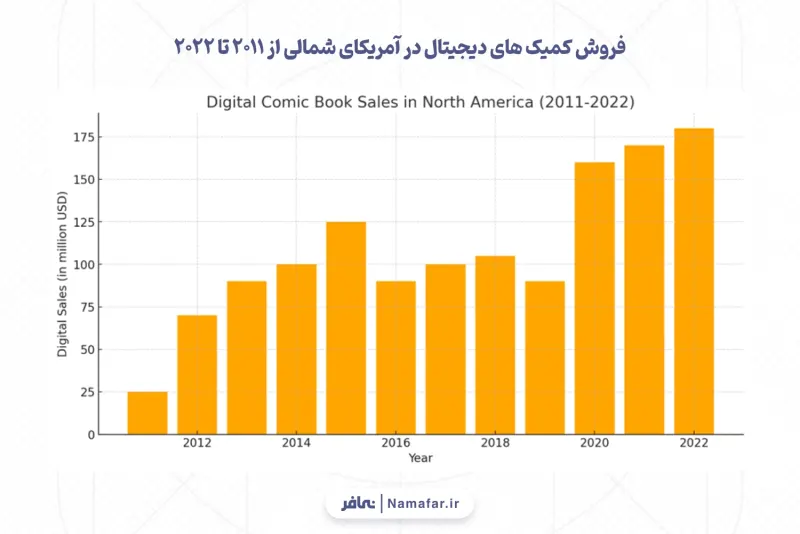
In the chart below you can see digital comics sales statistics from 2011. In all years the sales trend has not been accompanied by growth, but overall this trend has seen an increase in sales.
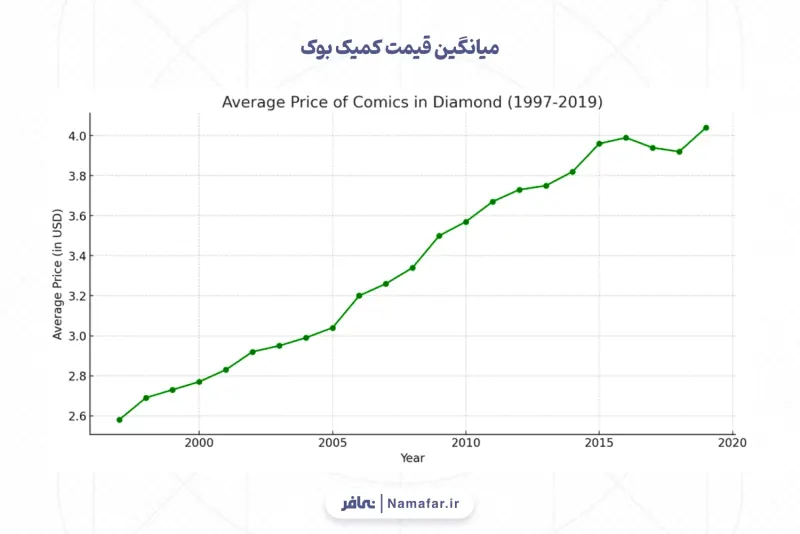
Before we turn to examining the important year 2021, in the chart below you can see the average price of each comic book from 1997. These figures are the result of averaging comics sold by Diamond, which is considered one of the largest comics distributors in America. These figures show that although the price trend of comic books has been almost always increasing, this increase has occurred at a very slow speed over these past twenty years.
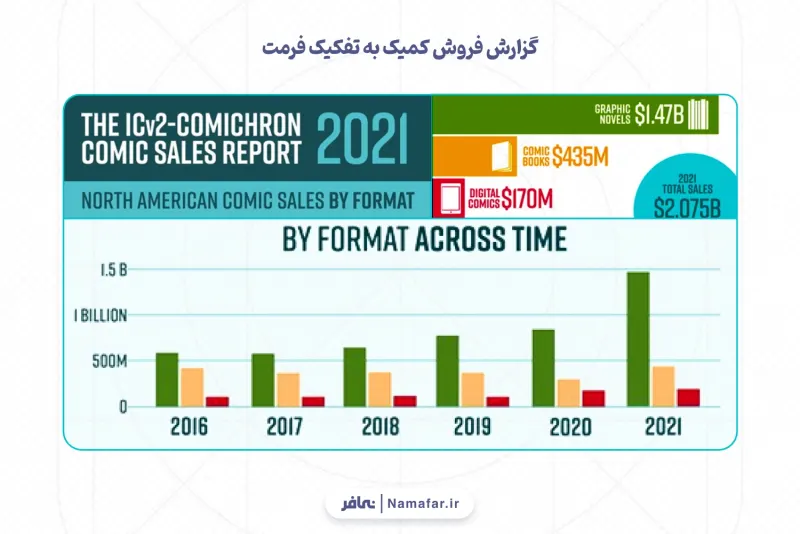
The year 2021 is considered an important year for the comic-strip industry. The coronavirus pandemic and the restrictions resulting from quarantine caused people to spend more time at home and to look for home entertainments, such as reading comics and graphic novels. This increase in demand led to greater comics sales. In 2021, manga and graphic novels became extremely popular in the North American market. The growth of manga's popularity, especially among young people and adolescents, was one of the main factors in the jump in sales. Also, sales of these titles on online platforms and at large retailers played a substantial role in the increase in sales. Given the chart below, which shows sales figures for comic books, digital comics, and graphic novels, we realize that although the sales trend of comic books has not changed noticeably, graphic novel sales have increased substantially and the digital comics sales trend has also been slow but growing.
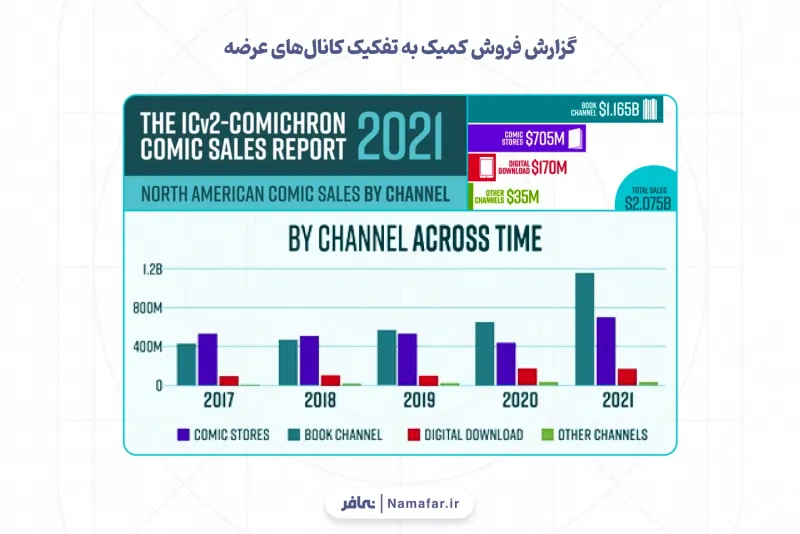
If we want to turn to how comics are sold, we have no choice but to focus on comics distribution and sales channels. In 2021, with the reopening of bookstores and comic shops and the improvement of conditions resulting from the pandemic, demand for physical copies of comics also increased. This caused sales to rise substantially from the 2020 level, which had declined under the impact of store closures. As you can see in the chart below, in this year sales through book sales channels experienced 81 percent growth, while specialty comic shops had 60 percent growth. In recent years, digital comics download channels have also gained small growth.
Leaving aside how comics are distributed, we arrive at the publishers of this colorful industry. Among them, the names of two large and well-known publishers are always heard: Marvel Comics and DC Comics. The competition of these two comic-strip giants begins from the 1950s, a time when DC, by publishing the works of superheroes such as Batman and Superman, has complete dominance over the comics publishing market and Marvel has not yet become a large publisher. From the 1960s Marvel gradually takes on a more serious form and grows rapidly and is able to bring the competition close to DC. Marvel succeeded, because of creating deeper stories and characters who had human problems and concerns, in attracting many younger readers. The 1970s and the 1980s became known as the era of adulthood in comics. In this era, both publishers tried to present darker and more serious stories, but in the end Marvel was more successful. In the 1990s the comics market faced problems and independent publishers such as Image Comics emerged. In this decade, Marvel and DC both faced declining sales, but by making changes and introducing new stories they tried to preserve their market. Marvel encountered a financial crisis and in 1996 declared bankruptcy, but improved with the publication of successful series and the sale of related products such as toys. From the beginning of the twenty-first century onward, market conditions after the release of superhero sequel films such as The Dark Knight and Spider-Man turned in favor of these two publishers. From 2008 onward Marvel, by creating its cinematic world under the title of the Marvel Cinematic Universe (MCU), succeeded in seizing the lead from its old rival both in cinema and in comic books.
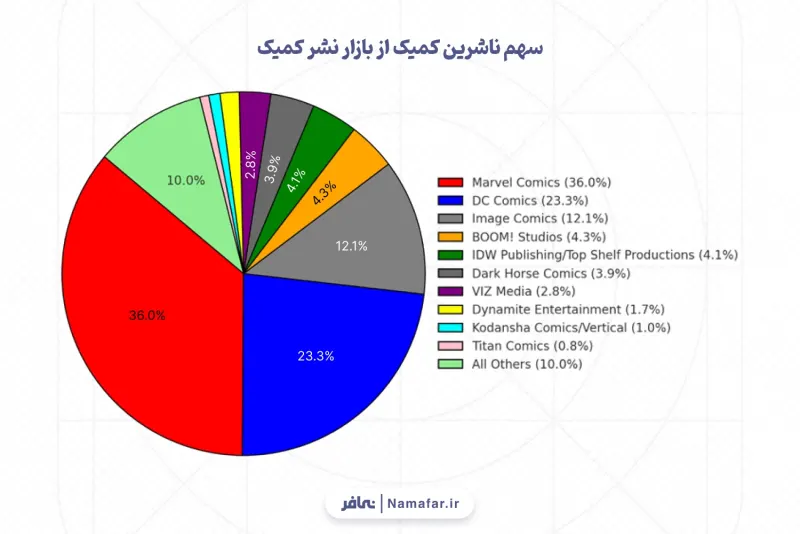
In the chart below you can see each comics publisher's share of the comic book market in 2023. Marvel publishing still holds more than one-third of the market, and after it its main rival DC, by a considerable margin, is in second place. Independent publishers such as Image, Boom, and Dark Horse are in the next ranks.
Comic-book exhibitions and events
Comic-book exhibitions and events, such as Comic-Con, play a very important role in the development and flourishing of the comics industry. These events, by attracting thousands of enthusiasts, provide an opportunity to introduce new works, interaction between artists and audiences, and increased sales of related products. San Diego Comic-Con, as one of the world's largest comic-book events, attracts more than 135,000 participants annually and has an impact of more than 160 million dollars on the local economy. International events such as New York Comic-Con also have a substantial economic impact by attracting more than 200,000 participants. These events not only help increase comics sales, but by holding panels, workshops, and signing sessions, they strengthen direct interaction between artists and audiences.
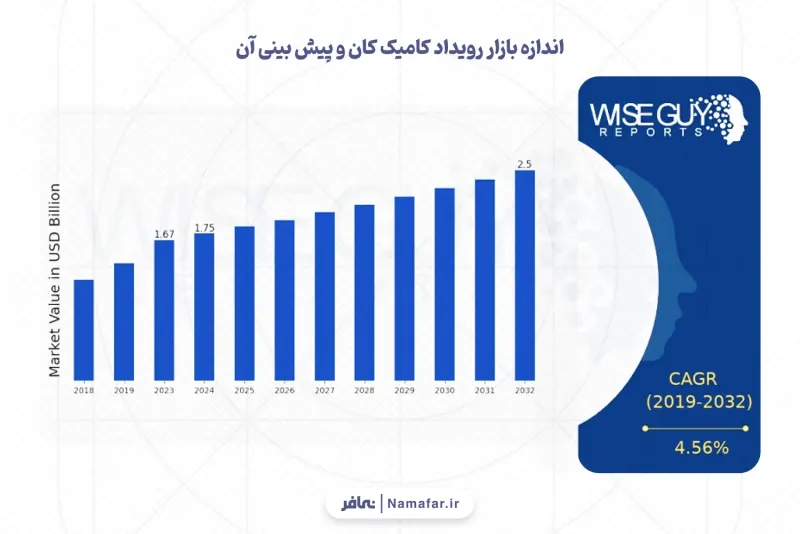
The market for comic-book events, especially Comic-Cons, is a relatively large and, of course, growing market. In the chart below, based on a report by the wiseguyreports website, you can see that the Comic-Con market in 2023 was valued at 1.67 billion dollars and is expected to reach 2.5 billion dollars by 2032 at a compound annual growth rate of 4.56 percent.
The importance of the comic book as a parent industry
Some readers may wonder why, despite the comic-book industry's turnover not being all that high relative to other creative industries, this sector still has high importance. The answer is that it is true that this industry itself has little to show off against newer industries, but it is still important as a parent industry for creating and inspiring the produced works of other sectors.
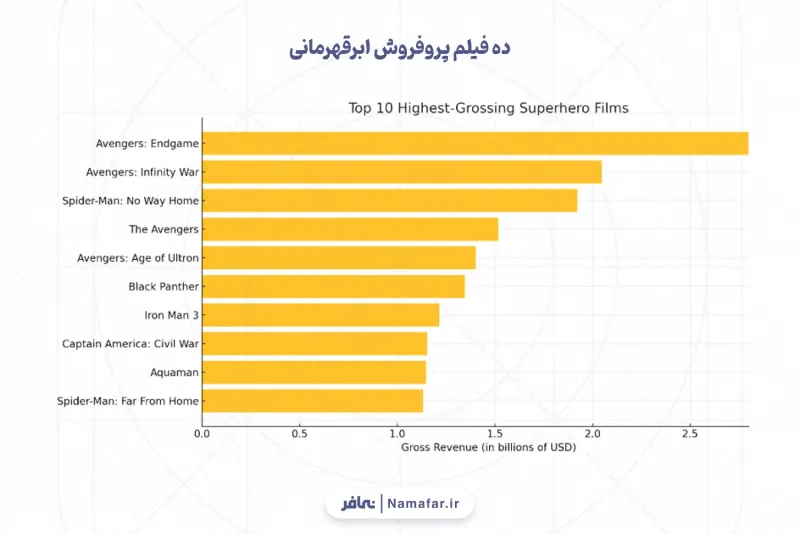
For example, films adapted from comics, especially from the Marvel and DC worlds, from the beginning of the Marvel Cinematic Universe (MCU) and the DC Extended Universe (DCEU), have so far generated more than 50 billion dollars in revenue. Films such as Avengers: Endgame have sold more than 2.7 billion dollars and have been placed on the list of the highest-grossing films in history. In the table below you can see the global box office figures of the ten best-selling superhero films.
In addition, the market for comics accessories and toys, which includes action figures, apparel, posters, and other branded goods, is directly influenced by comic-book characters and stories and has become a multi-billion-dollar industry. For example, sales of goods related to Marvel and DC in recent years alone have been more than 10 billion dollars. These cases show how comic books, despite a small volume of direct sales, play a key role in a broader economic chain of creative industries and still have a special place in cultural and economic production and consumption.
The comics industry in Iran
The popularity of comic strips in Iran began with the publication and spread of the Tintin comic by Universal Publishing before the Revolution. The popularity of translated foreign comics continued after the Revolution as well. In the area of original comics, however, the work has been more difficult; from comics with traditional stories such as Rostam to religious comics such as Ashura, they have been published from the 1370s (1990s) onward, and even a periodical titled "Jadid" was published in a specialized way in the comics field, but none of these works were able to achieve the kind of economic success that would establish this industry's place within the framework of Iran's creative industries.
In recent years, however, with the publication of the comic "Ilya," a new development has occurred. This comic is written around an Iranian teenage superhero and takes place in a native Iranian setting. Komika publishing, in an admirable move, published this serialized comic in the usual comics format at international standard size, and almost on a monthly basis. This work, in professionally publishing comics aside from their content, helps strengthen the comics industry in Iran. This series has also had good successes economically: by 1401 (2022/23), more than 20 thousand copies of this series had been sold; at that year's book fair alone three thousand copies of this book were sold. This publisher has also attracted about 2,000 annual subscriptions for the Ilya comic. Given these figures and the popularity of these comics among adolescents, a different outlook for the comics industry in Iran can be envisioned.
Closing remarks
In the age of TikTok, Instagram, and all kinds of social networks, it may appear that traditional print creative industries such as books and comics magazines no longer have their past impact, but when we examine the matter more deeply we reach other results. Comics still continue their sales with strength, and comics-centered events around the world attract thousands of audience members. The cultural economy of this creative industry is also pursued more than ever, because this industry is recognized as a parent and foundational industry in the creative industries.
But what brings comics to this special place in the competition among creative industries is their remarkable ability in dream-making. Colorful comics with their extraordinary images have for nearly eighty years been shaping the dreams of adolescents and young people. In Iran, although admirable efforts have been made for the comics industry to take root, this industry is still nascent in Iran, and the future horizons for its dream-making in our country are bright.
Sources:
https://www.skyquestt.com/report/comic-book-market#:~:text=Comic%20Book%20Market%20size%20was,period%20(2023%2D2030).
https://www.cognitivemarketresearch.com/comic-book-market-report?srsltid=AfmBOopuhsYQWiaEGfNMJiiWTpfnN-OiDai61e96MvM4If54vuojx9No
https://gitnux.org/comic-book-demographic-statistics/
https://comicsbeat.com/
https://comichron.com/
https://www.comichron.com/yearlycomicssales/industrywide/2021-industrywide.html
https://market.us/report/comic-book-app-market/
Machine-translated from Persian by Namafar; the Persian original is authoritative. Read the original in Persian