In 2001 UNESCO for the first time unveiled a cultural program named "World Book Capital." In this program, a city that, with the participation of people and NGOs and government organizations, excels in promoting reading is selected as the world capital. Alexandria in Egypt, Beirut in Lebanon, Bogota in Colombia and others are among the cities that during this period have been selected as World Book Capital. This program, after a 14-year gap, was implemented for the first time in 1393 (2014/15) in Iran. So far Ahvaz, Neyshabur, Bushehr, Kashan, Yazd, Shiraz and Sanandaj have been awarded this title.
The Book Capital and its responsibilities
The Book Capital has a social responsibility to promote reading and to advance cultural facilities. The Ministry of Culture and Islamic Guidance, in cooperation with related agencies and organizations, issues a call every year to take part in the Book Capital scheme, and after judging, the Book Capital is selected from among the participating cities. Cities' cultural agencies and institutions such as the General Directorate of Culture and Islamic Guidance, public libraries, municipalities and others, in cooperation with NGOs, given their facilities, carry out activities every year to take part in this scheme and to be selected, and they define activities for the future.
What are the criteria for selecting the Book Capital?
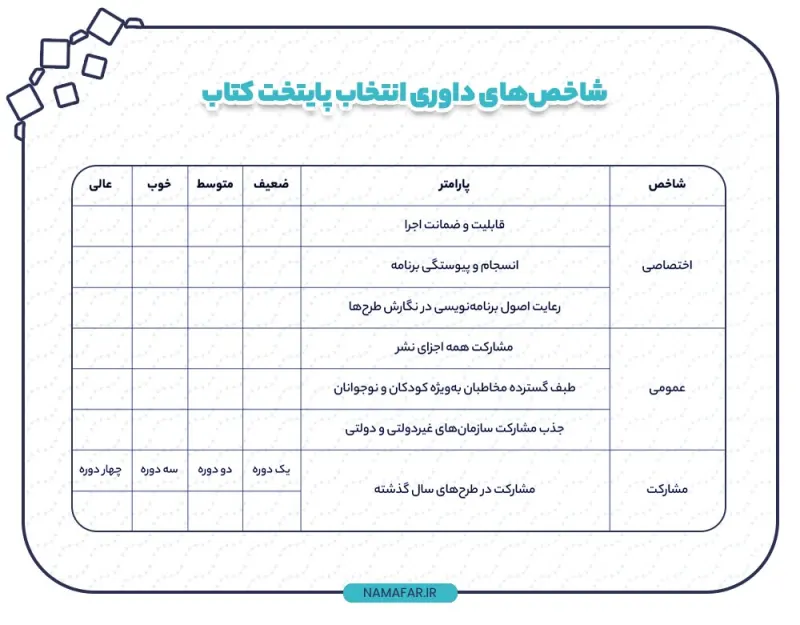
The method and criteria for selecting the capital are a matter of debate. The evaluation criteria for the plans and programs implemented and presented by different cities are defined and carried out in three indicators: general, specific, and participation in previous rounds. The indicators have several axes; each axis is also scored at four levels.
The defined axes are unrealistic and the distance between the scoring levels is not proportionate. Most important of all, the possibility of interference and arbitrary selection is likely.
How did Sanandaj become Book Capital?
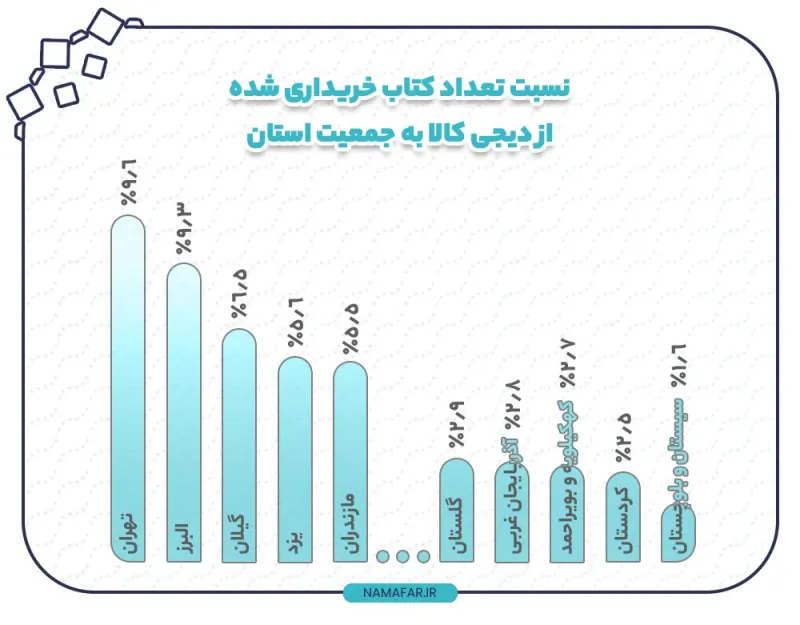
In 1400 (2021/22) the city of Sanandaj was selected as Book Capital on the criterion of "continuity in promoting a culture of reading." This is while the monthly per-capita non-textbook reading time of Kurdistan's residents in 1399 (2020/21) is 9 minutes a day; 27 percent lower than the national average figure. Kurdistan, in the statistics on book purchases from Digikala relative to its population, is the second-to-last province.
The director-general of the Ministry of Culture and Islamic Guidance of Kurdistan Province, in explaining the reasons for selecting Sanandaj, has cited the existence of 45 publishers, seventy-six university libraries, four Kurdistan-studies centers and flagship schemes. Also, carrying out book tourism schemes, book exchange in parks and on sidewalks, author signing events for newly published books, teaching reading skills, building book-related landmarks and so on are among the reasons for selecting Sanandaj as Book Capital. These reasons are to a large extent distant from the statistics, documentation and observations.
In 1396 (2017/18) Bushehr was selected as capital in view of the criteria mentioned. Looking at the country's per-capita reading time in 1399 (2020/21), the average per-capita reading time in the country is 4 hours, and this figure in Bushehr is only 1 hour and 18 minutes. This probably indicates that the goals of this scheme have not been realized. The question is, how effective is the aforementioned scheme in this form? And is this scheme merely something that must be done, now in whatever manner and appearance? It seems that for the answer to these questions one must wait for the statistics after the scheme is implemented in Sanandaj and a comparison with the years before it.
Machine-translated from Persian by Namafar; the Persian original is authoritative. Read the original in Persian